Unwrapping the Secrets of A Christmas Carol: Stave 3 Questions and Answers Revealed

Stave 3 of Charles Dickens’ beloved novel, “A Christmas Carol,” is a pivotal moment in the story. In this section, the main character Ebenezer Scrooge is visited by the Ghost of Christmas Present, who takes him on a journey to witness the celebrations and joys of the holiday season. Throughout this stave, Scrooge learns valuable lessons about the importance of family, love, and compassion.
As readers delve into Stave 3 of “A Christmas Carol,” they may have several questions about the events that unfold and the messages conveyed by the author. This article will explore some of the most commonly asked questions about Stave 3, providing insightful answers and analysis.
One of the essential questions readers may have is: What is the significance of the Ghost of Christmas Present in Stave 3? The Ghost represents the spirit of generosity and abundance, showing Scrooge the joy that can be found in sharing and caring for others. Through his encounters with different families and individuals, Scrooge realizes the value of human connection and the importance of spreading happiness.
Another question that often arises is: What lessons does Scrooge learn in Stave 3? In this stave, Scrooge learns the consequences of his indifference and selfishness, seeing firsthand the impact his actions have on others. He discovers the true meaning of Christmas and understands the power of kindness and compassion. This realization prompts him to reflect on his past behavior and gives him the opportunity to change his ways.
A Christmas Carol Stave 3 Questions and Answers

In Stave 3 of “A Christmas Carol,” also known as “The Second of the Three Spirits,” Ebenezer Scrooge is visited by the Ghost of Christmas Present. This spirit takes Scrooge on a journey to witness the celebrations and festivities of Christmas happening in the present time. Throughout this stave, Scrooge is confronted with various questions and answers that prompt him to reflect on his own behavior and the true meaning of Christmas.
One of the key questions raised in Stave 3 is why Scrooge has not participated in the joyous Christmas celebrations in the past. The Ghost of Christmas Present shows him people from various walks of life, including his own nephew Fred, who are celebrating and spreading happiness on Christmas Day. Scrooge is forced to confront his own isolation and the choices he has made that have separated him from the holiday spirit.
Another important question that arises in this stave is how Scrooge’s actions and attitudes affect those around him. The spirit introduces Scrooge to the Cratchit family, particularly Bob Cratchit and his son Tiny Tim. Through witnessing their love, joy, and struggle, Scrooge starts to comprehend the impact of his indifference and greed on others. The spirit’s proclamation that Tiny Tim will die if the future remains unchanged serves as a wake-up call for Scrooge.
As Scrooge is shown these scenes and confronted with these questions, he begins to show signs of change. He starts to understand the importance of love and connection, and starts to express regret and remorse for his past actions. Stave 3 serves as a turning point in Scrooge’s transformation, as he starts to embody the Christmas spirit and shows a willingness to change his ways.
Overall, Stave 3 of “A Christmas Carol” raises important questions about the true meaning of Christmas, the impact of one’s actions on others, and the potential for change and redemption. Through these questions and answers, the reader, as well as Scrooge, are challenged to reflect on their own behavior and the possibility of finding joy and connection through compassion and generosity.
Major Events in Stave 3 of A Christmas Carol
In Stave 3 of A Christmas Carol, titled “The Second of the Three Spirits,” Ebenezer Scrooge is visited by the Ghost of Christmas Present, who takes him on a journey to witness the celebrations and hardships of others during the Christmas season.
The major events in this stave include:
- The introduction of the Ghost of Christmas Present: The spirit appears as a jolly giant with a glowing torch, dressed in a green robe adorned with holly. Scrooge is initially apprehensive, but soon becomes intrigued and eager to learn from this spirit.
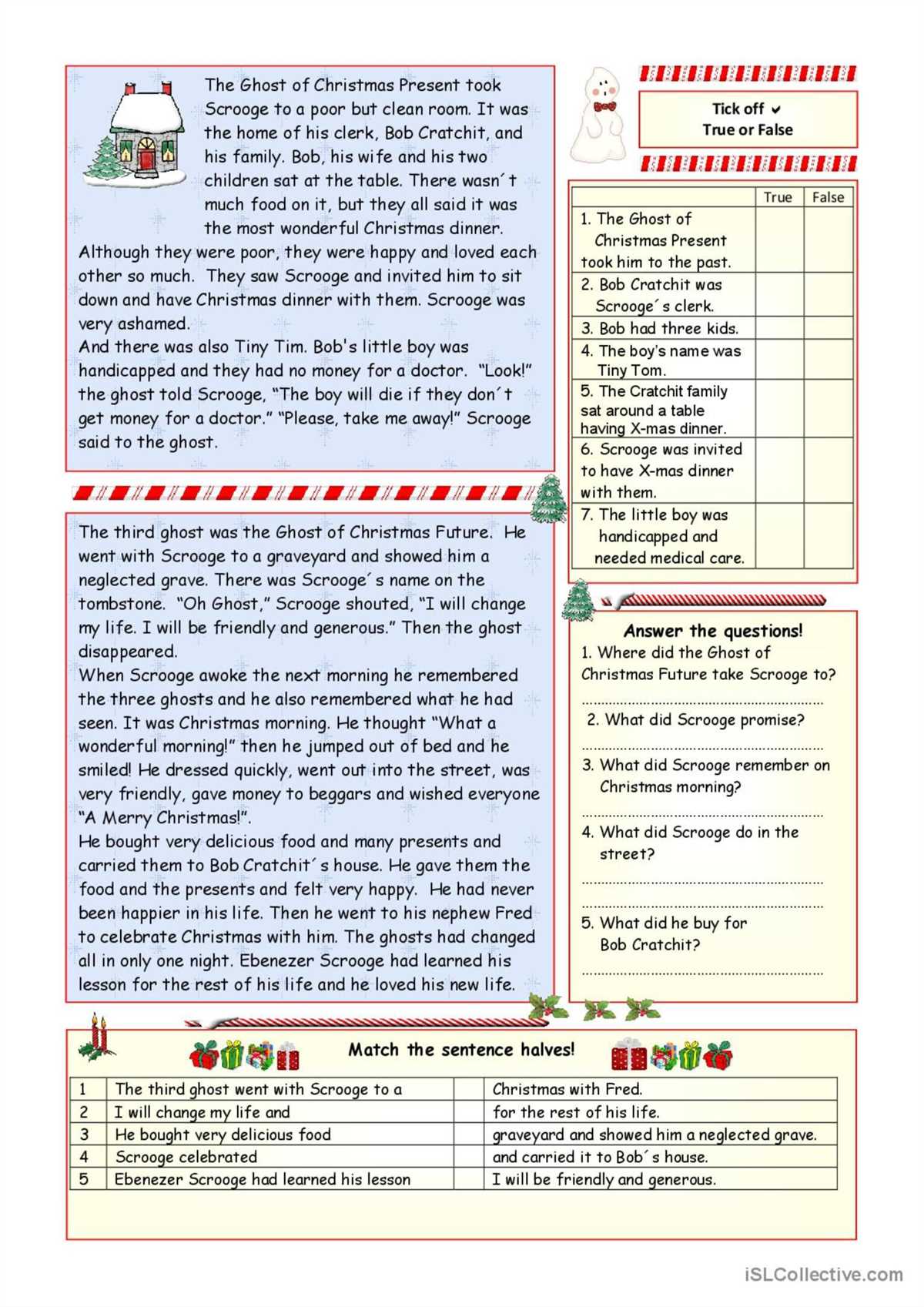
- Scrooge’s visit to the Cratchit family: The Ghost takes Scrooge to the humble home of Bob Cratchit, where he sees the family preparing a meager Christmas meal. Despite their poverty, the Cratchits display love, joy, and gratitude for what they have.
- The revelation of Tiny Tim’s fragile health: During his visit to the Cratchit household, Scrooge learns that Bob’s son, Tiny Tim, is a kind and optimistic boy, but his life is threatened by an illness. This realization deeply affects Scrooge and serves as a turning point in his character development.
- Scrooge’s observation of various Christmas celebrations: The Ghost takes Scrooge to witness the festivities happening across the city, including parties, feasts, and acts of charity. Through these experiences, Scrooge starts to understand the true spirit of Christmas and the importance of sharing love and kindness.
- Scrooge’s encounter with Ignorance and Want: As the night progresses, the Ghost of Christmas Present shows Scrooge two emaciated children named Ignorance and Want. These figures symbolize the consequences of society’s neglect and indifference. Scrooge is warned about the potential repercussions if he does not change his ways.
Overall, Stave 3 of A Christmas Carol plays a crucial role in Scrooge’s transformation by exposing him to the sufferings and joys of others during the Christmas season. It challenges his beliefs and forces him to reflect on his own actions, paving the way for further revelations in the following staves.
How does Scrooge’s perception of time change in Stave 3?
Stave 3 of “A Christmas Carol” marks a significant shift in Scrooge’s perception of time. Up until this point, Scrooge has been a man singularly focused on his present and his past, disregarding the importance of the future. However, in this stave, Scrooge’s encounter with the Ghost of Christmas Present prompts a transformation in his understanding of time.
Firstly, Scrooge learns to appreciate the fleeting nature of time. When the Ghost takes him to witness a Christmas party at Fred’s house, Scrooge sees how people enjoy each present moment, reveling in the joy and camaraderie. This experience highlights to Scrooge that time is limited and should not be squandered. He realizes that he has wasted much of his life by not embracing the joys and connections that come with each passing moment.
Secondly, Scrooge begins to recognize the importance of living in the present. As the Ghost of Christmas Present reveals the poverty and suffering endured by many in the city, Scrooge is reminded that his actions in the present can have a profound impact on the lives of others. He learns that he has the power to make a positive difference through acts of kindness and generosity, and that the present is the only moment in which he can truly take action to make amends for his past actions.
Overall, Stave 3 marks a turning point in Scrooge’s perception of time. He begins to understand that the past cannot be changed, but the present offers opportunities for redemption and growth. By embracing the present moment and valuing the limited time he has, Scrooge opens himself up to the possibility of transformation and a more fulfilling future.
The Significance of the Ghost of Christmas Present’s Appearance
The appearance of the Ghost of Christmas Present in Charles Dickens’ “A Christmas Carol” holds significant symbolism and meaning. This jolly spirit is described as being larger than life, with a glowing torch-like crown of flame and a robe adorned with summer flowers. The Ghost is larger than any of the other spirits that visit Scrooge, representing the vastness and abundance of the spirit of Christmas.
The Ghost’s appearance also signifies the present moment and the importance of living in the present. The Ghost emphasizes the fleeting nature of time and the need to appreciate and cherish the present moment. The Ghost brings Scrooge to various scenes of joy and celebration, showing him the happiness that can be found in the present, regardless of one’s circumstances. This serves as a reminder to Scrooge, and to readers, that the present is a gift that should not be taken for granted.
Additionally, the Ghost of Christmas Present’s appearance underscores the themes of generosity and compassion. The Ghost is depicted as a jolly, generous figure, laughing heartily and spreading joy wherever he goes. He is surrounded by a feast of abundance, symbolizing the abundance that can be found in sharing with others and showing kindness. Through his appearance, the Ghost embodies the spirit of Christmas and serves as a contrast to Scrooge’s own miserly and self-centered nature.
In summary, the Ghost of Christmas Present’s appearance in “A Christmas Carol” is significant because it represents the vastness and abundance of the spirit of Christmas, emphasizes the importance of living in the present, and symbolizes the themes of generosity and compassion. This jolly spirit serves as a catalyst for Scrooge’s transformation and reminds both Scrooge and readers of the joy and happiness that can be found in embracing the true spirit of Christmas.
How does Stave 3 further develop Scrooge’s transformation?
In Stave 3 of “A Christmas Carol,” the transformation of Scrooge continues to progress as he is visited by the Ghost of Christmas Present. This ghost takes him on a journey to witness how others are celebrating Christmas, which helps to open Scrooge’s eyes to the joy and happiness that he has been missing out on.
Firstly, the Ghost of Christmas Present shows Scrooge the Cratchit family, particularly focusing on their youngest son, Tiny Tim. Scrooge is moved by the love and affection that the family has for each other, despite their difficult circumstances. He observes the warmth and compassion they have towards one another, which contrasts sharply with his own cold and selfish nature. This scene serves to further break down Scrooge’s barriers and ignite a sense of empathy within him.
Secondly, the ghost takes Scrooge to the homes of others, where they are joyfully celebrating Christmas. Scrooge witnesses parties and gatherings filled with laughter, music, and love. He realizes that he has been isolating himself from the joy and camaraderie that comes with the holiday season. This exposure to the happiness of others begins to make him question his own choices and the emptiness of his own existence.
Furthermore, the ghost reveals to Scrooge the consequences of his miserly ways. They visit a future scene where Scrooge’s own death is met with indifference and relief. He sees that his actions have caused him to be despised and forgotten by those around him. This glimpse into his potential future makes Scrooge reflect on the legacy he will leave behind and the impact he has on others.
In conclusion, Stave 3 of “A Christmas Carol” plays a crucial role in further developing Scrooge’s transformation. Through witnessing the love and happiness of others, as well as the potential consequences of his own actions, Scrooge begins to question his own choices and open himself up to change. The transformation that began in earlier staves continues to deepen, as Scrooge faces the reality of his own cold-heartedness and begins to see the importance of love, compassion, and connection with others.
Lessons learned by Scrooge in Stave 3

Scrooge undergoes a profound transformation in Stave 3 of “A Christmas Carol” as he learns several important lessons from the experiences he witnesses. First and foremost, he learns the significance of human connection and the importance of fostering relationships. Through his interactions with the Cratchit family and his nephew Fred, Scrooge realizes the joy and warmth that can be derived from meaningful connections with others.
Furthermore, Scrooge learns the lesson of empathy and compassion. As he witnesses the struggles and hardships faced by those around him, he begins to understand the pain and suffering he has caused by his own callous behavior. This newfound empathy leads him to feel genuine remorse and a desire to make amends for his past actions.
Scrooge also learns the lesson of the power of generosity and giving. Through the visit of the Ghost of Christmas Present, he witnesses the selflessness and generosity of others, particularly those less fortunate than himself. This inspires him to change his ways and become a more giving and compassionate person, realizing that true happiness can be found in helping others.
Lastly, Scrooge learns the importance of living in the present moment and cherishing the time he has with loved ones. Through his encounters with the Ghost of Christmas Present, he realizes the fleeting nature of life and the need to appreciate the here and now. This lesson serves as a reminder for him to prioritize the things that truly matter and to make the most of every moment.
In conclusion, Stave 3 of “A Christmas Carol” teaches Scrooge valuable lessons about the significance of human connection, empathy, generosity, and living in the present. These lessons not only transform Scrooge’s perspective on life but also serve as timeless reminders for readers to embrace the true spirit of Christmas.
How does Stave 3 contribute to the overall theme of redemption in A Christmas Carol?
Stave 3 of Charles Dickens’ A Christmas Carol plays a significant role in developing and reinforcing the theme of redemption throughout the story. In this section, the main character, Ebenezer Scrooge, undergoes a transformation as he is visited by three spirits who help him confront his past, present, and future.
The Ghost of Christmas Past takes Scrooge on a journey down memory lane, showing him scenes from his childhood and early adulthood. Through these encounters, Scrooge begins to reflect on the choices he made that led him to his current state of greed and isolation. This reflection prompts a sense of remorse and regret in Scrooge, laying the foundation for his redemption.
The Ghost of Christmas Present further contributes to Scrooge’s redemption by exposing him to the lives of others and the joy they find in the Christmas season. Scrooge observes the Cratchit family, who despite their poverty, find happiness in their love and togetherness. This experience challenges Scrooge’s self-centered worldview and ignites a sense of empathy and compassion within him.
The Ghost of Christmas Yet to Come serves as the final catalyst for Scrooge’s transformation. This ghost shows Scrooge the consequences of his actions, revealing a bleak future where he is despised and alone. Faced with his own mortality and the impact of his choices on others, Scrooge finally embraces redemption and vows to change his ways.
In summary, Stave 3 significantly contributes to the theme of redemption in A Christmas Carol by allowing Scrooge to confront his past, witness the lives of others, and see the potential consequences of his actions. Through these experiences, Scrooge undergoes a profound change, ultimately choosing redemption and embracing the true spirit of Christmas.