Unlocking the Secrets: Algebra 2 Unit 1 Assessment Answer Key Exposed
In Algebra 2, the unit 1 assessment is a crucial step in evaluating students’ understanding of fundamental concepts such as equations, functions, and inequalities. This assessment is designed to test their ability to solve equations and inequalities, graph functions, and analyze mathematical models.
By providing comprehensive answers to the unit 1 assessment, students gain insights into their strengths and weaknesses in algebraic problem-solving. It serves as an opportunity for them to showcase their proficiency in translating real-life problems into mathematical equations and finding solutions.
The answers to the unit 1 assessment cover topics such as linear and quadratic equations, systems of equations, absolute value equations, and exponential functions. These responses help students determine the accuracy of their solutions and identify areas for improvement.
With a clear understanding of the unit 1 assessment answers, students can confidently approach future lessons and exams in Algebra 2. They can build upon their knowledge and skills, continuously strengthening their grasp of algebraic concepts.
Section 1: Overview of Algebra 2 Unit 1 Assessment Answers
The Algebra 2 Unit 1 Assessment is an important evaluation of students’ understanding of key concepts and skills in the subject. This section provides an overview of the answers to the assessment questions.
Answer 1: The first question in the assessment focuses on solving linear equations. Students are required to apply their knowledge of properties of equality and algebraic manipulations to find the solution. The correct answer involves isolating the variable and simplifying the equation to determine the value.
Answer 2: The second question tests students’ understanding of quadratic functions. They must identify the vertex, axis of symmetry, and whether the parabola opens upward or downward. The correct answer requires the application of the vertex formula and recognition of the quadratic function’s shape.
Answer 3: The third question assesses students’ grasp of exponential growth and decay. They need to apply the formula and calculate the initial value, growth/decay rate, and an expression that represents the scenario. The correct answer should demonstrate an understanding of exponential functions’ behavior.
Answer 4: The fourth question focuses on analyzing polynomial functions. Students must identify the degree, leading coefficient, and end behavior of a given polynomial. The correct answer necessitates recognizing the highest degree term, comparing coefficients, and using knowledge of polynomial characteristics.
Answer 5: The final question evaluates students’ comprehension of rational expressions. They are required to simplify a given rational expression by factoring and canceling common factors. The correct answer involves applying factoring techniques and simplifying the expression to its simplest form.
This section provides a brief overview of the answers to some of the key questions in the Algebra 2 Unit 1 Assessment. It is essential for students to thoroughly understand these concepts and practice applying them in order to succeed in Algebra 2.
What is Algebra 2 Unit 1 Assessment?
The Algebra 2 Unit 1 Assessment is an evaluation tool used to assess students’ knowledge and understanding of the concepts covered in the first unit of an Algebra 2 course. This assessment is typically administered after students have completed the unit and are expected to have developed a solid foundation in algebraic skills and concepts.
The assessment generally consists of a variety of questions, including multiple-choice, short answer, and problem-solving questions. It aims to test students’ ability to apply algebraic principles to solve equations and inequalities, analyze functions, and manipulate expressions.
Some of the key topics covered in Algebra 2 Unit 1 that are likely to be assessed include linear functions and their graphs, systems of linear equations and inequalities, quadratic functions and their properties, and exponential functions. Students are expected to demonstrate their understanding of these topics and their ability to solve related problems.
The Algebra 2 Unit 1 Assessment serves multiple purposes – it helps teachers gauge students’ mastery of the material covered in the unit, identifies areas where students may need additional support or instruction, and allows students to reflect on their own progress and areas of strength and weakness. Overall, the assessment plays a crucial role in informing instruction and guiding future learning in the Algebra 2 course.
Importance of Algebra 2 Unit 1 Assessment Answers
In the field of mathematics, assessments play a crucial role in evaluating a student’s understanding and knowledge of a particular topic. Algebra 2 unit 1 assessment answers are of particular importance as they provide a comprehensive analysis of a student’s grasp of fundamental algebraic concepts and skills. These answers not only help measure a student’s competence but also serve as a valuable tool for educators in identifying areas of improvement and adjusting their teaching strategies to cater to their students’ needs.
With algebra being a foundational subject in mathematics, a solid understanding of unit 1 concepts is essential for students to successfully progress and excel in subsequent units and courses. The assessment answers help students identify any gaps in their understanding and provide an opportunity to revisit and reinforce these concepts. This iterative process of learning and assessment ensures that students build a strong foundation and are equipped with the necessary skills and knowledge to tackle more complex algebraic problems.
Furthermore, algebra 2 unit 1 assessment answers serve as a benchmark for students to track their progress and growth over time. By comparing their initial answers with the correct solutions, students can identify areas where they need further practice and focus their efforts accordingly. This self-reflection and self-evaluation promote a growth mindset and encourage students to take ownership of their learning.
For educators, algebra 2 unit 1 assessment answers provide valuable insights into their teaching effectiveness and enable them to make data-informed decisions. By analyzing trends and patterns in student responses, teachers can identify common misconceptions and adapt their instructional strategies to address these misconceptions proactively. Additionally, these answers allow educators to differentiate their instruction and provide targeted support to students who may be struggling.
In conclusion, algebra 2 unit 1 assessment answers are essential tools for both students and educators in the pursuit of mathematical excellence. They facilitate the identification of knowledge gaps, promote self-reflection, and inform instructional decisions. By leveraging the insights provided by these assessment answers, students can enhance their understanding and mastery of algebraic concepts, setting a solid foundation for future mathematical success.
Section 2: Common Topics Covered in Algebra 2 Unit 1 Assessment
In Algebra 2, Unit 1 covers several common topics that are often assessed to evaluate students’ understanding of fundamental algebraic concepts and skills. These topics include:
- Linear Equations and Inequalities: This section often assesses students’ ability to solve and graph linear equations and inequalities in one variable. Students are expected to understand how to isolate the variable, use the properties of equality and inequality, and interpret the solutions in context.
- Polynomial Operations: This topic assesses students’ understanding of polynomials and their operations. Students are expected to perform operations such as addition, subtraction, multiplication, and division of polynomials. They should also be able to use factoring techniques to simplify expressions.
- Quadratic Equations: This section focuses on quadratic equations and their solutions. Students should be able to solve quadratic equations by factoring, using the quadratic formula, or completing the square. They should also be able to graph quadratic functions and analyze their key features.
- Exponential and Logarithmic Functions: This topic assesses students’ understanding of exponential and logarithmic functions. Students should be able to solve equations involving exponential and logarithmic expressions, graph these functions, and apply them in real-world contexts.
- Rational Functions: This section covers rational functions and their properties. Students should be able to simplify, graph, and evaluate rational expressions. They should also be able to solve equations involving rational functions.
These are some of the common topics covered in Algebra 2 Unit 1 assessment. Mastering these concepts is crucial for students to build a solid foundation in algebra and prepare for more advanced mathematical topics in subsequent units.
Linear functions and their properties
A linear function is a mathematical equation that describes a straight line. It has the general form of y = mx + b, where m is the slope of the line and b is the y-intercept. The slope represents how steep the line is, while the y-intercept is the point where the line crosses the y-axis.
There are several properties of linear functions that are worth noting. Firstly, the slope of a linear function determines the direction and steepness of the line. A positive slope indicates an upward-sloping line, while a negative slope represents a downward-sloping line. A slope of zero indicates a horizontal line.
- Another property of linear functions is that they have constant rates of change. The rate of change is equal to the slope and measures how much the output (y-value) changes for a given change in the input (x-value).
- Linear functions also have a constant difference between consecutive terms, known as the common difference. This property is observed in arithmetic sequences, where each term is obtained by adding the common difference to the previous term.
- In addition, linear functions can be represented graphically as a straight line. The slope-intercept form (y = mx + b) allows us to easily identify the slope and y-intercept from the equation and plot the line accordingly.
Overall, linear functions are an important concept in algebra as they provide a simple and efficient way to model and analyze a wide range of real-world phenomena. Understanding their properties and behavior can help in solving equations, graphing lines, and making predictions based on given data.
Quadratic functions and their properties
A quadratic function is a type of polynomial function that can be expressed as f(x) = ax^2 + bx + c, where a, b, and c are constants and a ≠ 0. Quadratic functions have several key properties that are important to understand when studying algebra.
Vertex: The vertex of a quadratic function is the point where the function reaches its maximum or minimum value, depending on the concavity. The vertex can be found using the formula x = -b/2a, and substituting this value into the equation gives the corresponding y-coordinate.
Axis of symmetry: The axis of symmetry is a vertical line that passes through the vertex of a quadratic function. It divides the function into two symmetrical halves. The equation of the axis of symmetry is given by x = -b/2a.
Graph: The graph of a quadratic function is a parabola, which is a U-shaped curve. The graph can be concave up or concave down, depending on the coefficient a. If a > 0, the parabola opens upward and if a < 0, it opens downward. The vertex of the parabola represents the minimum or maximum point, and the axis of symmetry is the line of symmetry for the graph.
Intercepts: The x-intercepts of a quadratic function are the points where the graph crosses the x-axis. These points are also known as the roots or solutions of the quadratic equation ax^2 + bx + c = 0. The y-intercept is the point where the graph crosses the y-axis, and it can be found by substituting x = 0 into the quadratic equation.
Discriminant: The discriminant is a value that can be calculated using the coefficients of a quadratic equation. It determines the nature of the solutions. If the discriminant is positive, there are two distinct real solutions. If it is zero, there is only one real solution (a repeated root). If the discriminant is negative, there are two complex conjugate solutions.
Tips for Answering Algebra 2 Unit 1 Assessment Questions
When approaching the Algebra 2 Unit 1 Assessment, it’s important to have a clear understanding of the concepts and skills covered in the unit. This will ensure that you are well-prepared to answer the questions correctly. Here are some helpful tips for answering the assessment questions:
- Read the question carefully: Take the time to carefully read each question and make sure you understand what is being asked. Look for keywords and key phrases that can give you clues about how to approach the problem.
- Solve step-by-step: For complex problems, it’s important to break them down into smaller, more manageable steps. This will help you avoid making mistakes and make it easier to find the correct solution. Show all your work, as partial credit may be given even if your final answer is incorrect.
- Use appropriate notation: Algebra 2 often involves working with equations, variables, and mathematical symbols. Make sure you use the correct notation when writing your answers. This is particularly important when dealing with fractions, exponents, and radicals.
- Check your work: Once you have found a solution, take the time to double-check your work. Look for any potential errors or mistakes in your calculations. This will help you catch any errors and ensure that your final answer is accurate.
By following these tips, you can approach the Algebra 2 Unit 1 Assessment with confidence and increase your chances of success. Remember to study and review the material beforehand to ensure a thorough understanding of the concepts covered in the unit. Good luck!
Understanding the Problem Statement
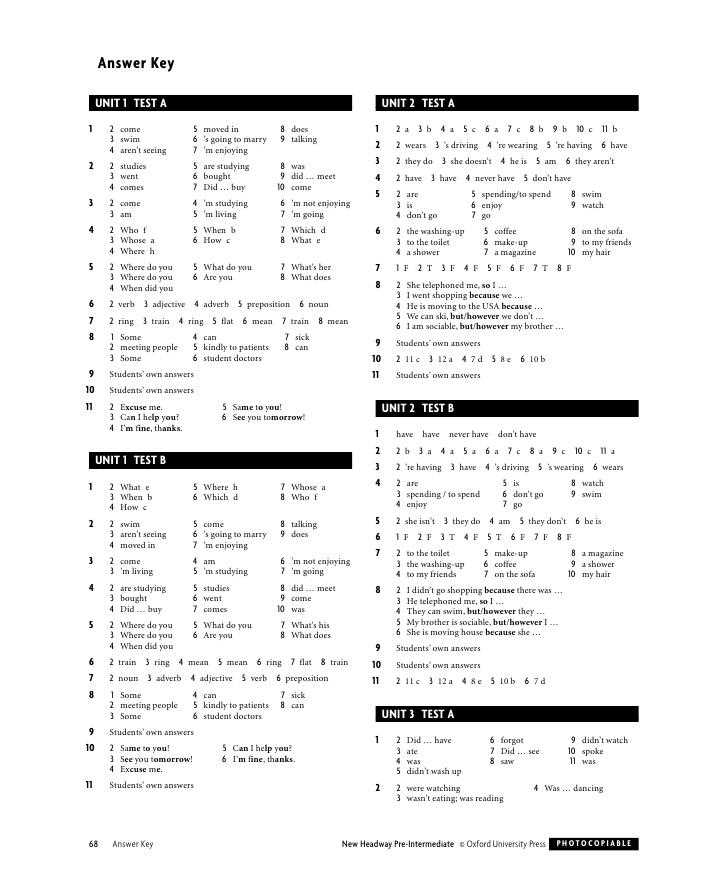
In this article, we have discussed the importance of understanding the problem statement in Algebra 2 unit 1 assessment. The problem statement serves as a guide to solving the given problem and helps us understand what is being asked of us.
By carefully reading and analyzing the problem statement, we can identify key information such as the variables involved, the relationship between the variables, and any given constraints or conditions. This information is crucial in formulating an effective solution strategy.
Summary:
- The problem statement provides important details about the given problem in Algebra 2 unit 1 assessment.
- Understanding the problem statement helps us identify key variables, relationships, constraints, and conditions.
- By analyzing the problem statement, we can formulate an effective solution strategy.
In conclusion, understanding the problem statement is a fundamental step in solving problems in Algebra 2 unit 1 assessment. It allows us to gather the necessary information and formulate a plan of action to solve the given problem.