Uncover the Answers to all your Outsiders Chapter Questions
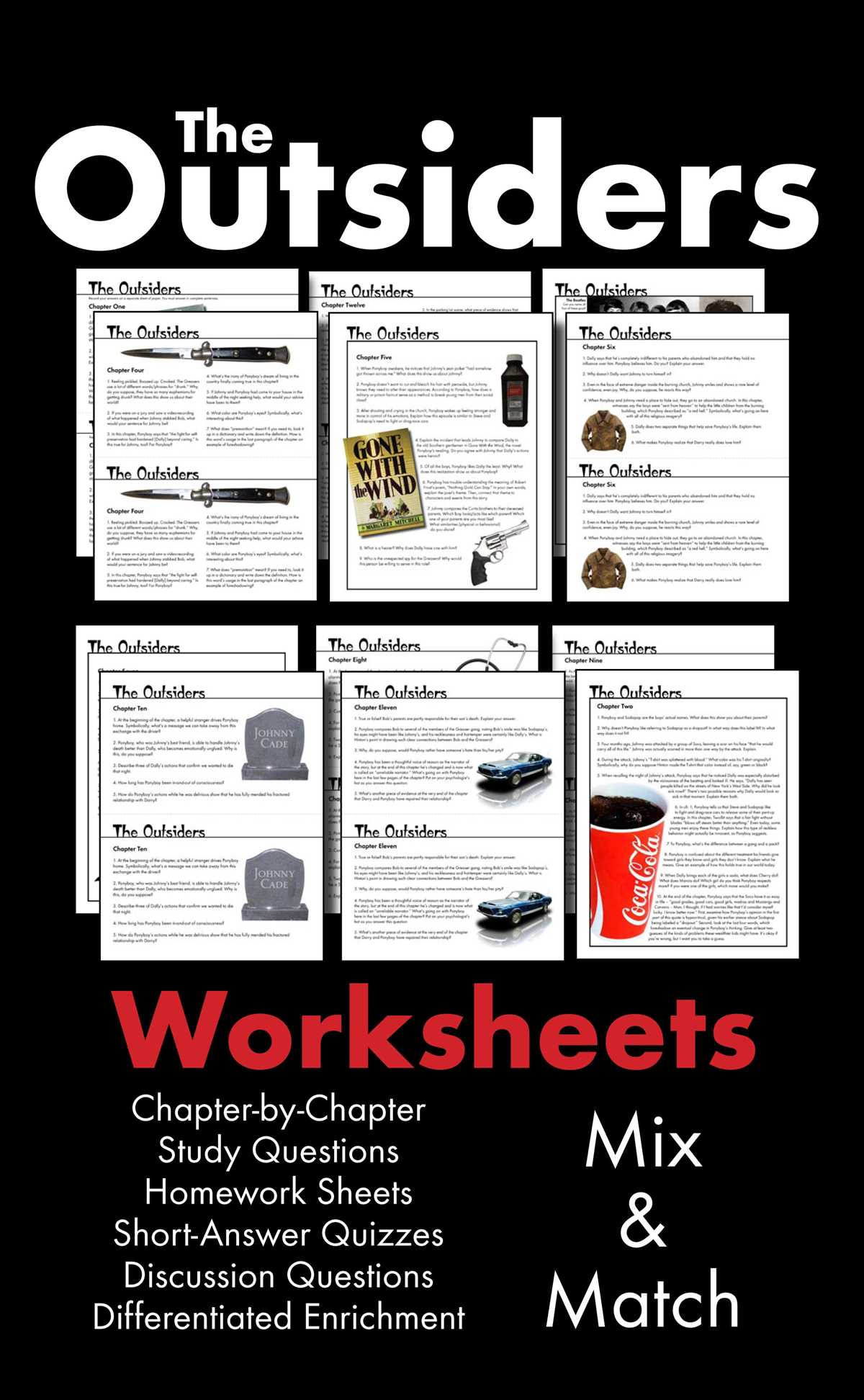
Are you currently studying The Outsiders by S.E. Hinton and finding it difficult to understand or answer the questions at the end of each chapter? Look no further! In this article, we will provide you with detailed answers to the chapter questions that will help you better understand the novel and its themes.
The Outsiders is a coming-of-age novel that explores the lives of teenage characters from two different social classes, the Greasers and the Socs, in 1960s Oklahoma. As you progress through each chapter of the book, you may encounter thought-provoking questions that require deeper analysis to fully grasp the story. Our answers will provide you with insights into character motivations, plot developments, and thematic elements.
By referring to our answers to the chapter questions, you will not only improve your comprehension of The Outsiders but also enhance your ability to analyze and interpret literature. We have carefully crafted our responses to ensure you gain a deeper understanding of the novel and its underlying messages. Whether you are studying the book for school or simply reading it for pleasure, our answers will help you make the most of your reading experience.
Answers to the Outsiders Chapter Questions
In the novel “The Outsiders” by S.E. Hinton, each chapter presents important events and developments in the lives of the characters. Here are some chapter-wise answers to the questions that arise while reading the book:
Chapter 1: Why do the Socs and Greasers dislike each other?

The Socs and Greasers dislike each other primarily due to their different social backgrounds and values. The Socs, short for Socials, are wealthy and have a sense of entitlement, often picking on the less fortunate Greasers. On the other hand, the Greasers come from poor families and struggle to make ends meet. This class difference, along with different lifestyles and rivalries, contributes to the animosity between the two groups.
Chapter 2: How does Ponyboy feel about his brothers Darry and Sodapop?
Ponyboy idolizes his older brothers, Darry and Sodapop. He sees Darry as strict and overprotective, but also as someone who has sacrificed his own dreams to take care of the family after their parents’ death. Sodapop, the middle brother, is Ponyboy’s best friend and confidante. Ponyboy feels immense love and loyalty towards both of them, even though he sometimes struggles with the responsibilities that come with being the youngest in a troubled family.
Chapter 3: What happens during the fight between the Socs and Greasers at the park?
During the fight at the park, several Greasers, including Ponyboy, Johnny, and Dallas, confront the Socs, who were harassing them earlier. In the heat of the moment, Johnny ends up stabbing one of the Socs, Bob, when the latter was attempting to drown Ponyboy. This incident sets off a chain of events that will significantly impact the lives of the characters and intensify the tension between the Socs and Greasers.
Chapter 4: What differences can be seen between Cherry Valance and the other Socs?
Cherry Valance stands out among the other Socs due to her willingness to bridge the gap between the two groups. Unlike her friends, Cherry is kind, empathetic, and open-minded. She befriends Ponyboy and recognizes that not all Greasers are the same. She also asserts that the Socs have their own issues, highlighting that the seemingly perfect life they lead is not without its problems.
Chapter 5: How does Dally’s behavior change after Johnny’s death?
After Johnny’s death, Dally’s behavior takes a drastic turn. Consumed by anger, grief, and a desire for revenge, Dally becomes more reckless and cold-hearted. He becomes willing to endanger himself and others in a way he hadn’t before. His actions ultimately lead to his own tragic end, as he purposefully provokes the police to shoot him instead of surrendering peacefully.
Chapter 6: What transformation does Ponyboy undergo throughout the novel?
Throughout the novel, Ponyboy undergoes a significant transformation. Initially, he is a naive and idealistic young boy who believes in the inherent goodness of people. However, as he experiences loss, violence, and personal growth, Ponyboy starts questioning his beliefs and confronts the harsh realities of the world. By the end of the story, Ponyboy learns the importance of empathy, understanding, and the value of life.
These answers provide a glimpse into the various chapters of “The Outsiders” and the events that shape the characters’ lives. Each chapter contributes to the overall narrative, highlighting the themes of social divides, identity, loyalty, and personal growth.
Chapter 1: Understanding the Characters
The Outsiders is a novel written by S.E. Hinton that explores the lives of two rival groups, the Greasers and the Socs, in a small town. The characters in the first chapter provide valuable insights into their backgrounds and motivations, setting the stage for the conflicts that will arise throughout the story.
1. Ponyboy Curtis:
The protagonist and narrator of the story, Ponyboy Curtis is a 14-year-old Greaser with light-brown hair and greenish-gray eyes. Ponyboy is intelligent and sensitive, often reflecting on the injustices and hardships faced by the Greasers. He enjoys reading books and watching movies, which sets him apart from some of his peers. As we learn in the first chapter, Ponyboy lives with his older brothers, Darry and Sodapop, after their parents died in a car accident.
2. Darry Curtis:
Darry is the oldest Curtis brother, and at 20 years old, he has taken on the responsibility of caring for his younger siblings. As a result, he is often strict and serious, trying to ensure a stable home environment for Ponyboy and Sodapop. Darry dropped out of school to work and support his brothers, which has caused tension between him and Ponyboy, who feels that Darry doesn’t understand him. Despite this conflict, it is clear that Darry loves his brothers and wants the best for them.
3. Sodapop Curtis:
Sodapop, or Soda for short, is the middle Curtis brother, known for his quick wit and good looks. He dropped out of school as well and now works at a gas station to help support the family. Unlike Darry, Soda is often laid-back and easygoing, serving as a peacemaker in the family. He has a close relationship with Ponyboy and is also the only one who can truly understand and communicate with Darry.
4. Dallas Winston:
Dallas Winston, also known as Dally, is a tough and rebellious Greaser with a reputation for being fearless and reckless. Dally consistently finds himself in trouble with the law, but his loyalty to his gang is unwavering. In the first chapter, we learn that Dally has just been released from jail and he joins Ponyboy and Johnny on their way home. Despite his rough exterior, it becomes clear that Dally has a soft spot for Johnny.
In conclusion, the first chapter of The Outsiders introduces us to a diverse cast of characters, each with their own unique backgrounds and personalities. Ponyboy, Darry, Sodapop, and Dally are just a few of the characters who will play crucial roles in the unfolding story of friendship, loyalty, and the struggle to find identity in a divided world.
Chapter 2: Uncovering the Plot
The second chapter of “The Outsiders” by S.E. Hinton delves deeper into the ongoing conflict between the two rival gangs in the town of Tulsa, Oklahoma. Ponyboy, the protagonist, begins to uncover the plot and understand the motives driving the Socs and the Greasers.
Ponyboy, along with his two brothers, Soda and Darry, is a member of the Greasers, a gang composed of underprivileged teenagers. As the chapter progresses, Ponyboy and his friend Johnny encounter a group of drunk Socs, the wealthier and privileged group in town. This encounter leads to a tragic event that sets off a chain of events that will shape the rest of the story.
After the encounter with the Socs, Ponyboy and Johnny find themselves on the run and seek refuge in an abandoned church. Here, they have time to reflect on the social divide between the two gangs and the harsh realities they face as Greasers. They discuss the unfair stereotypes and assumptions that society has placed on them, forcing them into their roles as outsiders.
Throughout this chapter, Ponyboy begins to question the motives behind the ongoing conflicts between the Socs and Greasers. He realizes that class differences and societal expectations are at the root of the tensions, but he also sees the humanity within some of the Socs, challenging his previous assumptions about the entire group. As the plot unravels, Ponyboy’s understanding of the underlying issues deepens, setting the stage for further exploration of social identity and the consequences it has on individuals.
Chapter 3: Analyzing the Themes
In Chapter 3 of “The Outsiders,” the themes of friendship and loyalty continue to be prominent. The greasers, a tight-knit group of young boys from the East side of town, rely on each other for support and protection in the face of their ongoing rivalry with the Socs, a wealthier group from the West side. Despite their differences in social status, the greasers understand the importance of sticking together and remaining loyal to one another. This theme is exemplified in the opening scene of the chapter, where Ponyboy is attacked by a group of Socs and is ultimately saved by his friend Johnny.
Throughout the chapter, the theme of social class and its impact on relationships is also explored. The greasers are constantly reminded of their lower social status and the prejudice they face from the Socs. This division is made clear when Cherry, a Soc girl, mentions that she can socialize with the greasers without her friends knowing, highlighting the stark divide between the two groups. This theme of social class is further emphasized when Ponyboy and Johnny seek refuge at an abandoned church after a violent incident. The church becomes a symbol of hope and a safe haven away from the harsh realities of their daily lives.
Another theme that emerges in Chapter 3 is the notion of innocence and loss. As Ponyboy and Johnny spend time hiding out in the church, they begin to reflect on the unfairness of their lives and the loss of their innocence. They discuss how violence and societal expectations have forced them to grow up faster than they should have. This theme culminates in the tragic event at the end of the chapter, where Johnny and Ponyboy are forced to defend themselves against the Socs, resulting in the death of one of the attackers. This event represents a loss of innocence for both boys and sets in motion the events that will shape the rest of the novel.
- Friendship and loyalty continue to be prominent themes in Chapter 3.
- Social class and its impact on relationships are explored.
- The notion of innocence and loss is introduced.
Chapter 4: Examining the Setting
In Chapter 4 of “The Outsiders,” the setting plays a significant role in shaping the events and atmosphere of the story.
Grellot Street: Grellot Street is where Ponyboy and Johnny seek refuge after Bob’s death. It is described as a desolate and abandoned area, with old houses and vacant lots. This setting reflects the characters’ social status as greasers and their constant struggle to find a safe place to hide from the Socs. The rundown buildings and empty lots highlight the poverty and instability of Ponyboy’s world.
The Church: The abandoned church becomes a crucial setting in Chapter 4. Ponyboy and Johnny hide in the church to evade the authorities after Bob’s murder. The church represents a sanctuary and a symbol of hope amidst their troubled lives. However, it also reflects the decay and neglect present in their society. The broken windows and lack of care mirror the broken dreams and struggles faced by Ponyboy and Johnny.
The Park: Another important setting in Chapter 4 is the park where Randy, a Soc, meets Ponyboy. The park is a neutral ground for the two characters to engage in a conversation and gain a better understanding of each other’s perspectives. The park symbolizes a temporary truce between the greasers and Socs, highlighting the possibility of unity despite their differences. This setting adds depth to the story by exploring the complexities of social divisions and the potential for empathy and compassion.
The Drive-In Theater: The drive-in theater is mentioned briefly in Chapter 4 when Ponyboy recalls a memory of watching movies with his parents. This setting represents a happier time in Ponyboy’s life before the tragedy and violence took over. It serves as a contrast to the current harsh realities faced by the characters and emphasizes the loss of innocence that accompanies growing up in their environment.
In conclusion, Chapter 4 of “The Outsiders” uses various settings to enhance the themes of social class, alienation, and the search for identity. The contrast between the rundown neighborhoods and the drive-in theater underscores the harsh realities faced by the greasers while also reminding them of the happiness they once experienced. Overall, the settings in Chapter 4 contribute to the overall atmosphere and character development in the novel.
Chapter 5: Exploring the Conflict
In Chapter 5 of “The Outsiders,” the conflict between the two rival gangs, the Greasers and the Socs, continues to escalate. The chapter opens with Ponyboy waking up after falling asleep in the vacant lot. He is relieved to find that Johnny is still there with him. The two boys are apprehensive about going back home, as they fear the consequences of killing a Soc at the park.
As Ponyboy and Johnny walk towards town, they come across a church hiding in the woods. The church provides them with a temporary sanctuary from the outside world. They decide to hide out in the church to escape the violence and turmoil of their everyday lives. However, this decision only serves to intensify the conflict between the Greasers and the Socs, as it becomes a symbol of the divide between the two social classes.
The conflict between the Greasers and the Socs is not only physical, but also rooted in deep-seated social and economic disparities. The Socs, who come from affluent families, represent social privilege and wealth, while the Greasers are perceived as the underdogs, struggling to make ends meet. This conflict is further highlighted by the physical appearance and behavior of the two groups, with the Greasers sporting long hair and leather jackets, while the Socs don preppy clothes and drive fancy cars.
Chapter 5 also introduces a new character, Cherry Valance, a Soc who provides insight into the Socs’ perspective. Cherry is torn between her loyalty to her friends and her empathy towards the greasers, particularly Ponyboy. Her presence adds another layer of complexity to the conflict, as she sees the unfairness of the social divide but is reluctant to fully embrace the greasers’ way of life.
In summary, Chapter 5 delves deeper into the conflict between the Greasers and the Socs, highlighting the socio-economic disparities and the profound impact it has on their lives. It also introduces the church as a symbol of sanctuary and the complexities of Cherry Valance’s perspective on the conflict. The chapter sets the stage for further exploration of the conflict and its effects on the characters in the subsequent chapters.
Chapter 6: Interpreting the Symbolism
In Chapter 6 of “The Outsiders,” the symbolism within the story becomes evident as the characters’ actions and choices reflect deeper meanings. Through the use of various symbols, S.E. Hinton conveys significant themes and messages, allowing readers to interpret the story on a deeper level.
Fire: Fire is a recurring symbol throughout the novel and represents both destruction and rejuvenation. It serves as a metaphor for the chaos and violence within the characters’ lives. When Ponyboy saves the children from the burning church, it symbolizes his transformation from a troubled teenager to a hero. The fire also represents the destruction of innocence and the loss of childhood.
The Color Red: The color red symbolizes danger and impending violence. It is prominently associated with the Socs, who wear red as a sign of their affiliation. It signifies the constant threat and aggression in the characters’ lives. Additionally, the color red represents the pain and suffering experienced by the greasers and their desperate struggle for survival.
The Switchblade: The switchblade represents power, danger, and the boundary between life and death. It is a weapon used by both the Socs and the greasers, reflecting their shared sense of vulnerability and the lengths they are willing to go in order to protect themselves. The switchblade also symbolizes the fine line between belonging and outsiderhood, as it can both unite and divide the characters.
Overall, the symbolism in Chapter 6 of “The Outsiders” serves to enhance the themes of violence, loss of innocence, and the complex dynamics between the different social groups. Through these symbols, the author creates a rich and layered narrative that encourages readers to reflect on the deeper meanings of the story.