Mastering the AP Calculus AB Final Exam: Tips and Strategies for Success

The AP Calculus AB final exam is a comprehensive test designed to evaluate students’ understanding and proficiency in calculus concepts and application. It is offered by the College Board as part of the Advanced Placement program, which allows high school students to earn college credit for successful performance on exams. The AP Calculus AB exam covers a wide range of topics including limits, derivatives, integrals, and differential equations.
This final exam is typically taken by students who have completed a full year of calculus coursework and have developed a solid foundation in the subject. It is a rigorous assessment that requires students to demonstrate their knowledge and skills in solving calculus problems. The exam consists of multiple-choice questions as well as free-response questions that require students to show their work and explain their solutions.
Preparing for the AP Calculus AB final exam requires diligent study and practice. Students are encouraged to review and master key calculus concepts, such as finding limits, calculating derivatives, and solving integrals. They should also be familiar with different problem-solving techniques and strategies, as well as be able to apply calculus principles to real-world situations. Practice exams and past AP Calculus AB exams are valuable resources for students to gauge their readiness and identify areas for improvement.
Scoring well on the AP Calculus AB final exam can have several advantages for students. It demonstrates their proficiency in calculus and can potentially earn them college credit or advanced placement in calculus courses. Additionally, a strong performance on the exam can enhance college applications and showcase a student’s dedication and academic abilities. Overall, the AP Calculus AB final exam is an opportunity for students to showcase their understanding and mastery of calculus concepts, as well as their ability to apply them in problem-solving situations.
What to Expect on the AP Calculus AB Final Exam

Preparing for the AP Calculus AB final exam can be a daunting task, but with the right approach and understanding of what to expect, you can feel more confident on test day. The final exam is designed to assess your knowledge and skills in calculus, specifically focusing on topics covered throughout the course.
The exam is divided into two sections: a multiple-choice section and a free-response section. The multiple-choice section consists of 45 questions, and you have 1 hour and 45 minutes to complete it. This section tests your ability to solve problems, apply calculus concepts, and analyze data. It covers a wide range of topics, including limits, derivatives, integrals, applications of derivatives, and applications of integrals.
The free-response section of the exam consists of 6 questions and you have 1 hour and 30 minutes to complete it. This section requires you to show your work and explain your reasoning in solving the problems. It covers similar topics as the multiple-choice section, but with a greater emphasis on problem-solving skills and conceptual understanding. You may be asked to solve optimization problems, find limits, or analyze functions using calculus techniques.
It is important to note that the exam does not allow the use of calculators in the multiple-choice section, but you are allowed to use them in the free-response section. However, it is recommended to rely on your knowledge of calculus concepts rather than solely relying on a calculator.
To prepare for the AP Calculus AB final exam, it is crucial to review all the topics covered in the course, practice solving problems, and familiarize yourself with the format and style of the exam. Utilize resources such as textbooks, practice exams, and online resources to reinforce your understanding of calculus concepts and improve your problem-solving skills.
By understanding what to expect on the AP Calculus AB final exam and preparing accordingly, you can approach the test with confidence and increase your chances of achieving a high score. Remember to stay calm, manage your time effectively, and trust in the knowledge and skills you have developed throughout the course.
Exam Overview
The AP Calculus AB final exam is a comprehensive assessment of the knowledge and skills acquired throughout the course. It covers a wide range of topics including limits, derivatives, integrals, differential equations, and applications of calculus. The exam consists of both multiple-choice questions and free-response questions, with a total of 45% of the final score allocated to the multiple-choice section and 55% allocated to the free-response section.
The multiple-choice section consists of 45 questions and students are given a total of 1 hour and 45 minutes to complete this section. It assesses the students’ understanding of key calculus concepts, their ability to solve problems using calculus techniques, and their analytical reasoning skills. The questions may involve interpreting graphs, solving equations, and analyzing functions. It is important for students to practice solving a variety of calculus problems to prepare for this section.
The free-response section consists of six questions, which are divided into two parts: the calculator-active section and the calculator-inactive section. The calculator-active section allows students to use their graphing calculator to solve problems, while the calculator-inactive section requires students to solve problems without the use of a calculator. This section assesses students’ ability to apply calculus concepts to real-world situations, set up and solve mathematical models, and write clear and concise solutions. It is essential for students to practice writing coherent solutions and using appropriate mathematical notation.
Topics Covered:
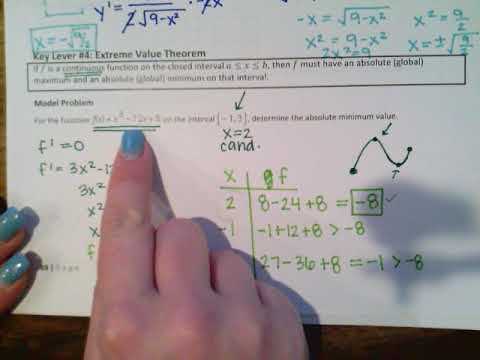
- Limits and continuity
- Differentiation and its applications
- Integrals and their applications
- Differential equations
- Applications of calculus to the physical world
- Formal definitions and theorems of calculus
Preparing for the AP Calculus AB final exam requires a thorough understanding of the topics covered, regular practice solving calculus problems, and familiarity with the format of the exam. Students should review their class notes, textbook, and other study resources to reinforce their knowledge and skills. Working through practice exams and timed mock exams can help students build their speed and accuracy in solving calculus problems. Additionally, seeking guidance from a teacher or tutor can provide valuable insights and feedback on areas that need improvement. With proper preparation and practice, students can feel confident and perform well on the AP Calculus AB final exam.
Key Concepts to Review

As you prepare for the AP Calculus AB final exam, it is important to review and master some key concepts that will be tested. These concepts form the foundation of calculus and understanding them will ensure your success on the exam. Here are some key concepts you should focus on:
1. Limits

Understanding limits is crucial in calculus as it forms the basis for many other concepts. Review the definition of a limit, how to find limits algebraically, graphically, and numerically, and how to evaluate limits at infinity. Be sure to also understand the concepts of one-sided limits and continuity.
2. Derivatives

Derivatives are at the core of calculus and are used to find rates of change, slopes of tangent lines, and to optimize functions. Review the definition of a derivative, the power rule, product rule, quotient rule, and chain rule. Be able to compute derivatives using these rules and understand their applications.
3. Integrals
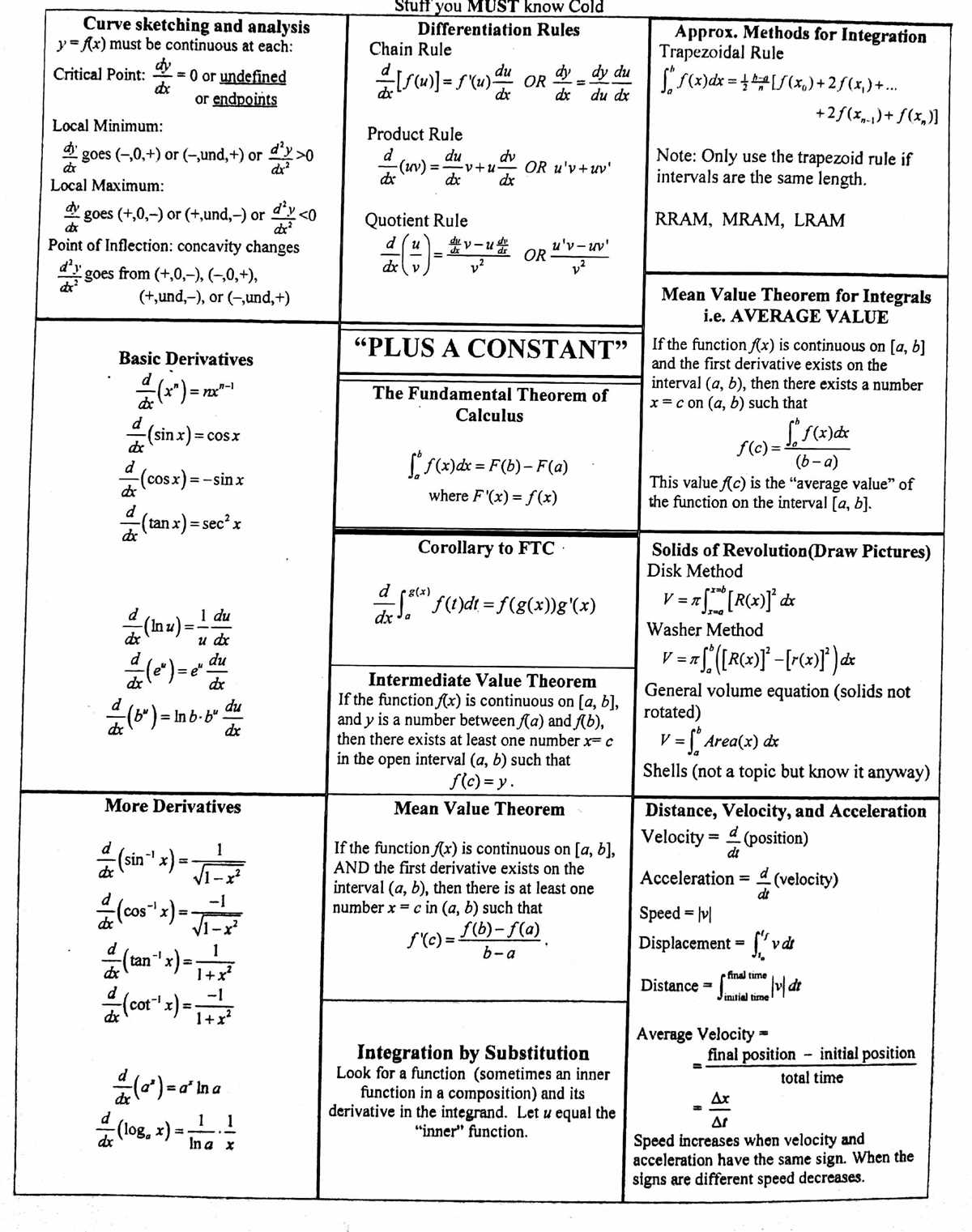
Integrals are used to find areas under curves, calculate net change, and solve differential equations. Review the definition of an integral, the fundamental theorem of calculus, and the different methods of integration such as substitution, integration by parts, and trigonometric substitutions. Practice evaluating definite and indefinite integrals.
4. Related Rates
Related rates problems involve finding the rate at which one quantity changes with respect to another. Review the steps involved in solving related rates problems and practice applying them to various scenarios, such as geometric shapes, rates of change, and physical problems.
5. Applications of Differentiation and Integration
Calculus is widely used in various fields to model and solve real-world problems. Review the applications of differentiation, such as optimization, curve sketching, and related rates. Also, review the applications of integration, such as finding areas, volumes, average values, and work.
- Make sure to practice solving a variety of problems that cover these key concepts, as this will help reinforce your understanding and improve your problem-solving skills. Additionally, review any formulas and theorems that are relevant to these concepts.
Practice Questions and Study Resources
Preparing for the AP Calculus AB final exam can be a daunting task, but with the right practice questions and study resources, you can feel confident and well-prepared. To excel in this subject, it is important to not only have a solid understanding of the concepts, but also to practice applying them to different problems and scenarios.
One of the best ways to practice for the final exam is to use a variety of practice questions. Practice questions can help you identify areas where you may need additional review and allow you to become familiar with the format and types of questions that may appear on the actual exam. Look for practice questions that cover a wide range of topics, including limits, derivatives, integrals, and applications of calculus.
Additionally, utilizing study resources such as textbooks, online videos, and review books can greatly enhance your understanding and retention of the material. Textbooks provide comprehensive explanations and examples, while online videos offer visual and interactive content to help reinforce key concepts. Review books often include practice exams and explanations, allowing you to simulate the exam experience and identify areas for improvement.
Top Practice Questions and Study Resources for AP Calculus AB:
- College Board’s AP Classroom: This online resource offers a wide range of practice questions and full-length exams specifically designed for the AP Calculus AB exam. It provides personalized feedback and scoring to help you track your progress.
- Calculus Exams: This website offers a collection of past AP Calculus AB exams, along with scoring guidelines and explanations. Working through these exams will give you a good sense of the types of questions that may appear on the final exam.
- Khan Academy: Khan Academy offers comprehensive video lessons and practice exercises for AP Calculus AB. Their step-by-step explanations make complex concepts easier to understand and their practice problems allow for targeted practice.
- AP Calculus AB Review Books: Review books such as “Cracking the AP Calculus AB Exam” and “Barron’s AP Calculus” are excellent resources for in-depth review and practice. They often include multiple practice exams and detailed explanations to help you fully grasp the material.
Remember, consistent practice and utilization of study resources are key to success on the AP Calculus AB final exam. By familiarizing yourself with practice questions and utilizing study resources, you will be well-prepared and confident on exam day.
Tips for Exam Preparation
Preparing for the Ap Calculus AB final exam requires a strategic approach to ensure success. Here are some tips to help you prepare effectively:
- Create a study schedule: Set aside dedicated time each day to review your notes, practice problems, and go over important concepts. Breaking down your study sessions into smaller, manageable chunks will help you retain information better.
- Review class notes: Go through your class notes and make sure you understand the key concepts and formulas. Focus on any areas where you may need additional clarification or practice.
- Practice with past exams: Familiarize yourself with the format and types of questions that may be asked on the exam by practicing with past exams. This will help you become more comfortable with the exam environment and identify any weak areas that need improvement.
- Seek help if needed: If you’re struggling with a particular topic or concept, don’t hesitate to seek help from your teacher, classmates, or online resources. Understanding the material thoroughly is crucial for success in the exam.
- Utilize resources: Make use of textbooks, online resources, and study guides to supplement your learning. These resources can provide additional explanations, practice problems, and tips for understanding difficult concepts.
- Stay organized: Keep all your study materials, notes, and practice problems in one place. This will help you stay organized and easily access the information you need during your study sessions.
- Take care of yourself: Maintain a healthy lifestyle by getting enough sleep, eating nutritious food, and exercising regularly. Taking care of your physical and mental well-being can improve your focus and concentration during studying and the exam.
By following these tips, you can approach your Ap Calculus AB final exam with confidence and increase your chances of achieving a successful outcome.
Strategies for Time Management

Time management is crucial for success in any task, especially when it comes to preparing for the Ap calculus ab final exam. With a limited amount of time available, it is important to plan and prioritize your study schedule wisely. This can be achieved through employing effective time management strategies that will maximize productivity and ensure adequate preparation for the exam.
Create a Study Schedule: Mapping out your study sessions is essential for efficient time management. Start by identifying the topics that require the most attention and allocate specific time slots to tackle them. It is important to set realistic goals for each study session and break them down into manageable chunks. Consider your peak concentration hours and try to schedule your most challenging tasks during those times.
Eliminate Distractions: Minimizing distractions is crucial for maintaining focus and optimizing study time. Clear your study space of any potential interruptions, such as noise, clutter, or electronic devices. Turn off notifications on your phone or put it on silent mode to avoid being tempted by social media or other distractions. Consider using productivity apps or website blockers to limit access to distracting websites during study sessions.
Utilize Effective Study Techniques: Adopting effective study techniques will not only save time but also enhance understanding and retention of the material. Actively engage with the content through practices like summarizing, highlighting important points, and explaining concepts to yourself or others. Practice past exams or problems to familiarize yourself with the format and identify areas that need further improvement. Collaborate with classmates or join study groups to exchange ideas and gain additional insights.
Take Regular Breaks: While it may seem counterintuitive, taking regular breaks can actually improve productivity and prevent burnout. Research shows that short breaks between study sessions can help refresh the mind and enhance focus. Plan short breaks every hour or so, and use them to relax, stretch, or engage in enjoyable activities. Use a timer or a pomodoro technique to ensure that breaks do not extend beyond the scheduled time.
Review and Reflect: Allocate time for regular review and reflection to reinforce learning and identify areas that need further attention. Set aside some time at the end of each study session or day to review the material covered and reflect on your progress. This will help consolidate your understanding and identify any gaps in your knowledge that require additional study.
By implementing these strategies for time management, you can effectively utilize your study time and ensure optimal preparation for the Ap calculus ab final exam. Remember that each person’s study routine and preferences may differ, so it is important to find what works best for you and adapt these strategies accordingly.
Test-Taking Tips and Techniques
When it comes to taking the AP Calculus AB final exam, preparation is key. By implementing some proven test-taking tips and techniques, you can enhance your performance and increase your chances of success. Here are some tips to keep in mind:
1. Start studying early
Don’t wait until the last minute to start studying for the exam. Give yourself ample time to review the material and practice solving calculus problems. Create a study schedule that allows you to cover all the necessary topics and stick to it.
2. Understand the format of the exam

Familiarize yourself with the structure and content of the AP Calculus AB final exam. Be aware of the number of multiple-choice and free-response questions, the time limits for each section, and the distribution of topics. This understanding will help you allocate your time effectively and strategically approach each question.
3. Practice under timed conditions
Simulate the exam environment by practicing under timed conditions. Set a timer and attempt full-length practice tests to improve your time management skills. This will help you develop a sense of how long you should spend on each question and avoid getting stuck on difficult problems.
4. Review past exams

Go through past AP Calculus AB exams to get a sense of the types of questions that are typically asked. Pay attention to the wording, the level of difficulty, and the topics covered. Understanding the exam’s pattern and style will enable you to better anticipate the types of questions you might encounter.
5. Seek clarification
If there are any concepts or topics that you’re struggling with, don’t hesitate to seek clarification from your teacher or classmates. Utilize available resources such as online study guides, forums, and textbooks to deepen your understanding of the material. Clearing up any doubts before the exam will boost your confidence and improve your performance.
6. Take care of yourself
Lastly, remember to take care of yourself physically and mentally. Get enough sleep, eat nutritious meals, and engage in activities that help you relax and destress. Taking care of your well-being will ensure that you’re in the best possible condition to tackle the exam.
By following these test-taking tips and techniques, you’ll be well-prepared to ace your AP Calculus AB final exam. Keep a positive mindset, stay focused, and trust in your abilities. Good luck!