10 Essential Tips for Acing Your AP Calculus AB Final Exam Review

Preparing for the AP Calculus AB final exam can be a challenging task. This comprehensive exam covers the entire range of topics that students have learned throughout the school year. It is crucial for students to review all the material thoroughly and gain a solid understanding of the concepts to excel in the exam.
One key aspect of preparing for the AP Calculus AB final exam is to review the different types of functions and their properties. This includes polynomial functions, exponential functions, logarithmic functions, and trigonometric functions. Understanding how these functions behave, their graphs, and their application in real-life scenarios is essential for success on the exam.
Another important area of focus is differentiation and integration. Students should be able to compute derivatives and antiderivatives using various techniques such as the power rule, chain rule, and integration by substitution. They should also be familiar with the concept of the definite integral and its application in calculating area, volume, and accumulation.
Additionally, students should review the applications of calculus in optimization problems, related rates, and differential equations. These topics often require a deep understanding of calculus concepts and their practical implications. Students should practice solving a variety of problems in these areas to build their problem-solving skills.
What to Expect on the AP Calculus AB Final Exam
As the end of the school year approaches, it’s time to start preparing for the AP Calculus AB final exam. This exam is designed to test your understanding of the topics covered throughout the course and assess your ability to apply calculus concepts to solve problems.
The exam is divided into two sections:
- Multiple-Choice Questions: This section consists of 45 multiple-choice questions that cover a range of topics, including limits, derivatives, integrals, and applications of calculus. You will need to carefully read each question and select the correct answer from the options provided.
- Free-Response Questions: This section consists of 6 free-response questions that require you to show your work and provide a written explanation of your solution. These questions are more in-depth and often involve problem-solving scenarios. It is important to demonstrate your understanding of calculus concepts and your ability to apply them effectively.
Here are some tips to help you prepare:
- Review the Course Material: Take the time to go over your notes, textbook chapters, and any additional resources provided throughout the course. Make sure you understand the key concepts and can solve practice problems.
- Practice Past Exams: Look for past AP Calculus AB exams and practice solving the multiple-choice and free-response questions. This will give you an idea of what to expect on the actual exam and help you identify areas that need improvement.
- Seek Help if Needed: If you are struggling with certain topics or concepts, don’t hesitate to reach out to your teacher, classmates, or online resources for help. Understanding the material is crucial for success on the exam.
- Manage Your Time: The AP Calculus AB exam is timed, so it is important to practice working under time constraints. This will help you develop strategies for effectively allocating your time during the exam.
- Stay Calm and Confident: Exam day can be stressful, but it is important to stay calm and confident in your abilities. Trust in the preparation you have done and approach each question with a clear and focused mindset.
By following these tips and putting in the necessary time and effort to prepare, you can increase your chances of performing well on the AP Calculus AB final exam. Remember to stay focused, stay positive, and believe in yourself!
Overview of the AP Calculus AB Exam

The AP Calculus AB Exam is a comprehensive assessment of students’ knowledge and skills in calculus. It is administered by the College Board and is designed to measure a student’s understanding of the concepts and techniques of calculus, as well as their ability to apply these concepts to solve problems.
The exam is divided into two sections: a multiple-choice section and a free-response section. The multiple-choice section consists of 45 questions, while the free-response section consists of six questions. The exam covers a wide range of topics, including limits and continuity, derivatives, integrals, and applications of calculus.
Multiple-Choice Section: The multiple-choice section of the exam assesses students’ ability to analyze and apply calculus concepts. It includes questions that require students to evaluate limits, find the derivative or integral of a function, and solve problems using calculus techniques. Students must also demonstrate their understanding of the fundamental theorems of calculus and their ability to apply them to solve problems.
Free-Response Section: The free-response section of the exam allows students to demonstrate their problem-solving skills and their ability to communicate their mathematical reasoning. It includes both short-answer and long-answer questions, such as finding the equation of a tangent line, solving an optimization problem, or evaluating an integral. Students are expected to show their work and provide clear explanations for their solutions.
Overall, the AP Calculus AB Exam is a challenging assessment that requires a thorough understanding of calculus concepts and problem-solving skills. It is important for students to prepare by reviewing key concepts, practicing problem-solving techniques, and familiarizing themselves with the format of the exam. By doing so, students can maximize their chances of success on the exam and demonstrate their readiness for college-level calculus courses.
Reviewing Basic Calculus Concepts
As you prepare for your AP Calculus AB final exam, it’s important to review the basic calculus concepts that form the foundation of the course. These concepts include limits, derivatives, and integrals, which are fundamental to understanding the principles of calculus.
Limits: Limits are an essential concept in calculus that help us understand the behavior of functions as they approach a certain value. They allow us to analyze the behavior of functions at specific points and determine their continuity. Limits also play a crucial role in finding derivatives and integrals.
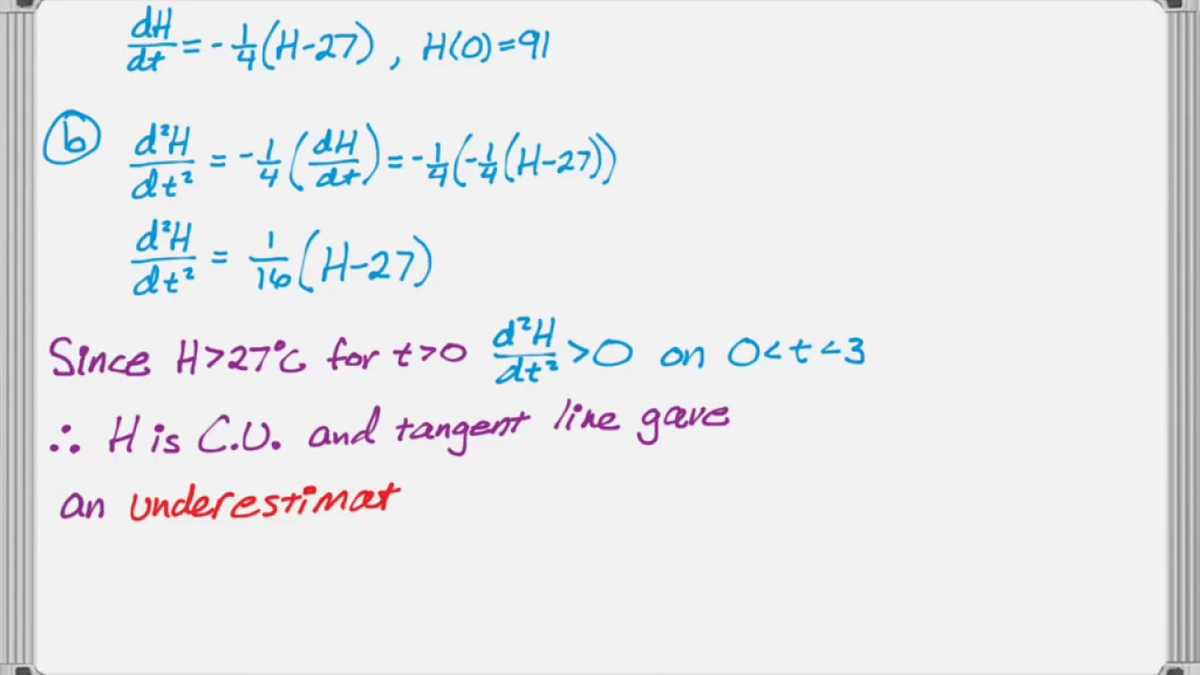
Derivatives: Derivatives are an integral part of calculus and are used to determine the rate of change of a function at any given point. They provide insights into the slope of a curve and the concavity of graphs. The derivative of a function can be found using different methods, such as the power rule, product rule, and chain rule.
Integrals: Integrals are another core concept in calculus that are used to calculate the area under a curve. They allow us to find the total accumulation of a quantity over a given interval. The definite integral gives a precise numeric value, while the indefinite integral represents a family of functions that differ by a constant.
Key Takeaways:
- Limits help analyze the behavior of functions at specific points.
- Derivatives determine the rate of change and the slope of a graph.
- Integrals calculate the area under curves and represent the accumulation of quantities.
By reviewing these basic calculus concepts, you will strengthen your understanding and be better prepared for your AP Calculus AB final exam.
Tips for Mastering Differential Calculus
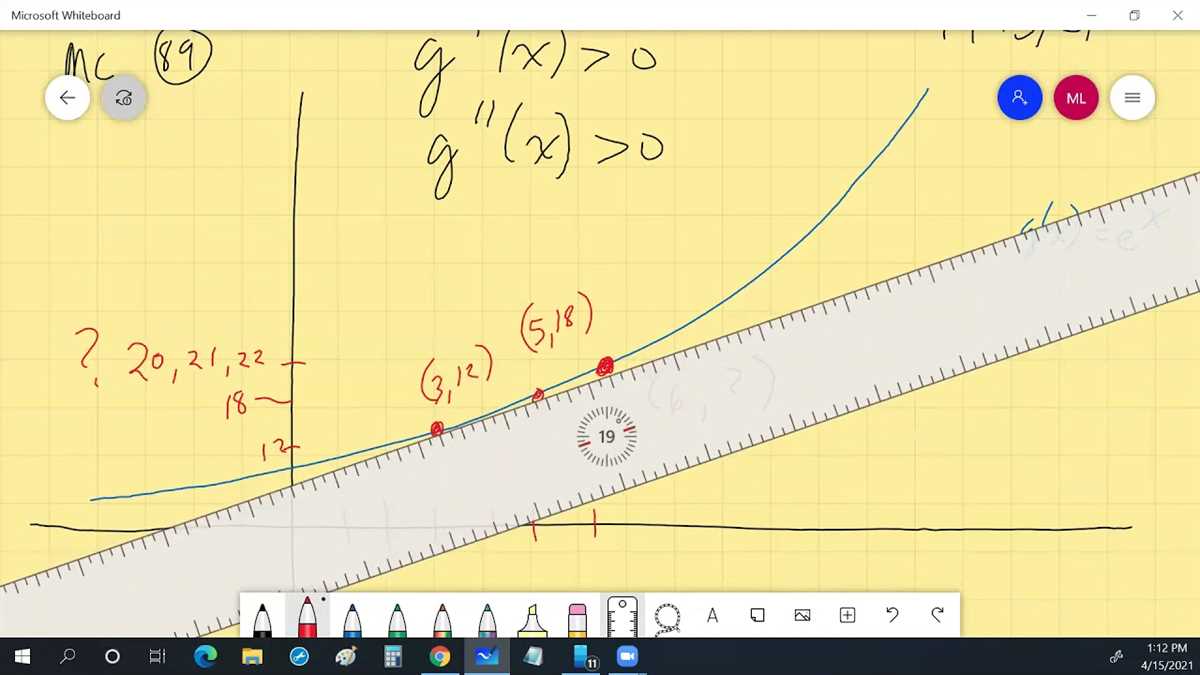
Differential calculus is an essential branch of mathematics that focuses on the study of rates of change and slopes of curves. This branch can be quite challenging, but with the right approach and practice, mastering differential calculus is achievable.
1. Understand the Basic Concepts: Start by familiarizing yourself with the fundamental concepts of differential calculus, such as limits, derivatives, and the chain rule. These concepts serve as building blocks for more complex problems.
2. Practice with Different Types of Problems: Try to solve a variety of problems that involve different functions, such as polynomials, trigonometric functions, and exponential functions. This will help you develop a deeper understanding of how to apply differential calculus principles to various scenarios.
3. Use the Power Rule: The power rule is a useful tool in differential calculus that allows you to find the derivative of a polynomial function. Memorizing and practicing this rule will save you time and help you quickly find the derivatives of polynomial functions.
4. Master the Chain Rule: The chain rule is an important technique used to find the derivative of composite functions. Understanding and applying the chain rule correctly is essential for solving complex differential calculus problems.
5. Practice Differentiation Techniques: Familiarize yourself with various differentiation techniques, such as implicit differentiation, logarithmic differentiation, and related rates. Practice solving problems that involve these techniques to improve your skills.
6. Review Algebra and Trigonometry: Differential calculus often requires a strong foundation in algebra and trigonometry. Review these subjects to ensure you have a solid understanding of the underlying concepts and can apply them effectively in differential calculus problems.
7. Seek Help and Resources: If you struggle with certain concepts or problems, don’t hesitate to seek help from your teacher, classmates, or online resources. There are plenty of video tutorials and practice problems available to aid in your understanding of differential calculus.
8. Practice, Practice, Practice: Like any skill, mastering differential calculus requires practice. Continuously work on solving problems and challenging yourself with new concepts. The more you practice, the more comfortable you will become with differential calculus.
By following these tips and dedicating time and effort to study and practice, you can become proficient in differential calculus. Remember to stay patient and persistent, as mastering this branch of mathematics may take time, but the rewards are well worth it.
Strategies for Success in Integral Calculus
Integral calculus is an important branch of mathematics that deals with the concept of integration. It is essential for students to develop effective strategies to master this subject and achieve success in their final exams. Here are some strategies that can help:
1. Understand the Fundamentals:
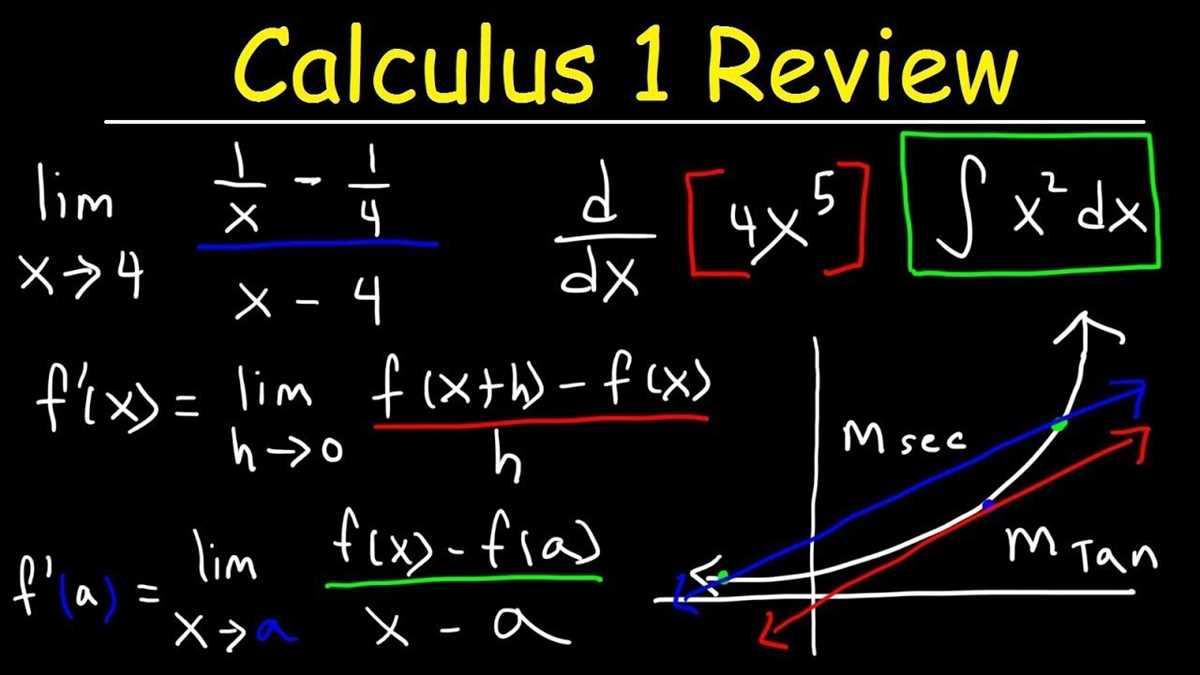
A strong foundation in basic calculus concepts such as limits, derivatives, and antiderivatives is crucial for success in integral calculus. Take the time to thoroughly understand these fundamental concepts, as they form the building blocks for more advanced topics in integration.
2. Practice Regularly:
Regular practice is key to mastering integral calculus. Solve a variety of integration problems, both from textbooks and other sources, to strengthen your problem-solving skills. Working through different types of problems will help you become familiar with the various techniques and approaches used in integration.
3. Review and Understand the Different Techniques:
Integral calculus involves several techniques, such as substitution, integration by parts, partial fractions, trigonometric substitutions, and more. Make sure to review and understand each technique thoroughly. Practice applying these techniques to different types of problems, so that you can quickly identify which technique to use in a given situation.
4. Learn from Mistakes:
It is natural to make mistakes while solving integration problems. Instead of getting discouraged, learn from your mistakes. Analyze where you went wrong and understand the correct approach. This will not only help you avoid similar mistakes in the future but also deepen your understanding of the concepts.
5. Seek Help and Collaborate:
If you find yourself struggling with certain concepts or problems, don’t hesitate to seek help. Reach out to your teacher, classmates, or online resources for clarification. Collaborating with others can provide different perspectives and insights that can enhance your understanding of integral calculus.
6. Review and Practice Previous Exams:
Reviewing previous exams and quizzes can give you an idea of the types of questions that may appear on your final exam. Practice solving these problems under exam-like conditions to familiarize yourself with the format and time constraints. This will boost your confidence and help you perform better on the actual exam.
By following these strategies and putting in consistent effort, you can improve your skills in integral calculus and excel in your final exam.
Preparing for the Free Response Section

As the AP Calculus AB final exam approaches, it is important to allocate sufficient time to prepare for the free response section. This section of the exam requires students to apply their knowledge and skills to solve complex problems, which can be daunting for many. However, with proper preparation and practice, students can develop the confidence and proficiency needed to excel in this section.
1. Familiarize yourself with the format: The free response section of the AP Calculus AB exam consists of six questions, which need to be completed within 90 minutes. These questions may require students to solve problems using calculus concepts such as differentiation, integration, and application of calculus to real-life scenarios.
2. Review key concepts: In order to perform well in the free response section, it is crucial to have a strong understanding of key calculus concepts. Review topics such as limits, derivatives, integrals, and their applications. Make sure to revisit any areas where you may feel less confident and practice solving related problems.
3. Practice past exam questions: One of the most effective ways to prepare for the free response section is to practice solving past exam questions. This will not only familiarize you with the types of problems you may encounter but also help you identify areas where you may need additional practice. Set aside dedicated study sessions to work on these questions, and aim to improve your speed and accuracy with each practice session.
4. Develop a problem-solving strategy: To maximize your efficiency during the exam, it is important to develop a problem-solving strategy. This may involve breaking down complex problems into smaller, more manageable steps, utilizing appropriate calculus techniques, and clearly communicating your solutions. Practice applying this strategy to various types of calculus problems to refine your approach.
5. Seek additional resources: If you find yourself struggling with certain concepts or types of problems, don’t hesitate to seek additional resources. There are numerous online tutorials, video lessons, and study guides available that can provide extra support and clarify any misunderstandings. Utilize these resources to reinforce your understanding and improve your performance in the free response section.
By dedicating time to thoroughly understand the format, reviewing key concepts, practicing past exam questions, developing a problem-solving strategy, and seeking additional resources, you can effectively prepare for the free response section of the AP Calculus AB final exam. Remember, practice and persistence are key to success in this section, so keep practicing and stay confident!
Final Exam Study Tips and Resources

Preparing for your final exam in AP Calculus AB can be a daunting task, but with the right study tips and resources, you can feel confident and well-prepared. Here are some tips to help you succeed:
- Start Early: Begin studying well in advance of your exam. Cramming the night before will not lead to long-term retention of the material.
- Create a Study Schedule: Organize your study time by creating a schedule that outlines specific topics to review each day. This will help you stay focused and ensure you cover all the necessary content.
- Utilize Practice Exams: Take advantage of past exams or practice questions provided by your teacher or online resources. These will familiarize you with the format and types of questions you may encounter on the actual exam.
- Review Class Notes: Go through your class notes and highlight key concepts and formulas. Take the time to understand them thoroughly and practice applying them to different problems.
- Seek Help: If you’re struggling with certain topics, don’t hesitate to seek help from your teacher, classmates, or online resources. Understanding the material is crucial for success on the exam.
Additionally, here are some resources that can further assist you in your studying:
- Textbook: Refer to your AP Calculus AB textbook for detailed explanations and practice problems.
- Online Videos: Watch instructional videos on platforms like Khan Academy or YouTube to reinforce your understanding of key concepts.
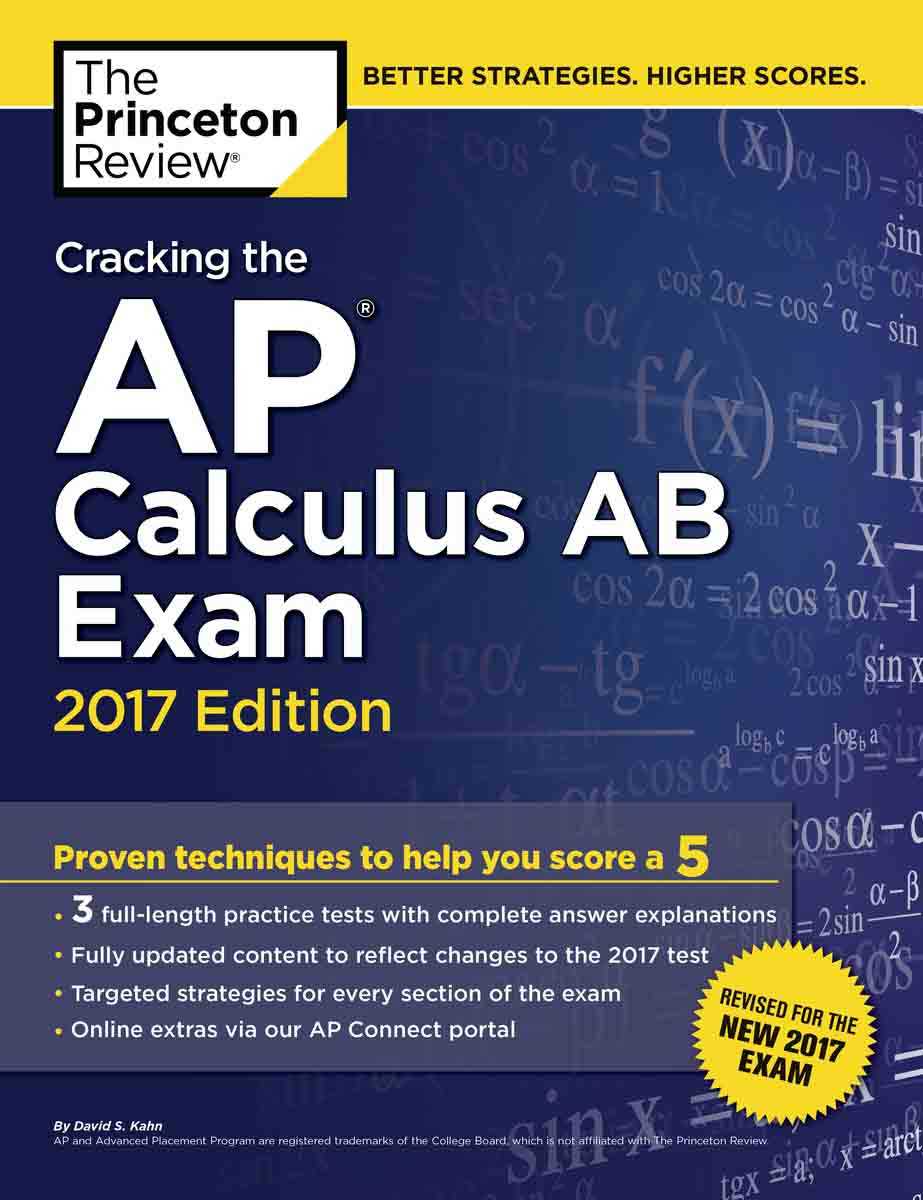
- Review Books: Use review books specifically designed for AP Calculus AB, such as “Cracking the AP Calculus AB Exam” or “5 Steps to a 5: AP Calculus AB 2021” to further supplement your studying.
Remember, the key to success on your final exam lies in consistent and thorough preparation. Use these study tips and resources to guide your review and increase your chances of achieving a high score on the AP Calculus AB exam. Good luck!