Unlock Your Success: A Comprehensive Guide to Acing Your AP Gov Final Exam
As the end of the school year approaches, many high school seniors are faced with the daunting task of studying for their AP Government final exams. These exams are designed to test students’ understanding of the concepts and principles learned throughout the course, and they can be challenging for even the most dedicated students.
Fortunately, there are several strategies that students can use to prepare for their AP Government final exams. One of the most important steps is to review all of the material covered in class. This may involve going back through your notes, reading your textbook, or even watching online lectures or tutorials. It’s also a good idea to work through any practice problems or review questions provided by your teacher.
In addition to reviewing the material, it’s important to familiarize yourself with the format of the exam. The AP Government final exam typically consists of multiple-choice questions, short-answer questions, and an essay. By practicing with sample questions and reviewing the scoring guidelines, you can become more comfortable with the types of questions you’ll be asked and develop an effective strategy for approaching each section of the exam.
Finally, it’s important to take care of your physical and mental health during the exam review process. Make sure you’re getting enough sleep, eating nutritious meals, and taking breaks to relax and recharge. Overworking yourself can lead to burnout and make it difficult to retain information. By taking care of yourself, you’ll be better equipped to stay focused and perform well on your AP Government final exam.
What to Expect on Your AP Government Final Exam

Preparing for your AP Government final exam can be a daunting task, but understanding what to expect can help alleviate some of the stress. The exam will test your knowledge and understanding of the key concepts and principles of American government and politics. It will assess your ability to analyze and interpret various sources, including documents, data, and visuals. Additionally, the exam will evaluate your critical thinking skills by requiring you to apply your knowledge to real-world scenarios.
One important aspect of the AP Government final exam is the multiple-choice section. This section consists of questions that require you to demonstrate your understanding of foundational concepts and theories. It is important to review key terms, concepts, and historical events in order to succeed in this section. Familiarize yourself with the format of the multiple-choice questions and practice answering them to improve your speed and accuracy.
The free-response section of the exam will test your ability to formulate and articulate a cohesive argument. You will be asked to analyze and interpret primary and secondary sources, and construct well-supported arguments in response to specific prompts. It is crucial to practice writing clear and concise essays, as well as mastering the required formatting and citation styles.
- Key Tips for Success:
- Review key terms, concepts, and historical events
- Practice answering multiple-choice questions
- Polish your essay writing skills
- Master the required formatting and citation styles
- Utilize available study resources, such as textbooks and online practice exams
In conclusion, the AP Government final exam will assess your knowledge and understanding of American government and politics. By knowing what to expect and preparing accordingly, you can increase your chances of success. Remember to review key concepts, practice answering multiple-choice questions, and hone your essay writing skills. Good luck!
The Foundations of American Government

When studying the foundations of American government, it is important to understand the key principles and values that shaped the nation’s political system. One of the fundamental ideas that influenced the creation of the American government is the concept of popular sovereignty. This means that the power of the government comes from the consent of the governed.
Another crucial aspect of American government is the separation of powers. The Founding Fathers were inspired by the ideas of Montesquieu, who advocated for the division of government into three branches: legislative, executive, and judicial. This separation of powers helps to prevent any one branch from becoming too powerful and ensures a system of checks and balances.
- Popular sovereignty: The power of the government comes from the consent of the governed.
- Separation of powers: The government is divided into three branches to prevent any one branch from becoming too powerful.
Additionally, the Founding Fathers were influenced by Enlightenment principles, such as natural rights and social contract theory. They believed that individuals have inherent rights, including life, liberty, and property, and that governments should protect these rights. This idea is reflected in the Declaration of Independence, which asserts that all men are created equal and have the right to pursue happiness.
The Constitution of the United States serves as the foundation and framework of American government. It establishes the structure of the government, enumerates the powers of each branch, and outlines the rights and freedoms of the people. It also includes a system of federalism, where power is divided between the national government and state governments.
In conclusion, the foundations of American government are rooted in the principles of popular sovereignty, the separation of powers, and the protection of individual rights. These concepts, along with the Constitution, form the basis of the American political system and continue to shape the country’s governance today.
The Constitution and its Amendments
The Constitution of the United States is the fundamental law of the country. It sets out the framework and basic principles of the government, and establishes the rights and freedoms of the people. The Constitution is a living document that can be amended to adapt to changing times and needs. Over the years, several amendments have been added to the Constitution to expand and clarify the rights of individuals, protect against government abuse, and address important societal issues.
One of the most significant amendments to the Constitution is the First Amendment, which guarantees the freedom of speech, religion, press, assembly, and petition. This amendment ensures that individuals have the right to express their opinions and beliefs, practice their chosen religion, and peacefully assemble to protest or advocate for change. The First Amendment is essential for maintaining a free and democratic society, as it allows for the open exchange of ideas and the checks and balances necessary to hold the government accountable.
- The Fourteenth Amendment is another crucial addition to the Constitution that guarantees equal protection under the law. It prohibits states from denying any person within their jurisdiction the equal protection of the laws and ensures that all individuals are treated fairly and equally by the government. The Fourteenth Amendment has been instrumental in advancing civil rights and combating discrimination, particularly in areas such as race, gender, and sexual orientation.
- The Second Amendment is a highly debated and often controversial amendment that protects the right to bear arms. It grants individuals the right to own and possess firearms, subject to reasonable regulation. The interpretation of this amendment has been the subject of ongoing legal and political discussion, as some argue for stricter gun control measures to prevent violence, while others emphasize the importance of individual self-defense and the right to bear arms.
- Other significant amendments include the Fourth Amendment, which protects against unreasonable searches and seizures; the Fifth Amendment, which guarantees due process and protection against self-incrimination; and the Eighth Amendment, which prohibits cruel and unusual punishment. These amendments, along with others, help safeguard individual rights and ensure that the government operates within the bounds of the law.
In conclusion, the Constitution and its amendments form the foundation of the United States government and protect the rights and freedoms of its citizens. These amendments have evolved over time to address changing societal needs and challenges, and continue to shape the laws and principles of the nation. Understanding and upholding the Constitution is essential for maintaining a just and democratic society.
Federalism and the Division of Power
The concept of federalism is fundamental to the structure of the United States government. It is the division of power between the national government and the state governments. This division is enshrined in the Constitution, which specifies certain powers that are reserved for the federal government, while leaving other powers to the states. This system of dividing power ensures a balance of power between the national and state governments, preventing any one level of government from becoming too powerful.
One of the key features of federalism is the idea of dual sovereignty. This means that both the federal government and the state governments have their own spheres of authority and can enact laws and regulations within those spheres. The federal government has enumerated powers, which are specifically listed in the Constitution, such as the power to regulate interstate commerce and declare war. The states, on the other hand, have reserved powers, which are not delegated to the federal government and are not prohibited by the Constitution.
- Key Phrases:
- – Federalism: division of power between national and state governments
- – Constitution determines powers of each level of government
- – Dual sovereignty: federal and state governments have their own spheres of authority
- – Enumerated powers: specifically listed powers of federal government
- – Reserved powers: powers not delegated to federal government and not prohibited by Constitution
The Branches of Government
The United States government is divided into three main branches: the executive branch, the legislative branch, and the judicial branch. Each branch has its own unique responsibilities and powers, which are outlined in the U.S. Constitution.
The executive branch, headed by the President, is responsible for enforcing and carrying out the laws. The President is elected by the people and serves as the head of state and commander-in-chief of the military. The executive branch also includes the Vice President and the President’s cabinet, which is made up of department heads who advise the President on policy matters and oversee specific areas of government.
The legislative branch, also known as Congress, is responsible for making the laws. It is composed of two houses: the Senate and the House of Representatives. The Senate has equal representation for each state with two senators per state, while the House of Representatives has representation based on each state’s population. Congress has the power to pass laws, declare war, and regulate commerce, among other responsibilities.
The judicial branch, headed by the Supreme Court, is responsible for interpreting the laws and ensuring that they are constitutional. The Supreme Court is the highest court in the land and has the power to declare laws and actions of the government as unconstitutional. The judicial branch also includes lower federal courts and state courts, which handle various types of cases.
Overall, the three branches of government work together to ensure a system of checks and balances, where no one branch has too much power. This system is designed to protect the rights and freedoms of the American people and uphold the principles of democracy.
Civil Liberties and Rights

Civil liberties and rights are fundamental principles that protect individuals from government interference and ensure their basic freedoms and equality. These principles are outlined in the United States Constitution and its amendments. They are essential for maintaining a democratic society and protecting citizens from abuse of power.
One of the key civil liberties is freedom of speech. The First Amendment guarantees the right to express oneself and communicate ideas without censorship or punishment from the government. This includes the freedom to protest, criticize the government, and advocate for social change. However, there are limits to this right, such as speech that incites violence or poses a clear and present danger to public safety.
Another important civil liberty is the freedom of religion. The First Amendment also protects individuals’ rights to practice their chosen religion, or to have no religion at all. This ensures that the government cannot establish a national religion or discriminate against individuals based on their religious beliefs. However, this does not mean that religious practices can infringe on the rights of others or break the law.
In addition to civil liberties, civil rights are protections against discrimination and ensure equal treatment under the law. These rights are essential for marginalized groups that have historically faced systemic oppression and discrimination. Examples of civil rights include the right to vote, the right to equal protection under the law, and the right to be free from discrimination based on race, gender, or sexual orientation.
- Civil liberties and rights are fundamental principles that protect individuals.
- Freedom of speech is a key civil liberty.
- Freedom of religion is another important civil liberty.
- Civil rights ensure equal treatment under the law.
Overall, civil liberties and rights are crucial for maintaining a just and equitable society. They allow individuals to freely express themselves, practice their chosen religion, and be treated equally under the law. These principles are constantly being tested and debated, and it is the responsibility of both the government and the citizens to uphold and defend them.
Public Policy and Political Participation
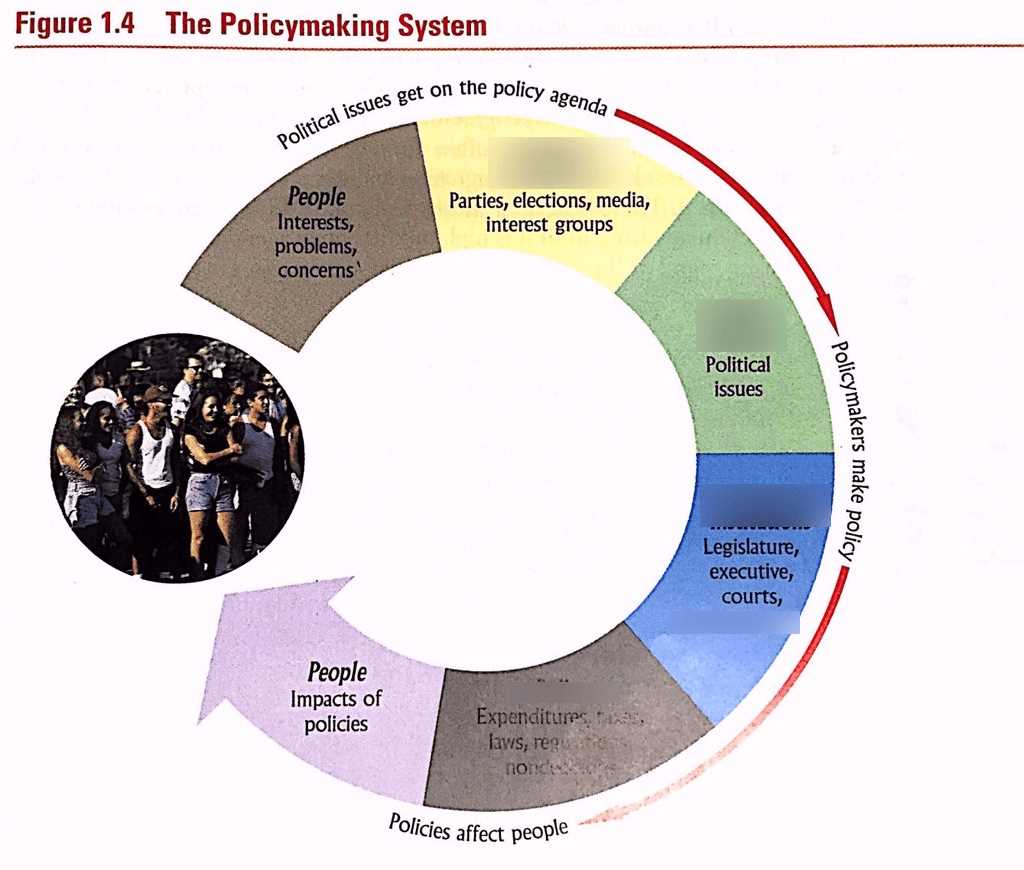
Public policy refers to the decisions and actions taken by government officials to address societal problems and promote the general welfare. It encompasses a wide range of issues, including healthcare, education, the economy, and social justice. Public policy is shaped by a variety of factors, including public opinion, interest groups, and political parties. It plays a crucial role in shaping the functioning of a democratic society.
Political participation, on the other hand, refers to the active involvement of citizens in the political process. It includes activities such as voting, contacting elected officials, participating in protests and demonstrations, and joining political organizations. Political participation is essential for a healthy democracy, as it allows citizens to have a voice in the decision-making process and hold their elected officials accountable.
In conclusion, public policy and political participation are intertwined and crucial components of a functioning democracy. Public policy determines the course of action taken by the government to address societal issues, while political participation allows citizens to have a say in the decision-making process. Both are essential for shaping the policies and direction of a country and ensuring that the needs and interests of all citizens are taken into account.
Q&A:
What is public policy?
Public policy refers to the set of decisions and actions taken by governments or other authoritative bodies to address public issues or problems. It is the result of a political process and aims to achieve specific goals for the betterment of society.
What is political participation?
Political participation refers to the involvement of individuals or groups in the political process. It can take various forms, such as voting in elections, joining political parties, attending public meetings, and engaging in political activism. Political participation is essential for a functioning democracy, as it allows citizens to have a voice in shaping public policy and holding government officials accountable.
Why is public policy important?
Public policy is important because it has a direct impact on the lives of individuals and communities. It helps address societal challenges, promote social welfare, and ensure the efficient functioning of government institutions. Public policy also plays a role in shaping the economy, protecting the environment, and promoting equity and social justice.
How can individuals participate in public policy making?
Individuals can participate in public policy making by engaging in various activities. This includes staying informed about current issues, attending public hearings and meetings, contacting elected officials, joining advocacy groups, and participating in public consultations and surveys. By voicing their concerns and opinions, individuals can influence policy decisions and contribute to the democratic process.
What are some challenges to political participation?
There are several challenges to political participation, including voter apathy, unequal access to political resources and information, and various forms of discrimination and exclusion. Lack of trust in political institutions, as well as perceived inefficiency or corruption, can also discourage individuals from actively participating in politics. Overcoming these challenges is important for ensuring broader and more inclusive political participation.