Ap us history practice exam answer key

For those aiming to enhance their understanding of key topics in American social and political development, reviewing responses from past multiple-choice and essay sections is fundamental. The solutions provided here will help pinpoint the areas that need further attention, as well as clarify any mistakes made in prior attempts.
Pay special attention to explanations of complex political theories and movements. These often appear in both objective questions and longer written tasks, where you must demonstrate the ability to connect historical events to their long-term impacts. Focus on clarifying the reasoning behind each correct option, especially when dealing with questions regarding constitutional interpretations or landmark Supreme Court cases.
Also, understanding how questions are structured is crucial. Recognizing patterns in question formats can offer insights into the types of information you should prioritize in your study sessions. With practice, you’ll be better equipped to handle the pressure of time limits during the actual assessment.
AP US History Practice Exam Answer Key

Review the following responses to ensure a strong grasp of key concepts and improve your performance. Check your responses thoroughly with the provided solutions for accurate self-assessment.
| Question | Correct Response |
|---|---|
| 1. Which event marked the beginning of the American Revolution? | The Battles of Lexington and Concord |
| 2. What was the main reason for the creation of the Bill of Rights? | To protect individual liberties from government infringement |
| 3. The Monroe Doctrine was primarily aimed at which region? | Latin America |
| 4. Which Supreme Court case established the principle of judicial review? | Marbury v. Madison |
| 5. What was the purpose of the Homestead Act of 1862? | To encourage settlement of the western territories by offering land to settlers |
| 6. What did the Emancipation Proclamation accomplish? | It declared the freedom of slaves in the Confederate states |
| 7. The main goal of the Progressive Movement was to: | Address the social and political issues caused by industrialization |
| 8. Which amendment granted women the right to vote? | The 19th Amendment |
| 9. What was the significance of the Supreme Court’s decision in Brown v. Board of Education? | It declared racial segregation in public schools unconstitutional |
| 10. The 1964 Civil Rights Act aimed to: | End segregation and discrimination in public places and employment |
Carefully verify your results, and focus on any areas that may need further attention. This review is a key step towards mastering the material and succeeding in your assessments.
Understanding Key Terms and Concepts in AP US History Exams

Focus on mastering specific terms related to the political, social, and economic developments that shaped the nation. Concentrate on understanding the meaning and implications of phrases like “Federalism,” “Manifest Destiny,” and “Checks and Balances.” These will provide the context for various events, laws, and systems crucial to the country’s formation and expansion.
Be familiar with the major movements and ideologies such as “Progressivism,” “Reconstruction,” and “Civil Rights.” Recognizing the key figures associated with these movements, like Theodore Roosevelt or Martin Luther King Jr., will help you connect ideas to their historical impact.
Memorize the names of significant legislation and Supreme Court decisions, such as the “Homestead Act” or “Brown v. Board of Education.” These legal milestones will demonstrate your understanding of how laws shaped the nation’s trajectory over time.
Understand economic terms, like “Capitalism,” “Mercantilism,” and “Laissez-faire,” and how they relate to historical events such as the rise of industrialization and the Great Depression. Linking these ideas to real-world examples enhances comprehension and analysis skills.
Finally, be prepared to apply your understanding of these terms to interpret political cartoons, speeches, and documents. Recognizing the historical significance of primary sources will allow you to contextualize key moments in time more effectively.
Common Mistakes to Avoid in AP US History Practice Exams
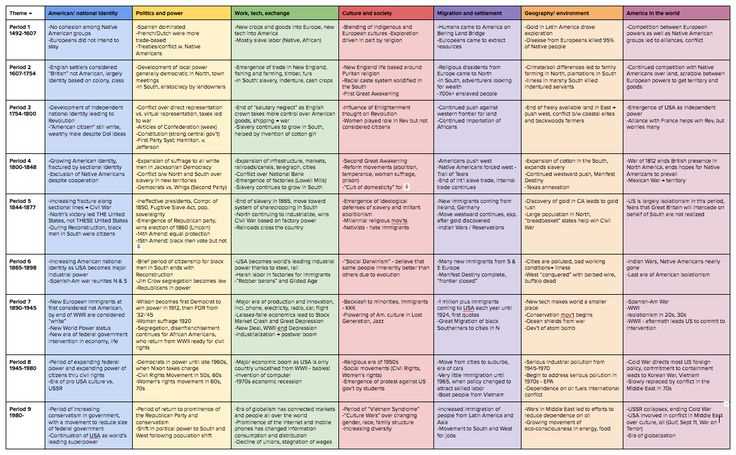
Avoid rushing through multiple-choice questions. Carefully read each option, as small details can change the meaning of the response. Take time to evaluate each statement instead of relying on gut feelings.
Do not focus only on memorization. Understanding the causes and effects of significant events is more effective than rote memorization. Connect ideas and identify patterns rather than just recalling isolated facts.
Misunderstanding the time frame of events can lead to incorrect answers. Be sure to recognize the chronological order of important developments. Review key dates and time periods to prevent confusion between different historical eras.
Skipping the analysis of the questions is another common error. Pay attention to keywords in the prompts that direct you toward specific information. Often, the wording will hint at what is being asked and how to respond.
Avoid second-guessing your choices. Once you’ve made a decision, stick with it unless you are certain you made a mistake. Changing answers frequently often leads to confusion or incorrect selections.
Do not ignore the context of the question. Understanding the broader political, social, and economic environments will help you choose the most accurate response. Keep the big picture in mind as you analyze each option.
Ensure that you manage your time properly. Spending too much time on one question can prevent you from completing the entire section. Set aside enough time to revisit questions you may want to reconsider later.
How to Analyze Multiple-Choice Questions in AP US History
Focus on the keywords within the question to identify the central concept. Scan for terms that point to a specific period, event, or individual, and make sure you understand their significance. When reviewing the options, eliminate answers that are clearly irrelevant to the main topic. Prioritize choices that directly relate to the context described in the prompt. Consider the historical context of the question: a strong understanding of major themes, such as political, economic, or social changes, will help you eliminate wrong choices. Pay attention to absolutes like “always” or “never,” which are often indicators of incorrect answers.
Look for subtle differences between the options. If two answers seem similar, identify specific distinctions between them–often the more precise answer is the correct one. Use your knowledge of key events or figures to weigh the most plausible response. Keep in mind the overarching trends and outcomes in U.S. events to assess which answer fits most accurately.
For further practice and guidance, visit the College Board’s official AP section: https://apstudents.collegeboard.org/.
Strategies for Answering Document-Based Questions (DBQs)
Focus on analyzing the provided documents before addressing the prompt. Thoroughly read each source, noting key points, tone, and context. Identify any potential biases or perspectives reflected in the documents, as these can help shape your argument.
- Begin with a clear thesis statement that directly addresses the prompt and integrates the provided documents.
- Group the documents based on common themes or perspectives, and reference multiple sources in each paragraph.
- Incorporate outside knowledge that complements the documents and strengthens your response. Make connections to major events or figures when relevant.
- Ensure your argument flows logically, addressing the question while incorporating evidence from the documents to support your position.
Review your work for clarity and coherence, ensuring each document is directly linked to your argument. Double-check that you have addressed all parts of the prompt with adequate evidence.
Time Management Tips During the AP US History Exam

Allocate a set amount of time for each section before beginning. Stick to these time limits, even if you’re unsure about an answer. If you find yourself stuck, move on and return to the question later.
Familiarize yourself with the format and structure of the test to anticipate the number of questions in each section. This allows for better pacing and less stress as you work through the content.
Read the instructions carefully, but don’t waste too much time on them. Most of the details are straightforward, so focus on understanding what is required to answer efficiently.
For multiple-choice questions, quickly eliminate clearly incorrect answers to increase your chances of guessing right if necessary. This will save you time in the long run and reduce the need for revisiting difficult questions.
In the essay sections, spend a few minutes outlining your thoughts before starting to write. A clear structure will help you write more swiftly and avoid wasting time reworking your ideas.
When you begin writing your responses, focus on key points and avoid long introductions. Be concise and direct to stay within the time constraints.
Review your responses only if you have time left. Avoid obsessing over minor details, as this can be counterproductive.
How to Use the AP US History Practice Exam Answer Key for Self-Assessment
Analyze your responses by comparing them to the correct solutions. Identify areas where you answered incorrectly or had difficulty, and make note of these topics. Pay attention to the types of questions that caused confusion–whether they were multiple choice or short response–and review the relevant content. Break down your mistakes to understand the reasoning behind them. This can involve revisiting specific concepts or reviewing study materials to strengthen your understanding of weak areas. Use the correct responses to measure the depth of your knowledge and pinpoint any gaps that need more focus.
Focus on the reasoning behind the correct answers, not just memorization. Understanding why a particular solution is right can help you grasp the underlying principles more clearly. Keep track of common patterns in your mistakes, and adjust your study strategy accordingly. If you frequently struggle with similar topics, it’s a sign to dedicate more time to reviewing those concepts and applying them in different formats. Also, evaluate your time management during the evaluation process–if you struggled to complete certain sections, practice under timed conditions to build efficiency.
Consider seeking help with challenging topics. Discussing your difficulties with peers or instructors can provide new insights and clarify misunderstandings. When assessing your performance, it’s crucial to stay objective and avoid getting discouraged by errors. Use this assessment as a tool to measure progress and fine-tune your preparation approach. This ongoing reflection will help you identify strengths to build upon and weaknesses to address.