The Essential Guide to Understanding Atoms and the Periodic Table: Answer Key Revealed!
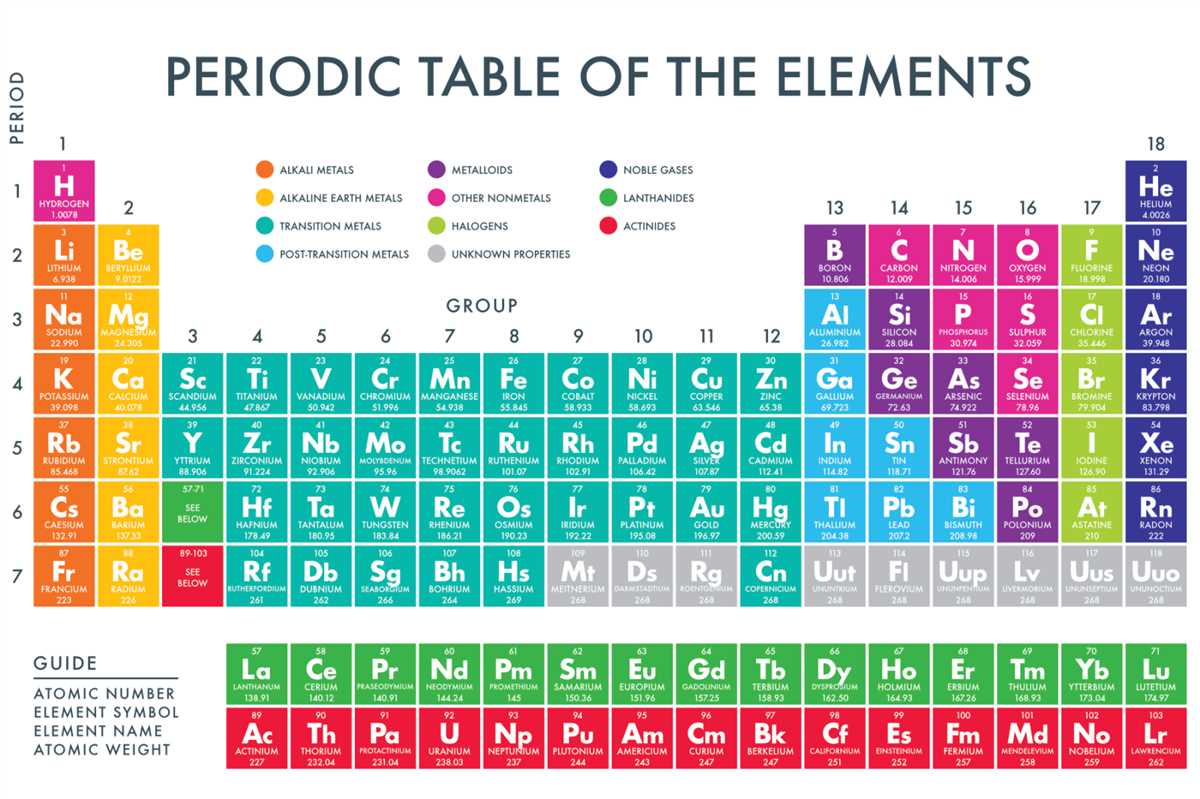
The study of atoms and the periodic table is fundamental to understanding the building blocks of matter. Atoms are the smallest units of matter that retain the chemical properties of an element, and the periodic table organizes these elements based on their atomic number, electron configuration, and chemical properties. It is a powerful tool for scientists and students alike, providing a wealth of information about the properties and behavior of elements.
In this article, we will explore the answer key to some common questions about atoms and the periodic table. We will delve into the structure of an atom, including the subatomic particles that make it up – protons, neutrons, and electrons. We will also discuss the concept of atomic number and how it relates to the position of elements on the periodic table.
Furthermore, we will examine the periodic table in more detail, discussing the organization of elements into periods and groups. We will explain how the periodic table can be used to determine the properties of elements, such as their atomic radius, ionization energy, and electronegativity. Additionally, we will explore the significance of the periodic table for predicting the reactivity and chemical behavior of elements.
By understanding the key principles of atoms and the periodic table, scientists are able to make predictions and draw conclusions about the behavior of different elements and their compounds. This knowledge is crucial in fields such as chemistry, physics, and materials science, allowing researchers to develop new materials, analyze chemical reactions, and understand the properties of substances at the atomic level. So, let’s dive into the answer key to atoms and the periodic table to unlock the mysteries of matter!
What are Atoms and the Periodic Table?
Atoms are the basic building blocks of matter. They are the smallest units of a chemical element that retain the chemical properties of that element. Atoms consist of three types of subatomic particles: protons, neutrons, and electrons. Protons have a positive charge, neutrons have no charge, and electrons have a negative charge. The protons and neutrons are located in the nucleus of the atom, while the electrons orbit around the nucleus in energy levels.
The periodic table is a tabular arrangement of chemical elements organized based on their atomic number, electron configuration, and recurring chemical properties. It is a visual representation that provides valuable information about each element. The periodic table consists of rows called periods and columns called groups or families. Each element is represented by a unique symbol and is arranged in order of increasing atomic number.
The periodic table is divided into several blocks: s-block, p-block, d-block, and f-block. These blocks correspond to the different types of orbitals that the electrons occupy in an atom. The elements in the periodic table are grouped based on their similar properties, such as metallicity, reactivity, and electron configuration.
The periodic table is a useful tool for chemists and scientists as it allows them to predict the behavior and properties of elements based on their position in the table. It provides a systematic way of organizing and understanding the vast number of known chemical elements. The periodic table is constantly evolving as new elements are discovered and added to the table. Overall, atoms and the periodic table are essential concepts in chemistry that help explain the structure and behavior of matter.
Understanding Atoms
Atoms are the fundamental building blocks of matter. They are the smallest units of an element that retain the properties of that element. Atoms consist of three main particles: protons, neutrons, and electrons. Protons have a positive charge, neutrons have no charge, and electrons have a negative charge. The number of protons in an atom determines its atomic number, while the sum of protons and neutrons gives the atom’s atomic mass.
The electron cloud model provides a visual representation of an atom’s structure. According to this model, electrons are in constant motion around the nucleus, forming layers called energy levels or shells. The innermost shell can hold up to 2 electrons, while the second and third shells can hold up to 8 electrons each. Electrons are arranged in these energy levels in a way that the outermost level is never fully filled. This arrangement is important because it determines how atoms interact with one another chemically.
The periodic table is a valuable tool for understanding the properties and behavior of atoms. It organizes elements based on their atomic number and reveals patterns in their properties. Elements in the same column, known as groups or families, have similar properties due to their similar electron configurations. The rows, known as periods, indicate the number of energy levels an atom has. The periodic table also provides information about elements’ atomic mass, symbol, and name.
- The atomic number tells you the number of protons in an atom.
- The atomic mass indicates the average mass of an atom of that element.
- The symbol is a shorthand representation of an element, usually based on the element’s name.
- The name is the common or scientific name of the element.
By understanding atoms and their properties, scientists have been able to uncover the underlying mechanisms of chemical reactions, create new materials, and explore the vast world of the microscopic. Atoms are not just theoretical concepts; they are the building blocks of everything we see and interact with in the universe.
Structure of Atoms
The structure of atoms is composed of subatomic particles. These particles include protons, neutrons, and electrons. Protons have a positive charge, neutrons have no charge, and electrons have a negative charge. The protons and neutrons are located in the central nucleus of the atom, while the electrons orbit around the nucleus in specific energy levels or shells.
The number of protons in an atom determines its atomic number and identifies the element. For example, an atom with one proton is hydrogen, while an atom with six protons is carbon. The number of neutrons can vary within the same element, creating isotopes. Isotopes have the same number of protons but different numbers of neutrons.
- Protons: Positively charged particles located in the nucleus.
- Neutrons: Neutral particles also located in the nucleus.
- Electrons: Negatively charged particles found in energy levels around the nucleus.
The arrangement of these particles gives an atom its overall charge. The number of protons and electrons is equal, creating a neutral atom. However, if the number of electrons is not equal to the number of protons, the atom becomes an ion with a positive or negative charge.
The understanding of the structure of atoms is crucial in chemistry and physics. It allows scientists to predict and explain various chemical and physical properties of elements and compounds. The periodic table, which organizes all known elements, provides a visual representation of the atomic structure and helps in understanding their properties and relationships.
The Periodic Table: A Brief Overview
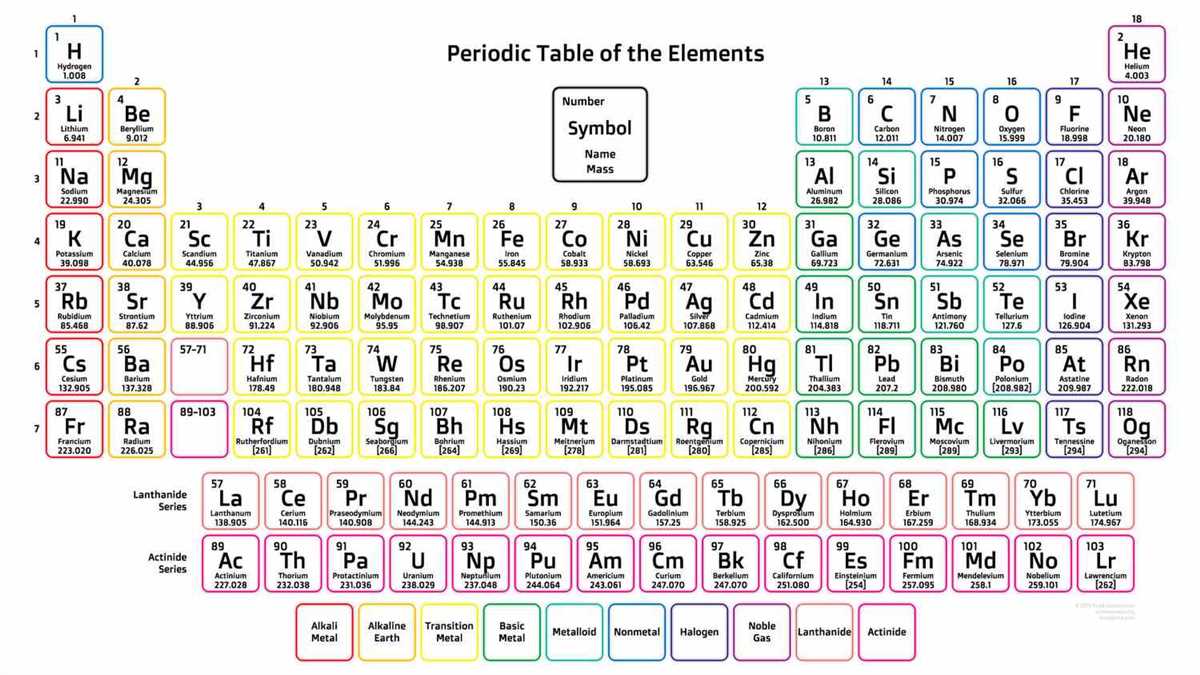
The periodic table is a tool used by scientists to organize and visualize the known elements in the universe. It is a systematic arrangement of these elements based on their atomic number, electron configuration, and recurring chemical properties. The table is divided into rows called periods and columns called groups, and each element is represented by a chemical symbol and atomic number.
At the heart of the periodic table is the concept of periodicity, which refers to the repeating patterns of chemical and physical properties that occur as you move across a row or down a column. This pattern helps scientists predict the behavior and properties of elements based on their position in the table. For example, elements in the same group generally have similar chemical reactivity and form similar types of compounds.
The periodic table is a powerful tool for understanding the relationships between elements and their properties. It allows scientists to classify elements into different categories, such as metals, nonmetals, and metalloids, based on their characteristics. It also provides valuable information about an element’s atomic structure, such as the number of protons, neutrons, and electrons it contains.
Key Features of the Periodic Table:

- Periods: Rows in the periodic table that represent the number of electron shells an element has.
- Groups: Columns in the periodic table that represent elements with similar chemical properties
- Atomic Number: The number of protons in an atom’s nucleus, which determines its identity as an element.
- Chemical Symbol: Abbreviation used to represent an element, such as H for hydrogen and O for oxygen.
- Atomic Mass: The average mass of an atom, including the protons, neutrons, and electrons it contains.
- Metals: Elements that are shiny, malleable, and good conductors of heat and electricity.
- Nonmetals: Elements that are usually brittle, dull, and poor conductors of heat and electricity.
- Metalloids: Elements that have properties of both metals and nonmetals. They are often semiconductors.
In summary, the periodic table is a fundamental tool in chemistry that helps scientists organize and understand the properties of elements. Its structure and organization provide valuable insights into the behavior and characteristics of different elements, allowing for the advancement of scientific knowledge and discoveries.
Elements and Their Properties
The periodic table is a comprehensive chart that organizes the elements based on their atomic properties. It provides valuable information about each element, including their atomic number, symbol, and atomic mass. Additionally, the periodic table categorizes elements into groups and periods, highlighting specific patterns and trends in their properties.
One important property of elements is their atomic structure. Each element is made up of atoms, which consist of a nucleus containing protons and neutrons, surrounded by electrons orbiting in energy levels. The number of protons in the nucleus determines the element’s atomic number, while the total number of protons and neutrons determines its atomic mass. These atomic properties play a significant role in defining an element’s chemical behavior and reactivity.
Another key property of elements is their electronic configuration. Elements are organized into periods on the periodic table based on the number of electron shells they possess. Each shell can hold a specific number of electrons, and elements within the same period share the same number of occupied shells. This electronic configuration impacts an element’s chemical reactivity and ability to form bonds with other elements.
Elements also exhibit a variety of physical and chemical properties. These properties include their state of matter (solid, liquid, or gas), melting and boiling points, density, conductivity, and reactivity. For example, metals generally have high conductivity, malleability, and ductility, while nonmetals are typically poor conductors and brittle. Furthermore, elements within the same group or family often share similar chemical properties due to their similar electron configurations.
In conclusion, the periodic table provides a wealth of information about the elements and their properties. By organizing the elements based on their atomic properties and categorizing them into specific groups and periods, the periodic table allows scientists to identify patterns and trends in element behavior. Understanding these properties is essential in fields such as chemistry, materials science, and engineering, where knowledge of element behavior and reactivity is crucial.
Electron Configuration and the Periodic Table

Electron configuration refers to the arrangement of electrons in an atom’s energy levels, also known as electron shells. These energy levels are represented by numbers called principal quantum numbers (n). The first energy level (n = 1) can hold a maximum of 2 electrons, the second level (n = 2) can hold a maximum of 8 electrons, and so on. The distribution of electrons in these energy levels follows a specific pattern, which can be determined using the periodic table.
The periodic table is a tabular arrangement of chemical elements, organized according to their atomic number, electron configuration, and recurring chemical properties. Each element is represented by its atomic symbol and atomic number. The atomic symbol represents the element’s name, while the atomic number indicates the number of protons in the nucleus of an atom of that element.
In terms of electron configuration, the periodic table is divided into several blocks: the s-block, p-block, d-block, and f-block. The s-block elements have their outermost electron in an s orbital, the p-block elements have their outermost electron in a p orbital, the d-block elements have their outermost electron in a d orbital, and the f-block elements have their outermost electron in an f orbital. The arrangement of these blocks reflects the filling pattern of the electron shells.
Additionally, the periodic table is divided into periods and groups. The periods are horizontal rows that represent the number of occupied energy levels in an atom of each element. The groups, also known as families or columns, represent elements with similar properties and valence electron configuration. The periodic table provides a visual representation of how electrons are distributed in the various energy levels of different elements and helps us understand the periodic trends and similarities between elements.
Overall electron configuration can be represented as follows:
- 1s^2 2s^2 2p^6 3s^2 3p^6 4s^2 3d^10 4p^6 5s^2 4d^10 5p^6 6s^2 4f^14 5d^10 6p^6 7s^2 5f^14 6d^10 7p^6 – Noble Gases
- 1s^2 2s^2 2p^6 3s^2 3p^6 4s^2 3d^10 4p^6 5s^2 4d^10 5p^6 6s^2 4f^14 5d^10 6p^6 7s^2 5f^14 6d^10 – Actinides
- 1s^2 2s^2 2p^6 3s^2 3p^6 4s^2 3d^10 4p^6 5s^2 4d^10 5p^6 6s^2 4f^14 5d^10 6p^6 7s^2 5f^14 – Lanthanides
- 1s^2 2s^2 2p^6 3s^2 3p^6 4s^2 3d^10 4p^6 5s^2 4d^10 5p^6 6s^2 4f^14 5d^10 6p^6 – Transition Metals
- 1s^2 2s^2 2p^6 3s^2 3p^6 4s^2 3d^10 4p^6 5s^2 4d^10 5p^6 – Noble Gases
- 1s^2 2s^2 2p^6 3s^2 3p^6 4s^2 3d^10 4p^6 – Halogens
- 1s^2 2s^2 2p^6 3s^2 3p^6 – Chalcogens
- 1s^2 2s^2 2p^6 3s^2 – Alkaline Earth Metals
- 1s^2 2s^2 – Alkali Metals
Understanding electron configuration and its relationship with the periodic table is crucial in predicting an element’s chemical behavior, reactivity, and bonding patterns. It provides a framework for understanding the arrangement of electrons in atoms and how they interact with other elements to form compounds.
Answer Key: Key Concepts and Key Terms
In this article, we have covered various key concepts and key terms related to atoms and the periodic table. Let’s summarize the main points:
Key Concepts:
- Atoms: Atoms are the basic building blocks of matter. They are composed of protons, neutrons, and electrons.
- Atomic Structure: The atomic structure refers to the arrangement of particles within an atom. The protons and neutrons are located in the nucleus, while the electrons orbit around the nucleus in energy levels.
- Periodic Table: The periodic table is a tabular arrangement of elements based on their atomic number and chemical properties. It is organized into periods (rows) and groups (columns).
- Element: An element is a substance that consists of only one type of atom. It is represented by a unique symbol on the periodic table.
- Atomic Number: The atomic number represents the number of protons in an atom’s nucleus. It determines the element’s identity and its position on the periodic table.
- Atomic Mass: The atomic mass is the total mass of an atom, which is determined by the combined mass of protons and neutrons in the nucleus.
Key Terms:
- Proton: A positively charged particle found in the nucleus of an atom.
- Neutron: A neutral particle found in the nucleus of an atom.
- Electron: A negatively charged particle that orbits the nucleus of an atom.
- Nucleus: The central part of an atom that contains protons and neutrons.
- Energy Levels: The regions around the nucleus where electrons are found.
- Period: A horizontal row on the periodic table.
- Group: A vertical column on the periodic table. Elements in the same group have similar physical and chemical properties.
In conclusion, understanding the key concepts and key terms associated with atoms and the periodic table is crucial for studying chemistry. By comprehending the atomic structure, properties, and organization of elements, scientists can gain insights into the behavior and interactions of matter, leading to advancements in various scientific fields.