10 Thought-Provoking Beowulf Discussion Questions and Answers
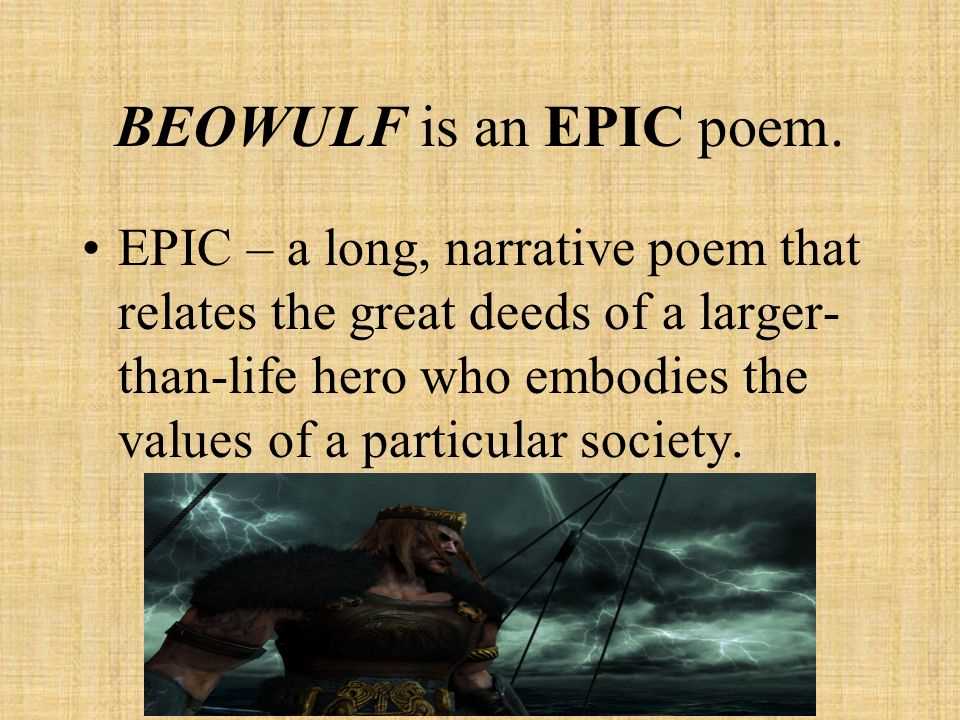
Beowulf is an epic poem from the Anglo-Saxon period that tells the story of a heroic warrior named Beowulf. The poem explores themes such as honor, bravery, and the importance of reputation. Throughout the poem, Beowulf faces numerous challenges and battles against monsters and other opponents.
When studying Beowulf, it is important to engage in discussions and analyze the text to gain a deeper understanding of its themes and meaning. To facilitate these discussions, here are some Beowulf discussion questions and answers to help guide your exploration of this ancient epic.
1. What role does fate play in Beowulf?
Answer: Fate is a recurring theme in Beowulf, as the characters often believe that their lives are predetermined by a higher power. The characters’ actions and decisions are often influenced by this belief in fate, as they accept their destinies and face their challenges with courage and resilience.
Beowulf Discussion Questions and Answers
In the epic poem Beowulf, there are many themes and motifs that can spark interesting discussions. Here are some discussion questions and answers to help guide your conversation:
1. What is the role of heroism in Beowulf?
Heroism is a central theme in Beowulf. The poem portrays Beowulf as a courageous and fearless hero who is willing to risk his life to protect his people from monsters and other threats. Beowulf embodies the qualities of a noble warrior, such as strength, bravery, and loyalty. He is not only a symbol of heroism for the Geats but also an inspiration for future generations. Beowulf’s heroic actions reflect the values and ideals of the Anglo-Saxon society, where bravery and honor were highly esteemed.
2. What are the different types of monsters in Beowulf?
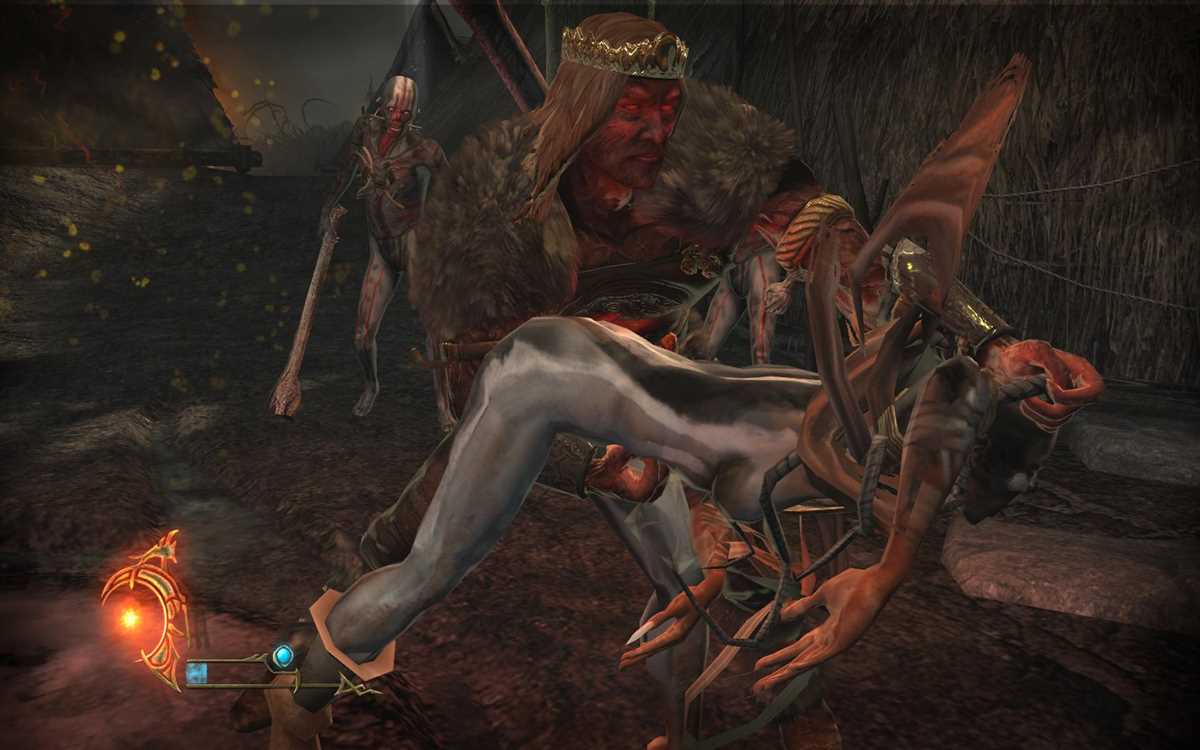
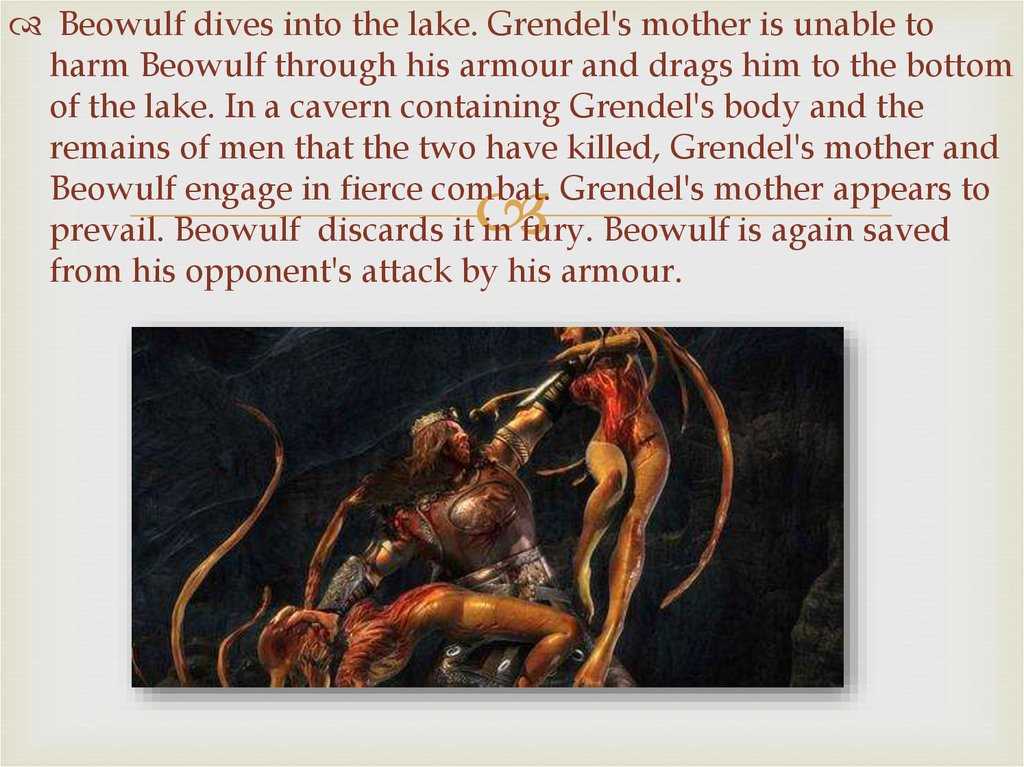
Beowulf features several types of monsters that Beowulf encounters and battles. The first monstrous opponent Beowulf faces is Grendel, a descendant of Cain who terrorizes Heorot, the mead hall of King Hrothgar. Grendel is described as a supernatural creature who is impervious to weapons made by humans. Beowulf also fights Grendel’s mother, a water monster who seeks revenge for her son’s death. Finally, in his old age, Beowulf confronts a dragon, a symbol of greed and destruction. These monsters represent the forces of evil that Beowulf must overcome in order to protect his people.
3. Is Beowulf a reliable narrator?
Beowulf is not the narrator of the poem; rather, it is told from the perspective of an anonymous narrator who recounts the events of Beowulf’s life. However, Beowulf’s deeds and words are described in great detail, providing insight into his character and motivations. While Beowulf may not be a reliable narrator in the traditional sense, his actions and words reveal his courage and sense of honor. The narrator’s portrayal of Beowulf as a heroic figure adds to the overall epic quality of the poem.
4. What is the significance of the mead hall in Beowulf?
The mead hall, specifically Heorot, holds great significance in Beowulf. It serves as a symbol of power, community, and civilization. Heorot is where the warriors gather to celebrate their victories and share stories, music, and mead. It represents the unity and strength of the Danish people. However, Grendel’s attacks on Heorot disrupt this harmony and threaten the social order. Beowulf’s mission to defeat Grendel and restore peace to the mead hall is a testament to his heroism and his commitment to protecting his people’s way of life.
These discussion questions and answers provide a starting point for exploring the themes, characters, and motifs in Beowulf. The poem offers a rich and complex narrative that continues to captivate readers and provoke thought centuries after it was written.
Understanding Beowulf
Beowulf is an epic poem that provides valuable insights into the culture, values, and beliefs of the early medieval period. Written in Old English, it has been studied and analyzed by scholars for centuries, offering a glimpse into the historical and literary context of the time. By understanding Beowulf, readers can gain a deeper appreciation for the heroic ideals, the importance of kinship bonds, and the struggles between good and evil in early medieval society.
The heroic ideals: Beowulf, the protagonist of the poem, embodies the heroic ideals of strength, bravery, loyalty, and honor. He is depicted as a superhuman figure who fearlessly confronts and defeats the monstrous creatures that threaten his people. Beowulf’s heroic deeds serve as a model for the warriors of the time, inspiring them to embody these virtues and fulfill their duty to protect and defend their community.
The importance of kinship bonds: Beowulf highlights the significance of kinship bonds and the concept of comitatus, a relationship between a lord and his warriors based on loyalty, mutual protection, and shared values. Throughout the poem, the characters’ actions are often driven by their commitment to their kinsmen and the desire to uphold their family’s reputation. Beowulf’s loyalty to his king, Hrothgar, and his willingness to risk his life for the greater good exemplify the importance placed on kinship bonds.
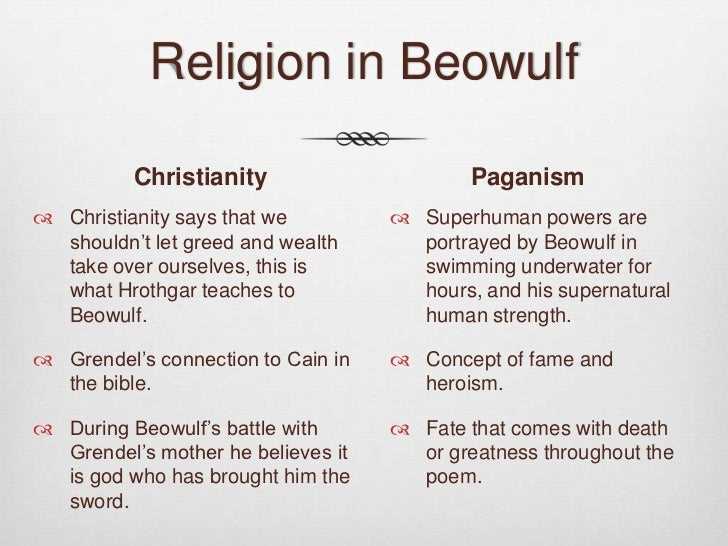
The struggles between good and evil: Beowulf portrays the eternal conflict between good and evil. The poem is filled with monstrous creatures such as Grendel, Grendel’s mother, and the dragon, who represent the forces of chaos and destruction. Beowulf’s heroic quest to defeat these creatures symbolizes the triumph of good over evil. However, the poem also explores the complexities of these struggles, as Beowulf himself possesses both heroic qualities and flawed characteristics, blurring the line between good and evil.
Beowulf’s enduring popularity can be attributed to its exploration of universal themes and its rich portrayal of early medieval society. Through its characters and their actions, the poem provides a window into a world where heroism, loyalty, and the eternal struggle between good and evil are central to the human experience.
Themes and Symbolism
In the epic poem Beowulf, various themes and symbols are explored to depict the values and beliefs of the Anglo-Saxon society. These themes and symbols play a crucial role in understanding the deeper meaning of the text and its significance.
Valor and Heroism:
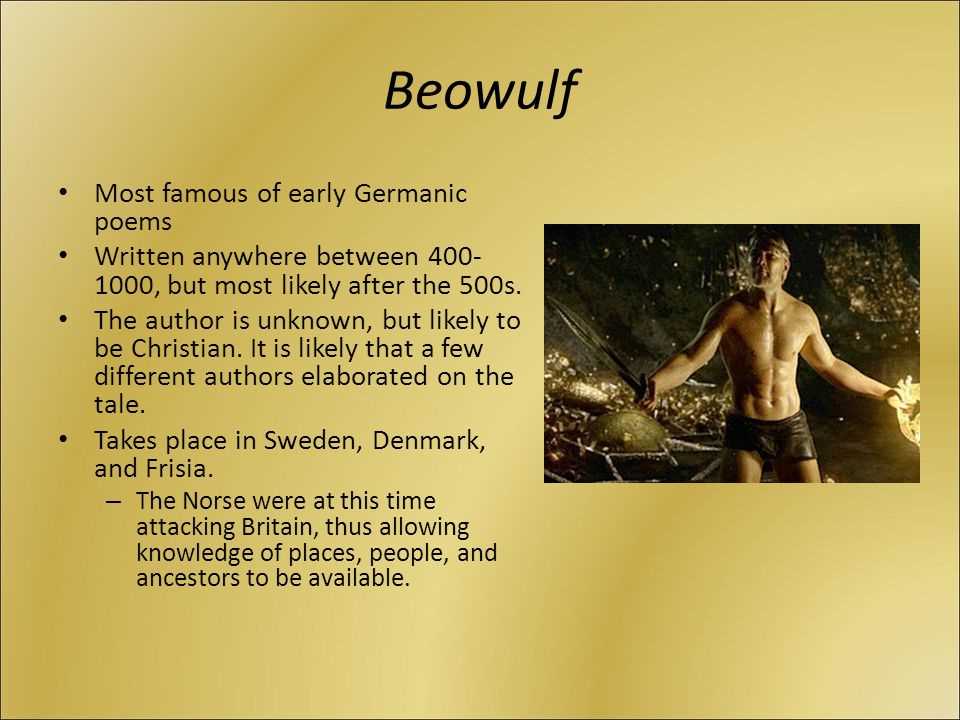
One prominent theme in Beowulf is valor and heroism. The poem celebrates bravery, strength, and courage through the character of Beowulf. Beowulf’s willingness to fight and protect his people, even in the face of great danger, symbolizes the importance of honor and duty. The poem emphasizes the ideal of the warrior hero, who fearlessly battles monsters and upholds his reputation.
Good vs. Evil:
The theme of good versus evil is also prevalent in Beowulf. Throughout the poem, the battle between Beowulf and various monsters, such as Grendel and the dragon, represents the eternal struggle between good and evil. Beowulf, as the embodiment of good, represents the values of righteousness and justice, while the monsters represent chaos and destruction. The poem highlights the importance of maintaining order and defeating evil forces.
Legacy and Reputation:
Another important theme in Beowulf is the idea of legacy and reputation. The characters in the poem value their reputations and strive to leave a lasting impact on the world. Beowulf seeks to establish a legacy by defeating monsters and protecting his people, while Hrothgar desires to build a grand mead-hall, Heorot, to solidify his reputation and ensure his name lives on. The poem explores the significance of one’s actions and the desire for immortality through reputation.
Symbols:
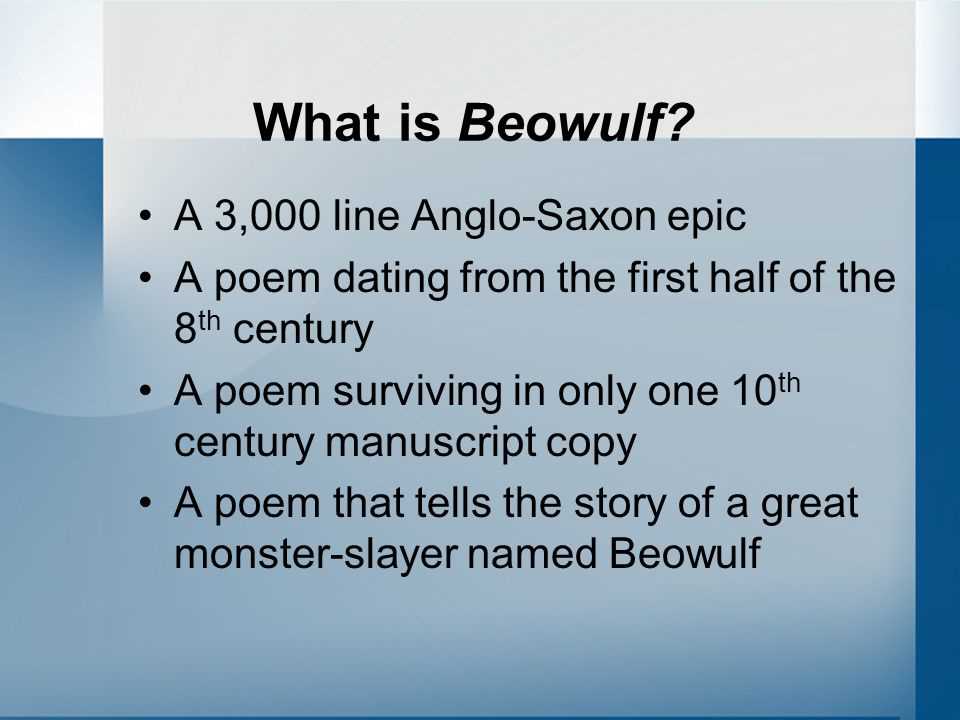
Beowulf also contains several symbols that add depth to the story. One prominent symbol is the mead-hall, Heorot, which represents the pride and prosperity of the Danish people. It serves as a gathering place for feasts, celebrations, and the display of wealth and power. Grendel’s attacks on Heorot symbolize the destruction of this pride and the disruption of societal order.
The dragon is another significant symbol in the poem. It represents greed and the destructive nature of unchecked power. Beowulf’s final battle with the dragon symbolizes the hero’s ultimate test and his willingness to sacrifice himself for the greater good.
- Valor and heroism
- Good vs. Evil
- Legacy and Reputation
- Symbols: Mead-hall and Dragon
Character Analysis
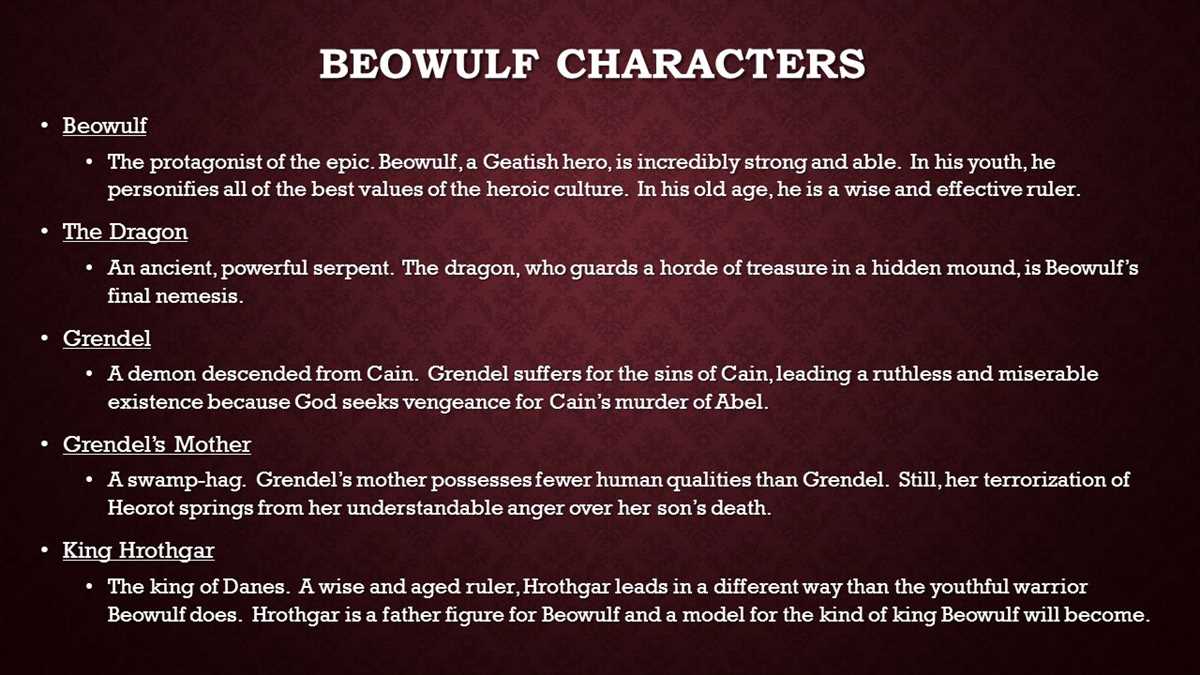
In the epic poem Beowulf, the character of Beowulf himself is a central figure who embodies the qualities of a heroic warrior. He is described as being strong, fearless, and skilled in battle. These characteristics are evident in his actions throughout the poem, as he fearlessly battles against powerful monsters and defends his people. Beowulf’s physical strength is highlighted multiple times, such as when he tears off Grendel’s arm with his bare hands. His bravery and willingness to face any challenge make him a true hero.
Another notable character in Beowulf is Grendel, the monstrous antagonist. Grendel is depicted as a bloodthirsty and ruthless creature who terrorizes the Danish kingdom. He is described as being incredibly strong and capable of inflicting great harm. Despite his terrifying nature, Grendel is also portrayed as a lonely and tormented creature who is doomed to a life of isolation. This complex characterization adds depth to the story and raises questions about the nature of good and evil.
Additionally, the character of King Hrothgar plays a significant role in the poem. He is portrayed as a wise and respected ruler who seeks help from Beowulf to defeat Grendel. Hrothgar’s decision to reach out to a foreign warrior for assistance demonstrates his humility and willingness to put the needs of his people before his own pride. Hrothgar’s character serves as a contrast to the monstrous Grendel, highlighting the qualities of nobility and leadership.
In summary, the characters in Beowulf are highly complex and provide insight into the themes of heroism, courage, and the nature of good and evil. Beowulf, Grendel, and King Hrothgar each bring unique qualities and motivations to the story, making them integral to the overall narrative and the exploration of these themes.
Historical Context
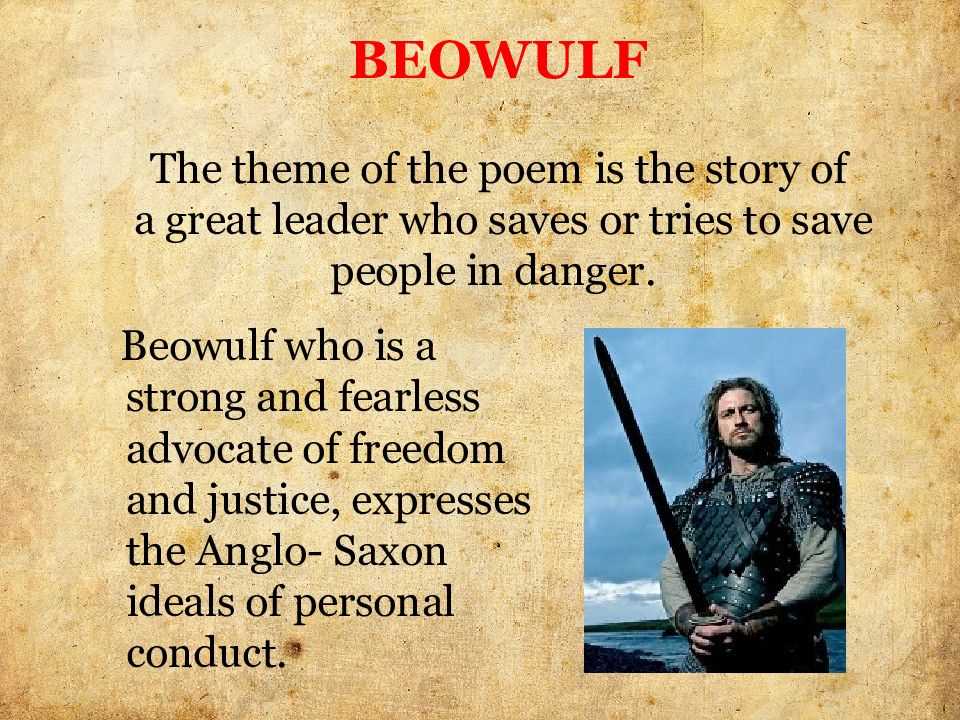
The epic poem Beowulf is believed to have been composed in the late 8th century and is considered one of the most important works of Old English literature. The events in Beowulf take place in Scandinavia during the 6th century, a time when various Germanic tribes were migrating and settling in different parts of Europe.
During this time, violent conflicts and warrior culture were prevalent in the Germanic societies. The poem reflects these aspects of the society, as it centers around the heroic deeds of the protagonist Beowulf and his battles against monstrous creatures such as Grendel, Grendel’s mother, and a dragon.
Beowulf also provides insights into the political and social structures of the time. The poem portrays a feudal society where kings ruled over their tribes and were expected to protect their people and reward their loyal warriors with gifts and honor. It also highlights the importance of loyalty and kinship ties among the warrior elite.
The historical context of Beowulf is further enriched by references to pagan Germanic mythology and beliefs. The characters in the poem often invoke and rely on the power of various gods and fate to guide their actions and determine their outcomes. This reflects the religious and cultural practices of the time, before the spread of Christianity in the region.
Overall, the historical context of Beowulf provides valuable insights into the warrior culture, social structures, and belief systems of the Germanic societies during the Middle Ages. It serves as a valuable source of information for historians and helps us understand the values and traditions of the time.
Comparisons with Other Epic Poems
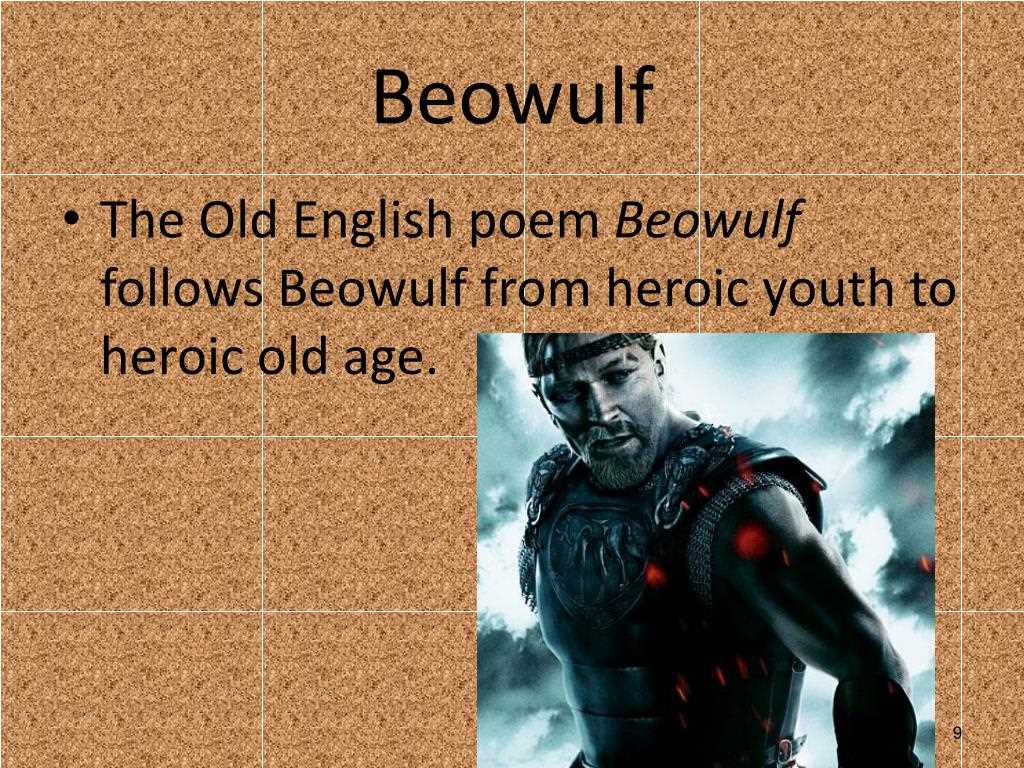
The epic poem Beowulf, written in Old English, shares several similarities and differences with other epic poems from different cultures. One of the most notable similarities is the theme of heroic deeds and adventures. Just like in the Greek epic poem Odyssey, where Odysseus embarks on a long journey to return home after the Trojan War, Beowulf also takes on various quests to protect his people and defeat monsters.
Another similarity between Beowulf and other epic poems, such as the Indian epic Ramayana, is the presence of supernatural beings. In Beowulf, Grendel and his mother are described as monstrous creatures, while in Ramayana, there are characters like Ravana, a demon king, and Hanuman, a monkey god. These supernatural beings add an element of fantasy and the supernatural to both narratives.
Despite these similarities, Beowulf also stands out in its unique characteristics. For instance, unlike the Greek and Indian epics that heavily incorporate gods and goddesses into the narrative, Beowulf focuses more on the bravery and strength of human heroes. Beowulf’s abilities and achievements are attributed to his own physical prowess and courage, rather than the intervention of divine powers.
In addition, Beowulf differs from other epic poems in terms of its historical and cultural context. While the Odyssey and Ramayana are rooted in myth and legend, Beowulf reflects the historical and cultural elements of Anglo-Saxon society. The characters, settings, and events in the poem provide insights into the values, traditions, and social structures of the time.
In conclusion, Beowulf shares common themes and characteristics with other epic poems such as the Odyssey and Ramayana, including the presence of heroic deeds, supernatural beings, and epic quests. However, it also distinguishes itself through its focus on the strength of human heroes and its depiction of the Anglo-Saxon society. These elements contribute to Beowulf’s status as a unique and important piece of literature in the epic genre.
Relevance to Modern Society
Beowulf, despite being a centuries-old epic poem, still holds significant relevance to modern society. The themes and values explored in the poem are timeless and continue to resonate with audiences today.
1. Heroism and Courage: Beowulf exemplifies the characteristics of a hero, displaying immense courage and strength in his battles against monsters. This theme is still celebrated today, as society looks up to individuals who display bravery and selflessness. Whether it is soldiers protecting their country or ordinary citizens standing up against injustice, the concept of heroism is deeply ingrained in the human psyche.
2. Good vs. Evil: The poem explores the eternal struggle between good and evil, a theme that continues to captivate audiences in modern storytelling. The battle between Beowulf and the monsters represents the fight against evil forces that threaten the peace and stability of society. This theme is reflected in many contemporary movies, books, and television shows, highlighting the ongoing relevance of this conflict.
3. Loyalty and Friendship: Beowulf showcases the importance of loyalty and friendship through the relationships between characters. Beowulf’s unwavering loyalty to King Hrothgar and his fellow warriors demonstrates the significance of standing by one’s companions in times of adversity. This theme resonates with modern society, where strong friendships and loyalty are valued for their ability to provide support, trust, and a sense of belonging.
4. Fate and Destiny: The concept of fate and destiny is a central theme in Beowulf as characters acknowledge the role of a higher power in shaping their lives. This theme continues to be explored in contemporary literature and media, as individuals grapple with the idea of a predetermined future versus free will. Questions surrounding fate and destiny prompt deeper introspection, challenging individuals to reflect on their own life choices and the influence of external forces.
In conclusion, Beowulf remains relevant to modern society due to its exploration of enduring themes such as heroism, good vs. evil, loyalty and friendship, and fate and destiny. The values and lessons conveyed in the poem continue to resonate with audiences, reminding them of the timeless aspects of the human experience. Beowulf serves as a reminder that despite the passage of time, the fundamental themes and values that shape our lives remain unchanged.