Unleashing the Secrets of Geometry: Exploring Chapter 8’s Quirkiest Concepts
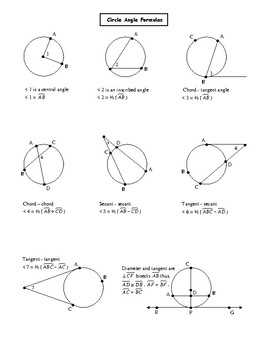
Geometry is an important branch of mathematics that deals with the study of shapes, sizes, properties, and relationships of figures in space. It provides us with a way to understand and describe the world around us, from the smallest molecules to the largest celestial bodies. In Chapter 8 of the Big Ideas Geometry textbook, students delve into the concepts of similarity and congruence, exploring how these fundamental ideas can be applied to solve various geometric problems.
Throughout Chapter 8, students will learn about the properties of similar figures, including angle-angle similarity, side-side-side similarity, and side-angle-side similarity. By understanding these properties, students can determine whether two figures are similar and use this knowledge to solve real-world problems. These problems range from determining the height of a tree to finding the distance between two locations using shadow lengths and angles.
The chapter also covers the concept of congruence and its various criteria, such as side-side-side congruence, angle-side-angle congruence, and side-angle-side congruence. By identifying congruent figures, students can prove that two shapes are identical in size and shape. This knowledge is essential in a wide range of disciplines, from architecture and engineering to computer graphics and art.
Throughout the chapter, students are provided with numerous examples, practice problems, and exercises to reinforce their understanding of the concepts. The answers to these problems can be found in the Big Ideas Geometry Chapter 8 Answers section, providing students with a valuable resource for checking their work and gaining confidence in their geometric problem-solving skills.
Big Ideas Geometry Chapter 8 Answers
Big Ideas Geometry Chapter 8 focuses on angles and triangles. This chapter explores various concepts related to angles, such as angle relationships, angle measurements, and the properties of triangles. By understanding these concepts, students can solve problems involving angles and triangles, and apply these knowledge to real-world situations.
Angle Relationships: One of the key topics in this chapter is angle relationships. Students learn about different types of angle pairs, such as complementary angles, supplementary angles, vertical angles, and adjacent angles. They learn how to identify these angle pairs and determine their measurements using the given information.
Angle Measurements: Another important aspect of this chapter is angle measurements. Students learn about different units for measuring angles, such as degrees and radians. They also learn how to use a protractor to measure angles accurately. By mastering these skills, students can accurately measure and compare angles in various geometric figures.
Properties of Triangles: Lastly, this chapter covers the properties of triangles. Students learn about the different types of triangles based on their angles and sides, such as acute triangles, obtuse triangles, and equilateral triangles. They also explore the relationships between the angles and sides of triangles, such as the Pythagorean Theorem. These properties help students analyze and solve problems involving triangles.
In conclusion, Big Ideas Geometry Chapter 8 provides students with a solid foundation in angle relationships, angle measurements, and the properties of triangles. By mastering these concepts, students can analyze and solve geometric problems involving angles and triangles. The answers to the exercises in this chapter enable students to check their understanding and strengthen their problem-solving skills.
Overview of Chapter 8
In Chapter 8 of “Big Ideas Geometry,” we delve into the world of similarity and transformations. This chapter focuses on understanding and applying the properties of similar figures, as well as exploring translations, reflections, rotations, and dilations. These concepts are fundamental in geometric transformations and have various real-world applications. By the end of this chapter, students will have a solid grasp of these concepts and be able to solve complex problems involving similarity and transformations.
Similar Triangles: The chapter begins with an introduction to similar triangles and the properties that define them. Students will learn how to determine if two triangles are similar and how to prove their similarity using the AA, SAS, and SSS similarity criteria. They will also explore the relationships between the corresponding sides and angles of similar triangles, including the important concept of proportional side lengths.
Transformations: The next portion of the chapter focuses on different types of transformations. Students will learn about translations, which involve moving a figure without changing its shape or size. They will also explore reflections, which involve flipping a figure over a line, and rotations, which involve turning a figure around a fixed point. Additionally, students will learn about dilations, which involve changing the size of a figure while maintaining its shape.
Throughout the chapter, students will have the opportunity to practice applying these concepts through a variety of exercises and real-world examples. They will learn how to use similarity and transformations to solve problems involving scale factors, congruence, and area ratios. They will also explore how these concepts are used in architecture, art, and other fields.
Overall, Chapter 8 of “Big Ideas Geometry” provides a comprehensive overview of the fundamental concepts of similarity and transformations, equipping students with the skills they need to solve complex problems and apply these concepts in real-world situations.
Exploring Quadrilaterals
In geometry, a quadrilateral is a polygon with four sides. It is a two-dimensional shape that can have various properties and characteristics. By exploring quadrilaterals, we can better understand their attributes and relationships with other geometric shapes.
Types of Quadrilaterals: There are different types of quadrilaterals, each with its own unique properties. Some common types include rectangle, square, rhombus, parallelogram, trapezoid, and kite. These shapes can be distinguished based on the lengths of their sides, the measures of their angles, and the relationships between their sides and angles.
Properties of Quadrilaterals: Quadrilaterals have specific properties that help us identify and classify them. Some important properties include: opposite sides are parallel, opposite angles are congruent, consecutive angles are supplementary, diagonals bisect each other, and the sum of the interior angles is always 360 degrees. These properties allow us to determine the type of quadrilateral and make deductions about its characteristics.
- A rectangle is a quadrilateral with four right angles and opposite sides parallel and congruent.
- A square is a quadrilateral with all sides congruent and all angles right angles.
- A rhombus is a quadrilateral with all sides congruent.
- A parallelogram is a quadrilateral with opposite sides parallel and congruent.
- A trapezoid is a quadrilateral with one pair of opposite sides parallel.
- A kite is a quadrilateral with two pairs of adjacent sides congruent.
Relationships with Other Shapes: Quadrilaterals are closely related to other geometric shapes. For example, a rectangle is a special type of parallelogram, a square is a special type of rectangle and rhombus, and a rhombus is a special type of parallelogram. Understanding the relationships between quadrilaterals and other shapes helps us build a solid foundation in geometry and solve more complex problems.
In conclusion, exploring quadrilaterals enables us to identify and understand their properties, classify them into different types, and establish their relationships with other geometric shapes. This knowledge is essential in geometry as it forms the basis for solving various mathematical problems and proving geometric theorems.
Properties of Parallelograms
A parallelogram is a special type of quadrilateral where opposite sides are parallel. There are several important properties of parallelograms that help us understand and solve problems related to them.
Property 1: Opposite sides are equal in length: In a parallelogram, the opposite sides are congruent. This means that if we label one side as “a” and the opposite side as “b”, then a = b.
Property 2: Opposite angles are congruent: The opposite angles in a parallelogram are equal in measure. This means that if we label one angle as “A” and the opposite angle as “B”, then m∠A = m∠B.
Property 3: Consecutive angles are supplementary: The consecutive angles (angles that share a side) in a parallelogram add up to 180 degrees. This means that if we label one angle as “A” and the angle next to it as “B”, then m∠A + m∠B = 180°.
Property 4: Diagonals bisect each other: The diagonals of a parallelogram bisect each other. This means that if we have a parallelogram ABCD with diagonals AC and BD, then AC intersects BD at point E, and AE = CE and BE = DE.
Summary:
- In a parallelogram, opposite sides are congruent.
- In a parallelogram, opposite angles are congruent.
- In a parallelogram, consecutive angles are supplementary.
- In a parallelogram, the diagonals bisect each other.
Rectangles, Rhombi, and Squares
Rectangles, rhombi, and squares are all quadrilaterals with specific characteristics and properties. Understanding these shapes can aid in solving various geometric problems and applying mathematical concepts.
Rectangles: A rectangle is a quadrilateral with four right angles. This means that all interior angles measure 90 degrees. In addition, opposite sides of a rectangle are congruent, meaning they have the same length. Therefore, if you know the length of one side of a rectangle, you automatically know the length of the opposite side. Rectangles also have diagonals that are congruent and bisect each other.
Rhombi: A rhombus is a quadrilateral with all sides of equal length. This means that all sides are congruent. Additionally, opposite angles of a rhombus are congruent, meaning they have the same measure. Rhombi do not necessarily have right angles, so their angles can vary. However, if a rhombus does have right angles, it becomes a special type of rhombus known as a square.
Squares: A square is a special type of rectangle and rhombus. It has four right angles, just like a rectangle, and all sides are congruent, just like a rhombus. Therefore, a square combines the properties of both shapes. A square also has diagonals that are congruent and bisect each other, just like a rectangle. With its symmetrical properties, a square is often used in various mathematical applications, including calculating areas and perimeters.
- Rectangles have four right angles and opposite sides that are congruent.
- Rhombi have all sides congruent and opposite angles congruent.
- Squares are rectangles with all sides congruent and diagonals that are congruent.
Understanding the properties and relationships of rectangles, rhombi, and squares is essential for solving geometry problems and applying geometric concepts in the real world.
Trapezoids and Kites
In geometry, trapezoids and kites are both quadrilateral shapes with specific properties and characteristics. Understanding these properties can help us solve various geometric problems and calculations.
A trapezoid is a quadrilateral with at least one pair of parallel sides. It can have two pairs of parallel sides, known as a parallelogram, or just one pair of parallel sides. The non-parallel sides are called legs, while the parallel sides are called bases. The heights of a trapezoid are perpendicular segments drawn from one base to the other.
The formula to find the area of a trapezoid is A = (b1 + b2) * h / 2, where A represents the area, b1 and b2 represent the lengths of the bases, and h represents the height. The perimeter of a trapezoid can be found by adding all the side lengths together.
A kite is a quadrilateral with two pairs of adjacent sides that are equal in length. The diagonals of a kite are perpendicular and bisect each other. The longer diagonal is known as the main diagonal, while the shorter diagonal is called the cross diagonal. The area of a kite can be found by multiplying the lengths of the diagonals and dividing by 2.
In summary, trapezoids and kites are important geometric shapes with unique properties. Understanding their properties and formulas for calculating their areas and perimeters can help us solve various geometric problems and equations.
Applying Quadrilateral Properties

Throughout this chapter, we have explored the properties and characteristics of different types of quadrilaterals. We have learned about the angles, sides, diagonals, and symmetry of various quadrilaterals, including rectangles, squares, parallelograms, rhombuses, and trapezoids.
By understanding these properties, we can apply them to solve a variety of problems and answer questions related to quadrilaterals. For example, we can use the properties of rectangles to determine the dimensions of a given shape or find missing angles. We can also use the properties of parallelograms to prove that certain quadrilaterals are parallelograms or to find the lengths of their sides.
Summary:
- Rectangles have four right angles and opposite sides that are congruent.
- Squares are a special type of rectangle with all sides congruent.
- Parallelograms have opposite sides that are parallel and congruent.
- Rhombuses have all sides congruent.
- Trapezoids have one pair of parallel sides.
By applying these properties and understanding the characteristics of different quadrilaterals, we can solve geometry problems, prove the properties of quadrilaterals, and explore the relationships between different types of quadrilaterals.
Overall, studying quadrilaterals and their properties allows us to analyze and understand the geometry of shapes in a deeper and more meaningful way. Whether we are designing buildings, solving real-world problems, or simply exploring the beauty of mathematics, the study of quadrilaterals has practical applications and contributes to our overall mathematical knowledge.
Q&A:
What is a quadrilateral?
A quadrilateral is a polygon with four sides and four vertices.
What are the properties of a parallelogram?
A parallelogram has opposite sides that are parallel and congruent, opposite angles that are congruent, and consecutive angles that add up to 180 degrees.
What is the sum of the interior angles of a quadrilateral?
The sum of the interior angles of a quadrilateral is always 360 degrees.
What is the relationship between the opposite angles of a quadrilateral?
The opposite angles of a quadrilateral are congruent.
What is the sum of the opposite angles of a parallelogram?
The sum of the opposite angles of a parallelogram is always 180 degrees.