Biology exam questions and answers
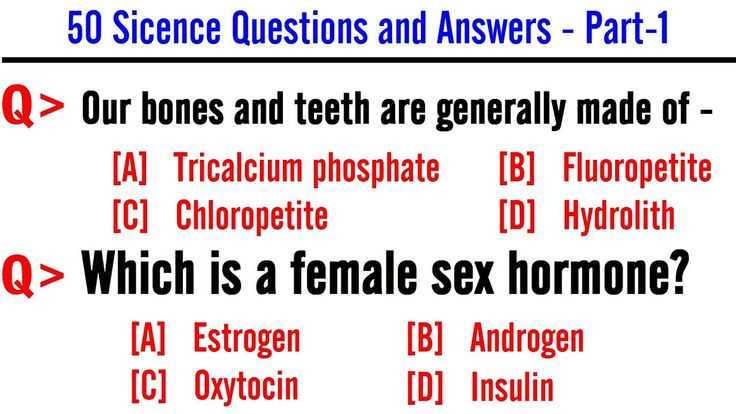
Biology Exam Questions and Answers
Focus on applying a structured approach to tackle subject-related topics effectively. Below is a detailed outline addressing specific points, which will help you understand how to prepare and handle challenging tasks related to these tests.
- Identify Key Terminology: Start by recognizing and mastering the core concepts. Memorizing terms such as cellular processes, genetics, and ecological principles is necessary for quick recall during assessments. Create a list of the most commonly tested terms and study their definitions and applications.
- Understand Complex Processes: Break down complicated systems like respiration, photosynthesis, or the immune response into smaller parts. Diagramming these processes helps clarify each stage. Understanding these mechanisms at a deep level aids in answering related inquiries with precision.
- Practice with Sample Inquiries: Use past tests or quizzes to practice answering practical problems. These exercises allow you to apply what you know and identify any gaps in knowledge. Ensure that you can justify your responses logically and connect different ideas from the syllabus.
- Focus on Practical Application: When faced with tasks requiring experimentation or data interpretation, familiarize yourself with how to approach real-life scenarios. Knowing how to assess lab results or apply theoretical knowledge to scenarios involving ecosystems or organisms is crucial for comprehensive solutions.
- Time Management: During preparation, practice pacing yourself under test conditions. Focus on answering questions concisely within a set period. Learning how to balance speed with accuracy is a key factor for success.
- Stay Updated on Emerging Topics: While basic principles remain constant, newer research and advancements might influence how specific topics are tested. Stay current with developments in areas like biotechnology or conservation to be prepared for any recent trends in the subject.
Understanding Cell Structure and Functions
Mastering the components of a cell is key to answering related tasks accurately. Here’s a breakdown of the primary structures and their roles:
- Cell Membrane: Controls the movement of substances into and out of the cell. It’s composed of a lipid bilayer with embedded proteins that regulate material exchange, maintaining homeostasis.
- Nucleus: The control center of the cell, housing the cell’s genetic material (DNA). It coordinates activities such as growth, metabolism, and protein synthesis.
- Endoplasmic Reticulum (ER): Exists in two forms: rough (with ribosomes) and smooth. Rough ER is involved in protein synthesis and modification, while smooth ER synthesizes lipids and detoxifies certain chemicals.
- Ribosomes: Small structures responsible for protein synthesis. They read messenger RNA (mRNA) to assemble amino acids into proteins.
- Mitochondria: Known as the powerhouse of the cell, these organelles generate ATP through cellular respiration, providing the energy required for cell activities.
- Golgi Apparatus: Packages, modifies, and sorts proteins and lipids that are either secreted from the cell or transported to other organelles.
By understanding each structure’s function, you can accurately identify and explain their roles in cellular activities. This understanding is critical for any related task or inquiry.
Common Genetics Questions Explained
Inheritance patterns such as Mendelian genetics play a major role in understanding heredity. When studying dominant and recessive traits, remember that a dominant allele only requires one copy to be expressed, while a recessive trait needs two copies to show up. If a parent carries a heterozygous genotype (one dominant and one recessive allele), the child has a 50% chance of inheriting the dominant allele.
In cases of incomplete dominance, the offspring exhibit a blend of the two parental traits, resulting in an intermediate phenotype. For example, crossing red and white flowers might produce pink offspring. Codominance, on the other hand, results in both parental traits being expressed simultaneously, as seen in human blood types where both A and B alleles are codominant.
Understanding the concept of genetic linkage is key when studying chromosomes. Genes located close together on the same chromosome tend to be inherited together, which can affect the outcomes of genetic crosses. This principle explains why certain traits may be passed on together more frequently than others.
Gene mutations, which can arise spontaneously or due to environmental factors, lead to changes in the DNA sequence. Some mutations are silent, while others can cause diseases or provide adaptive advantages. It is crucial to differentiate between point mutations, which involve a single nucleotide change, and frameshift mutations, which shift the reading frame of the genetic code.
Human Body Systems and Their Interactions
The circulatory system transports oxygen and nutrients throughout the body, enabling the respiratory system to deliver oxygen to tissues while removing carbon dioxide. The heart pumps blood, which carries essential molecules to various organs, ensuring cellular function.
The nervous system coordinates body functions by sending electrical signals to muscles and glands. It interacts with the endocrine system, which releases hormones that regulate processes like metabolism, growth, and mood, ensuring internal balance.
The digestive system processes food, breaking it down into nutrients absorbed by the circulatory system. This energy is used by muscles and cells for activities ranging from movement to cellular repair. The excretory system removes waste products, preventing toxic buildup and maintaining homeostasis.
The immune system works closely with the lymphatic system to defend against pathogens. White blood cells identify and attack invaders, while the lymphatic system transports immune cells to sites of infection, ensuring a coordinated response.
The muscular system facilitates movement, relying on the skeletal system for structure and support. These systems collaborate to enable precise movements, such as walking or lifting, while maintaining stability and balance.
Ecology and Environmental Science Concepts
Energy flow through ecosystems is governed by producers, consumers, and decomposers. Producers, such as plants, convert solar energy into chemical energy through photosynthesis, supporting herbivores. Consumers feed on other organisms, while decomposers break down organic material, recycling nutrients.
Biodiversity refers to the variety of life forms within an ecosystem. It maintains ecosystem stability and resilience, allowing natural processes like pollination, seed dispersal, and nutrient cycling to occur effectively. High biodiversity strengthens ecosystem services that humans rely on.
Human activities, such as deforestation and pollution, disrupt ecosystems. These actions lead to habitat loss, reduced biodiversity, and the degradation of natural resources. Sustainable practices, including conservation, renewable energy use, and waste management, mitigate negative environmental impacts.
Climate change, driven by human emissions of greenhouse gases, is altering global temperatures and weather patterns. This affects ecosystems, species migration, and agricultural productivity. Reducing emissions, improving energy efficiency, and protecting carbon sinks like forests are critical to addressing climate change.
For further information on environmental science, visit Nature – Environmental Science.
Photosynthesis and Cellular Respiration in Detail
Photosynthesis converts light energy into chemical energy, producing glucose and oxygen as by-products. This process occurs in chloroplasts, where light is absorbed by chlorophyll. The light-dependent reactions occur in the thylakoid membranes, where light energy is used to generate ATP and NADPH. These molecules power the Calvin cycle, which takes place in the stroma and forms glucose by fixing carbon dioxide.
Cellular respiration, on the other hand, breaks down glucose to release energy stored in its bonds. This process begins with glycolysis, which occurs in the cytoplasm and splits glucose into two pyruvate molecules. In the presence of oxygen, pyruvate enters the mitochondria and undergoes further processing through the citric acid cycle and oxidative phosphorylation. The final products of this process are ATP, water, and carbon dioxide.
These two processes are interconnected: the products of photosynthesis provide the raw materials for cellular respiration, while the by-products of cellular respiration supply the carbon dioxide needed for photosynthesis. This creates a cyclical relationship, with both processes sustaining each other in a balanced ecosystem.
Practical Approaches to Answering Biochemistry Questions
Focus on breaking down complex biochemical concepts into smaller, manageable parts. Recognize key processes such as enzyme kinetics, metabolic pathways, and molecular structures. By understanding the basic components, you’ll be better equipped to address challenging topics with precision.
Use diagrams to enhance your understanding and provide clear visual representations of processes like glycolysis, the citric acid cycle, or protein synthesis. These visuals often highlight connections that are easier to recall under pressure.
Understand the vocabulary and nomenclature specific to the subject. Terms like “activation energy,” “substrate affinity,” or “oxidative phosphorylation” are frequently tested, and knowing their precise definitions can make all the difference in how well you answer.
Practice applying knowledge to scenarios. For instance, when considering the effects of inhibitors on enzyme activity, think through real-world examples like competitive and non-competitive inhibition. This helps you connect theory to practice and strengthens recall.
| Process | Key Concept | Application |
|---|---|---|
| Glycolysis | Energy production, ATP synthesis | Understanding step-by-step reactions aids in memorization and recall |
| Citric Acid Cycle | Electron transport, NADH/FADH2 production | Link to oxidative phosphorylation and ATP generation |
| Protein Synthesis | Translation, transcription | Relate mutations to potential diseases or conditions |
Make use of mnemonics for lengthy sequences, like remembering the order of substrates in the citric acid cycle. Acronyms can simplify what might seem like a daunting series of reactions.