The Ultimate Chem 101 Final Exam Study Guide: Ace Your Test with These Expert Tips
Preparing for a final exam in chemistry can be a daunting task, especially if you’re not sure where to start. However, with the right study guide, you can feel confident and well-prepared to tackle any question that comes your way.
Chem 101 is a foundational course that covers the basics of chemistry, including topics such as atomic structure, chemical reactions, and stoichiometry. This study guide will break down these key concepts and provide you with the essential information you need to succeed on your final exam.
Throughout this guide, we will review important theories and principles, explain key terms and equations, and provide practice problems to help you solidify your understanding of the material. With each topic, we’ll highlight the most important points to remember and provide tips for problem solving and critical thinking.
By the end of this study guide, you’ll be equipped with the knowledge and skills needed to excel on your Chem 101 final exam. So let’s dive in and start preparing for success!
Chem 101 Final Exam Study Guide
Preparing for the Chem 101 final exam can feel overwhelming, but with a well-organized study guide, you can approach the exam with confidence. This study guide will cover key concepts and topics that are likely to be tested, helping you review and reinforce your understanding of the material.
1. Atomic Structure
Understanding atomic structure is essential for chemistry. Review the concepts of protons, neutrons, and electrons, as well as their respective charges and locations within an atom. Be familiar with the periodic table and its organization, including the arrangement of elements based on atomic number and the different blocks of elements.
2. Chemical Bonding
Chemical bonding is the foundation of understanding how atoms come together to form molecules. Review the different types of chemical bonds, including ionic, covalent, and metallic bonds. Understand how to determine the type of bond based on the electronegativity difference between atoms. Additionally, review Lewis structures and the octet rule.
3. Chemical Reactions
Chemical reactions involve the rearrangement of atoms to form new substances. Review the different types of chemical reactions, such as synthesis, decomposition, combustion, and single and double replacement reactions. Understand how to balance chemical equations and calculate reaction stoichiometry.
4. Thermodynamics
Thermodynamics focuses on the study of energy changes in chemical reactions. Review concepts such as enthalpy, entropy, and Gibbs free energy. Understand how to calculate enthalpy changes, as well as predict the spontaneity of a reaction based on the sign of the Gibbs free energy.
5. Acids and Bases

Acids and bases play a crucial role in many chemical reactions. Review the definitions of acids and bases according to the Arrhenius, Bronsted-Lowry, and Lewis theories. Understand how to calculate pH and pOH, as well as perform acid-base titrations.
6. Organic Chemistry
Organic chemistry focuses on the study of compounds containing carbon. Review the nomenclature of organic compounds, including alkanes, alkenes, alkynes, and functional groups such as alcohols and carboxylic acids. Understand the concepts of isomerism and organic reaction mechanisms.
Remember to complement your study guide with practice problems, previous exams, and class notes. Stay organized, manage your time effectively, and seek help if needed. Good luck with your Chem 101 final exam!
Overview of Chem 101
Chem 101 is an introductory course in chemistry that covers the fundamental principles and concepts of the subject. This course is designed for students who have little or no prior knowledge of chemistry. It provides a solid foundation for further studies in related fields such as biochemistry, chemical engineering, and pharmacy.
The course begins with an introduction to the basic concepts of matter and its composition. Students learn about atoms, elements, and compounds, as well as the periodic table and the properties of different elements. They also study basic atomic structure, including the arrangement of electrons in atoms and the formation of chemical bonds.
The next part of the course focuses on stoichiometry, which is the quantitative study of chemical reactions. Students learn how to balance chemical equations, calculate the amount of reactants and products in a reaction, and solve various stoichiometric problems using the mole concept. They also learn about the different types of reactions, including precipitation, acid-base, and redox reactions.
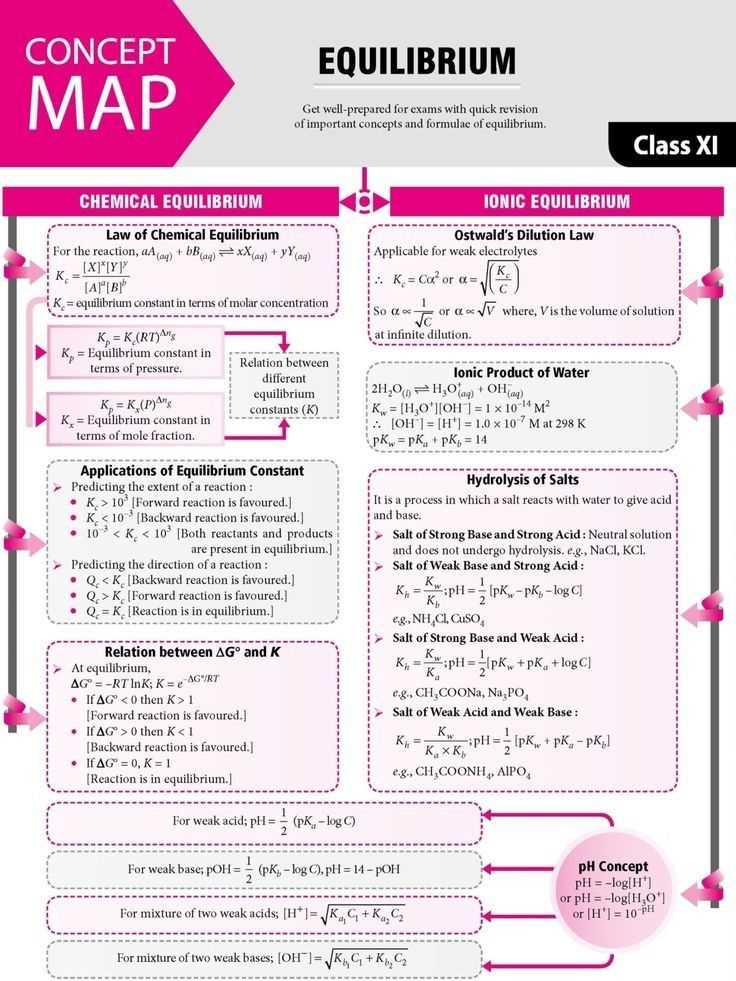
Another important topic covered in Chem 101 is chemical equilibrium. Students learn about the equilibrium constant, Le Chatelier’s principle, and how to calculate the concentration of reactants and products at equilibrium. They also study acids and bases, pH, and buffers.
The course concludes with an introduction to thermodynamics and kinetics. Students learn about energy changes in chemical reactions, including enthalpy, entropy, and Gibbs free energy. They also study reaction rates, factors affecting reaction rates, and the rate laws of chemical reactions.
Throughout the course, students are required to participate in laboratory sessions to gain hands-on experience in conducting experiments, making observations, and analyzing data. These practical sessions help reinforce the theoretical concepts learned in class and develop essential laboratory skills.
In summary, Chem 101 covers a wide range of topics in chemistry, from the basics of matter and atoms to stoichiometry, equilibrium, thermodynamics, and kinetics. It provides students with a solid foundation in the subject and prepares them for further studies or careers in the field of chemistry.
Key Concepts in Chem 101
Chem 101 is an introductory course that covers the fundamental concepts of chemistry. It lays the foundation for further study in the field and provides students with a strong understanding of the basic principles. Here are some key concepts you should be familiar with:
- Atoms and Elements: Atoms are the building blocks of matter, and each element is made up of a unique type of atom. Understanding the structure of atoms, their properties, and how they form chemical bonds is crucial in chemistry.
- Chemical Reactions: Chemical reactions involve the rearrangement of atoms to form new substances. It is essential to understand the different types of chemical reactions, how to balance equations, and how to calculate stoichiometry.
- States of Matter: Matter exists in three states: solid, liquid, and gas. Understanding the behavior of substances in each state, phase changes, and the principles of gas laws is important in chemistry.
- Acids and Bases: Acids are substances that release hydrogen ions in water, while bases release hydroxide ions. Understanding the properties of acids and bases, pH, and their reactions is crucial in many chemical processes.
- Chemical Bonding: Chemical bonding involves the attraction between atoms to form molecules or compounds. Understanding different types of bonding, such as covalent and ionic bonding, is essential in understanding the properties and behavior of substances.
- Thermodynamics: Thermodynamics deals with the energy changes that occur during chemical reactions. Understanding concepts like enthalpy, entropy, and Gibbs free energy is important in assessing the feasibility and spontaneity of reactions.
These are just a few of the key concepts covered in a Chem 101 course. It is important to study and understand these concepts thoroughly as they form the foundation for further studies in chemistry.
Important Equations and Formulas
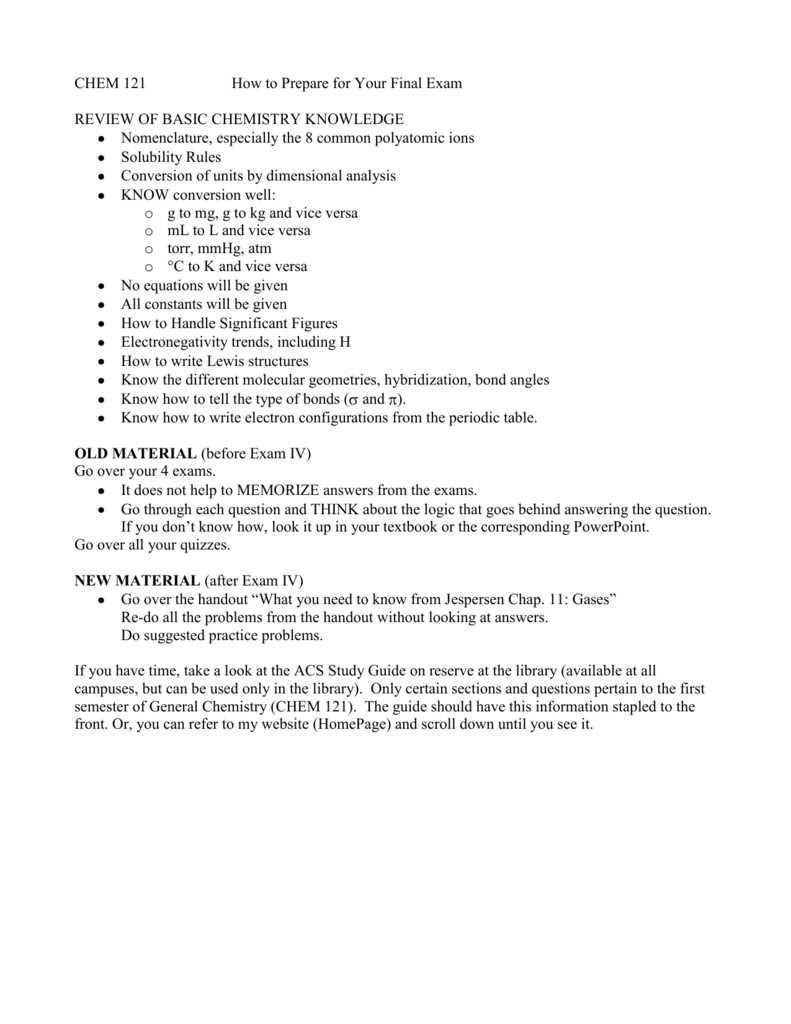
In order to succeed on your Chem 101 final exam, it’s crucial to have a solid understanding of important equations and formulas. These mathematical expressions will help you solve various problems and calculations in chemistry.
Gas Laws:
- The ideal gas law: PV = nRT, where P is pressure, V is volume, n is the number of moles, R is the ideal gas constant, and T is temperature.
- Boyle’s Law: P1V1 = P2V2, which shows the inverse relationship between pressure and volume when temperature remains constant.
- Charles’ Law: V1/T1 = V2/T2, demonstrating the direct relationship between volume and temperature, assuming pressure remains constant.
- Avogadro’s Law: V1/n1 = V2/n2, indicating the direct relationship between volume and the number of moles when pressure and temperature are constant.
Stoichiometry:
- Mole ratio: A balanced chemical equation allows you to determine the ratio of moles between the reactants and products.
- Percent yield: (actual yield / theoretical yield) × 100%, used to calculate the efficiency of a chemical reaction.
- Limiting reactant: The reactant that is completely consumed and determines the amount of product that can be formed.
- Molarity: Molarity (M) is calculated by dividing the number of moles of solute by the volume of the solution in liters. M = moles of solute / liters of solution.
Acids and Bases:
- pH: The negative logarithm of the hydrogen ion concentration, measured on a scale from 0 to 14. pH = -log[H+]
- pOH: The negative logarithm of the hydroxide ion concentration. pOH = -log[OH-]
- pKa: The negative logarithm of the acid dissociation constant (Ka). pKa = -log(Ka)
- Buffer solutions: Composed of a weak acid and its conjugate base or a weak base and its conjugate acid, they resist changes in pH.
Thermodynamics:
- Enthalpy change (ΔH): The heat energy exchanged during a chemical reaction.
- Gibbs free energy (ΔG): Determining if a reaction is spontaneous or non-spontaneous. ΔG = ΔH – TΔS, where T is temperature and ΔS is entropy change.
- Entropy (ΔS): The measure of disorder or randomness in a system.
- Heat capacity (C): The amount of heat energy required to change the temperature of a substance by 1 degree Celsius.
These equations and formulas provide the foundation for understanding and solving problems in chemistry. Make sure to practice using them in different contexts to solidify your knowledge before the final exam.
Tips for Studying and Reviewing
Studying for a final exam in chemistry can be overwhelming, but with the right approach and strategies, you can feel more confident and prepared. Here are some tips to help you study and review effectively:
1. Start Early
Don’t wait until the last minute to start studying. Give yourself plenty of time to review the material and break it down into manageable chunks. Starting early will also give you the opportunity to seek help from your professor or classmates if you come across any difficult concepts.
2. Create a Study Schedule
Plan out your study sessions and allocate specific times for each topic or chapter. Having a schedule will help you stay organized and ensure that you cover all the necessary material. Be sure to include breaks in your schedule to rest and recharge.
3. Review Lecture Notes and Textbook
Go through your lecture notes and the relevant chapters in your textbook. Pay attention to key concepts, definitions, and any examples or problems that were discussed in class. Use highlighting or underlining to mark important information that you want to review.
4. Practice with Sample Questions
One of the best ways to prepare for a chemistry exam is by practicing with sample questions. Look for past exams or create your own practice questions based on the material you’ve covered. Try to solve them on your own first, and then check your answers to identify any areas where you need improvement.
5. Form Study Groups
Consider forming study groups with classmates who are also preparing for the exam. Working together can help you clarify any confusing topics, share different perspectives, and motivate each other to stay focused and on track. Just make sure the group stays on task and doesn’t become a social gathering.
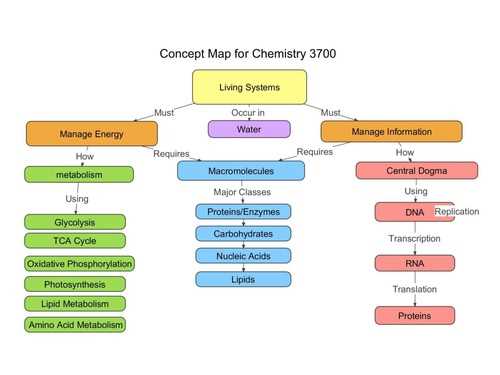
6. Use mnemonics and visual aids
Chemistry often involves complex formulas, equations, and concepts that can be challenging to remember. Create mnemonics or acronyms to help you recall important information. You can also use visual aids, such as diagrams, charts, or flashcards, to reinforce your understanding and improve retention.
7. Seek Help if Needed
If you’re struggling to understand certain topics or concepts, don’t hesitate to seek help. Talk to your professor, attend office hours, or ask a classmate for clarification. There are also many online resources, tutorials, and videos available that can provide additional explanations and examples.
Remember, studying for a chemistry final exam requires consistent effort and dedication. By following these tips and staying organized, you can maximize your studying efficiency and increase your chances of success.
Practice Problems and Sample Questions
In preparation for the Chem 101 final exam, it is crucial to practice solving problems and answering sample questions. This will not only help you identify areas where you need improvement, but also familiarize yourself with the types of questions you may encounter on the actual exam.
Below are some practice problems and sample questions to aid in your studying:
- Problem 1: Calculate the molar mass of calcium nitrate (Ca(NO3)2).
- Problem 2: Balance the following chemical equation: Fe + O2 → Fe2O3.
- Problem 3: Calculate the percent yield of a reaction if 2.5 grams of a product was obtained, but the theoretical yield is 3.0 grams.
Sample Questions:
- Which of the following is an example of an exothermic reaction?
- Burning wood
- Boiling water
- Photosynthesis
- Melting ice
- What is the formula for sodium chloride?
- NaCl
- NaOH
- Na2SO4
- NaNO3
- How many electrons are in a neutral atom of sulfur with an atomic number of 16?
- 8
- 16
- 32
- 40
By practicing these problems and answering the sample questions, you will become more confident and prepared for the Chem 101 final exam. Remember to review the concepts covered in class and seek clarification on any topics you find challenging. Good luck!
Final Exam Preparation and Test-Taking Strategies: Conclusion
The final exam is often a crucial component of a student’s grade and can be a source of significant stress and anxiety. However, with proper preparation and the implementation of effective test-taking strategies, students can increase their chances of success and alleviate some of the pressure associated with exams.
Throughout this study guide, we have explored various techniques and resources that can help students prepare for their final exams in Chemistry 101. From creating a study schedule and reviewing course materials to practicing with sample questions and seeking additional help, these strategies can enhance comprehension and retention of the subject matter.
It is important for students to approach final exam preparation with a proactive mindset and a focus on understanding rather than memorization. By engaging in active learning methods such as self-quizzing, concept mapping, and teaching others, students can solidify their knowledge and increase their ability to recall information during the exam.
During the actual test, students should employ effective test-taking strategies such as time management, careful reading of instructions, and prioritizing questions. Additionally, maintaining a positive mindset, staying confident, and managing test anxiety can greatly contribute to performance.
While this study guide provides valuable tips and strategies, it is important for students to tailor their approach based on their individual learning styles and preferences. Regular practice, seeking help when needed, and maintaining a balanced lifestyle are also crucial aspects of exam preparation.
Overall, by incorporating the techniques and resources discussed in this guide, students can feel more confident and prepared for their Chemistry 101 final exam. Through diligent studying, effective test-taking strategies, and a proactive mindset, success on the final exam is within reach!