Mastering Chemistry: Your Ultimate Guide to Acing Semester 2 Exam Review
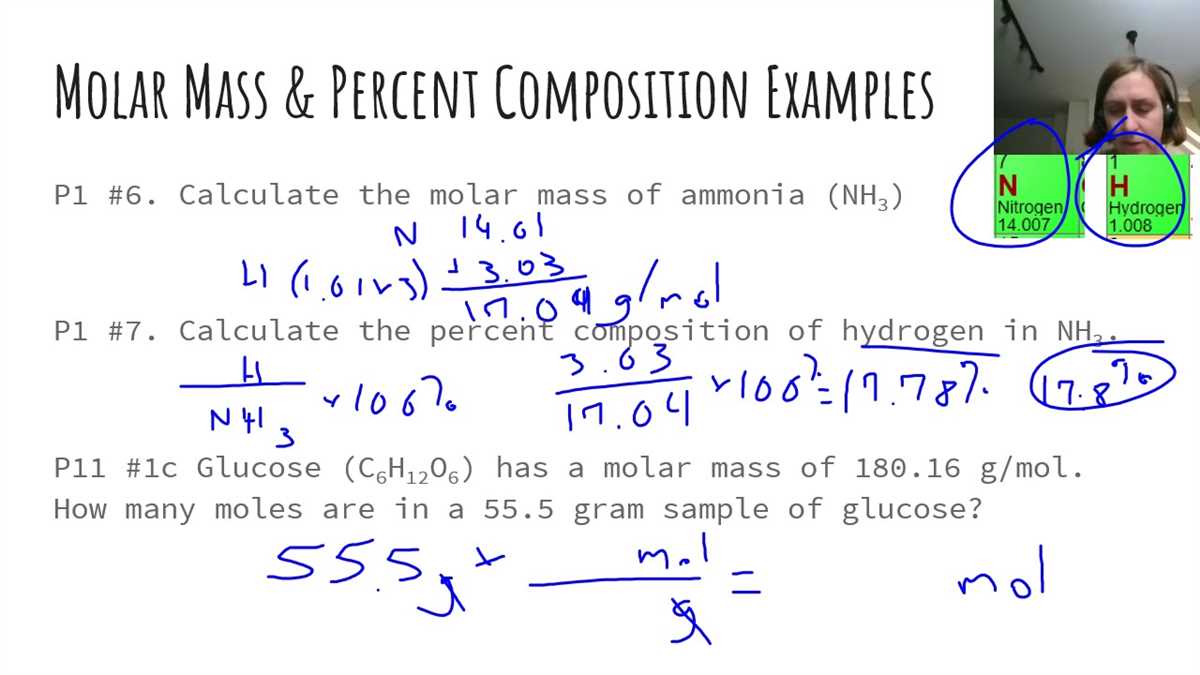
Welcome to the ultimate review guide for the Chemistry Semester 2 exam! If you are feeling overwhelmed by the amount of material you need to study or if you simply want to refresh your knowledge before the big test, you have come to the right place. In this article, we will cover all the key topics and concepts that you need to know in order to ace your exam and achieve success in your chemistry course.
Chemistry Semester 2 builds upon the foundations laid in Semester 1, delving deeper into topics such as chemical reactions, stoichiometry, thermodynamics, and equilibrium. It is essential to have a solid understanding of these concepts in order to progress in your chemistry studies and excel in future courses. This review guide will serve as your comprehensive resource, providing concise explanations, helpful tips, and practice questions to reinforce your learning.
Throughout this guide, we will cover the various types of chemical reactions, including synthesis, decomposition, combustion, and redox reactions. We will also explore how to balance chemical equations and calculate reaction stoichiometry. In addition, you will gain a thorough understanding of thermodynamics, including concepts such as enthalpy, entropy, and Gibbs free energy. Lastly, we will tackle equilibrium, discussing topics such as Le Chatelier’s principle and calculating equilibrium constants.
Whether you are preparing for a cumulative final exam or a specific unit test, this review guide will provide you with the necessary tools to succeed. Take the time to thoroughly review each concept and work through the practice questions to reinforce your understanding. By mastering the material covered in this guide, you will feel confident and prepared when it comes time to take your Chemistry Semester 2 exam. Good luck!
Overview
In the Chemistry semester 2 exam review, we will be covering a range of topics that were discussed throughout the semester. These topics include chemical reactions, stoichiometry, gas laws, solutions, acids and bases, and electrochemistry. It is important to have a solid understanding of these concepts in order to successfully pass the exam.
Chemical reactions are the process by which one or more substances are transformed into different substances. This involves the breaking of bonds in reactant molecules and the formation of new bonds in product molecules. It is essential to understand how to balance chemical equations and identify the type of reaction that is taking place.
Stoichiometry is the calculation of quantitative relationships in chemical reactions. This involves determining the amount of reactants and products in a given reaction. It is important to know how to use mole ratios and perform calculations involving mass, volume, and concentration.
Gas laws describe the behavior of gases under various conditions. This includes understanding relationships between temperature, pressure, volume, and amount of gas. It is essential to know the basic gas laws, such as Boyle’s law, Charles’s law, and Avogadro’s law.
Solutions are homogeneous mixtures of two or more substances. This includes understanding solubility, concentration, and the process of dissolution. It is important to know how to calculate molarity, dilution, and perform stoichiometric calculations involving solutions.
Acids and bases are chemical substances that can donate or accept protons. This includes understanding the properties of acids and bases, pH scale, acid-base reactions, and titrations. It is important to know how to calculate pH, pOH, and perform acid-base equilibrium calculations.
Electrochemistry is the study of the relationship between electricity and chemical reactions. This includes understanding redox reactions, electrochemical cells, electrolysis, and the flow of electrons. It is important to know how to balance redox equations and calculate cell potentials.
Overall, the Chemistry semester 2 exam review will cover these key topics and require a comprehensive understanding of the principles and calculations involved. It is crucial to review and practice these concepts in order to succeed in the exam.
Important Concepts and Topics
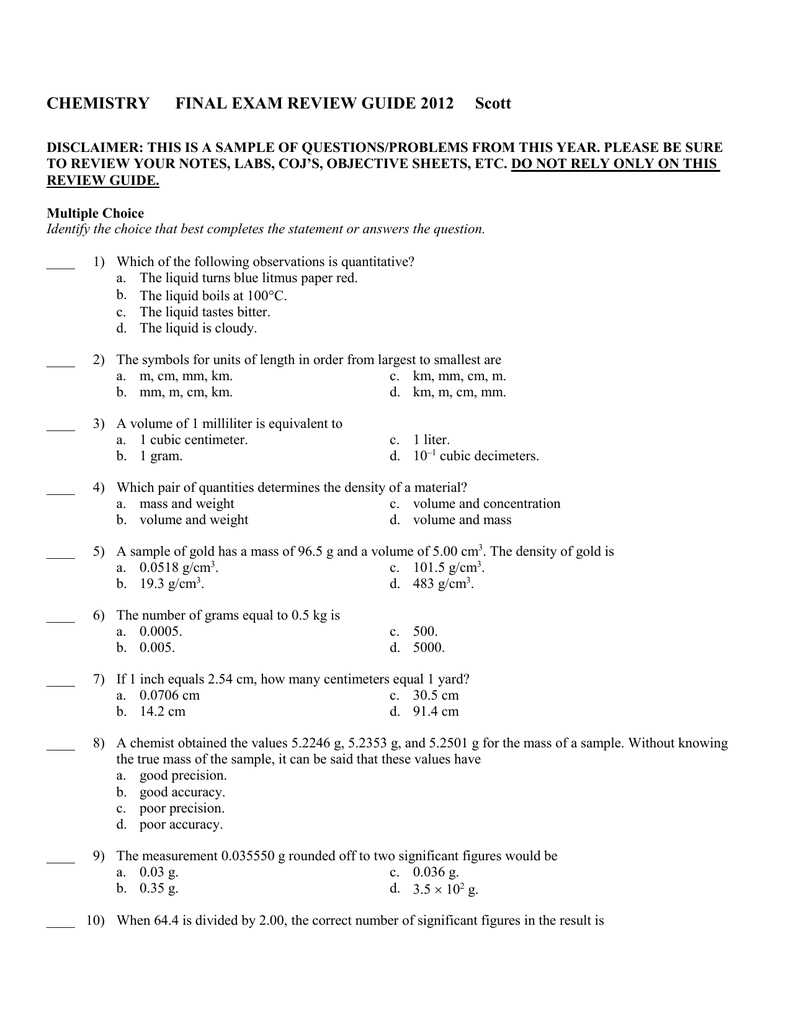
In this Chemistry semester 2 exam review, there are several important concepts and topics that you should focus on. These concepts and topics will help you understand the core principles of Chemistry and prepare you for the exam.
1. Chemical Reactions: Understanding chemical reactions is essential in Chemistry. You should be familiar with concepts such as balancing chemical equations, predicting products, and identifying different types of reactions, such as synthesis, decomposition, combustion, and redox reactions. It is important to know how to write and balance chemical equations, as well as how to calculate reaction stoichiometry.
2. Acid-Base Chemistry: Acid-base reactions play a crucial role in many chemical processes. Make sure you understand the properties of acids and bases, such as pH, pOH, and the Bronsted-Lowry and Lewis definitions of acids and bases. Also, be familiar with buffer solutions and their capacity to resist changes in pH.
3. Thermodynamics: Thermodynamics deals with the study of energy changes in chemical reactions. Pay attention to concepts such as enthalpy, entropy, Gibbs free energy, and their relationships. Understand the laws of thermodynamics and how they apply to chemical processes, including exothermic and endothermic reactions.
4. Equilibrium: Equilibrium is an important concept as it describes the balance between reactants and products in a chemical reaction. Make sure you understand the concept of dynamic equilibrium, Le Chatelier’s principle, and how to calculate equilibrium constants and concentrations at equilibrium.
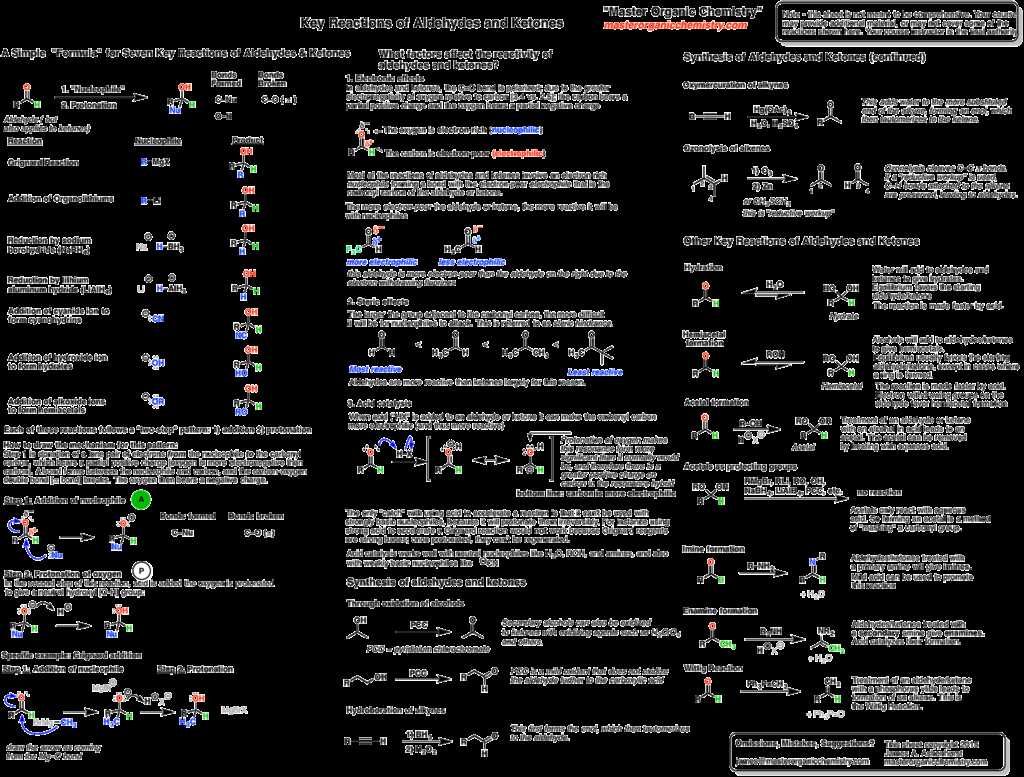
5. Organic Chemistry: Organic chemistry focuses on the structure, properties, composition, reactions, and synthesis of carbon-based compounds. You should be familiar with topics such as functional groups, isomerism, nomenclature, and reaction mechanisms.
6. Kinetics: Kinetics is the study of the speed of chemical reactions and the factors that influence it. Understand concepts such as reaction rates, rate laws, reaction mechanisms, and the effect of temperature, concentration, surface area, and catalysts on the rate of reactions.
7. Periodic Trends: The periodic table is a crucial tool in Chemistry. Be familiar with periodic trends such as atomic radius, ionization energy, electron affinity, and electronegativity. Understand the patterns and variations in these properties across the periodic table.
By focusing on these important concepts and topics, you will be well-prepared for your Chemistry semester 2 exam. Make sure to review your class notes, textbooks, and practice problems to reinforce your understanding and problem-solving skills.
Atomic Structure and Periodicity
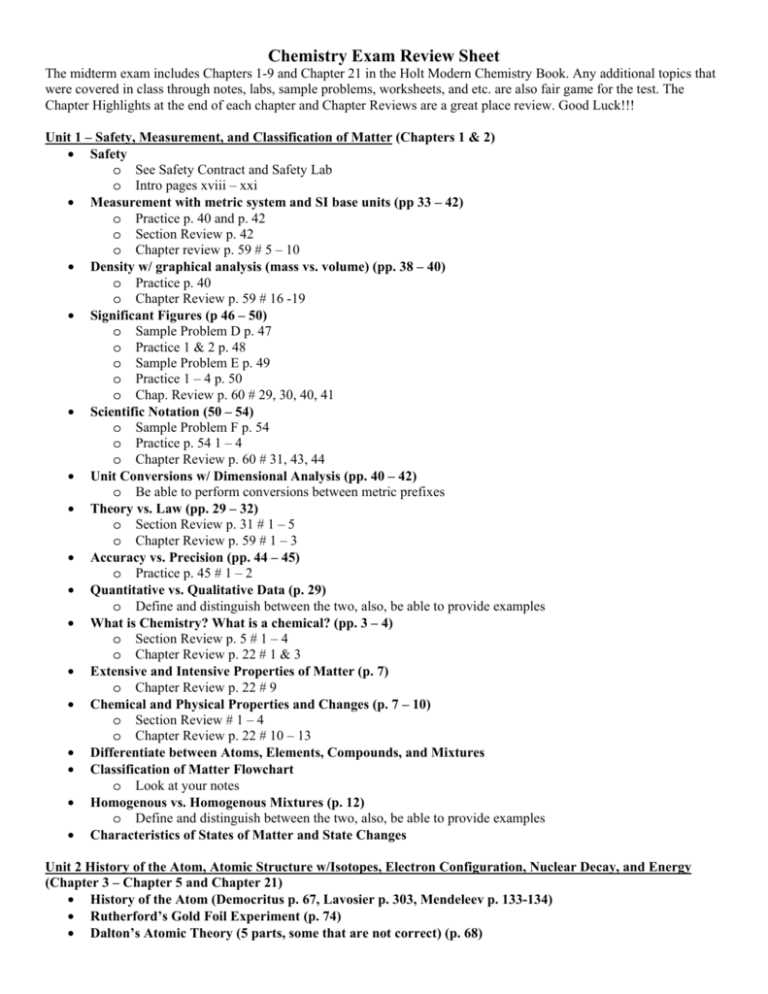
The study of atomic structure and periodicity is fundamental to understanding the behavior and properties of elements. Atoms are the building blocks of matter, and their structure determines how they interact with each other to form compounds and molecules. The periodic table organizes the elements based on their atomic structure and allows us to predict their properties.
At the core of an atom is the nucleus, which is made up of protons and neutrons. Protons have a positive charge, while neutrons have no charge. Surrounding the nucleus are electrons, which have a negative charge. The number of protons in an atom determines its atomic number, which in turn determines its identity as a specific element. For example, carbon atoms have six protons, while oxygen atoms have eight. The number of neutrons can vary, giving rise to different isotopes of an element.
- Electron configuration: Electrons occupy energy levels or shells around the nucleus. Each energy level can hold a certain number of electrons, with the innermost level having the lowest energy and being filled first. The electron configuration of an atom describes how the electrons are arranged in these energy levels.
- Periodic trends: The periodic table is arranged in periods (rows) and groups (columns). As you move across a period, the atomic radius decreases, while the ionization energy and electronegativity increase. As you move down a group, the atomic radius increases, while the ionization energy and electronegativity decrease.
- Chemical bonding: The arrangement of electrons in an atom’s outermost energy level, known as the valence electrons, determines how it will bond with other atoms. Atoms strive to achieve a stable electron configuration by either gaining, losing, or sharing electrons. This leads to the formation of various types of chemical bonds, such as ionic bonds, covalent bonds, and metallic bonds.
Understanding atomic structure and periodicity is essential not only for chemistry, but also for other branches of science, such as physics and materials science. By studying the behavior of atoms and how they interact, scientists can develop new materials with specific properties, understand chemical reactions, and unravel the mysteries of the universe at its most fundamental level.
Bonding and Molecular Structure
Chemical bonding refers to the attractive forces that hold atoms together in compounds. There are three main types of chemical bonds: ionic bonds, covalent bonds, and metallic bonds. Ionic bonds occur when one atom transfers electrons to another atom, resulting in the formation of positively and negatively charged ions. Covalent bonds occur when atoms share electrons, creating a stable electron arrangement. Metallic bonds occur between metal atoms, where the electrons are delocalized and free to move throughout the structure.
The arrangement of atoms in a molecule is called its molecular structure. This structure is determined by the type and number of bonds between atoms. In a covalent bond, the atoms can be held together by single, double, or triple bonds. Single bonds involve the sharing of one pair of electrons, double bonds involve the sharing of two pairs of electrons, and triple bonds involve the sharing of three pairs of electrons.
- Polar covalent bonds: In some covalent bonds, the sharing of electrons is not equal, resulting in a molecule with partial positive and partial negative charges. This is called a polar covalent bond. An example of a molecule with polar covalent bonds is water (H2O), where the oxygen atom attracts the shared electrons more strongly than the hydrogen atoms.
- Nonpolar covalent bonds: Other covalent bonds involve the sharing of electrons equally between atoms, resulting in a molecule with no partial charges. This is called a nonpolar covalent bond. An example of a molecule with nonpolar covalent bonds is methane (CH4), where the carbon and hydrogen atoms share electrons equally.
- Intermolecular forces: In addition to bonds within molecules, there are also forces between molecules called intermolecular forces. These forces determine the physical properties of substances, such as boiling point and solubility. Examples of intermolecular forces include hydrogen bonding, dipole-dipole interactions, and London dispersion forces.
In summary, chemical bonding involves the attractive forces that hold atoms together in compounds. The molecular structure of a compound is determined by the type and number of bonds between atoms. Covalent bonds can be polar or nonpolar, depending on the unequal or equal sharing of electrons. Intermolecular forces are the forces between molecules that influence the physical properties of substances. Understanding bonding and molecular structure is essential for understanding the behavior and properties of chemical compounds.
Chemical Reactions and Stoichiometry
In chemistry, chemical reactions play a crucial role in understanding how different substances interact with each other. Chemical reactions involve the breaking and forming of bonds between atoms to create new substances. This process occurs through the exchange, addition, or removal of atoms to form new molecules. Understanding and predicting chemical reactions is essential for various applications, such as pharmaceuticals, materials science, and environmental studies.
Stoichiometry, on the other hand, is the branch of chemistry that deals with the quantitative relationships between the amounts of reactants and products in a chemical reaction. It allows scientists to determine the amount of each substance needed or produced in a reaction, based on the balanced chemical equation. Stoichiometry relies on the concept of the mole, which represents a specific number of particles, atoms, or molecules. By using the mole ratio derived from the balanced equation, stoichiometry calculations can determine the desired quantities.
To solve stoichiometry problems, it is important to follow a step-by-step approach. First, start with a balanced chemical equation that represents the reaction. Then, convert the given information (usually in moles or grams) to moles of the desired substance using the mole ratio. Next, use the molar mass to convert moles to grams if necessary. Finally, check the units and make sure the answer is reasonable.
Chemical reactions and stoichiometry are fundamental concepts in chemistry that allow scientists to understand and predict the behavior of matter. They provide a quantitative framework for studying and analyzing chemical reactions, enabling scientists to make informed decisions and optimize processes in various industries.
Below is an example of a balanced chemical equation and a stoichiometry problem:
Balanced Chemical Equation:
2H2 + O2 -> 2H2O
Example Stoichiometry Problem:
- If 4 moles of H2 react with excess O2, what mass of H2O will be produced?
| Given: | 4 moles H2 |
|---|---|
| Desired: | Mass of H2O |
| Step 1: | Convert moles of H2 to moles of H2O using the mole ratio from the balanced equation (2 moles H2O/2 moles H2) |
| Step 2: | Convert moles of H2O to grams using the molar mass of H2O |
| Answer: | The mass of H2O produced is 36 grams |
States of Matter and Solutions
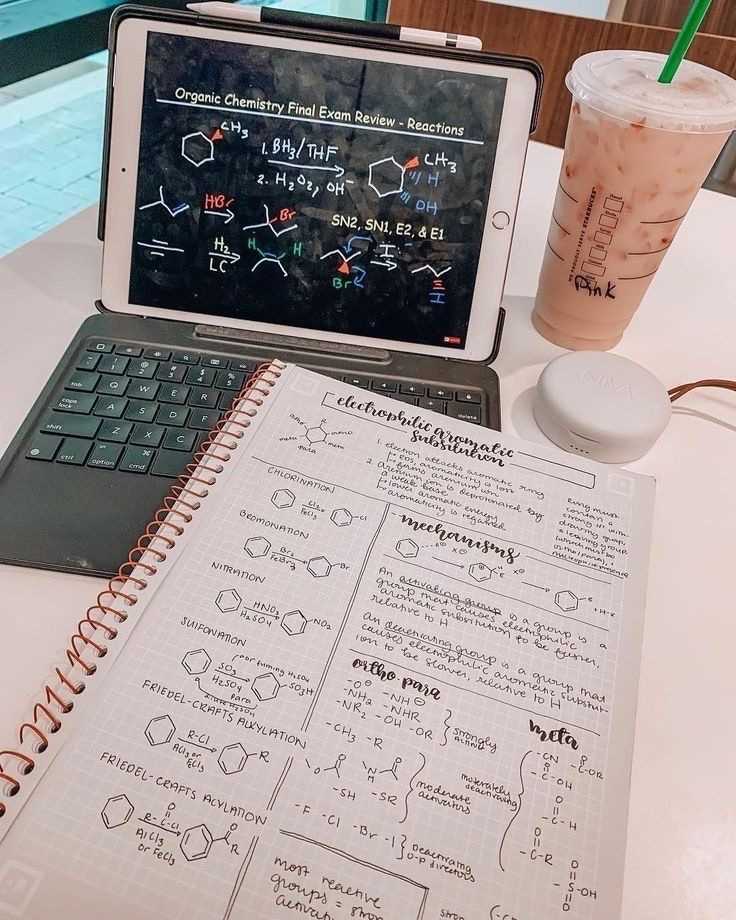
The states of matter refer to the physical forms that substances can exist in: solid, liquid, and gas. Each state of matter has its own unique properties and behavior. Solids have a definite shape and volume, with particles tightly packed together in a fixed arrangement. Liquids, on the other hand, have a definite volume but take on the shape of their container, with particles that are close together but able to move past one another. Gases have neither a definite shape nor volume, with particles that are far apart and move freely in all directions.
Solutions, on the other hand, are homogeneous mixtures of two or more substances. They consist of a solute, the substance that is being dissolved, and a solvent, the substance that does the dissolving. The solute particles become evenly distributed throughout the solvent to form a single phase. Solutions can exist in all three states of matter and exhibit similar properties to their respective state.
In solid solutions, such as alloys, the particles of the solute are evenly distributed within the particles of the solvent. This results in enhanced properties, such as increased strength or resistance to corrosion. Liquid solutions, such as saltwater, are commonly encountered in everyday life. The solvent, typically water, can dissolve many different solutes, creating a variety of solutions with different properties. Gaseous solutions, such as air, are mixtures of gases where the solute gas molecules are dispersed within the solvent gas.
Solutions can be characterized by various properties, including concentration, solubility, and colligative properties. Concentration refers to the amount of solute per unit volume or mass of the solution. Solubility is the maximum amount of solute that can dissolve in a given amount of solvent at a specific temperature and pressure. Colligative properties, such as boiling point elevation and freezing point depression, depend on the concentration of solute particles in the solution and not on the specific identity of the solute.
Acids and Bases
An acid is a chemical substance that donates protons (H+) or hydrogen ions. Acids have a sour taste and can corrode metals. They are also electrolytes, which means they can conduct electricity when dissolved in water. Acids can be classified as strong or weak, depending on the extent to which they dissociate or break apart in water.
A base, on the other hand, is a chemical substance that accepts protons. Bases have a bitter taste and can feel slippery to the touch. Like acids, bases are also electrolytes. Bases can be classified as strong or weak, based on the extent of their dissociation in water.
One way to identify an acid or a base is by using the pH scale, which measures the acidity or alkalinity of a solution. The pH scale ranges from 0 to 14, with 7 being neutral. Solutions with a pH less than 7 are considered acidic, while solutions with a pH greater than 7 are considered basic or alkaline.
- Acids can react with bases to form salt and water, a reaction known as neutralization.
- Some common examples of acids include hydrochloric acid (HCl), sulfuric acid (H2SO4), and acetic acid (CH3COOH).
- Common bases include sodium hydroxide (NaOH), potassium hydroxide (KOH), and calcium hydroxide (Ca(OH)2).
- Acid-base reactions are important in various chemical and biological processes, such as digestion, respiration, and maintaining the pH balance in the human body.
Understanding acids and bases is crucial in the field of chemistry as they play a significant role in many chemical reactions and processes. Whether it’s testing the pH of a solution, identifying the components of a substance, or understanding the effects of acids and bases on different materials, a strong foundation in acids and bases is essential for any chemistry student.
Conclusion
Organic chemistry is a fascinating branch of chemistry that is dedicated to the study of carbon compounds and their properties. It plays a crucial role in our daily lives, as many of the substances we encounter on a daily basis are organic compounds. From the food we eat to the medicines we take, organic chemistry is present in almost every aspect of our lives.
Throughout this article, we have explored the fundamental concepts of organic chemistry, such as the structure and properties of organic compounds, as well as various methods for their synthesis and analysis. We have also discussed the importance of organic chemistry in various industries, including pharmaceuticals, materials, and environmental science.
Overall, the study of organic chemistry is essential for understanding the complex molecular world and how it impacts our lives. As we continue to advance in technology and science, further discoveries in organic chemistry will undoubtedly provide us with new and exciting possibilities in fields such as medicine, energy, and materials science. Whether you are a student, a researcher, or simply interested in understanding the world around you, organic chemistry offers a never-ending journey of discovery and innovation.