Unraveling the Mystery: Finding Answers to Counting Atoms Worksheet
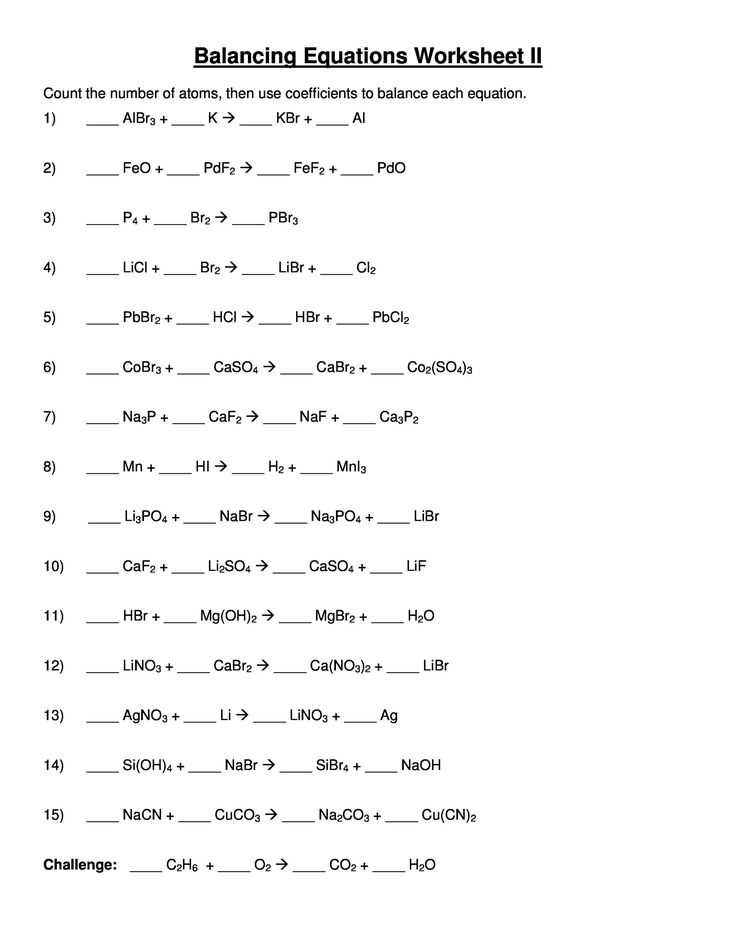
Understanding the concept of counting atoms is essential in chemistry. Atoms are the fundamental building blocks of matter, and knowing how to count them is crucial in various chemical reactions and equations. A counting atoms worksheet provides a practical way to practice and reinforce this skill.
The answers to a counting atoms worksheet help students check their understanding and accuracy. By comparing their answers with the provided solutions, students can identify any mistakes made and learn from them. This process enables them to improve their skills in counting atoms and strengthens their overall grasp of chemistry concepts.
Counting atoms worksheets typically consist of chemical formulas or equations, where students are required to count the number of atoms for each element involved. These worksheets often involve different chemical compounds or reactions, which allows students to practice counting atoms in various scenarios.
For example:
Consider the chemical equation: C6H12O6. In this case, students would be asked to count the number of carbon (C), hydrogen (H), and oxygen (O) atoms present. The answer would be 6 carbon atoms, 12 hydrogen atoms, and 6 oxygen atoms.
Counting atoms worksheets are an effective tool for students to reinforce their understanding of chemistry concepts and improve their ability to count atoms accurately. With practice, students can become more proficient in counting atoms and apply this skill to more complex chemical equations and reactions.
Understanding Atom Counting
Counting atoms is an essential skill in chemistry. It allows us to determine the composition and structure of molecules and compounds. Atom counting is based on the fact that each element is made up of individual atoms, and these atoms can combine in specific ratios to form compounds.
When counting atoms, it is important to understand the concept of a chemical formula. A chemical formula represents the types and numbers of atoms present in a molecule or compound. Each element is represented by its chemical symbol, and the number of atoms of each element is indicated by a subscript after the symbol.
To count the number of atoms in a chemical formula, we can follow a few simple steps:
- Identify the chemical formula and the elements present in it.
- Determine the number of atoms of each element by looking at the subscripts.
- Multiply the number of atoms by the coefficient outside the parentheses, if there is one.
- Add up the total number of atoms of each element to get the final count.
It is important to note that parentheses in a chemical formula indicate a repeating unit. In this case, the number outside the parentheses represents the number of repeating units, and the number inside the parentheses represents the number of atoms within each unit.
By understanding these concepts and following the steps outlined above, you can successfully count atoms in a chemical formula and gain a deeper understanding of the composition and structure of molecules and compounds.
What is Atom Counting?
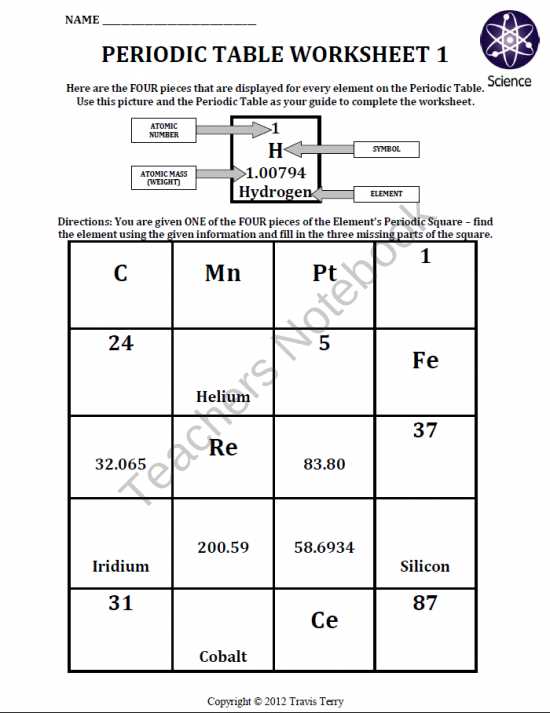
Atom counting is a process of determining the number of atoms present in a chemical formula or a specific compound. It involves understanding the composition of the compound and identifying the different elements and their respective quantities.
Atoms are the building blocks of matter and they combine to form molecules and compounds. Each element is represented by a unique symbol and has a specific atomic number, which indicates the number of protons in its nucleus. In a chemical formula, these symbols are used to represent the types of atoms present, and the subscripts denote the number of each element.
For example, in the chemical formula H2O, there are two hydrogen atoms (H) and one oxygen atom (O). By counting the number of each atom, we can determine the total number of atoms in the compound.
Atom counting is important in various fields such as chemistry, physics, and biology. It is used to calculate the amounts of different elements present in a sample, understand the stoichiometry of chemical reactions, and predict the behavior of compounds under different conditions.
In conclusion, atom counting is a fundamental skill in understanding the composition and structure of compounds. By accurately counting the number of atoms, scientists can gain valuable insights into the properties and reactivity of different substances.
Why is Atom Counting Important?
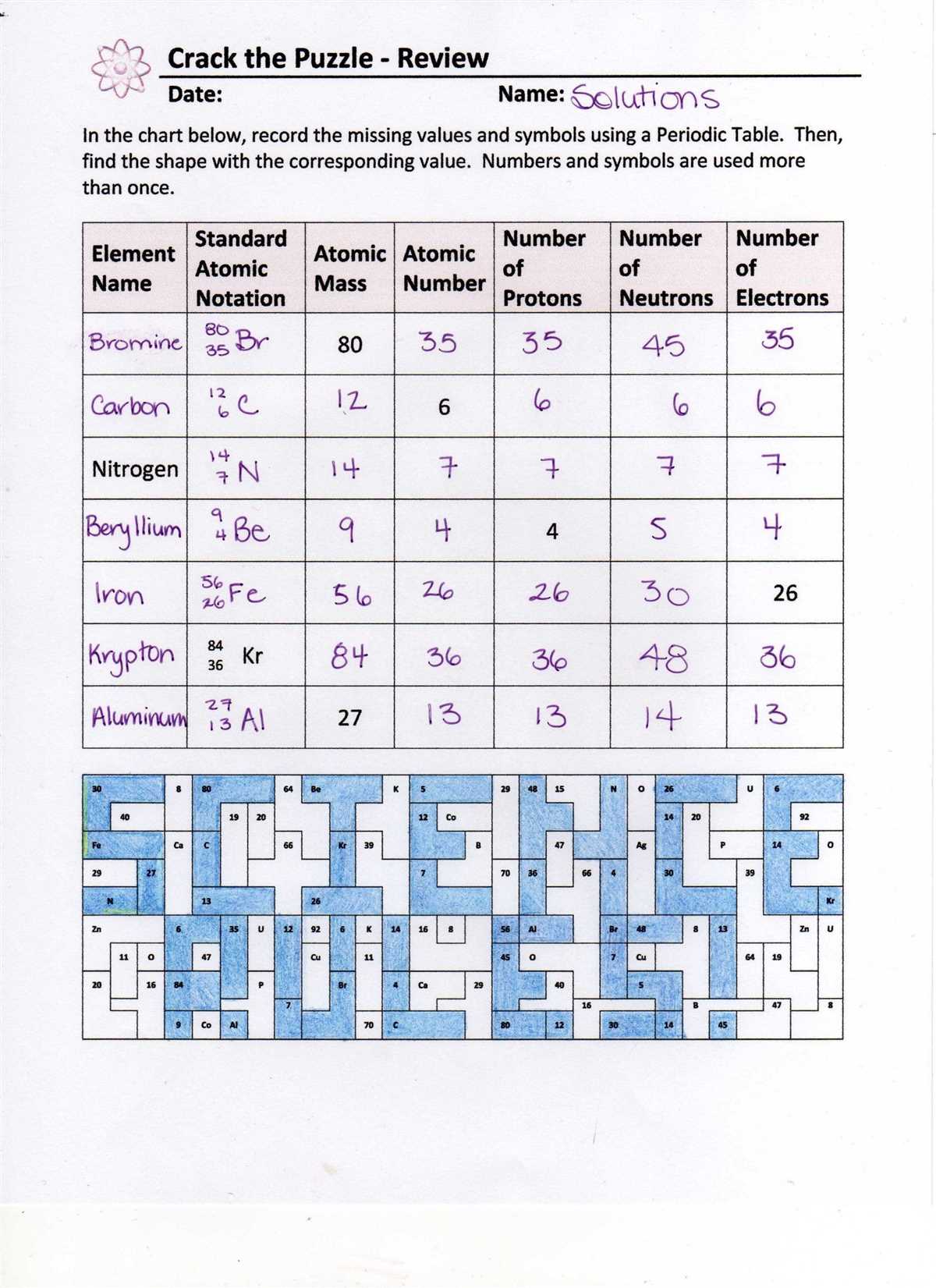
Atom counting is an essential skill in chemistry that allows us to determine the composition, structure, and properties of substances. By counting atoms, we can understand the fundamental building blocks that make up matter and predict how they will interact with other substances. This knowledge is crucial for a wide range of scientific and technological applications, including drug development, materials science, and environmental monitoring.
Understanding Chemical Formulas: Atom counting is necessary to interpret and write chemical formulas accurately. Chemical formulas represent the elements and the number of atoms of each element present in a compound. For example, the chemical formula H2O indicates that there are two hydrogen atoms (H) and one oxygen atom (O) in a water molecule. Counting atoms in a formula allows us to determine the ratio of elements in a compound and calculate its molar mass.
Molecular Equations and Stoichiometry: Atom counting is essential for balancing chemical equations and performing stoichiometric calculations. Balancing equations involves ensuring that the number of atoms of each element is the same on both sides of the equation. This process allows us to understand the proportions in which substances react and form products. Stoichiometric calculations involve determining the amounts of reactants and products based on the balanced chemical equation and the molar ratios between the species involved.
Quantitative Analysis: Atom counting is crucial for quantitative analysis, where the amount of a specific element or compound in a sample is determined. Techniques such as spectroscopy, mass spectrometry, and titration rely on accurate atom counting to measure the concentration or purity of substances. By counting atoms, scientists can determine the composition of mixtures, detect impurities, and evaluate the efficiency of chemical reactions or industrial processes.
Environmental Impact: Atom counting is also important for assessing the environmental impact of chemical substances. By determining the number of atoms of toxic elements in a substance, scientists can evaluate its potential harm and develop strategies for minimizing its adverse effects. Atom counting is particularly relevant in environmental chemistry and toxicology, where understanding the behavior and fate of pollutants in ecosystems is essential for protecting human health and the environment.
In conclusion, atom counting is a fundamental skill in chemistry that enables us to understand the composition, properties, and behavior of substances. It plays a crucial role in various scientific and technological fields and is essential for advancing our understanding of the world around us.
Atom Counting Worksheet: Step by Step
Counting atoms is an essential skill in chemistry, as it allows scientists to determine the composition of substances and understand their chemical reactions. The Atom Counting Worksheet provides students with a step-by-step process to count atoms in a given chemical formula.
Step 1: Identify the elements
The first step in counting atoms is to identify the elements present in the chemical formula. This can be done by looking at the symbols of the elements that are listed. For example, in the formula H2O, the elements are hydrogen (H) and oxygen (O).
Step 2: Count the subscripts
Next, count the subscripts next to each element symbol. Subscripts indicate how many atoms of the element are present in the formula. For example, in the formula H2O, there are two hydrogen atoms (H) and one oxygen atom (O).
Step 3: Account for coefficients
If there is a coefficient in front of the whole formula, it must be applied to each element. For example, if the coefficient is 2, then the number of atoms for each element is multiplied by 2. In the formula 2H2O, there would be four hydrogen atoms (2 x 2 = 4) and two oxygen atoms (2 x 1 = 2).
Step 4: Sum up the total atoms
Finally, sum up the total number of atoms for each element in the formula. This will give you the total count of atoms. For example, in the formula 2H2O, there are six atoms in total, four hydrogen atoms (2 x 2 = 4) and two oxygen atoms (2 x 1 = 2).
By following these step-by-step instructions, students can effectively count atoms in chemical formulas and gain a better understanding of the composition of substances.
Atom Counting Worksheet: Answers
Here are the answers to the atom counting worksheet:
Question 1:
The chemical formula shows the number and type of atoms that make up a molecule or compound. For example, in the chemical formula H2O, there are two hydrogen atoms (H) and one oxygen atom (O).
Question 2:
In order to determine the total number of atoms in a molecule, you need to multiply the subscript for each element by the number of molecules. For example, in the formula 2H2O, there are four hydrogen (H) atoms (2 x 2) and two oxygen (O) atoms (2 x 1). The total number of atoms in 2H2O is six.
Question 3:
To find the total number of atoms in a compound, you need to add up the number of each type of atom. For example, in the chemical formula CH4, there is one carbon (C) atom and four hydrogen (H) atoms. The total number of atoms in CH4 is five.
Question 4:
The coefficient in front of a chemical formula represents the number of molecules. For example, in the formula 2H2O, the coefficient is two, indicating that there are two molecules of water.
Question 5:
To calculate the total number of atoms in a compound with a coefficient, you need to multiply the coefficient by the number of atoms in each molecule. For example, in the formula 2H2O, there are four hydrogen (H) atoms (2 x 2) and two oxygen (O) atoms (2 x 1). The total number of atoms in 2H2O is six.
Question 6:
The atomic mass of an element is the average mass of all the isotopes of that element, taking into account the abundance of each isotope. It is usually expressed in atomic mass units (amu).
Question 7:
To calculate the molar mass of a compound, you need to multiply the atomic mass of each element by the number of atoms in the compound, and then add up the masses. For example, in the compound H2O, the molar mass is calculated by multiplying the atomic mass of hydrogen (1.00784 amu) by two, and the atomic mass of oxygen (15.999 amu) by one, and then adding the two masses together.
Question 8:
The molar mass of a compound is used to determine the number of moles of that compound in a given mass. To calculate the number of moles, you divide the mass of the compound by the molar mass. For example, if you have 18 grams of water (H2O), the molar mass of water is 18.01528 g/mol, so the number of moles of water is 1 (18 g / 18.01528 g/mol = 1 mol).
Question 9:
The Avogadro’s number is a constant used to convert between the number of atoms or molecules and the number of moles. It is equal to 6.022 x 10^23 particles per mole.
Question 10:
To find the number of atoms or molecules in a given number of moles, you multiply the number of moles by the Avogadro’s number. For example, if you have 2 moles of water (H2O), you would multiply 2 mol by Avogadro’s number (6.022 x 10^23 particles/mol) to find that you have 1.2044 x 10^24 molecules of water.
Tips for Successful Atom Counting
1. Understand the Chemical Formula
Before you can start counting atoms, it’s crucial to have a solid understanding of the chemical formula. Make sure you know the symbols for each element and how they combine to form molecules. This will give you a foundation for accurately counting atoms.
2. Break it Down
Complex chemical formulas can be overwhelming, so it’s essential to break them down into smaller parts. Identify each molecule or ion in the formula and focus on counting the atoms within that specific component. This approach can make the task more manageable and less confusing.
3. Use Coefficients
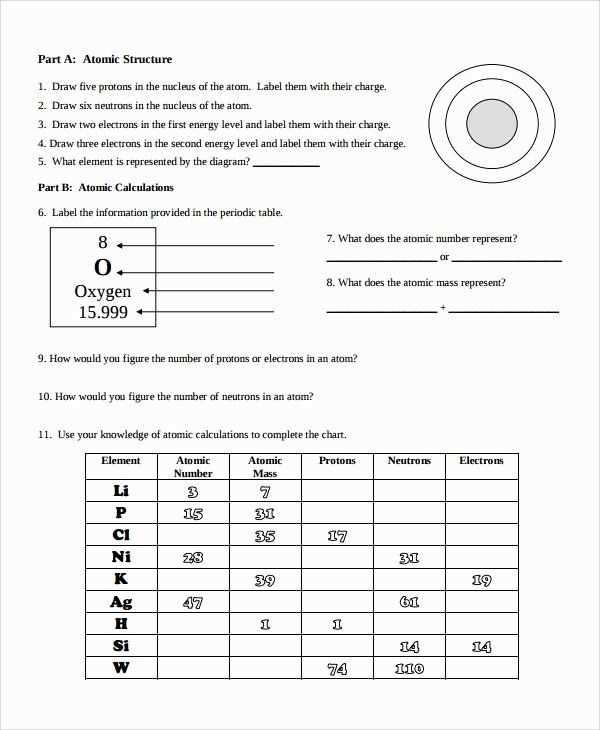
Coefficients in chemical equations indicate the number of molecules or ions involved. Pay attention to the coefficients and use them as a multiplier when counting atoms. This method can help you account for multiple molecules or ions present in the formula.
4. Pay Attention to Parentheses
Parentheses in chemical formulas indicate a group of atoms that act as a unit. When counting atoms, make sure to multiply the subscript outside the parentheses by each element inside the parentheses. This step is crucial for accurately counting atoms in complex formulas.
5. Practice, Practice, Practice
Like any skill, counting atoms requires practice to improve. The more you practice, the more familiar you’ll become with different formulas and their atom counts. Try working on various worksheets and exercises to enhance your atom counting skills.
By following these tips and practicing regularly, you’ll become more confident and proficient in counting atoms. Remember, patience and perseverance are key when it comes to mastering this skill. Keep practicing, and soon enough, you’ll be an atom-counting expert!