10 Essential Tips to Ace Your Final Exam in Drivers Ed
Getting a driver’s license is a milestone in every teenager’s life. It symbolizes newfound freedom and independence, but it also comes with a great responsibility. To obtain a driver’s license, one must pass a final exam in drivers ed. This exam tests a student’s knowledge of the rules of the road and their ability to apply that knowledge in real-world scenarios.
The final exam in drivers ed is a comprehensive test that covers a wide range of topics. It includes questions on traffic signs, road markings, and the meaning of various signals. Students are also asked to demonstrate their understanding of defensive driving techniques, such as maintaining a safe following distance and being aware of potential hazards on the road.
Preparing for the final exam in drivers ed requires diligent studying and practice. Students must review their state’s driver’s manual, which outlines the rules and regulations specific to their area. They must also attend driving lessons to gain hands-on experience and learn how to apply the theoretical knowledge they have acquired.
What to Expect on Your Final Exam in Drivers Ed
If you are about to take your final exam in Drivers Ed, it is important to know what to expect and how to prepare. The final exam is designed to test your knowledge and understanding of the rules of the road, as well as your ability to apply them in real-life driving situations.
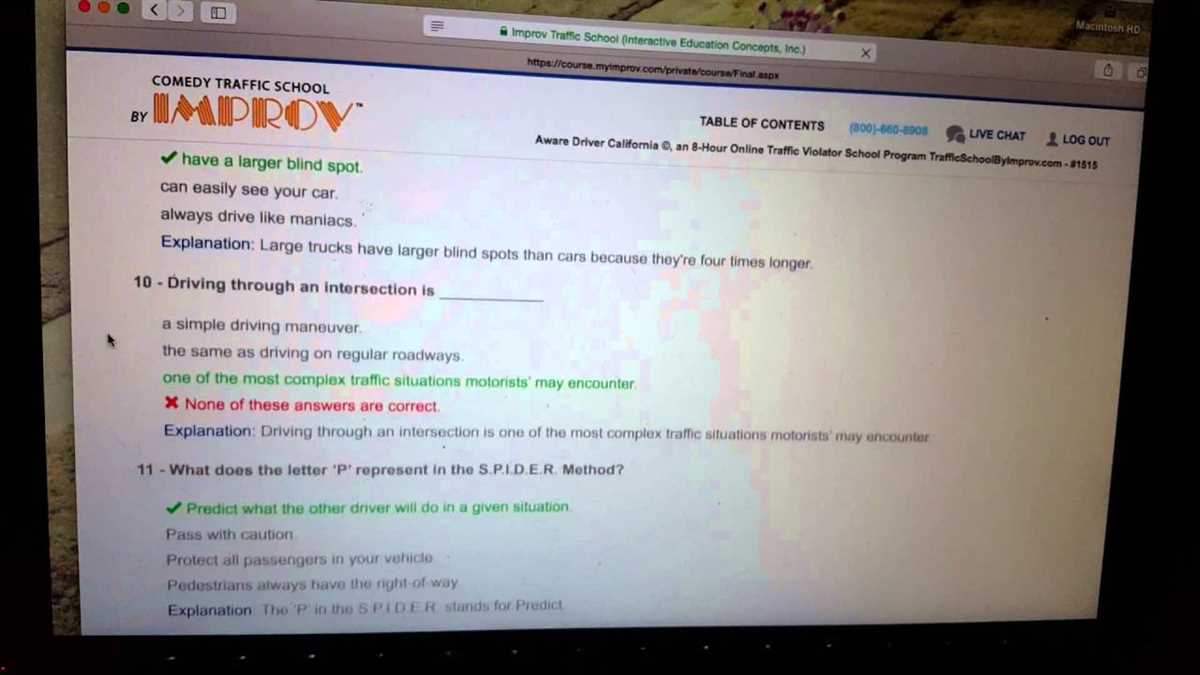
One thing to expect on your final exam is multiple-choice questions. These questions will ask you to select the correct answer from a set of options. They may cover a variety of topics, such as traffic signs, right-of-way rules, and defensive driving techniques. It is important to study the materials provided in your Drivers Ed course and be familiar with the information in order to answer these questions correctly.
You can also expect scenarios and situational questions on your final exam. These questions will present you with a specific driving situation and ask you to choose the best course of action. For example, you may be asked what to do when approaching a yellow traffic light or how to react when encountering an aggressive driver. These questions are designed to test your decision-making skills and your ability to apply the rules of the road in different circumstances.
In addition to multiple-choice and situational questions, your final exam may also include a practical component. This could involve demonstrating your ability to perform different driving maneuvers, such as parking, merging, and changing lanes. It is important to practice these skills before your exam to ensure that you are confident and comfortable behind the wheel.
To prepare for your final exam in Drivers Ed, be sure to review the course materials, study the rules of the road, and practice your driving skills. By being well-prepared, you can approach the exam with confidence and increase your chances of passing. Good luck!
Understanding the Format and Structure of the Final Exam
As you prepare for your final exam in drivers ed, it’s important to have a clear understanding of the format and structure of the exam. This knowledge will help you focus your studying and ensure that you are well-prepared for what’s to come on test day.
The final exam in drivers ed typically consists of a combination of multiple-choice questions, true/false statements, and scenario-based questions. It may also include a section where you are required to identify road signs and their meanings. The exam is designed to assess your knowledge and understanding of the rules of the road, safe driving practices, and various traffic situations.
- Multiple-choice questions: These questions present you with several options, and you must choose the one that best answers the question or completes the statement. It’s important to carefully read each question and all the answer choices before making your selection.
- True/False statements: These statements are either true or false, and you must indicate which one is correct. Pay close attention to the wording of each statement, as even a small change can make it false.
- Scenario-based questions: These questions describe a specific driving situation and ask you to choose the most appropriate course of action. These questions test your ability to apply your knowledge of the rules of the road to real-world scenarios.
- Road sign identification: You may be asked to identify specific road signs and explain their meanings. It’s important to study and memorize the different road signs and their corresponding meanings to excel in this section.
During the final exam, it’s crucial to manage your time effectively. Read each question carefully and take the time to think before answering. If you come across a question you’re unsure about, it’s best to make an educated guess rather than leave it blank. Remember to stay calm and focused throughout the exam, and try to eliminate any distractions around you.
Reviewing Traffic Laws and Regulations for the Final Exam
As the final exam for driver’s education approaches, it is important to review and refresh your knowledge of traffic laws and regulations. This exam will test your understanding of the rules of the road, your ability to interpret signs and signals, and your understanding of various driving situations. It is crucial to be well-prepared in order to pass the exam and demonstrate your competence as a driver.
One of the key areas to focus on is traffic signs and signals. Understanding the meaning of different signs and signals is essential for safe driving. Make sure you are familiar with the various types of signs, such as regulatory signs, warning signs, and informational signs. Review the meanings of common traffic signals, including red, yellow, and green lights, as well as pedestrian signals.
Take the time to understand the rules of the road and right-of-way. It is important to know who has the right-of-way in different situations, such as at intersections or when merging onto a highway. Review the proper procedures for yielding, stopping, and turning. Familiarize yourself with the rules regarding passing other vehicles, school buses, and emergency vehicles.
In addition, be sure to review speed limits and when they apply. Different types of roads and areas have different speed limits, so it is essential to know the appropriate speed for each situation. Pay particular attention to reduced speed zones, such as school zones or construction areas.
- Review the laws regarding distracted driving, including the use of cell phones and other handheld devices while driving.
- Make sure you understand the regulations regarding seat belt usage and child restraint systems.
- Familiarize yourself with the requirements for having a valid driver’s license, including the necessary documentation and age restrictions.
- Finally, practice identifying potential hazards and taking appropriate defensive driving measures.
By thoroughly reviewing these traffic laws and regulations, you will increase your chances of success on the final exam and become a safer and more responsible driver.
Study Tips and Strategies for Acing Your Final Exam
Preparing for your final exam in drivers ed can be a daunting task, but with the right study tips and strategies, you can set yourself up for success. Here are some tips to help you ace your final exam:
1. Review your notes: Start by reviewing all of your class notes and handouts. Take the time to go through each topic thoroughly and make sure you understand the key concepts.
2. Create a study schedule: Develop a study schedule that works for you and stick to it. Set aside specific blocks of time each day dedicated to studying for your exam. This will help you stay organized and ensure that you cover all the material.
- 3. Practice with sample questions: Seek out practice questions or sample exams to help you familiarize yourself with the format and types of questions that may be asked on the final exam. This will also help you identify any areas where you may need additional review.
- 4. Study with a group: Form a study group with classmates who are also preparing for the exam. Working with others can help you gain different perspectives and reinforce your understanding of the material.
- 5. Use visual aids: Utilize visual aids such as diagrams, charts, or flashcards to help you memorize important information. Visual aids can be especially useful when studying traffic signs, road markings, and other visual elements of driving.
- 6. Take breaks: Don’t forget to give yourself plenty of breaks during your study sessions. Taking short breaks can help you maintain focus and prevent mental fatigue.
- 7. Stay healthy: Make sure to take care of your physical and mental health during the study period. Get enough sleep, eat nutritious meals, and engage in stress-relieving activities like exercise or meditation.
By following these study tips and strategies, you’ll be well-prepared to ace your final exam in drivers ed. Remember to stay focused, stay organized, and stay confident in your knowledge and abilities. Good luck!
Common Mistakes to Avoid on the Final Exam in Drivers Ed
Passing the final examination in drivers ed is crucial to obtaining your driver’s license. It is important to be well-prepared and aware of the common mistakes that students tend to make on this important exam. By avoiding these mistakes, you can increase your chances of passing and becoming a responsible and safe driver on the road.
1. Lack of preparation: One of the biggest mistakes students make is not dedicating enough time to adequately prepare for the final exam. This includes studying the rules of the road, traffic signs, and road safety regulations. Make sure to allocate enough time in your schedule to thoroughly review the study material and take practice tests.
2. Ignoring the details: Paying attention to the details is crucial when taking the final exam. Many students lose points by not carefully reading the questions and options. Take your time to read the questions carefully, ensuring that you understand what is being asked before selecting an answer. Be cautious of trick questions and double-check your answers before moving on.
3. Overconfidence: While it is important to be confident in your abilities, overconfidence can lead to complacency and mistakes on the final exam. Avoid underestimating the difficulty of the exam and assume that you already know everything. Continuously review the material and take practice tests to identify any areas where you may need further improvement.
4. Failing to follow instructions: The final exam in drivers ed may include specific instructions or guidelines that must be followed. Failing to adhere to these instructions can result in lost points. Take the time to read and understand all instructions before starting the exam. This includes any time limits, restrictions on using external resources, or specific formatting requirements.
5. Inadequate time management: Time management is key when taking the final exam in drivers ed. Allow yourself enough time to complete the exam without rushing through the questions. Use your time wisely by answering the easier questions first and then revisiting the more challenging ones. Be mindful of the time remaining and allocate it accordingly.
6. Lack of focus: Maintaining focus throughout the duration of the exam is crucial. Avoid distractions and find a quiet space where you can concentrate fully on the questions. Take short breaks if needed to clear your mind and regain focus. Remember, the final exam is an opportunity to demonstrate your knowledge and skills.
By avoiding these common mistakes, you will be better prepared to tackle the final exam in drivers ed. Stay organized, focused, and confident in your abilities. With proper preparation and a calm mindset, you can successfully pass the exam and pave your way to becoming a licensed driver.
Practicing for the Final Exam: Mock Tests and Simulations
Preparing for your final exam in Drivers Ed is crucial for success. It’s important to not only review the material learned throughout the course, but also to practice applying that knowledge in a realistic setting. One effective way to do this is through mock tests and simulations.
Mock tests simulate the format and content of the actual final exam, allowing you to familiarize yourself with the types of questions you’ll encounter and the time constraints you’ll face. These mock tests can be taken online or obtained from a driving school or instructor. They provide an opportunity to assess your understanding of the material, identify any areas of weakness, and build confidence in your ability to answer exam questions correctly.
Simulations, on the other hand, recreate real-life driving scenarios that you may encounter on the road. These simulations can be done through virtual reality programs, computer simulations, or even driving simulators. By immersing yourself in these simulations, you can practice your decision-making skills, test your ability to follow traffic rules, and develop the necessary skills to handle different driving situations.
Both mock tests and simulations are valuable tools in preparing for the final exam. They not only help you gauge your level of preparedness, but also provide a safe and controlled environment to make mistakes and learn from them. So, make sure to take advantage of these resources to ensure you’re well-prepared for your final exam and ready to become a responsible and confident driver.
Final Exam Day: What to Bring and How to Prepare
As the final exam day of your driver’s ed course approaches, it’s important to be well-prepared so that you can confidently take the test and pass with flying colors. Here’s a list of items to bring and tips to help you get ready:
What to Bring:

- A pen or pencil: You’ll need this to fill out any necessary paperwork.
- Your learner’s permit: Make sure to bring your permit as it is required for taking the final exam.
- Any study materials: Bring along any notes, textbooks, or online resources that you’ve used to study for the exam.
- A positive mindset: Having a positive attitude can go a long way in helping you stay calm and focused during the exam.
How to Prepare:
- Review the material: Take some time to go over the key concepts and topics that were covered in your driver’s ed course. Pay close attention to any areas that you feel less confident in.
- Take practice tests: Familiarize yourself with the format and types of questions that may be asked on the final exam by taking practice tests. This will help you get used to the exam’s structure and reduce any test-related anxiety.
- Get a good night’s sleep: A well-rested mind is better able to retain information and perform well on exams. Make sure to get enough sleep the night before your final exam.
- Eat a healthy breakfast: Fuel your brain with a nutritious breakfast on the day of the exam. This will help you stay focused and energized throughout the test.
Remember, the final exam is an opportunity to demonstrate your knowledge and skills as a responsible and safe driver. By bringing the necessary items and adequately preparing, you’ll be in a strong position to succeed in your driver’s ed course. Good luck!