The Uncharted Waters of Interpretations: Finding Meaning in ‘From the Open Boat’ Answers
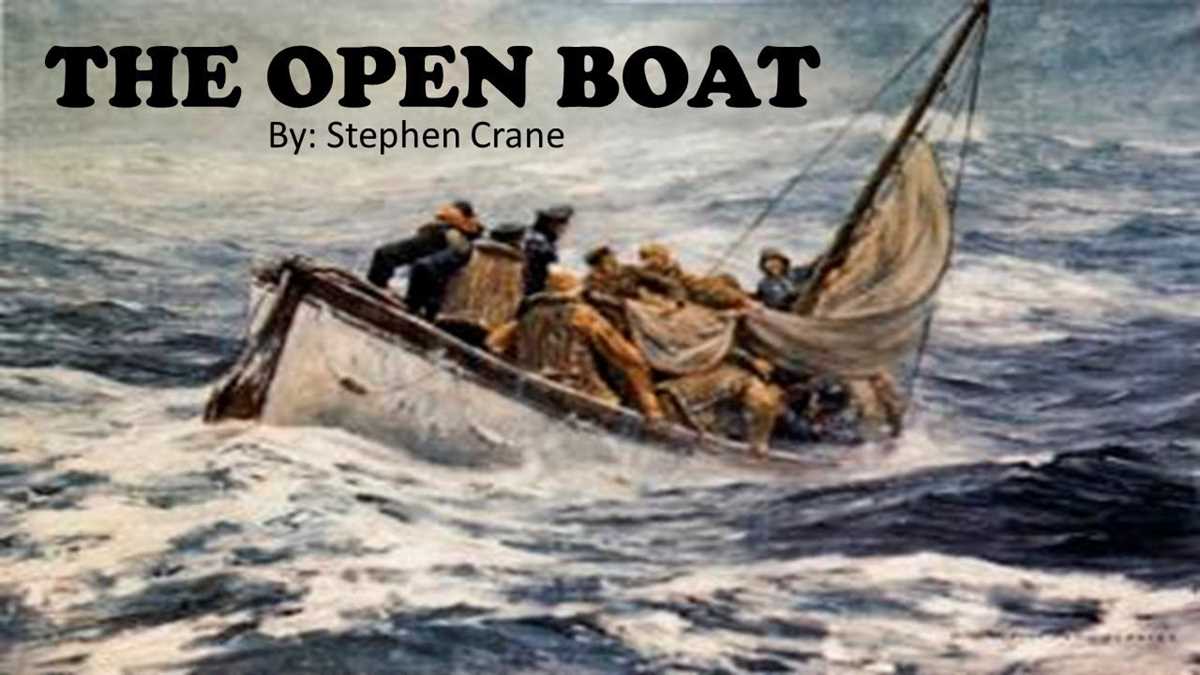
The story “The Open Boat” by Stephen Crane is a powerful tale that focuses on the theme of human resilience in the face of adversity. Written in 1897, this gripping narrative recounts the harrowing experiences of four men stranded at sea in a small boat after their ship sinks. As they battle against the merciless forces of nature, their physical and mental resilience is tested to the limits.
One of the central questions explored in “The Open Boat” is the insignificance of human beings in the face of the vast and indifferent natural world. The men find themselves completely at the mercy of the sea, with no control over their fate. As they struggle to stay afloat and navigate towards land, they are confronted with their own vulnerability and the realization that their existence is ultimately insignificant in the grand scheme of things.
Another question raised in the story is the existence of a higher power and the role it plays in human suffering. The men in the boat often contemplate whether their plight is a result of some divine plan or mere chance. This exploration of the relationship between humanity and the divine adds a layer of depth to the narrative, challenging readers to ponder the meaning of their own existence and the role of external forces in shaping their lives.
Overall, “The Open Boat” raises profound questions about human resilience, the insignificance of individuals in the face of nature, and the role of a higher power in human suffering. Through vivid and gripping storytelling, Stephen Crane invites readers to reflect on these themes and consider the depths of human strength and determination in the face of adversity.
Understanding the Key Themes in “The Open Boat”
“The Open Boat” is a short story written by Stephen Crane that explores themes of nature, survival, and human determination. Through the experiences of four survivors stranded at sea on a lifeboat, Crane provides a powerful commentary on the indifferent and unpredictable forces of nature, and the resilience of the human spirit in the face of adversity.
1. Nature as an Indifferent and Unpredictable Force: One of the key themes in “The Open Boat” is the portrayal of nature as a powerful, indifferent, and unpredictable force. The men in the story constantly battle against the harsh elements of the sea, struggling to navigate the waves and survive. Crane vividly describes the relentless and unforgiving nature of the sea, emphasizing its indifference to the plight of the men in the boat. This theme serves as a reminder of the insignificance of human existence in the face of the vastness and power of nature.
2. Survival and Human Determination: Another central theme of the story is the human determination to survive against all odds. The men in the boat, despite being exhausted, injured, and uncertain of their fate, refuse to give up and continue to fight for their lives. Their shared goal of survival creates a sense of unity among them and helps them push past their physical and emotional limits. Crane emphasizes the tenacity and resourcefulness of the human spirit, even in the most dire circumstances.
3. The Fragility of Human Existence: “The Open Boat” also explores the vulnerability and fragility of human existence. The men are constantly reminded of their mortality as they confront the vastness of the sea and the uncertainty of their situation. They become acutely aware of their insignificance in the face of the natural world and the possibility of death lurking around every corner. This theme highlights the fleeting nature of life and the human capacity to find meaning and purpose in the face of adversity.
In conclusion, “The Open Boat” delves into the themes of nature’s indifference, human determination, and the fragility of human existence. Through his vivid descriptions and powerful storytelling, Stephen Crane offers readers a profound exploration of the human condition and our place in the natural world.
The Significance of Nature in “The Open Boat”
The short story “The Open Boat” by Stephen Crane explores the power and insignificance of nature through the harrowing experience of four men stranded at sea. The story is based on Crane’s own experience as a survivor of a shipwreck while on his way to Cuba. Throughout the narrative, nature is portrayed as an indifferent force, capable of both providing and taking away life.
One of the key themes in “The Open Boat” is the idea that nature operates outside the control of humans. The men in the boat are at the mercy of the waves and the wind, unable to influence their course or destiny. This sense of powerlessness is emphasized by the repeated description of the sea as a vast, unfeeling entity: “The horizon narrowed and widened, and dipped and rose, and at all times its edge was jagged with waves that seemed thrust up in points like rocks.”
The insignificance of human existence in the face of nature is further highlighted by the presence of a bird. The men in the boat latch onto the sight of a distant bird as a symbol of hope and rescue, but they soon realize that the bird is completely unaware of their existence. This realization reinforces the idea that humans are mere specks in the grand scheme of nature, and that their struggles and successes are ultimately inconsequential.
- The portrayal of nature as both a life-giver and a life-taker is another significant aspect of the story. On one hand, the men find solace in the beauty and tranquility of the sea, noting that “it represented in a degree, to them, the serenity of nature amid the struggles of the individual.” On the other hand, they also experience the destructive power of nature when a massive wave threatens to capsize their already fragile boat. This duality serves to underscore the unpredictable and uncontrollable nature of the elements, and the precariousness of human existence in the face of them.
Overall, “The Open Boat” presents nature as a formidable and indifferent force that is beyond human comprehension and control. It explores the themes of powerlessness, insignificance, and the unpredictable nature of existence. Through its vivid descriptions and portrayal of the men’s struggle for survival, the story serves as a reminder of the fragility of human life and the awe-inspiring power of the natural world.
The Struggle for Survival in “The Open Boat”
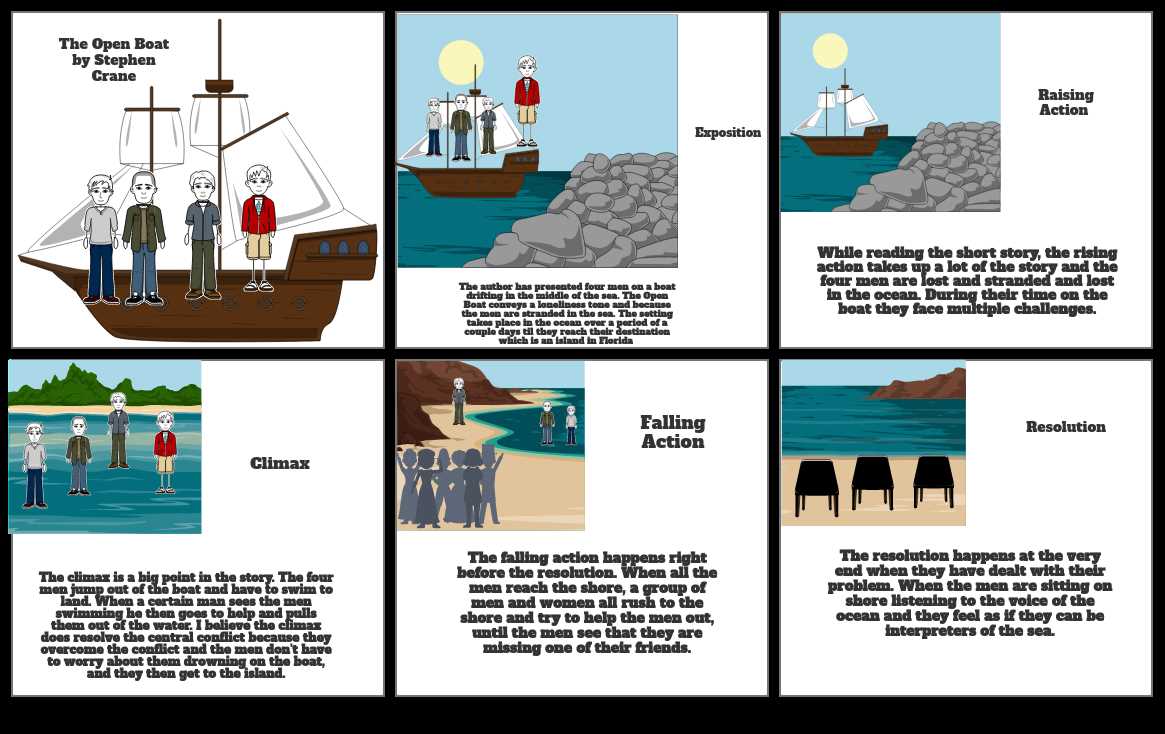
The short story “The Open Boat” by Stephen Crane depicts the intense struggle for survival endured by four men stranded in a lifeboat after their ship sinks. Through vivid descriptions and gripping narrative, Crane explores the physical and emotional challenges faced by the characters as they battle against the forces of nature.
The story begins with the line, “None of them knew the color of the sky,” setting the stage for the sense of disorientation and uncertainty that permeates the narrative. The men find themselves at the mercy of the open sea, with no means of communication or rescue in sight. They must rely solely on their own resourcefulness and resilience to navigate the treacherous waters and stay alive.
The relentless waves and the constant threat of capsizing add a palpable sense of danger to the story. Crane skillfully conveys the characters’ desperation as they struggle to keep the boat afloat and prevent it from being swamped by the towering waves. The men are constantly drenched and chilled to the bone, their bodies pushed to the limits of endurance.
However, the struggle for survival is not just physical; it also takes a toll on the characters’ emotional state. The men are beset by feelings of fear, despair, and hopelessness as they confront the harsh realities of their situation. They are forced to grapple with the fragility of human existence and the arbitrary nature of fate.
Throughout the story, Crane explores the themes of humanity’s insignificance in the face of nature and the power of community and camaraderie. The men find solace in each other’s presence and draw strength from their shared struggle. They derive a small measure of comfort from the fact that they are not alone in their predicament.
“The Open Boat” is a powerful and harrowing portrayal of the indomitable spirit of survival in the face of overwhelming odds. Crane’s vivid descriptions and poignant characterizations make it a timeless and compelling exploration of human resilience and the precariousness of existence.
The Power of Camaraderie in “The Open Boat”
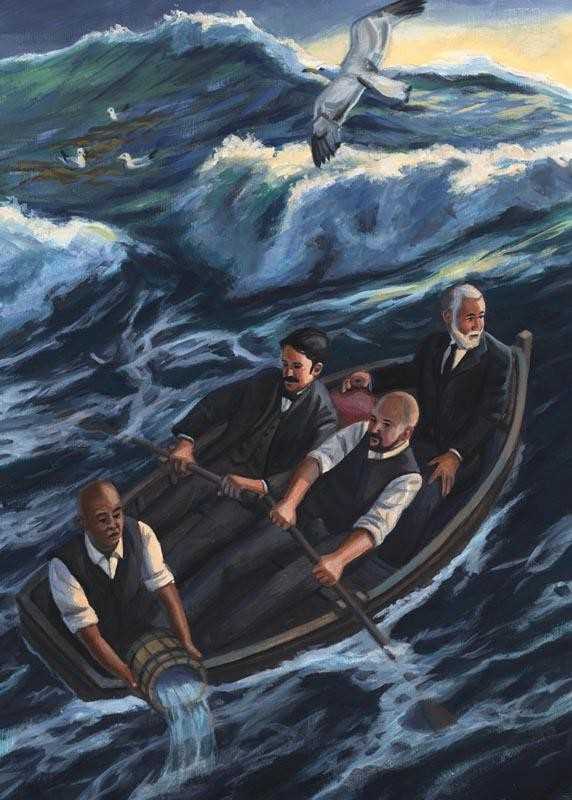
Throughout the story, Crane emphasizes the importance of camaraderie and its ability to keep the men going despite their dire circumstances. The men work together to row the boat, take turns steering, and provide each other with support and encouragement. They form a tight bond and rely on each other for emotional and physical strength.
- The power of camaraderie is evident in the way the men communicate and understand each other without words. They develop an unspoken language and are able to anticipate each other’s needs and actions. This silent understanding is crucial in their survival, as it allows them to work cohesively as a team and make quick decisions in critical moments.
- The men also draw strength from each other’s presence. The companionship they find in one another gives them hope and motivates them to keep fighting. In the face of overwhelming odds, their camaraderie becomes a source of resilience and determination.
- The camaraderie in “The Open Boat” transcends individual differences and creates a sense of unity among the men. Despite their different backgrounds and roles on the ship, they put aside any personal differences and come together as equals. They recognize that their survival depends on their ability to work together, and they put their trust in each other.
In conclusion, “The Open Boat” illustrates the power of camaraderie in the face of adversity. The men’s bond and unity serve as a source of strength and resilience, allowing them to face the challenges of their situation with courage and determination. Through their shared experiences, they demonstrate that even in the most desperate circumstances, the power of camaraderie can provide hope and inspire individuals to overcome incredible odds.
The Role of Fate and Determinism in “The Open Boat”
Fate and determinism play significant roles in Stephen Crane’s short story “The Open Boat.” As the story unfolds, the four men on the boat face numerous challenges and obstacles in their quest for survival. Despite their best efforts, it becomes evident that external forces beyond their control greatly influence the outcome of their journey.
Throughout the story, the men find themselves at the mercy of the sea, which acts as a powerful force symbolizing the indifferent and unpredictable nature of fate. Despite their collective willpower and determination to reach the shore, they are repeatedly thwarted by the relentless waves and currents. Crane emphasizes this sense of helplessness and inevitability by describing the sea as an immense, looming presence that constantly threatens to engulf them.
In addition to the role of the sea, Crane also explores the concept of individual agency versus external determinism. While the men make conscious decisions and exert their physical strength to row the boat and navigate, their actions are ultimately limited by the circumstances they find themselves in. As they battle exhaustion, hunger, and the elements, they become increasingly aware of their own insignificance in the face of a vast and indifferent universe.
This sense of fate’s control over their lives is further emphasized by the presence of the correspondent’s thoughts throughout the story. As a keen observer and introspective character, he ponders the nature of fate and questions the fairness of their situation. He acknowledges that their survival or demise is not solely dependent on their efforts, but rather subject to the whims of a higher power or cosmic force.
In conclusion, “The Open Boat” explores the themes of fate and determinism as the four men struggle against the forces of nature. Crane highlights the inherent unpredictability and indifference of fate through the symbol of the sea, while also underscoring the limitations of individual agency. The story serves as a reminder of the fragile nature of human existence and the ultimate powerlessness in the face of external forces beyond our control.
The Perception of Reality in “The Open Boat”
In Stephen Crane’s short story “The Open Boat,” the characters’ perception of reality becomes a central theme. Set in a lifeboat adrift in the open sea, the characters are faced with the harshness and unpredictability of nature, which challenges their understanding of their own existence and their place in the world. The story explores how individuals interpret and make sense of their surroundings, highlighting the subjectivity of perception and the limitations of human understanding.
The characters’ perception of reality is heavily influenced by their immediate circumstances, which constantly shift and evolve. As they battle against the unforgiving waves, the characters experience a range of emotions, from hope to despair, as their situation changes. Their perception of the world around them is shaped by the constant threat of death and the limitations of their physical environment. The relentless and indifferent sea acts as a constant reminder of their vulnerability and mortality, forcing them to confront the harsh realities of existence.
In addition, the characters’ perception of reality is also influenced by their interactions with one another. Through their conversations and observations, they try to make sense of their situation and find meaning in their struggles. However, their interpretations of their experiences often differ, highlighting the subjective nature of perception. Each character brings their own perspective and biases to the situation, shaping their understanding of what is happening and their place in it. This diversity of perception adds depth to the story, highlighting the complexities of human experience and the difficulty of finding a shared reality.
Overall, “The Open Boat” explores the intricacies of human perception and the challenges individuals face in understanding and interpreting their own reality. Through the characters’ experiences and interactions, the story emphasizes the subjective nature of perception and the limitations of human understanding. The harshness of the natural world and the characters’ constant struggle for survival serve as a backdrop for examining the complexities of perception and the elusive nature of truth.
The Existentialist Themes in “The Open Boat”
Throughout “The Open Boat,” author Stephen Crane explores various existentialist themes that reflect the human experience and the individuals’ struggle for meaning in an indifferent universe. These themes include the insignificance of human existence, the randomness of the universe, and the search for meaning and purpose.
One of the central existentialist themes in the story is the insignificance of human existence. The characters in the boat face the immense power and indifference of nature, which serves as a metaphor for the harsh reality of existence. They are confronted with the possibility of death without any apparent reason or purpose. The waves, the wind, and the open sea become symbols of the overwhelming forces that dwarf human existence. This existentialist perspective emphasizes the individual’s insignificance in the face of the vastness and randomness of the universe.
Additionally, “The Open Boat” highlights the randomness of the universe, another key existentialist theme. The characters find themselves in a life-or-death situation that is entirely out of their control. They are at the mercy of the natural elements and must navigate through the chaos with little hope of a clear resolution. Their experience reflects the inherent randomness of life, where events unfold without any discernible pattern or reason. This sense of the unpredictable and chaotic nature of existence adds to the existentialist themes explored in the story.
Lastly, “The Open Boat” examines the characters’ search for meaning and purpose in the face of their existential predicament. Stranded in the open sea, the men struggle to find a sense of direction and purpose. They grapple with questions of their own mortality and the possibility of a higher power governing their lives. The characters’ attempts to find meaning in their dire situation reflect the universal human desire to make sense of the world and one’s place within it. However, their quest for meaning ultimately remains unresolved, highlighting the existentialist notion that life may lack inherent meaning or purpose.
In conclusion, “The Open Boat” explores various existentialist themes that reflect the human experience and the struggle for meaning in an indifferent universe. The insignificance of human existence, the randomness of the universe, and the search for meaning and purpose are all central themes in the story. Through the characters’ experiences, Stephen Crane presents a bleak but thought-provoking perspective on the human condition and the existential challenges individuals face in an unpredictable and indifferent world.
Q&A:
What are the existentialist themes in “The Open Boat”?
Existentialist themes in “The Open Boat” include the individual’s struggle to find meaning in a chaotic and indifferent universe, the loneliness and isolation of human existence, and the idea that humans are ultimately responsible for creating their own purpose and determining their own fate.
How does “The Open Boat” explore the struggle to find meaning in a chaotic universe?
“The Open Boat” explores the struggle to find meaning in a chaotic universe through the characters’ desperate search for land and safety, their conversations about the indifference of nature towards their plight, and their reflection on the uncertainty and randomness of life.
What does “The Open Boat” suggest about the loneliness and isolation of human existence?
“The Open Boat” suggests that human existence is inherently lonely and isolating, as the characters are trapped on a small boat in the middle of the sea with no help in sight. Despite being in close proximity to one another, they feel alone and powerless against the vastness of nature.
How does “The Open Boat” illustrate the idea that humans are responsible for creating their own purpose and determining their own fate?
“The Open Boat” illustrates this idea through the characters’ constant struggle and effort to survive. They recognize that their fate is in their own hands and that they must actively work together and make choices to increase their chances of survival. They also acknowledge that their fate is not predetermined and that they have the power to influence their own destiny.