The Ultimate Guide to Understanding Galaxy Classification: Lecture Tutorial Answers Demystified

Welcome to the answers for the galaxy classification lecture tutorial! In this tutorial, we will go through a series of questions related to galaxy classification and learn about the different types of galaxies that exist in the universe. By the end of this tutorial, you will have a better understanding of how astronomers classify galaxies and the characteristics that define each type.
So, let’s dive into the questions and discover the answers together. In the first question, we were asked to identify the three main types of galaxies based on their shape. The three main types of galaxies are spiral galaxies, elliptical galaxies, and irregular galaxies. Spiral galaxies have a disk-like structure with arms spiraling outwards, while elliptical galaxies are more rounded in shape. Irregular galaxies, as the name suggests, do not have a distinct shape and appear irregular in form.
Now, let’s move on to the next question, which asked about the characteristics of spiral galaxies. Spiral galaxies are characterized by their flat, rotating disks and prominent arms that spiral out from a central bulge. These arms contain young stars, hot gas, and dust, giving spiral galaxies their distinct appearance. Spiral galaxies also have a defined central bulge made up of older stars. The Milky Way galaxy is an example of a spiral galaxy.
Next, let’s explore the features of elliptical galaxies. Unlike spiral galaxies, elliptical galaxies lack spiral arms and have a more rounded shape. They are composed of older stars and have little gas or dust. Elliptical galaxies vary in size, ranging from small dwarf galaxies to massive giant galaxies. They are often found at the centers of galaxy clusters and do not typically have a distinct disk structure like spiral galaxies.
Overview of Galaxy Classification
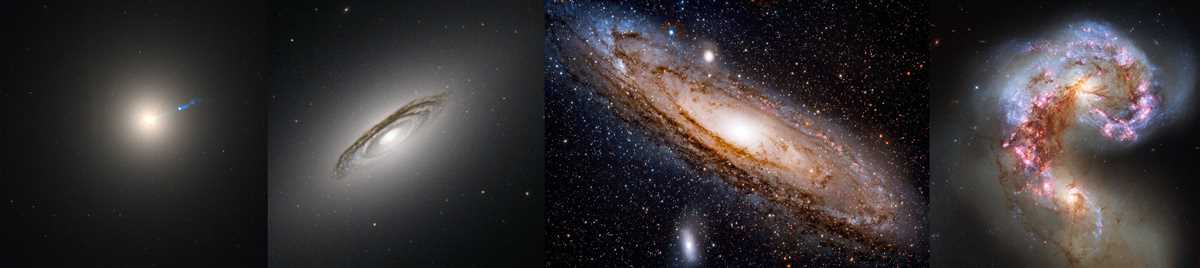
Galaxy classification is the process of categorizing galaxies based on their appearance and characteristics. It allows astronomers to study and understand the vast variety of galaxies that exist in the universe. The classification of galaxies helps in organizing and analyzing large data sets, making it easier to identify patterns and trends.
One of the most commonly used systems of galaxy classification is the Hubble sequence, also known as the Hubble tuning fork diagram. This classification system, developed by Edwin Hubble in the 1920s, divides galaxies into three main types: elliptical, spiral, and irregular.
Elliptical Galaxies:
Elliptical galaxies are characterized by their smooth and round appearance, without any clear structure or spiral arms. They are often referred to as “early-type” galaxies because they are thought to have formed earlier in the history of the universe. Elliptical galaxies are composed mainly of older stars and have little to no ongoing star formation.
Spiral Galaxies:
Spiral galaxies are characterized by their distinct spiral arms, which wrap around a central bulge. They are further classified into two sub-categories: barred and unbarred. Barred spiral galaxies have a bar-like structure that extends through the center, while unbarred spiral galaxies do not. Spiral galaxies typically have ongoing star formation and contain a mix of young and old stars.
Irregular Galaxies:

Irregular galaxies do not have a well-defined shape and can vary greatly in their appearance. They often exhibit irregular patterns of stars and gas, and some may even show signs of recent interactions or mergers with other galaxies. Irregular galaxies are believed to be relatively young and have ongoing star formation.
In addition to the Hubble sequence, there are other classification systems that focus on specific characteristics, such as the presence of active galactic nuclei (AGN) or the morphology of the galaxy’s central bulge. Each classification system provides valuable insights into the properties and evolution of galaxies, contributing to our overall understanding of the universe.
In the lecture on galaxy classification, several important concepts were covered. These concepts include:
1. Hubble sequence:
The Hubble sequence, also known as the Hubble tuning fork diagram, is a classification system for galaxies based on their visual appearance. It classifies galaxies into different types, including elliptical galaxies, spiral galaxies, and irregular galaxies. The Hubble sequence provides a way to organize and understand the diverse population of galaxies in the universe.
2. Elliptical galaxies:
Elliptical galaxies are one of the main types of galaxies in the Hubble sequence. They are characterized by their ellipsoidal shape and lack of significant structure, such as spiral arms. Elliptical galaxies are often spheroidal or elongated in shape and contain older stars. They are classified based on their ellipticity, ranging from E0 (round) to E7 (highly elongated).
3. Spiral galaxies:

Spiral galaxies are another type of galaxy in the Hubble sequence. They are characterized by their disk-like shape and prominent spiral arms. Spiral galaxies have a central bulge of stars and a rotating disk of stars and gas. They are furtherclassified into subtypes based on the tightness of their spiral arms, the size of their central bulge, and the presence of a bar-shaped structure in their center.
- Barred spiral galaxies have a bar-shaped structure running through their central bulge.
- Non-barred spiral galaxies do not have a bar-shaped structure.
4. Irregular galaxies:
Irregular galaxies are the third main type of galaxy in the Hubble sequence. They are irregular in shape and do not fit into the categories of elliptical or spiral galaxies. Irregular galaxies can have a variety of shapes, including amorphous or clumpy structures. They often contain young stars and are thought to be the result of interactions or mergers between other galaxies.
These concepts are fundamental for understanding the classification and diversity of galaxies in the universe. By studying the visual appearance and characteristics of different galaxies, astronomers can gain insights into the formation, evolution, and dynamics of these cosmic structures.
Hubble’s Galaxy Classification Scheme

Hubble’s galaxy classification scheme is a method used to categorize and classify galaxies based on their visual appearance. It was developed by the American astronomer Edwin Hubble in the 1920s and has since become one of the most widely used systems for classifying galaxies. The scheme is based on the idea that galaxies can be divided into different types based on their shape, size, and other visual characteristics.
According to Hubble’s scheme, galaxies are classified into four main categories: elliptical galaxies, spiral galaxies, barred spiral galaxies, and irregular galaxies. Elliptical galaxies have a smooth, ellipsoidal shape and lack the distinctive arms and spiral structure seen in spiral galaxies. Spiral galaxies, on the other hand, have a flat, disk-like shape with a central bulge and spiral arms that extend outwards. Barred spiral galaxies are similar to spiral galaxies, but they have a bar-shaped structure in the center that connects the arms. Irregular galaxies are those that do not fit into any of the other categories, often having a chaotic or irregular appearance.
The Hubble classification scheme also includes additional subcategories within each main category to further refine the classification of galaxies. For example, elliptical galaxies are classified based on how elongated or spherical they appear, ranging from E0 (roundest) to E7 (most elongated). Spiral galaxies are classified based on the tightness of their spiral arms, designated by the letters a, b, or c, with a being the tightest and c being the most open. The subcategories help to provide a more detailed description of the galaxies within each main category.
Hubble’s galaxy classification scheme has been instrumental in understanding the diversity and evolution of galaxies in the universe. By categorizing galaxies based on their visual appearance, astronomers have been able to identify patterns and trends, such as the correlation between galaxy type and age, and the connection between galaxies and the underlying structure of the universe. The classification scheme continues to be used today, allowing astronomers to study and compare galaxies across different regions of the cosmos.
Concepts covered:

In this lecture tutorial, we covered several important concepts related to galaxy classification. These concepts are essential for understanding the different types of galaxies and the methods used to categorize them.
Galaxy Classification:
- We discussed the Hubble tuning fork diagram, which is a classification scheme that categorizes galaxies based on their appearance and structure.
- The diagram includes three main branches: elliptical galaxies, spiral galaxies, and irregular galaxies.
Elliptical Galaxies:
- Elliptical galaxies are spherical or elongated in shape and lack the spiral arms seen in spiral galaxies.
- They are further classified based on their elongation or roundness, ranging from E0 (round) to E7 (highly elongated).
Spiral Galaxies:
- Spiral galaxies have a distinct spiral structure, with arms that wrap around a central bulge.
- They are classified based on the tightness of their spiral arms, ranging from Sa (tight) to Sc (loose).
Irregular Galaxies:
- Irregular galaxies have a chaotic or irregular shape, lacking any defined structure.
- They are often influenced by gravitational interactions with other galaxies.
Other Classification Systems:
- In addition to the Hubble tuning fork diagram, we briefly mentioned other classification systems, such as the Revised Shapley-Ames Catalog (RSA) and the Yerkes system.
- These systems provide further details and subtypes within the main categories of elliptical, spiral, and irregular galaxies.
This lecture tutorial provided an overview of the main concepts and classification schemes used in the field of galaxy classification. Understanding these concepts is crucial for astronomers to study and categorize the vast diversity of galaxies in our universe.
Revised Hubble Classification System
The Hubble Classification System, developed by Edwin Hubble in the 1920s, has long been used to categorize galaxies based on their visual appearance. However, with advancements in technology and our understanding of galaxy formation and evolution, a revised version of the classification system has been proposed.
The revised Hubble Classification System takes into account not only the visual appearance of galaxies but also their physical properties and evolutionary history. It is a more comprehensive and nuanced framework for understanding the diversity of galaxies in the universe.
1. Elliptical galaxies: Elliptical galaxies are categorized by their smooth and symmetrical appearance. They are usually spheroidal or ellipsoidal in shape, lacking any clear disk or spiral structure. The revised classification system further divides elliptical galaxies into subclasses based on their size and luminosity.
2. Spiral galaxies: Spiral galaxies are characterized by their rotating disk-like structure and spiral arms. They are further classified based on the tightness and number of arms, as well as the presence or absence of a central bar. Spiral galaxies are often divided into the subclasses of Sa, Sb, and Sc based on their characteristics.
3. Barred spiral galaxies: Barred spiral galaxies have a central bar structure that extends through the nucleus, with the spiral arms branching off from the ends of the bar. They are a subtype of spiral galaxies and are denoted by letters SBa, SBb, and SBc, depending on their characteristics.
4. Irregular galaxies: Irregular galaxies do not fit into the category of elliptical or spiral galaxies. They are characterized by their irregular shape and lack of a well-defined structure. Irregular galaxies can be further classified into subclasses based on their morphological features.
The revised Hubble Classification System provides scientists with a more comprehensive understanding of the different types of galaxies in the universe. It takes into account both the visual appearance and physical properties of galaxies, allowing for a more nuanced classification that reflects our evolving knowledge of galaxy formation and evolution.
Concepts covered:
In this lecture/tutorial on galaxy classification, we covered several important concepts related to understanding and categorizing galaxies. These concepts include:
- Hubble Classification Scheme: We discussed the Hubble classification scheme, which is a widely used system for categorizing galaxies based on their visual appearance. The scheme includes different types, such as elliptical galaxies, spiral galaxies, and irregular galaxies.
- Morphological Features: We explored the various morphological features that can be used to classify galaxies. These features include the presence of a central bulge, the shape and extent of arms, the presence of a bar, and the overall symmetry of the galaxy.
- Elliptical Galaxies: We delved into the characteristics of elliptical galaxies, which are spherical or ellipsoidal in shape. We discussed their lack of spiral structure and their classification based on their degree of elongation.
- Spiral Galaxies: We examined the properties of spiral galaxies, which have a central bulge and arms that spiral outward from the center. We discussed the different subtypes of spiral galaxies, including barred and unbarred spirals.
- Irregular Galaxies: We also touched upon irregular galaxies, which do not fit into the classifications of elliptical or spiral galaxies. We discussed their irregular shapes and the possible reasons for their formation.
- Galaxy Evolution: Lastly, we explored the concept of galaxy evolution, which involves the study of how galaxies change over time. We discussed the role of mergers, interactions, and other processes in shaping the morphology of galaxies.
Overall, this lecture/tutorial provided a comprehensive overview of the important concepts and categories used in the classification of galaxies. By understanding these concepts, scientists can gain valuable insights into the formation and evolution of galaxies.
Alternative Galaxy Classification Systems
In addition to the traditional Hubble tuning fork diagram, there are alternative galaxy classification systems that have been proposed by astronomers to provide a more comprehensive understanding of the different types of galaxies in the Universe. These alternative systems take into account various additional properties and characteristics of galaxies beyond just their appearance.
One alternative system is the galaxy morphological classification scheme known as the de Vaucouleurs classification system. Developed by French astronomer Gérard de Vaucouleurs in the 1950s, this system categorizes galaxies based on their morphological features such as bulge size, shape, and arm structure. It includes additional categories and subcategories to provide a more detailed classification of galaxies.
Another alternative galaxy classification system is the color-based classification system. This system takes into account the color of galaxies, which can reveal important information about their age, star formation activity, and other properties. By analyzing the colors of galaxies, astronomers can gain insights into the evolutionary history and physical processes occurring within them.
- Some other alternative classification systems include:
- The spectral classification system, which categorizes galaxies based on their spectral properties, such as emission lines and absorption features.
- The dynamical classification system, which classifies galaxies based on their kinematics and dynamics, such as rotational velocity and velocity dispersion.
- The environmental classification system, which categorizes galaxies based on their location within different types of environments, such as galaxy clusters or voids.
Overall, these alternative galaxy classification systems provide astronomers with more ways to study and understand the diverse range of galaxies in the Universe. By considering additional properties beyond just visual appearance, these systems allow for a deeper exploration of the physical processes and evolutionary pathways that shape galaxies.
Concepts covered:
In this lecture tutorial, we covered the following concepts related to galaxy classification:
- Hubble’s tuning fork diagram: We discussed how Edwin Hubble developed a diagram representing different types of galaxies, ranging from elliptical to spiral, based on their visual appearance.
- Galaxy morphology: We explored the different morphological features used to classify galaxies, such as the presence of a bulge, the shape of the galactic disk, and the tightness of spiral arms.
- Elliptical galaxies: We examined the characteristics of elliptical galaxies, including their smooth, oval-shaped appearance and lack of distinct structure. We also discussed their classification based on their elongation and roundedness.
- Spiral galaxies: We delved into the features of spiral galaxies, including their prominent disk, central bulge, and spiral arms. We explored the various subtypes of spiral galaxies, such as barred spirals and unbarred spirals.
- Lenticular galaxies: We looked at lenticular galaxies, which share characteristics of both elliptical and spiral galaxies. We discussed their disk-like appearance and the absence of prominent spiral arms.
- Irregular galaxies: We also examined irregular galaxies, whose appearance does not conform to the structure of elliptical, spiral, or lenticular galaxies. We discussed their irregular shape and the reasons behind their irregularity.
- Additional galaxy classification systems: We briefly touched upon alternative classification systems, such as the de Vaucouleurs system and the revised Hubble sequence, which provide further refinement to galaxy classification.
Overall, this lecture tutorial provided an overview of the key concepts related to galaxy classification, including Hubble’s tuning fork diagram, the characteristics of elliptical, spiral, lenticular, and irregular galaxies, and alternative classification systems.