The Ultimate Guide to Acing Your Geometry Unit Test

Geometry is a branch of mathematics that deals with the properties and relationships of shapes, sizes, and positions of figures. It is a fundamental subject that is taught in schools around the world as it lays the foundation for understanding various mathematical concepts and principles. A geometry unit test is an assessment that is used to evaluate students’ understanding of different geometric concepts and their ability to apply them to solve problems.
During a geometry unit test, students are typically assessed on their knowledge and understanding of topics such as lines, angles, triangles, polygons, circles, and three-dimensional shapes. They may be required to identify different types of shapes, calculate angles, find areas and volumes, and solve word problems related to geometry. The test usually consists of a combination of multiple-choice questions, short answer questions, and problem-solving questions.
Preparing for a geometry unit test requires a solid understanding of the concepts and principles taught in class, as well as practice solving various types of geometry problems. Students should review their class notes, textbook, and any additional study materials provided by their teacher. They should also practice solving sample questions and seek help from their teacher or classmates if they have any doubts or difficulties. A good preparation strategy includes reviewing the key concepts, practicing with different types of problems, and developing a clear understanding of the formulas and techniques needed to solve them.
Understanding the basics of geometry is essential for anyone studying the subject. Geometry is the branch of mathematics that deals with shapes, sizes, and properties of figures and spaces. It explores the relationships between points, lines, curves, surfaces, and solids.
One fundamental concept in geometry is points, which are basic units in space with no size or shape. A point can be represented by a dot, and it is denoted by a capital letter. Lines are another crucial element in geometry. They are straight or curved and extend indefinitely in both directions.
A line segment is a portion of a line that includes two distinct endpoints. It is denoted by two capital letters representing the endpoints. Angles are another important concept in geometry. They are formed by two rays with a common endpoint called the vertex. Angles can be classified as acute, right, obtuse, straight, or reflex, depending on their measurement.
Triangles are one of the most studied figures in geometry. They are polygons with three sides and three angles. Triangles can be classified by the length of their sides (equilateral, isosceles, or scalene) or by the measurement of their angles (acute, right, obtuse).
Geometry also explores the properties of circles, which are figures in which all points are equidistant from a fixed center point. Circles have a radius, diameter, and circumference. The area of a circle is determined by the formula πr^2, where r represents the radius.
Understanding the basics of geometry provides a foundation for further study in mathematics and other scientific disciplines. It helps develop critical thinking, problem-solving skills, and spatial awareness. Geometry is not only applicable in mathematics but also in real-world scenarios, such as architecture, engineering, and design. Whether you are studying geometry for academic purposes or for practical applications, mastering the basics is crucial for success.
Exploring geometric shapes and their properties

Geometry is a branch of mathematics that deals with the study of shapes, sizes, and properties of figures in space. It is a fascinating field that allows us to understand and analyze the world around us in a mathematical way. In this article, we will explore some common geometric shapes and their properties.
Triangles: Triangles are one of the most basic geometric shapes. They have three sides and three angles. The sum of the angles in a triangle is always 180 degrees. Triangles can be classified into different types based on their angles and sides, such as equilateral, isosceles, and scalene triangles.
Circles: Circles are round, perfectly symmetrical shapes that have a constant radius. They are defined by a center point and have no edges or corners. Circles have many unique properties, such as the circumference, which is the distance around the circle, and the area, which is the space enclosed by the circle.
Rectangles: Rectangles are quadrilateral shapes with four right angles. They have opposite sides that are equal in length and parallel to each other. The area of a rectangle is calculated by multiplying its length by its width, and the perimeter is the sum of all its sides.
Squares: Squares are a special type of rectangle with all four sides equal in length. They also have right angles and parallel sides. The area of a square is calculated by squaring its side length, and the perimeter is four times the side length.
Polygons: Polygons are shapes with straight sides and angles, and they can have any number of sides. Some common polygons include triangles, quadrilaterals, pentagons, hexagons, and octagons. Each polygon has unique properties, such as the sum of its interior angles and the number of diagonals it has.
In conclusion, exploring geometric shapes and their properties allows us to understand the fundamental concepts of geometry and how they apply to the world around us. By studying the properties of different shapes, we can analyze and solve real-world problems, as well as appreciate the beauty and symmetry of mathematical patterns.
Understanding angles and their measurements
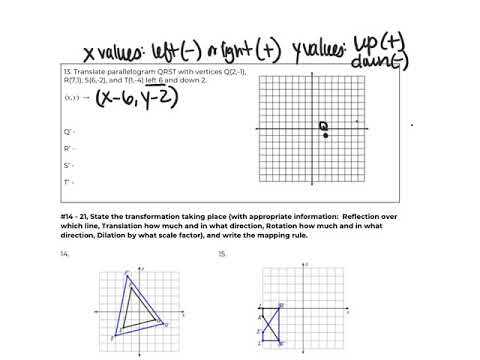
Angles are an essential concept in geometry. They are formed by two rays that share a common endpoint called a vertex. Understanding angles and their measurements is crucial for solving various mathematical problems and applications.
In geometry, angles can be classified based on their measurements. One common way to measure angles is in degrees. A full circle is divided into 360 degrees, and each degree is further divided into 60 minutes and each minute is divided into 60 seconds. This system allows precise measurements of angles.
Angles can be categorized into different types based on their measurements. An angle that measures less than 90 degrees is called an acute angle. An angle that measures exactly 90 degrees is called a right angle. An angle that measures more than 90 degrees but less than 180 degrees is called an obtuse angle. An angle that measures exactly 180 degrees is called a straight angle, while an angle that measures more than 180 degrees but less than 360 degrees is called a reflex angle.
Understanding how to measure and classify angles is crucial for solving geometric problems and applications. Angles are used to determine the size and shape of various objects, calculate distances, and analyze relationships between different parts of a figure. Mastering the concept of angles and their measurements is fundamental in the study of geometry and its applications in real-life scenarios.
Calculating area and perimeter of geometric figures
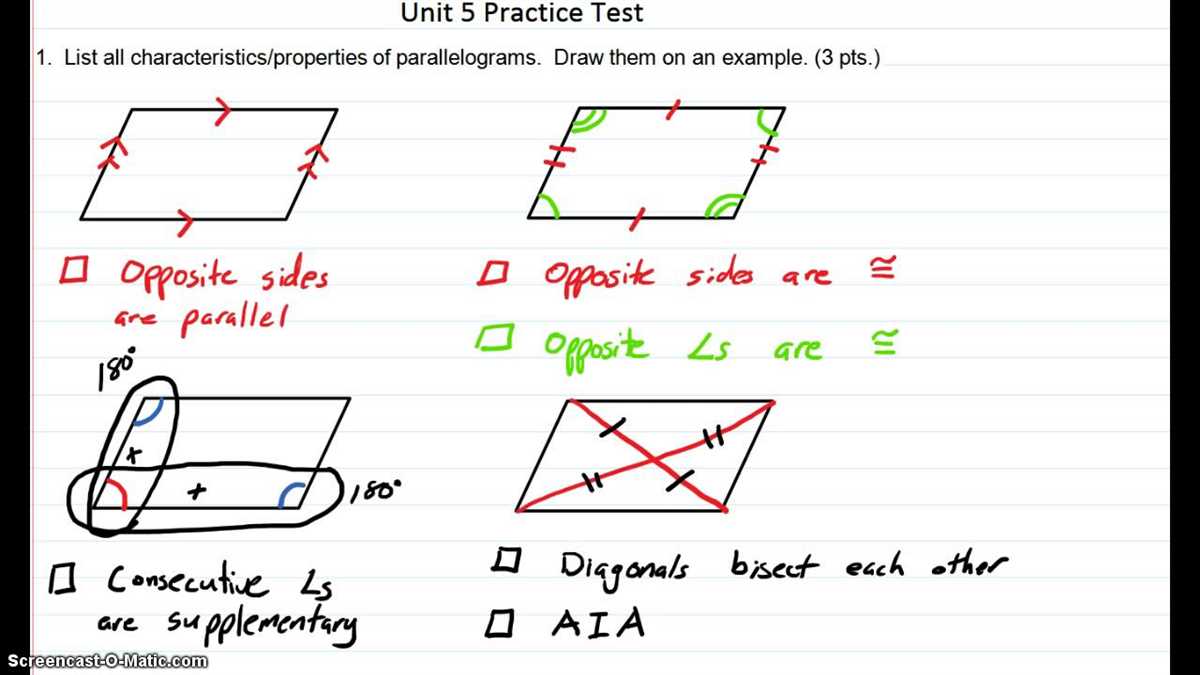
When working with geometric figures, it is important to be able to calculate their area and perimeter. The area of a figure refers to the amount of space it occupies, while the perimeter is the distance around its outer boundary.
There are specific formulas to calculate the area and perimeter of different geometric figures. For example, to find the area of a rectangle, you multiply the length by the width. The perimeter of a rectangle is calculated by adding the lengths of all its sides. Similarly, the area of a triangle can be found by multiplying the base by the height and then dividing by 2. The perimeter of a triangle is calculated by adding the lengths of its three sides.
Some key formulas for calculating the area and perimeter of common geometric figures:
- Rectangle: Area = length * width, Perimeter = 2 * (length + width)
- Triangle: Area = (base * height) / 2, Perimeter = side1 + side2 + side3
- Circle: Area = π * (radius)^2, Perimeter = 2 * π * radius
- Square: Area = side^2, Perimeter = 4 * side
Remember that it is important to use the correct units when calculating area and perimeter. For example, if the measurements are given in inches, the area will be in square inches and the perimeter will be in inches. Additionally, make sure to round your answers to the appropriate number of decimal places based on the given measurements.
In conclusion, being able to calculate the area and perimeter of geometric figures is an essential skill in geometry. The formulas for different figures may vary, but with practice and understanding, you can confidently find the area and perimeter of any given figure.
Using Pythagorean theorem in geometry problems
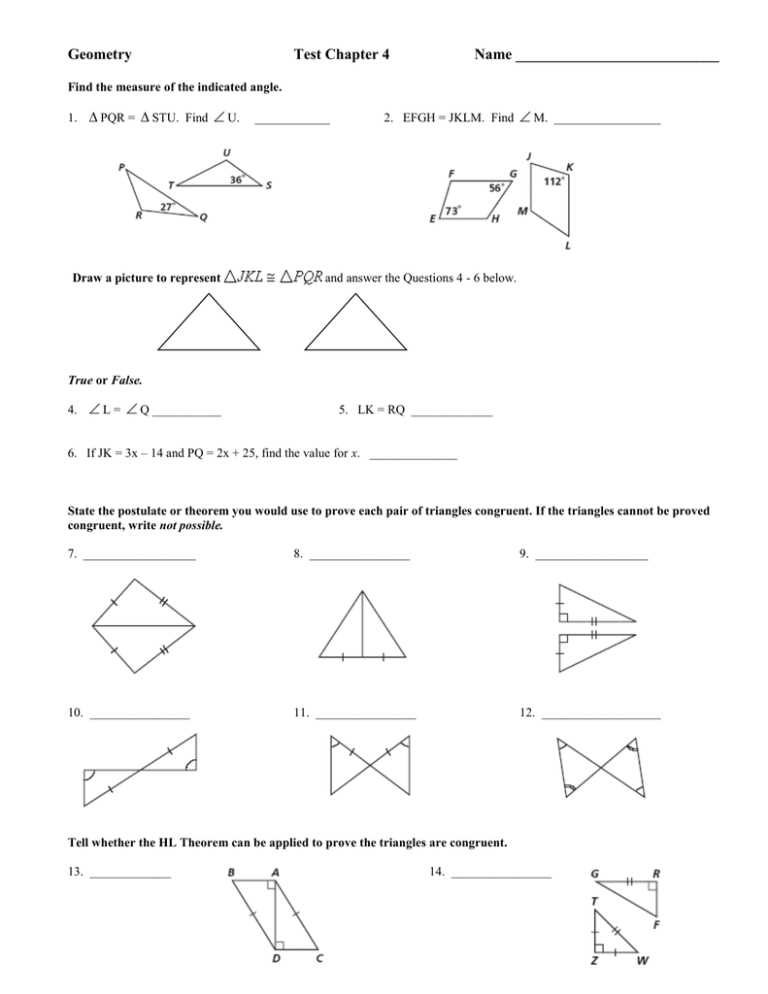
The Pythagorean theorem is a fundamental concept in geometry that is used to solve problems involving right triangles. The theorem states that in a right triangle, the square of the length of the hypotenuse (the side opposite the right angle) is equal to the sum of the squares of the lengths of the other two sides.
One common application of the Pythagorean theorem is in finding the length of an unknown side of a right triangle. By rearranging the formula, we can solve for the unknown side. For example, if we know the lengths of the other two sides, we can use the theorem to find the length of the hypotenuse. Conversely, if we know the length of the hypotenuse and one of the other sides, we can find the length of the remaining side.
Another use of the Pythagorean theorem is in determining whether a triangle is a right triangle. If the lengths of the three sides of a triangle satisfy the Pythagorean theorem, then the triangle is a right triangle. This can be a useful tool in classifying triangles and identifying their properties.
In addition to solving for lengths of sides, the Pythagorean theorem can also be used to find distances in coordinate geometry problems. By considering the horizontal and vertical distances between two points in a coordinate plane, we can create a right triangle and apply the theorem to find the distance between the points.
In summary, the Pythagorean theorem is a powerful tool in geometry that allows us to solve problems involving right triangles, find unknown side lengths, classify triangles, and find distances in coordinate geometry. Whether it’s finding the length of the hypotenuse or determining if a triangle is a right triangle, the Pythagorean theorem is an essential concept to know and apply in geometry problems.
Applying geometric concepts to real-world situations
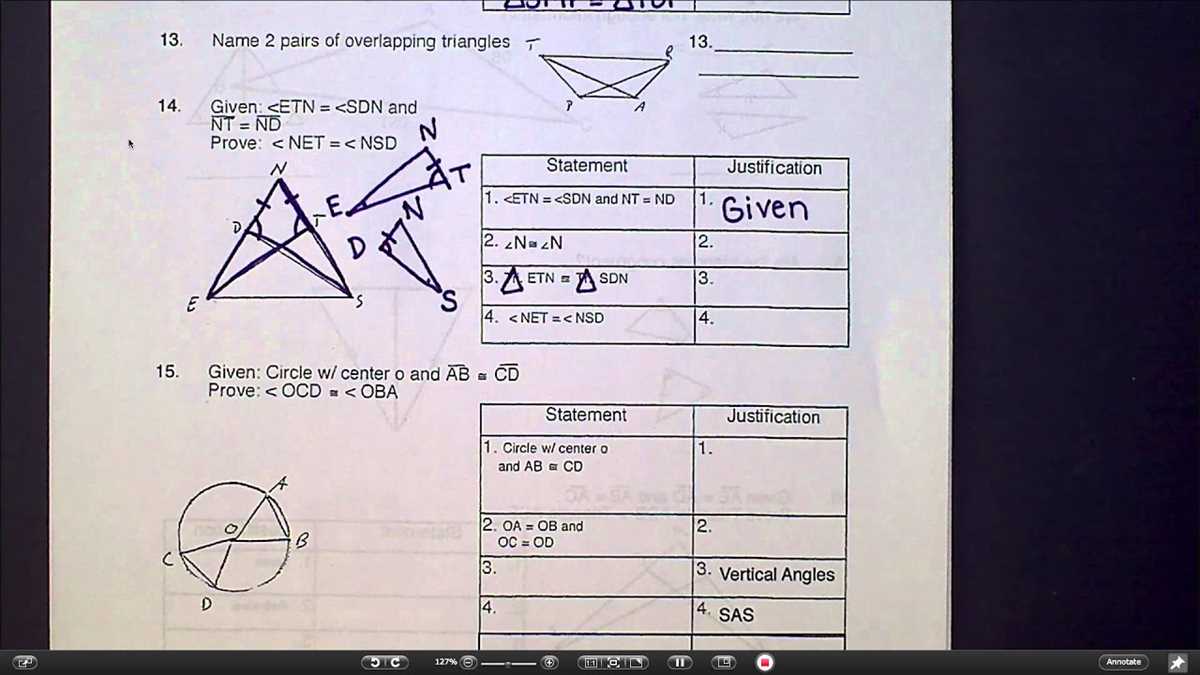
Geometry is more than just shapes and formulas–it has real-world applications that can be seen and used every day. By understanding and applying geometric concepts, we can solve problems and make connections to the world around us.
One application of geometry is in architecture and design. Architects use geometric principles to create structures that are aesthetically pleasing and structurally sound. They use concepts such as symmetry, scale, and proportion to design buildings that are visually appealing and functional. Geometric shapes are also used in the layout of furniture and interior design, ensuring that spaces are organized and efficient.
Another real-world application of geometry is in navigation and mapping. Geometric concepts like angles, distances, and coordinates are used to create accurate maps and determine the shortest route between two points. GPS navigation systems rely on geometric calculations to provide directions and determine the location of a vehicle in real-time.
Overall, geometry plays a crucial role in various fields and industries, including engineering, construction, art, and technology. It helps us understand and analyze the world around us, make informed decisions, and solve problems. By applying geometric concepts, we can create and improve the structures, systems, and designs that shape our everyday lives.