The Secret Life of Plants: Demystifying Photosynthesis

Photosynthesis is a crucial process that occurs in plants, allowing them to convert sunlight, water, and carbon dioxide into glucose and oxygen. This process is essential not only for the survival of plants but also for the sustenance of all living organisms on Earth. Understanding how photosynthesis works is key to appreciating the intricate mechanisms that enable plants to produce food and release oxygen.
To comprehend the process of photosynthesis, it is helpful to refer to a labeled diagram. The diagram depicts the key components and steps involved in photosynthesis, providing a visual representation of the complex process. By labeling the diagram, one can further enhance their understanding of the specific structures and processes that contribute to photosynthesis.
The labeled diagram of photosynthesis typically includes the core components such as the chloroplasts, thylakoids, stroma, and chlorophyll. The chloroplasts contain the chlorophyll, the pigment responsible for capturing sunlight. Thylakoids are membrane-bound structures within the chloroplasts where the light-dependent reactions take place. The stroma, on the other hand, is the fluid-filled space surrounding the thylakoids, where the light-independent reactions occur.
How Does Photosynthesis Work: Label the Diagram Answer Key
In the process of photosynthesis, plants use sunlight, water, and carbon dioxide to produce glucose and oxygen. This complex process takes place in the chloroplasts of plant cells. The diagram below provides a visual representation of the key components and steps involved in photosynthesis. Let’s label the diagram to better understand how photosynthesis works.
Label 1: Sunlight
- The first labeled component of the diagram is sunlight. Sunlight is a crucial part of photosynthesis as it provides the energy needed for the process to occur. Plants absorb sunlight using special pigments, such as chlorophyll, which are found in the chloroplasts.
Label 2: Chloroplasts
- The second labeled component is the chloroplast. Chloroplasts are organelles found in plant cells that contain chlorophyll. These structures are responsible for capturing sunlight and carrying out the chemical reactions of photosynthesis.
Label 3: Chlorophyll
- The third labeled component is chlorophyll. Chlorophyll is a pigment found in the chloroplasts that absorbs light energy from the sun. It gives plants their green color and plays a crucial role in capturing sunlight for photosynthesis.
Label 4: Carbon Dioxide
- The fourth labeled component is carbon dioxide. Plants take in carbon dioxide from the atmosphere through tiny openings called stomata, which are located on the surface of their leaves. Carbon dioxide is an essential ingredient for photosynthesis, as it provides the carbon atoms necessary for glucose production.
Label 5: Water
- The fifth labeled component is water. Plants absorb water from the soil through their roots and transport it to the leaves. Water molecules are broken down during photosynthesis, and their components are used to generate glucose and release oxygen.
Label 6: Glucose
- The sixth labeled component is glucose. Glucose is a simple sugar molecule that is produced during photosynthesis. It serves as the main source of energy for plants and is also stored as starch for future use.
Label 7: Oxygen
- The seventh labeled component is oxygen. Oxygen is released as a byproduct of photosynthesis. It is essential for the survival of many organisms, including humans, as it is used in respiration to produce energy.
| Sunlight | Chloroplasts | Chlorophyll | Carbon Dioxide | Water | Glucose | Oxygen |
|---|---|---|---|---|---|---|
| 1 | 2 | 3 | 4 | 5 | 6 | 7 |
Understanding the labeled diagram helps us visualize the important components and processes involved in photosynthesis. It illustrates how sunlight, chloroplasts, chlorophyll, carbon dioxide, water, glucose, and oxygen all play vital roles in this essential process for plants and the environment.
The Importance of Photosynthesis in Plants
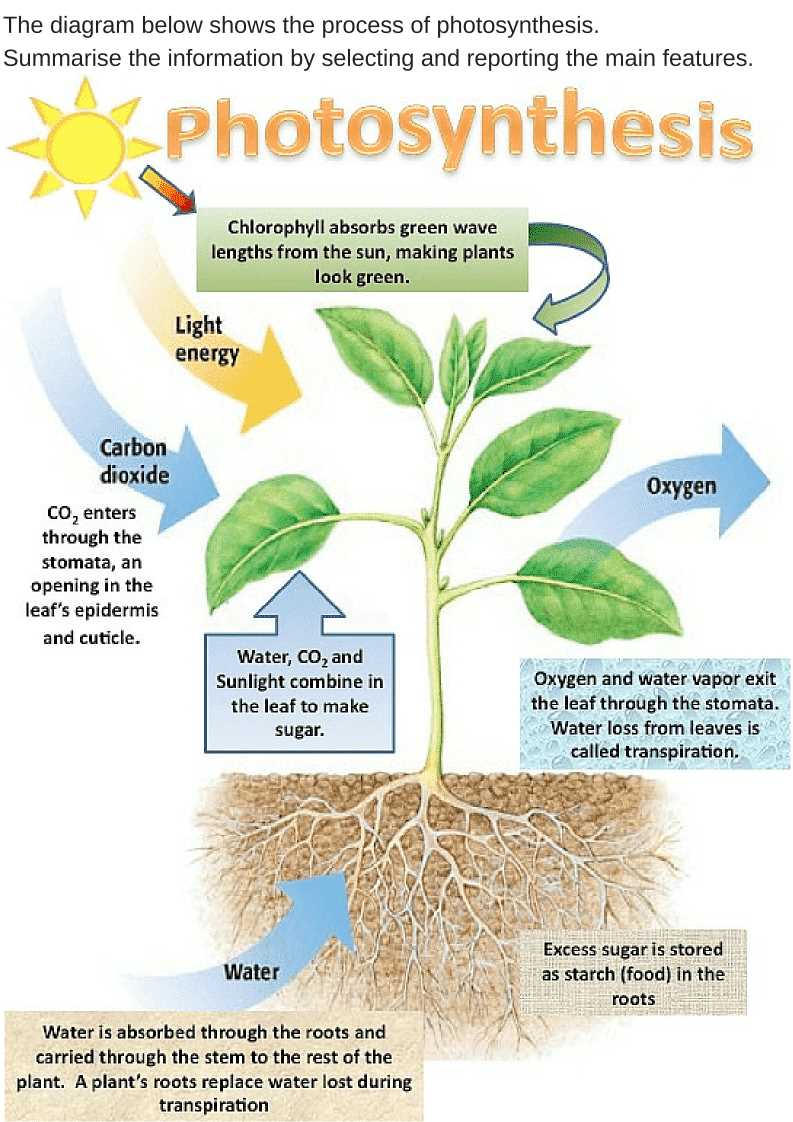
Photosynthesis is a crucial process that occurs in plants, and it is responsible for the production of oxygen and glucose, which are essential for the survival of both plants and animals. This process takes place in the chloroplasts of plant cells, specifically in the green pigment called chlorophyll.
Through photosynthesis, plants convert sunlight, water, and carbon dioxide into oxygen and glucose. This process not only helps plants to produce their own food but also plays a significant role in the Earth’s ecosystem. Without photosynthesis, there would be a lack of oxygen in the atmosphere, making it impossible for humans and other animals to breathe.
Here are a few key points that highlight the importance of photosynthesis in plants:
- Production of Oxygen: During photosynthesis, plants release oxygen as a byproduct. This oxygen is vital for the survival of all living organisms on Earth.
- Food Production: Photosynthesis allows plants to produce glucose, which serves as their primary source of energy. This glucose is also important for other organisms that consume plants for their own nourishment.
- Carbon Dioxide Absorption: Plants absorb carbon dioxide from the atmosphere during photosynthesis, helping to regulate the levels of this greenhouse gas and mitigate climate change.
- Energy Transfer: The process of photosynthesis transfers solar energy into chemical energy stored in glucose. This energy can be used by plants for growth, reproduction, and other metabolic processes.
- Habitat and Biodiversity: Photosynthesis provides the foundation for various ecosystems. It creates habitats for numerous organisms and supports biodiversity by sustaining different species of plants and animals.
In conclusion, photosynthesis is a vital process for the survival of plants and the well-being of our planet. It plays a critical role in producing oxygen, food, regulating carbon dioxide levels, transferring energy, and supporting ecosystems. Understanding and appreciating the importance of photosynthesis can help us recognize the significance of plants in maintaining a balanced and sustainable environment.
The Process of Photosynthesis: An Overview
Photosynthesis is the process through which plants, algae, and some bacteria convert sunlight into chemical energy in the form of glucose. This process is vital for the survival of these organisms and plays a crucial role in maintaining the balance of oxygen and carbon dioxide in the atmosphere.
The Light-Dependent Reactions
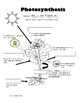
The first stage of photosynthesis is the light-dependent reactions. These reactions take place in the thylakoid membrane of the chloroplasts, where pigments such as chlorophyll capture sunlight. This energy is then used to split water molecules into hydrogen ions, electrons, and oxygen. The oxygen is released as a byproduct, while the electrons and hydrogen ions are transferred to electron carriers.
These electron carriers transport the electrons to the electron transport chain, a series of proteins embedded in the thylakoid membrane. As the electrons move through this chain, their energy is used to pump hydrogen ions into the thylakoid space, creating a concentration gradient. This gradient is crucial for the next stage of photosynthesis.
The Calvin Cycle
The second stage of photosynthesis is known as the Calvin Cycle or the light-independent reactions. This cycle takes place in the stroma of the chloroplasts and utilizes the products of the light-dependent reactions: ATP, NADPH, and carbon dioxide.
In the Calvin Cycle, ATP and NADPH are used to convert carbon dioxide molecules into glucose. This process involves a series of enzymatic reactions, with the help of the enzyme RuBisCo. The glucose produced can be used by the plant for energy or stored as starch for future use.
Overall, photosynthesis is a complex and fascinating process that allows plants to harness the energy of sunlight and convert it into chemical energy. This energy is then used to power the growth, development, and reproduction of plants, ensuring their survival and contributing to the overall balance of our planet’s ecosystem.
The Structure of a Leaf: Understanding the Key Components
The leaf is composed of several important structures, including the cuticle, epidermis, stomata, mesophyll, and vascular bundles. Let’s delve into each of these components and their roles.
The Cuticle
The cuticle is the waxy layer that covers the outer surface of the leaf, acting as a protective barrier against water loss and external factors. This transparent layer helps prevent dehydration and aids in minimizing damage from excessive sunlight or pathogens.
The Epidermis

The epidermis is the outermost layer of cells in the leaf, providing structural integrity and protection. It also contains specialized cells called guard cells, which surround tiny openings known as stomata.
Stomata and Guard Cells
Stomata are small openings found on the surface of the leaf that allow gases, including carbon dioxide and oxygen, to enter and exit. These openings are surrounded by two guard cells which regulate their opening and closing, playing a crucial role in controlling water loss and facilitating gas exchange.
Mesophyll
The mesophyll is the interior tissue of the leaf, where most of the photosynthesis process takes place. It is composed of two distinct layers called the palisade mesophyll and spongy mesophyll. The palisade mesophyll is located near the upper epidermis and contains densely packed cells with chloroplasts, which are responsible for capturing sunlight. The spongy mesophyll lies beneath the palisade layer and has loosely arranged cells that provide a network for gas exchange.
Vascular Bundles

The vascular bundles, also known as veins, are essential for transporting water, nutrients, and sugars throughout the leaf. They consist of xylem, which carries water and minerals from the roots, and phloem, which transports sugars produced during photosynthesis to other parts of the plant.
In conclusion, the various structures within a leaf work together to ensure the efficient capture of sunlight and the successful conversion of energy for a plant’s growth and survival. Understanding the key components of a leaf is crucial in comprehending the intricate process of photosynthesis.
Role of Chlorophyll in Photosynthesis: Absorbing Light Energy
Chlorophyll is a vital pigment found in the chloroplasts of plants and other photosynthetic organisms. It plays a crucial role in the process of photosynthesis by absorbing light energy from the sun. This pigment is responsible for giving plants their green color.
Within the chloroplasts, chlorophyll molecules are organized into pigment-protein complexes called photosystems. These photosystems contain clusters of chlorophyll molecules that can capture light energy and transfer it to other molecules within the complex. The two main types of chlorophyll found in plants are chlorophyll a and chlorophyll b. Chlorophyll a is the primary pigment involved in photosynthesis, while chlorophyll b acts as an accessory pigment and helps to expand the range of light wavelengths that can be absorbed.
The process of photosynthesis begins when chlorophyll molecules absorb light energy. This energy is used to excite electrons within the pigment molecules, which then results in the transfer of these energized electrons to other molecules in the photosystem. Through a series of electron transfer reactions, this energy is ultimately used to produce ATP (adenosine triphosphate) and NADPH (nicotinamide adenine dinucleotide phosphate), which are critical energy carriers in photosynthesis. The excited electrons from chlorophyll are also used to split water molecules, releasing oxygen as a byproduct.
In summary, chlorophyll plays a crucial role in photosynthesis by absorbing light energy and transferring it to other molecules within the photosystems. This energy is then used to drive the production of ATP and NADPH, as well as to release oxygen. Without chlorophyll, plants would not be able to capture and utilize the energy from sunlight to carry out the process of photosynthesis.
Breaking Down the Photosynthesis Equation: Reactants and Products
In order to understand how photosynthesis works, it is important to break down the photosynthesis equation and understand the reactants and products involved. The photosynthesis equation can be represented as follows: carbon dioxide + water + sunlight → glucose + oxygen.
The reactants in this equation are carbon dioxide, water, and sunlight. Carbon dioxide is a gas that is taken in by plants through tiny pores called stomata. Water is absorbed by the roots of the plant and transported to the leaves. Sunlight is the energy source needed for the process of photosynthesis to occur.
The products of photosynthesis are glucose and oxygen. Glucose is a sugar molecule that serves as the primary source of energy for plants. It can be used by the plant for immediate energy needs or stored for later use. Oxygen is a byproduct of photosynthesis and is released into the atmosphere. This oxygen is crucial for the survival of other living organisms, including humans, as it is the main source of oxygen in the air we breathe.
In summary, photosynthesis is a process that converts carbon dioxide, water, and sunlight into glucose and oxygen. This process is carried out by plants and some microorganisms, and it plays a crucial role in the Earth’s ecosystem by producing oxygen and providing energy for living organisms.
Significance of Photosynthesis for Environmental Balance
Photosynthesis plays a crucial role in maintaining the environmental balance on Earth. It is the primary process that converts sunlight, carbon dioxide, and water into oxygen and glucose, providing the necessary energy for all living organisms. This process is essential for the following reasons:
- Oxygen Production: Photosynthesis is responsible for producing approximately 20% of the Earth’s oxygen, which is essential for the survival of both plants and animals. Without this constant supply of oxygen, life as we know it would not be possible.
- Carbon Dioxide Regulation: Photosynthesis helps regulate the levels of carbon dioxide in the atmosphere. Carbon dioxide is a greenhouse gas that contributes to global warming and climate change. By absorbing carbon dioxide during photosynthesis, plants help reduce its concentration, mitigating the impacts of climate change.
- Food Production: Photosynthesis is the foundation of the food chain. Green plants produce glucose through photosynthesis, which serves as the primary source of energy for all other organisms. This process is vital for sustaining life and providing food for both humans and animals.
- Biodiversity: Photosynthesis supports the growth of diverse plant species, which in turn provide habitats and food sources for countless other organisms. By promoting biodiversity, photosynthesis ensures the stability and resilience of ecosystems.
- Soil Conservation: Photosynthesizing plants play a crucial role in preventing soil erosion. Their root systems help bind the soil, preventing it from being washed away by rainwater or wind. This function helps maintain the integrity of the soil and protects against desertification.
In summary, photosynthesis is a fundamental process with far-reaching implications for the environment. It contributes to oxygen production, regulates carbon dioxide levels, supports food production, fosters biodiversity, and aids in soil conservation. Understanding and appreciating the significance of photosynthesis can help us realize the importance of sustainable practices that preserve and protect this essential process.