Top 10 Informatica Data Quality Interview Questions and Answers

Informatica Data Quality (IDQ) is a comprehensive data quality management tool that helps organizations ensure the accuracy, completeness, and consistency of their data. It offers a wide range of features and functionalities to handle various data quality challenges. As a result, IDQ professionals are in high demand in the industry.
If you are preparing for an interview for a position involving Informatica Data Quality, it is important to be well-prepared. In this article, we will provide you with a list of commonly asked interview questions and their answers to help you better understand the concepts and be ready for your interview.
Some of the common Informatica Data Quality interview questions you might encounter include:
- What is Informatica Data Quality?
- What are the key features and benefits of Informatica Data Quality?
- What are the different data quality transformations available in Informatica Data Quality?
- How does Informatica Data Quality handle duplicate records?
- How can you profile data using Informatica Data Quality?
By familiarizing yourself with the answers to these questions, you will be able to confidently navigate the interview process and showcase your knowledge and expertise in Informatica Data Quality.
Informatica Data Quality Interview Questions and Answers
Informatica Data Quality (IDQ) is a powerful data quality tool that helps organizations ensure the accuracy, completeness, and integrity of their data. When interviewing for a position that requires knowledge of IDQ, it’s important to be prepared for a variety of technical questions. Here are some commonly asked IDQ interview questions and their answers:
1. What is Informatica Data Quality?
Informatica Data Quality is a data quality tool developed by Informatica Corporation. It helps organizations identify and fix data quality issues by providing a set of capabilities that include data profiling, data standardization, data matching, and data validation. It can be used to ensure data quality in various industries such as healthcare, banking, and retail.
2. What is the difference between Data Quality and Data Cleansing?
Data Quality is the process of ensuring that data is accurate, complete, and consistent. It involves activities like data profiling, standardization, and matching. Data Cleansing, on the other hand, is a specific step within the data quality process that focuses on identifying and correcting data errors or inconsistencies. It involves activities like data parsing, data scrubbing, and data enrichment.
3. How does Informatica Data Quality handle duplicate records?
Informatica Data Quality provides various algorithms and techniques to identify and handle duplicate records. It uses matching rules to compare the values of different fields within a record and assigns a similarity score. Based on this score, it can either flag the records as potential duplicates or merge them into a single record. The matching rules can be customized based on the specific requirements of the organization.
4. What is the role of data profiling in Informatica Data Quality?
Data profiling is a critical step in the data quality process as it involves analyzing the structure, content, and quality of the data. Informatica Data Quality allows users to profile their data to gain insights into its quality, completeness, and uniqueness. It provides statistical summaries, frequency distributions, and data domain analysis to help identify data quality issues such as missing values, inconsistent formats, and outliers.
5. How can you improve the performance of Informatica Data Quality?
To improve the performance of Informatica Data Quality, you can follow these best practices:
- Optimize the mapping design by reducing unnecessary transformations.
- Partition the data to distribute the processing load across multiple nodes.
- Use appropriate indexing and caching techniques.
- Tune the session configuration settings such as buffer size and commit interval.
- Monitor the performance using Informatica Data Quality’s built-in performance monitoring tools.
By implementing these best practices, you can ensure that Informatica Data Quality runs efficiently and delivers accurate results.
What is Informatica Data Quality?
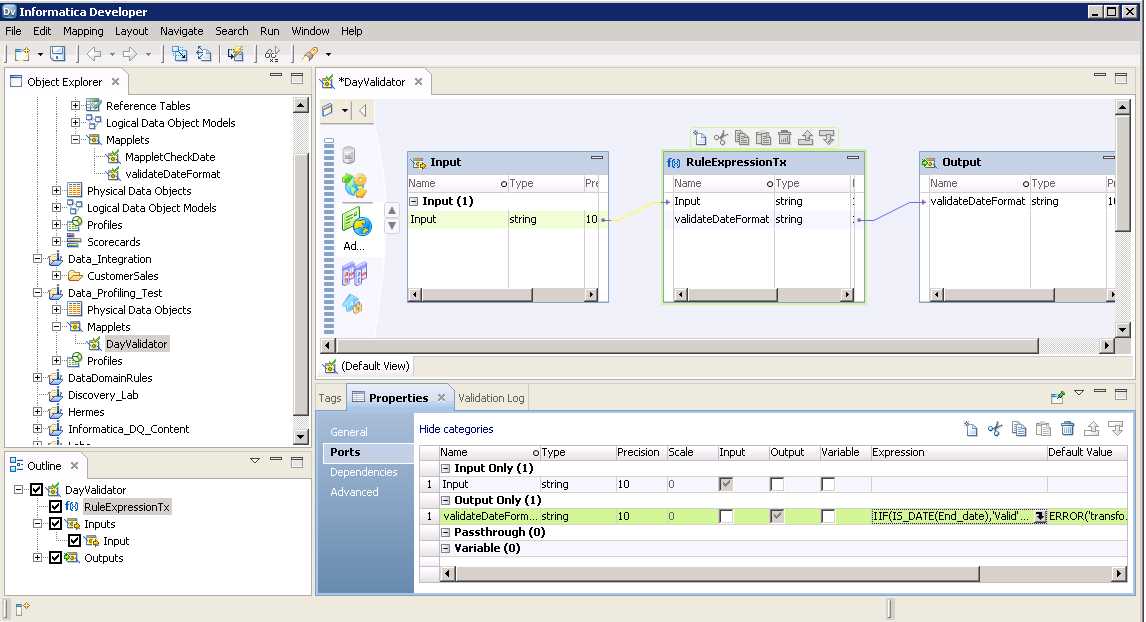
Informatica Data Quality is a suite of data quality tools developed by Informatica Corporation. It focuses on improving the accuracy, completeness, and consistency of data, enabling organizations to make better business decisions and improve operational efficiency.
The Informatica Data Quality suite includes various modules and components that facilitate data cleansing, profiling, standardization, and monitoring. These tools help organizations identify and rectify data quality issues, such as missing values, duplicate records, incorrect format, and inconsistent data, thereby ensuring data integrity.
Data cleansing is a critical aspect of Informatica Data Quality. It involves identifying and correcting errors or inconsistencies in data, such as incorrect spellings, erroneous information, and missing values. The suite provides functionalities like data profiling, which helps in analyzing the quality of data and identifying potential issues.
Data standardization is another significant aspect of Informatica Data Quality. It involves transforming and aligning data to a consistent format or standard. This ensures that data from different sources and systems are integrated seamlessly and can be analyzed or compared effectively.
Data monitoring is an essential capability of Informatica Data Quality, which allows organizations to continuously monitor the quality of data. This involves establishing data quality rules and thresholds, setting up automated data checks, and generating alerts or notifications when data quality issues exceed the defined thresholds.
Overall, Informatica Data Quality empowers organizations to improve the trustworthiness and reliability of their data. By ensuring data accuracy, completeness, and consistency, organizations can make informed decisions, streamline operations, enhance customer experiences, and achieve their business goals.
Key features of Informatica Data Quality
Informatica Data Quality (IDQ) is a powerful data quality tool that provides organizations with comprehensive features to ensure the accuracy, consistency, completeness, and reliability of their data. Here are some key features of Informatica Data Quality:
Data Profiling
Informatica Data Quality offers advanced data profiling capabilities that allow organizations to gain deep insights into the quality of their data. It helps in identifying data anomalies, inconsistencies, duplicates, and other data issues that might affect the overall data quality. Data profiling helps organizations understand the data distribution patterns, data types, and relationships within the data, enabling them to take appropriate actions to cleanse and improve the data.
Data Cleansing
Data cleansing is a crucial step in maintaining data quality. Informatica Data Quality provides a wide range of data cleansing functionalities that help organizations cleanse their data by removing duplicates, standardizing data formats, correcting spelling errors, and resolving data inconsistencies. The tool comes with built-in data cleansing rules and libraries, and it also supports custom rules to meet specific data cleansing requirements.
Match and Merge
Informatica Data Quality offers powerful match and merge capabilities that enable organizations to identify and merge duplicate records across different sources. It uses advanced algorithms and fuzzy matching techniques to accurately identify matching records, even if they have slight variations or discrepancies in data. The match and merge feature helps organizations eliminate data duplication, improve data accuracy, and create a single golden record for each entity.
Data Monitoring and Reporting
Informatica Data Quality provides comprehensive data monitoring and reporting features that allow organizations to track the quality of their data over time. It enables them to set up data quality rules, monitor data against these rules, and generate real-time reports and dashboards to measure data quality metrics. The tool also provides capabilities for data stewardship, allowing data stewards to review and resolve data quality issues proactively.
Data Governance and Compliance
Informatica Data Quality supports data governance initiatives by providing features for data lineage, data quality scorecards, and data quality assessments. It helps organizations establish data governance policies, enforce data quality standards, and ensure compliance with regulatory requirements. The tool allows organizations to define and manage data quality rules, perform impact analysis, and track data lineage, enabling them to gain better control and visibility over their data assets.
In summary, Informatica Data Quality offers a comprehensive set of features for data profiling, data cleansing, match and merge, data monitoring, data governance, and compliance. These features help organizations improve the accuracy, consistency, completeness, and reliability of their data, enabling them to make informed business decisions and achieve better outcomes.
What are the different components of Informatica Data Quality?

Informatica Data Quality is a comprehensive suite of applications and tools that help organizations ensure accurate and consistent data across all their systems. The suite consists of several components that work together to improve data quality and provide data governance capabilities.
One of the main components of Informatica Data Quality is the Data Quality Workbench. This tool allows users to profile, analyze, and identify data quality issues in their data. It provides a visual interface for creating and executing data quality rules and allows users to monitor the quality of their data over time.
Another important component is the Data Quality Dashboard, which provides a centralized view of data quality metrics and trends. It allows users to easily monitor the quality of their data and track the progress of data quality initiatives. The dashboard provides visualizations and reports that help users understand the state of their data and identify areas that require improvement.
Informatica Data Quality also includes data cleansing and standardization capabilities. The Data Quality Transformation component allows users to cleanse, standardize, and enrich their data. It provides a wide range of pre-built transformations that can be applied to data to improve its quality. Users can also create custom transformations based on their specific business rules and requirements.
Finally, Informatica Data Quality includes data governance features that help organizations establish and enforce data quality policies. The Data Quality Management component allows users to define and manage data quality rules, monitor compliance, and track the resolution of data quality issues. It also provides workflow capabilities for data quality issue management and collaboration.
In summary, the different components of Informatica Data Quality work together to provide organizations with the tools they need to ensure accurate and consistent data. From profiling and analyzing data quality issues to cleansing and standardizing data, Informatica Data Quality helps organizations improve their data quality and establish effective data governance practices.
How can you create a cleansing plan in Informatica Data Quality?
To create a cleansing plan in Informatica Data Quality, you need to follow a systematic approach. The process involves several steps, starting from identifying the data quality issues to implementing the necessary transformations to cleanse the data. Here is a step-by-step guide on creating a cleansing plan:
1. Understand the data:
The first step is to thoroughly understand the data and identify the potential data quality issues. This includes analyzing data patterns, identifying duplicates, missing values, and inconsistent formats.
2. Define cleansing rules:
Once you have identified the data quality issues, the next step is to define the cleansing rules that will be applied to the data. This involves setting up transformations and mapping rules to cleanse the data based on your business requirements.
3. Prioritize cleansing rules:
Not all data quality issues may have the same level of impact on your business. Therefore, it is important to prioritize the cleansing rules based on their importance. This will help you allocate resources and time effectively.
4. Build the cleansing plan:
Using Informatica Data Quality tools, you can build a cleansing plan by configuring the necessary transformations, mapping rules, and cleansing functions. This plan will outline how the data will be cleansed and transformed.
5. Test the plan:
Before implementing the cleansing plan on the entire dataset, it is recommended to test it on a small sample of data to ensure it produces the desired results. This will help you identify any potential issues or errors in the cleansing process.
6. Implement the plan:
Once you are satisfied with the testing results, you can proceed with implementing the cleansing plan on the entire dataset. This involves running the data through the configured transformations and mapping rules to cleanse and standardize the data.
By following these steps, you can create an effective cleansing plan in Informatica Data Quality to improve the accuracy and reliability of your data.
Explain the concept of data profiling in Informatica Data Quality.
Data profiling is a crucial step in the data quality process, where Informatica Data Quality helps to analyze and understand the content and structure of the data. It involves examining the data to identify its quality, completeness, accuracy, and consistency. Data profiling enables organizations to gain insights into their data assets, detect anomalies, and make informed decisions based on the findings.
Data profiling in Informatica Data Quality involves various activities such as assessing data quality rules, analyzing the data distribution, identifying patterns, and detecting data anomalies. It helps in understanding the data to address issues and improve data quality. The profiling results are presented in a user-friendly format, allowing users to easily interpret and take actions based on the findings.
During data profiling, Informatica Data Quality provides different profiling techniques, including column profiling, cross-column profiling, and rule-based profiling. Column profiling analyzes individual columns to understand their properties, such as data type, length, uniqueness, and frequency distribution. Cross-column profiling analyzes relationships between multiple columns to identify patterns and dependencies. Rule-based profiling applies predefined rules to validate the data against specific criteria, such as format, pattern, or reference data.
Overall, data profiling in Informatica Data Quality empowers organizations to gain a comprehensive understanding of their data assets, identify data quality issues, and take necessary actions to improve data accuracy, consistency, and completeness. It plays a crucial role in ensuring data quality for effective decision-making and business operations.
Conclusion:
In conclusion, using Informatica Data Quality involves following several best practices to ensure effective data quality management. These practices include:
- Understanding the data requirements and business rules
- Performing data profiling and analyzing data quality issues
- Creating and implementing data quality strategies
- Developing standardized data models and data mappings
- Ensuring proper data cleansing and transformation techniques
- Implementing data quality monitoring and reporting
- Establishing data governance and stewardship processes
- Collaborating with business stakeholders and subject matter experts
By following these best practices, organizations can improve the accuracy, completeness, consistency, and integrity of their data, leading to better decision-making, increased operational efficiency, and improved customer satisfaction. Informatica Data Quality provides a comprehensive set of features and functionalities to support these practices and enables organizations to achieve their data quality objectives.
Q&A:
What is Informatica Data Quality?
Informatica Data Quality is a software tool that combines data integration, data quality, and metadata management capabilities to ensure the accuracy, consistency, and integrity of data across an organization.
What are the main benefits of using Informatica Data Quality?
Using Informatica Data Quality can provide several benefits, such as improved data accuracy, increased data consistency, enhanced data integrity, better decision-making insights, and greater customer satisfaction.
What are some best practices for using Informatica Data Quality?
Some best practices for using Informatica Data Quality include defining clear data quality goals, establishing data quality rules and standards, regularly profiling and monitoring data, implementing data cleansing and enrichment processes, and integrating data quality into the overall data management strategy.
How can data profiling help in using Informatica Data Quality?
Data profiling is an important step in using Informatica Data Quality as it helps to understand the structure, content, and quality of data. By profiling the data, organizations can identify data issues and anomalies, which can then be addressed through data cleansing and enrichment processes.
Are there any recommended training resources for learning Informatica Data Quality?
Yes, Informatica offers various training resources for learning Informatica Data Quality, including online courses, instructor-led training, and certification programs. Additionally, there are also tutorial videos, user guides, and community forums available to help users get started and improve their skills.