Irony Uncovered: A Comprehensive PDF Worksheet with Answers

Understanding irony is an essential skill for any writer or reader. Irony adds depth and complexity to literature, enhancing the overall experience for the audience. If you’re looking to improve your understanding and recognition of irony, an irony worksheet with answers can be a valuable tool. This worksheet provides a variety of examples of verbal, situational, and dramatic irony, along with explanations and answers to help you grasp the concept.
Verbal irony occurs when someone says something but means the opposite. It’s often used to create sarcasm or humor. A verbal irony example might involve a person saying, “Oh, great! Just what I needed,” when they really mean the opposite. By completing the exercises in the irony worksheet, you can become more skilled at identifying and understanding verbal irony in different contexts.
Situational irony, on the other hand, is when something happens that is the opposite of what was expected. This can create surprise or humor for the audience. For example, if a character who is afraid of heights gets a job as a window washer, it would be a situational irony. The irony worksheet helps you practice recognizing and analyzing different examples of situational irony.
Dramatic irony occurs when the audience knows something that the characters in the story do not. This can create tension and suspense. For instance, in a play, the audience may know that one character plans to betray another, while the character remains unaware. The irony worksheet includes exercises to help you identify and interpret dramatic irony effectively.
Definition of Irony
Irony is a literary device that involves a contrast between what is expected to happen and what actually happens. It is a way of expressing meaning through opposite or contradictory statements, actions, or situations. This literary technique can be used to create humor, emphasize a point, or provide social commentary.
There are several types of irony, including verbal irony, situational irony, and dramatic irony. Verbal irony occurs when someone says something but means the opposite, often using sarcasm or a double entendre. Situational irony refers to a situation where the outcome is the opposite of what is expected or intended. Dramatic irony occurs when the audience or reader knows more about a situation or the true intentions of a character than the characters themselves.
Type of Ironies:
- Verbal Irony: This type of irony involves the use of words to convey a meaning that is the opposite of the literal meaning. It often involves sarcasm or saying something but meaning the opposite.
- Situational Irony: Situational irony occurs when the outcome of a situation is the opposite of what is expected or intended. It is a discrepancy between what is expected to happen and what actually happens.
- Dramatic Irony: Dramatic irony occurs when the audience or reader knows something that the characters do not. It creates tension and suspense as the audience anticipates the outcome based on their privileged knowledge.
Irony is a powerful tool in literature and can be used to engage readers, make them think, and add depth to a story or a message. It often relies on the unexpected or the contradictory to create impact and evoke emotion. Whether it is used to create humor, highlight hypocrisy, or make a social commentary, irony adds an extra layer of meaning to a literary work.
Types of Irony
Irony is a literary technique that involves unexpected or contradictory meanings within a situation or statement. There are several types of irony that can be found in literature and everyday life.
Verbal Irony
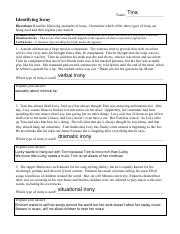
Verbal irony occurs when someone says the opposite of what they actually mean. This can be used for humorous effect or to convey sarcasm. For example, if someone says “What a beautiful day” during a thunderstorm, they are using verbal irony to express the opposite emotion.
Situational Irony

Situational irony occurs when the outcome of a situation is different from what is expected. This can create a sense of surprise or amusement. For example, if a fire station burns down, that would be a situational irony because a place that is supposed to protect against fires is itself destroyed by fire.
Dramatic Irony
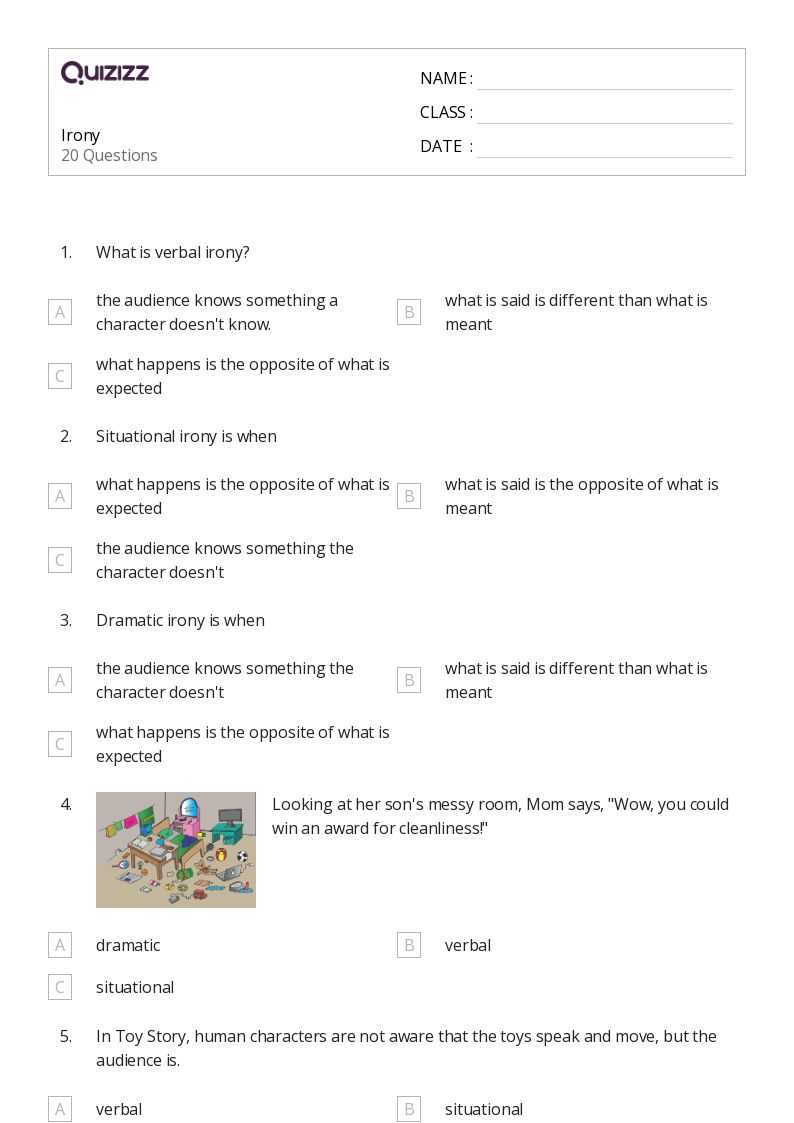
Dramatic irony occurs when the audience or reader knows something that the characters in a story do not. This can create tension and suspense, as the audience waits to see how the characters will react when they discover the truth. For example, in Shakespeare’s play “Romeo and Juliet,” the audience knows that Juliet is not really dead, but Romeo does not, leading to tragic consequences.
Irony of Fate
Irony of fate refers to a situation in which events turn out contrary to what is expected or intended. This type of irony often highlights the idea that human actions and plans are ultimately futile in the face of destiny. For example, a person who spends their entire life trying to avoid accidents and illness may still experience a tragic event.
In conclusion, irony is a powerful literary device that can add depth and complexity to a story. Verbal irony, situational irony, dramatic irony, and irony of fate all play important roles in creating unexpected twists and surprises for readers and audiences.
The Importance of Understanding Irony
Irony is a literary device that adds depth and complexity to a story. It is essential for readers to understand irony because it allows them to fully grasp the author’s intended meaning and enhances their overall reading experience.
One importance of understanding irony is that it helps readers to differentiate between what is being said and what is actually meant. Irony often involves saying one thing but implying another, creating a contrast between expectation and reality. By recognizing irony, readers can go beyond the surface-level meaning of a text and delve into its deeper layers.
Verbal irony is one of the most common types of irony in literature. It occurs when someone says something that is the opposite of what they truly mean. By understanding verbal irony, readers can pick up on the sarcasm and underlying messages within a text. This enhances their comprehension and allows them to appreciate the author’s wit and cleverness.
Situational irony is another type of irony that plays an important role in literature. It arises when there is a contrast between what is expected to happen and what actually happens. Understanding situational irony allows readers to recognize unexpected plot twists and appreciate the author’s ability to surprise and engage them.
- The benefits of understanding irony include:
In conclusion, understanding irony is crucial for readers as it enhances their comprehension, engagement, and appreciation of literature. By recognizing and interpreting irony, readers can go beyond the surface-level meaning of a text and delve into its deeper layers, leading to a more fulfilling reading experience.
Irony Worksheet
Irony is a literary device that is used to express a different meaning from what is actually stated. It is often characterized by a contrast between the literal and the intended meaning. Irony can be found in various forms of writing, including short stories, novels, and poems. To understand irony, it is important to recognize the different types and be able to identify examples in a text.
Verbal irony is one of the most common types of irony. It occurs when someone says the opposite of what they really mean. This can be used to express sarcasm or to create humor. For example, if someone says “What a lovely weather” during a thunderstorm, they are using verbal irony to express the opposite opinion.
Situational irony is another type of irony that occurs when the outcome of a situation is different from what is expected. This can be a twist of fate or a surprising turn of events. For example, in a story where a character spends years searching for a lost treasure only to find out it was right under their nose all along, there is situational irony.
Dramatic irony is a type of irony that occurs when the audience or reader knows something that the characters do not. This creates tension and suspense in a story. For example, when a character is planning a surprise party for their friend, but the friend is unaware of the plans, there is dramatic irony.
To practice identifying irony, you can use an irony worksheet. This worksheet will provide you with examples of different types of irony and ask you to identify them. It will help you strengthen your understanding of irony and enhance your analytical skills as a reader. By completing an irony worksheet, you will be able to recognize and appreciate the use of irony in various literary works.
Exercise 1: Identify the Type of Irony
In this exercise, we will practice identifying the different types of irony in various examples. Irony is a literary device that involves a contradiction between expectations and reality. There are three main types of irony: verbal, situational, and dramatic. Verbal irony occurs when someone says something but means the opposite. Situational irony happens when the outcome of a situation is different from what is expected. Dramatic irony occurs when the audience or reader knows something that the characters do not.
Below are some examples. For each example, determine the type of irony and briefly explain why.
- Example 1: “I can’t wait to spend my summer vacation doing chores!”
- This example is an example of verbal irony because the speaker says they can’t wait for something undesirable, implying the opposite of what they actually mean.
- Example 2: A fire station burns down.
- This example is an example of situational irony because the situation is unexpected and contradicts what is typically associated with a fire station.
- Example 3: In a horror movie, the audience knows that the killer is hiding in the closet, but the main character does not.
- This example is an example of dramatic irony because the audience has knowledge that the main character does not, which creates tension and suspense in the story.
By identifying and understanding the different types of irony, we can deepen our appreciation and analysis of literary works.
Exercise 2: Explain the Irony
In this exercise, you will be required to analyze the given examples and explain the irony present in each one. Irony is a literary device that involves expressing a meaning contrary to the literal interpretation of the words used. It can be used to create humor, sarcasm, or emphasize a point. To identify irony, you must look for situations where the outcome or meaning is unexpected or opposite to what is stated or expected. Let’s discuss some examples and their corresponding explanations:
Example 1:

Phrase: “I can’t believe I won the lottery on the unluckiest day of my life.”
Explanation: This is an example of situational irony. The speaker expresses disbelief at winning the lottery, which is typically considered lucky. However, the irony lies in the fact that the person won the lottery on what they consider the unluckiest day of their life.
Example 2:
Phrase: “Wow, you’re doing such a fantastic job of ignoring me.”
Explanation: This example illustrates verbal irony. The speaker sarcastically praises someone for doing an excellent job of ignoring them. The irony is that the statement is contradictory to what is actually desired, which is the person’s attention.
By analyzing and explaining the irony in various examples, you will develop a better understanding of how irony is used in writing and conversation. This will enhance your ability to recognize and appreciate irony in different contexts.
Irony Worksheet Answers
In this article, we will provide the answers to the irony worksheet questions. Understanding irony can be challenging, but by analyzing different examples and practicing identifying types of irony, you can improve your comprehension of this literary device.
Answer Key:

1. Situational Irony:
- The fire station burned down during a fire.
- A professional swimmer drowned in a bathtub.
- A police officer got arrested for stealing.
2. Verbal Irony:
- “Oh great, another rainy day in paradise,” said sarcastically by someone living in a city known for its constant sunshine.
- A person who just received a speeding ticket exclaims, “Wow, what a wonderful surprise!”
- “I can’t wait to spend my whole weekend attending a boring seminar,” said with a mocking tone by someone who has no interest in the event.
3. Dramatic Irony:
- In a movie, the audience knows that the protagonist’s best friend is planning to betray them, but the protagonist remains unaware.
- A character in a play is confident that they are about to win a prize, but the audience already knows they came in last place.
- An actor on stage is unaware that the prop they are holding is actually a fake weapon, but the audience knows it will be used in a pivotal scene later on.
Remember, irony adds depth and complexity to literature and other forms of storytelling. By familiarizing yourself with different types of irony and practicing analyzing examples, you can enhance your understanding of various texts and appreciate the layers of meaning they offer.
Answers for Exercise 1
Below are the answers for Exercise 1 of the Irony Worksheet:
1. What is irony?
- Irony is a figure of speech in which the meaning is the opposite of what is expected or intended. It is often used to create humor or emphasize a point.
2. What are the three types of irony?
- Situational irony: This occurs when the outcome of a situation is the opposite of what is expected.
- Verbal irony: This occurs when a person says or writes one thing but means another.
- Dramatic irony: This occurs when the audience or reader knows something that the characters do not.
3. Give an example of situational irony.
- An example of situational irony is a fire station burning down.
4. Give an example of verbal irony.
- An example of verbal irony is someone saying “What a beautiful day” when it is raining heavily.
5. Give an example of dramatic irony.
- An example of dramatic irony is in Shakespeare’s play Romeo and Juliet, where the audience knows that Juliet is not actually dead, but Romeo believes she is and ends up taking his own life.
By understanding the different types of irony and being able to identify examples, you can better appreciate and analyze the use of irony in literature, movies, and everyday conversations.