Decoding Mental Status Exam Descriptors: Understanding Psychological Assessments

Mental status exams (MSE) are assessments conducted by mental health professionals to evaluate a person’s current mental state and functioning. These exams are a crucial part of diagnosing mental health disorders, helping guide treatment plans, and monitoring progress over time. MSE descriptors are the specific terms and phrases used to describe different aspects of an individual’s mental status, providing valuable information about their cognitive, emotional, and behavioral functioning.
When conducting an MSE, clinicians use a variety of descriptors to evaluate different domains of mental status. For example, they may assess a person’s appearance and behavior, including their grooming, posture, and level of eye contact. They may also observe the person’s speech, noting any abnormalities in rate, volume, or coherence. Additionally, clinicians assess the person’s thought processes and content, looking for signs of disorganized or delusional thinking. These descriptors provide important clues about a person’s mental functioning and help clinicians make accurate diagnoses.
Another important aspect of an MSE is assessing a person’s mood and affect. Mood refers to a person’s subjective experience of emotion, while affect refers to the observable expression of emotion. Clinicians use descriptors to capture the quality and intensity of a person’s mood and affect, such as “euthymic” (normal mood), “euphoric” (excessively happy), or “blunted” (reduced affect). These descriptors help clinicians understand an individual’s emotional state and determine the appropriate treatment approach.
Overall, MSE descriptors play a vital role in mental health assessments, providing clinicians with a standardized vocabulary to describe and evaluate an individual’s mental state. These descriptors help facilitate communication among mental health professionals, allowing for accurate diagnoses and the development of effective treatment plans. By considering the various aspects of mental functioning, clinicians can gain a comprehensive understanding of a person’s mental health and work towards promoting optimal well-being.
Mental Status Exam Descriptors

The mental status exam (MSE) is a systematic assessment of a person’s current mental state. It involves the evaluation of different aspects of cognition, mood, behavior, and perception. The MSE is an important tool used by mental health professionals to understand a patient’s mental wellbeing and provide appropriate support and treatment.
During the MSE, various descriptors are used to describe the patient’s mental state. These descriptors help clinicians communicate their observations effectively and provide a comprehensive understanding of the individual’s mental functioning. Some common descriptors used in the MSE include:
- Affected: Describes the emotional state and mood of the individual. It can be used to indicate whether the person appears depressed, anxious, disinterested, or emotionally labile.
- Oriented: Indicates whether the person is aware of their surroundings and can accurately identify the time, place, and current situation.
- Coherent: Refers to the person’s ability to express thoughts and ideas in a clear and organized manner. It shows whether the individual’s speech is logical and understandable.
- Alert: Describes the person’s level of awareness and responsiveness to external stimuli. It can indicate whether the person is fully awake, attentive, and responsive to their surroundings.
- Perceptual disturbances: Refers to any abnormalities in the person’s perception of reality. It can include hallucinations, illusions, or delusions.
- Memory impairment: Indicates any difficulties in the person’s ability to recall and retain information. It can include short-term or long-term memory deficits.
These descriptors provide important insights into a person’s mental state and help clinicians formulate a diagnosis and treatment plan. By effectively utilizing the MSE descriptors, mental health professionals can improve their understanding and assessment of an individual’s mental health.
Definition of Mental Status Exam
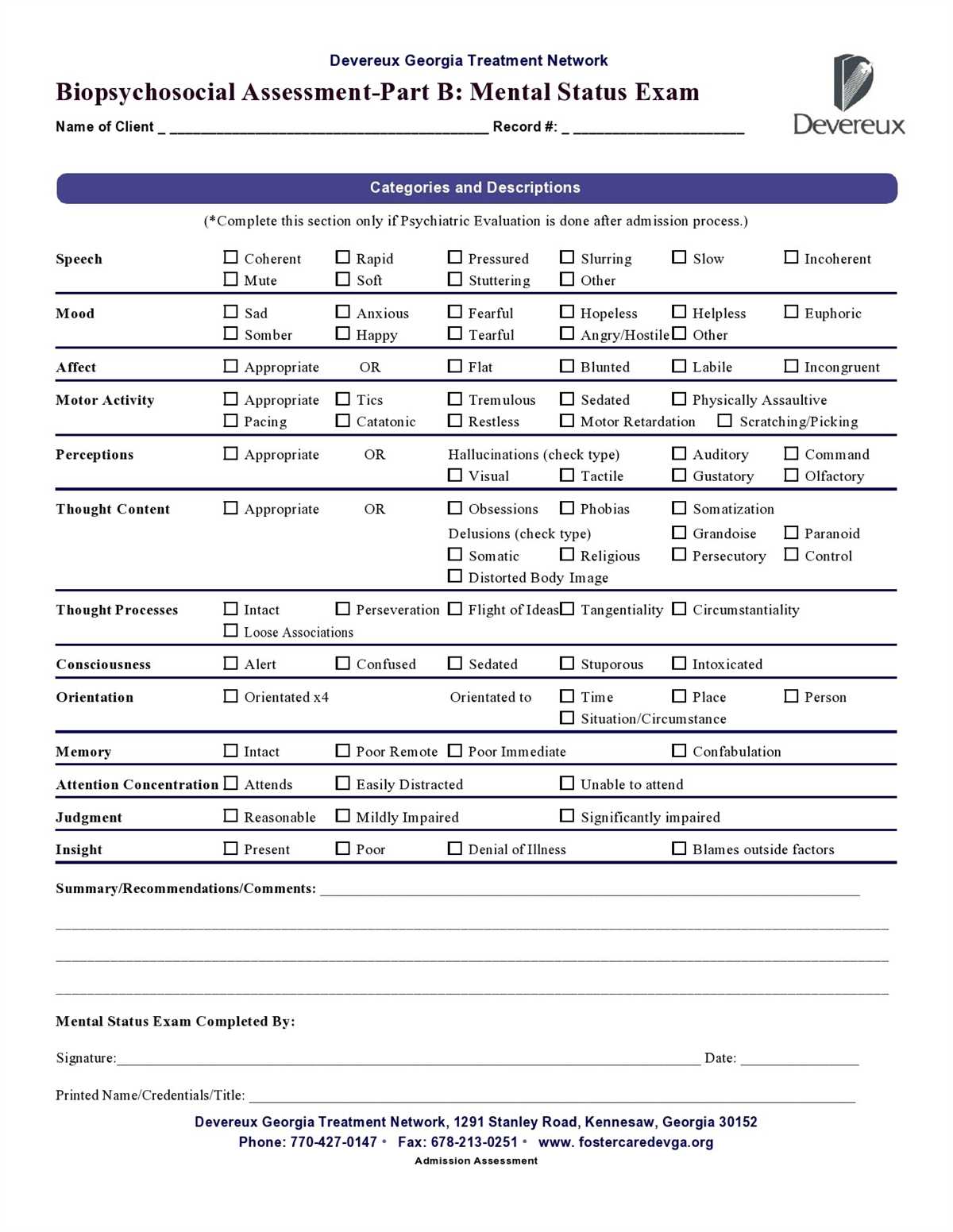
The Mental Status Exam (MSE) is a clinical assessment tool used by mental health professionals to evaluate an individual’s current mental functioning. It provides a systematic way to collect and organize information about a person’s cognitive, emotional, and behavioral state. The MSE assesses various domains, including appearance, behavior, speech, mood, affect, thought process, thought content, perception, cognition, and insight.
The MSE is an important part of a comprehensive psychiatric evaluation and is used to gather objective data about an individual’s mental status. It helps clinicians make diagnostic assessments, develop treatment plans, and monitor a person’s progress over time. The MSE provides valuable information about a person’s mental state, allowing clinicians to identify potential mental health disorders, such as depression, anxiety, bipolar disorder, or schizophrenia.
- Appearance: The clinician observes the individual’s physical appearance, including their grooming, hygiene, clothing, posture, and overall presentation.
- Behavior: The clinician assesses the individual’s behavior, looking for any abnormal movements, motor disturbances, or unusual mannerisms.
- Speech: The clinician evaluates the individual’s speech, noting factors such as rate, volume, articulation, coherence, and content.
- Mood and affect: The clinician assesses the individual’s overall mood and affect, noting any signs of depression, anxiety, irritability, euphoria, or emotional instability.
- Thought process: The clinician evaluates the individual’s thought process, looking for logical organization, coherence, and any evidence of disordered thinking.
- Thought content: The clinician explores the individual’s thought content, including any delusions, hallucinations, obsessions, or suicidal/homicidal ideation.
- Perception: The clinician assesses the individual’s perception, checking for any sensory distortions or abnormalities.
- Cognition: The clinician evaluates the individual’s cognitive functioning, including memory, attention, concentration, orientation, and problem-solving abilities.
- Insight: The clinician assesses the individual’s awareness and understanding of their own mental state and any potential mental health issues.
The MSE provides clinicians with a structured framework to gather and organize important information about an individual’s mental status. It is a valuable tool in psychiatric assessments, aiding in diagnosis, treatment planning, and ongoing monitoring of an individual’s mental well-being.
The Importance of Mental Status Exam

The Mental Status Exam (MSE) is a vital tool used by mental health professionals to assess an individual’s cognitive and emotional functioning. It is a systematic assessment that provides valuable information about a person’s psychological state, allowing clinicians to make accurate diagnoses, develop appropriate treatment plans, and monitor progress over time. By gathering detailed observations and information about a patient’s mental status, the MSE helps clinicians gain insight into their thoughts, feelings, behaviors, and overall mental health.
The MSE encompasses several key components that provide a comprehensive view of an individual’s mental status. These components include the patient’s appearance, speech, thought processes, perception, orientation, memory, intellect, mood, affect, and judgment. By examining each of these areas, clinicians are able to assess aspects such as the patient’s level of distress, cognitive abilities, emotional stability, and overall reasoning and judgment.
One important aspect of the MSE is its ability to aid in the diagnosis of psychiatric disorders. By conducting a thorough examination of a patient’s mental state, clinicians can identify symptoms and patterns that align with specific disorders, such as depression, anxiety, bipolar disorder, or schizophrenia. This helps clinicians establish an accurate diagnosis, which is essential for developing an effective treatment plan.
Furthermore, the MSE is a valuable tool for monitoring an individual’s progress over time. By conducting regular assessments, clinicians can track changes in the patient’s mental status, evaluate the effectiveness of treatment interventions, and make necessary adjustments to the treatment plan. This ongoing evaluation allows for the identification of improvement or deterioration in the patient’s mental health, ensuring that appropriate care is provided.
In summary, the Mental Status Exam is a critical component of mental health assessments. Its comprehensive nature provides valuable information about an individual’s mental state, aiding in accurate diagnosis, treatment planning, and progress monitoring. The MSE allows clinicians to gather detailed information about a patient’s thoughts, feelings, behaviors, and overall mental health, ensuring that appropriate care is provided and effective interventions are implemented.
Key Components of Mental Status Exam
The Mental Status Exam (MSE) is a structured assessment used by healthcare professionals to evaluate the mental functioning of an individual. It involves a comprehensive evaluation of various cognitive, emotional, and behavioral aspects to determine a person’s mental state. The MSE helps in diagnosing and monitoring mental disorders, as well as in formulating treatment plans and interventions.
The key components of the Mental Status Exam include:
- Appearance: The observer assesses the individual’s overall appearance, including their clothing, grooming, and personal hygiene. Any abnormalities or deficits in these areas may provide clues about their mental state.
- Behavior: This component focuses on the person’s actions and mannerisms. Observations are made on their level of activity, restlessness, or psychomotor agitation, as well as any unusual behaviors or mannerisms.
- Speech: The quality of the person’s speech is evaluated, including their rate, volume, rhythm, and coherence. Any abnormalities, such as slurred speech or pressured speech, can indicate underlying mental or neurological issues.
- Mood: The examiner assesses the person’s emotional state and mood expression. They look for symptoms of depression, anxiety, elation, anger, or apathy. The person’s affect, which refers to their emotional responsiveness, is also evaluated.
- Thought Process: This component examines how a person organizes and expresses their thoughts. The examiner evaluates for any disturbances in the thought process, such as tangential thinking, flight of ideas, or thought blocking.
- Thought Content: The content of the person’s thoughts is explored to identify any unusual or abnormal beliefs, delusions, obsessions, or preoccupations. Suicidal or homicidal thoughts are also assessed.
- Perception: The person’s sensory perception is evaluated, including their ability to accurately perceive their environment. Any hallucinations, illusions, or perceptual distortions are noted.
- Cognition: This component focuses on the person’s cognitive abilities, including orientation, attention, memory, language, and executive functioning. Any deficits in these areas can indicate cognitive impairment or neurological conditions.
- Insight and Judgment: The examiner assesses the person’s awareness and understanding of their own mental state and the consequences of their actions. Insight refers to their self-awareness, while judgment pertains to their ability to make sound decisions.
In summary, the Mental Status Exam encompasses a wide range of components that collectively provide valuable information about an individual’s mental functioning. It serves as a crucial tool in the assessment and diagnosis of mental disorders, guiding treatment interventions, and monitoring progress over time.
Describing Appearance and Behavior

A mental status exam typically includes an assessment of a person’s appearance and behavior, as these aspects can provide important clues about their mental state. Describing a person’s appearance involves observing their physical characteristics, grooming, and attire.
When assessing a person’s appearance, it is important to note their age, gender, and overall physical health. Additionally, any visible signs of distress or discomfort, such as trembling or restlessness, should be documented. Observing their eye contact, facial expressions, and posture can also provide insight into their emotional state.
Appearance:
- The individual appears older than their stated age.
- The person presents with disheveled hair and unkempt appearance.
- The individual is well-groomed and dressed appropriately for the occasion.
- There are visible signs of poor hygiene, such as body odor or dirty clothing.
- The person’s physical health appears to be within normal limits.
Behavior:
- The person is agitated and pacing around the room.
- The individual maintains steady eye contact and engages in active conversation.
- The person appears withdrawn and avoids eye contact with others.
- There are repetitive movements, such as hand wringing or rocking back and forth.
- The individual displays appropriate social behavior and interacts politely with others.
Overall, describing a person’s appearance and behavior in a mental status exam is crucial in evaluating their mental well-being. These observations can assist in diagnosing mental disorders and determining appropriate treatment options.
Describing Speech and Language

In the mental status exam, the assessment of speech and language can provide valuable information about a person’s cognitive functioning and potential underlying neurological issues. It is essential to observe and describe the speed, fluency, content, and quality of speech to gain insights into the individual’s communication abilities.
Speech: Speech can be assessed in terms of its rate, rhythm, and volume. Rapid or slow speech may indicate anxiety, mania, or cognitive impairments. Mumbling or slurred speech may suggest intoxication or neurological conditions. Volume can indicate the person’s emotional state and attention. Loud speech may indicate agitation or mania, while soft speech might suggest shyness or depression.
Language: Language assessment involves evaluating both receptive and expressive language skills. Receptive language refers to the ability to understand and comprehend spoken language. It can be assessed by asking the person to follow simple instructions or answer questions. Expressive language, on the other hand, refers to the ability to speak and convey thoughts and ideas. It can be assessed by observing the person’s ability to produce coherent and grammatically correct sentences and use appropriate vocabulary.
In addition to these aspects, it is important to note any abnormalities in speech or language, such as word-finding difficulties, repetition of words or phrases, or tangential or disorganized speech. These abnormalities may indicate language disorders, cognitive impairments, or psychiatric conditions such as schizophrenia. Overall, a thorough assessment of speech and language can provide valuable information about a person’s cognitive and emotional functioning, aiding in diagnosis and treatment planning.
Describing Mood and Affect

Mood and affect are two key components of mental health assessment and play a significant role in diagnosing and understanding a person’s emotional state. Describing mood and affect accurately is essential for clinicians to provide proper treatment and support to their patients.
In the field of psychiatry, mood refers to the overall emotional state or quality of feeling that a person experiences. It includes feelings such as happiness, sadness, anger, and anxiety. Affect, on the other hand, refers to the observed emotional state expressed through non-verbal cues, such as facial expressions, body language, and vocal tone. Describing and assessing mood and affect is crucial in evaluating a person’s mental well-being and determining the presence of any underlying psychiatric conditions.
Describing Mood:
When describing mood, clinicians can use various adjectives to convey the patient’s emotional state. These adjectives can range from positive (e.g., happy, content, elated) to negative (e.g., sad, irritable, hopeless). It is important to note the duration, intensity, and fluctuations of the mood, as well as any triggers or precipitating factors that may be influencing the individual’s emotional state.
Describing Affect:
Affect is typically described based on its quality, range, and appropriateness. Qualities of affect may include flat, blunted, labile, or euthymic. Range refers to the variation or stability of affect over time, while appropriateness assesses whether the observed affect matches the context or situation. Clinicians should also pay attention to any incongruent or discordant affect that does not align with the patient’s reported mood.
Conclusion:
Accurately describing mood and affect is crucial for mental health professionals in assessing and diagnosing psychiatric conditions. By carefully observing and using appropriate descriptors, clinicians can gain valuable insights into a patient’s emotional well-being. This information forms the basis for developing effective treatment plans that address the individual’s unique needs and promote overall mental wellness.