How to Solve Mole Mass Problems and Get Accurate Worksheet Answers
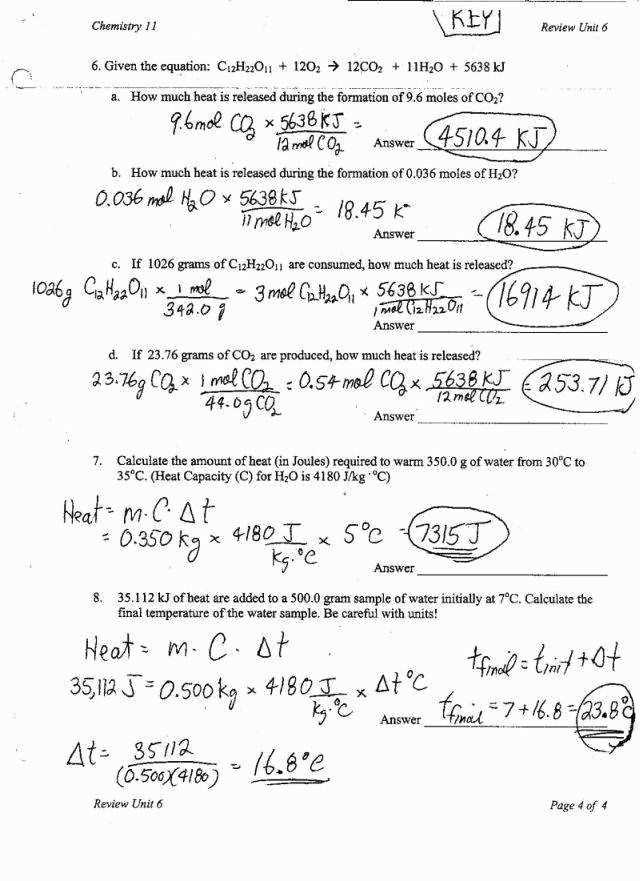
Understanding how to calculate the mass of a substance based on its mole quantity is an essential skill in chemistry. Mole mass problems are common exercises that help students develop their understanding of the relationship between moles and atomic mass. These problems require students to convert between moles and grams, using the molar mass of the substance.
To solve mole mass problems, students need to have a good understanding of the concept of a mole and know how to calculate the molar mass of a substance. The mole is a unit used to count atoms, molecules, or ions, while the molar mass is the mass of one mole of a substance. The molar mass can be calculated by summing the atomic masses of the elements in the molecule or compound.
In mole mass problems, students are typically given a certain number of moles of a substance and asked to calculate the mass in grams. Alternatively, they may be given the mass in grams and asked to find the number of moles. These problems require students to use the molar mass as a conversion factor in order to relate moles to grams.
Practicing mole mass problems is crucial for students to solidify their understanding of the relationship between moles and mass. By solving these problems, students develop their problem-solving and critical thinking skills, as well as their ability to apply mathematical concepts to real-world chemical situations.
What are mole mass problems?

In chemistry, mole mass problems are mathematical exercises used to calculate the mass of a given substance in moles, or to find the number of moles of a substance given its mass. These types of problems are commonly encountered in stoichiometry, a branch of chemistry that deals with the quantitative relationships between reactants and products in chemical reactions.
When solving mole mass problems, it is important to know the molar mass of the substance in question. Molar mass is the mass of one mole of a substance and is expressed in grams per mole. It can be calculated by adding up the atomic masses of all the elements in the chemical formula of the substance.
One common type of mole mass problem involves converting between grams and moles. To solve this type of problem, you first need to determine the molar mass of the substance. Then, using the given mass, you can calculate the number of moles using the equation:
moles = mass (g) / molar mass (g/mol)
Another type of mole mass problem involves finding the mass of a substance given its number of moles. To solve this type of problem, you use the equation:
mass (g) = moles x molar mass (g/mol)
Mole mass problems are important in chemistry because they allow us to determine the quantities of substances involved in chemical reactions. By understanding the relationships between mass, moles, and molar mass, chemists can accurately calculate the amounts of reactants needed and the amounts of products produced.
How to Solve Mole Mass Problems?
Mole mass problems, also known as stoichiometry problems, involve calculating the mass of a substance based on its relative molar ratio in a chemical reaction. These problems are commonly encountered in chemistry and require a systematic approach to solve.
Here is a step-by-step guide to solving mole mass problems:
- Start by writing down the balanced chemical equation for the reaction. This equation shows the molar ratios between the different substances involved.
- Identify the substance for which you want to determine the mass. This substance is usually given in the problem statement.
- Convert the given quantity of the substance to moles. To do this, divide the given mass by the molar mass of the substance, which can be found on the periodic table.
- Use the molar ratios from the balanced equation to convert the moles of the given substance to moles of the desired substance. Multiply the moles of the given substance by the appropriate molar ratio.
- Finally, convert the moles of the desired substance back to mass. Multiply the moles of the desired substance by its molar mass to obtain the mass in grams.
By following this systematic approach, you can effectively solve mole mass problems and calculate the mass of a substance in a chemical reaction.
Example of a Mole Mass Problem
A mole mass problem is a type of calculation that involves converting between the mass of a substance and the number of moles of that substance. This type of problem is commonly encountered in chemistry and is used to determine the amount of a particular substance present in a given sample or reactant.
For example, let’s say we have a sample of sodium chloride (NaCl) with a mass of 50 grams and we want to determine the number of moles of NaCl in the sample. To do this, we need to know the molar mass of NaCl, which is the sum of the atomic masses of sodium (Na) and chlorine (Cl). The atomic mass of Na is 23 grams/mol and the atomic mass of Cl is 35.5 grams/mol, so the molar mass of NaCl is 58.5 grams/mol.
To calculate the number of moles of NaCl in the sample, we use the formula:
moles = mass / molar mass
Plugging in the values from our example:
moles = 50 grams / 58.5 grams/mol
After performing the calculation, we find that there are approximately 0.855 moles of NaCl in the sample.
In conclusion, mole mass problems involve converting between the mass of a substance and the number of moles of that substance. By knowing the molar mass of the substance, we can use a simple formula to calculate the number of moles. These types of problems are important in chemistry for determining the amount of a substance present in a given sample or reactant.
Tips for solving mole mass problems
When solving mole mass problems, it is important to understand the relationship between moles and grams. Here are some tips to help you solve these types of problems:
1. Convert moles to grams using molar mass:
To convert moles to grams, you need to know the molar mass of the substance. The molar mass is the mass of one mole of the substance and is expressed in grams per mole. You can find the molar mass of an element by looking up its atomic mass on the periodic table. To convert moles to grams, multiply the number of moles by the molar mass. This will give you the mass in grams.
2. Convert grams to moles using molar mass:
To convert grams to moles, divide the mass in grams by the molar mass. This will give you the number of moles. Make sure to use the molar mass of the substance you are working with. If you have a compound, you will need to calculate the molar mass by adding up the atomic masses of each element in the compound.
3. Use the mole ratio to convert between different substances:

In some problems, you may need to convert between moles of different substances. To do this, you will need to use the mole ratio. The mole ratio is derived from the balanced chemical equation and tells you the number of moles of each substance involved in the reaction. To convert between moles of different substances, multiply the number of moles by the mole ratio.
By following these tips, you can successfully solve mole mass problems and calculate the mass or moles of a substance. Remember to double-check your calculations and units to ensure accuracy.
The Importance of Understanding Mole Mass Problems
Understanding mole mass problems is essential for success in chemistry. These problems involve calculating the mass of a substance given the number of moles, or vice versa. They are fundamental in many aspects of chemistry, including stoichiometry, empirical formulas, and reaction equations.
1. Stoichiometry: Mole mass problems are crucial in stoichiometry, which is the study of the quantitative relationships between reactants and products in a chemical reaction. By understanding these problems, chemists can determine the amount of a substance needed for a reaction or predict the amount of product that will be formed.
2. Empirical Formulas: Mole mass problems are also important in determining empirical formulas. These formulas give the simplest ratio of atoms in a compound. By knowing the moles and masses of each element in a compound, chemists can calculate the empirical formula and gain insights into its chemical properties.
3. Reaction Equations: Additionally, mole mass problems are essential in balancing chemical equations. Balancing equations involves ensuring that the number of atoms on both sides of the equation is equal. By understanding mole mass problems, chemists can determine the correct coefficients for each compound in the equation.
In conclusion, understanding mole mass problems is crucial in various areas of chemistry. It enables chemists to perform calculations related to stoichiometry, empirical formulas, and reaction equations. By mastering these problems, chemists can make accurate predictions and calculations, leading to a better understanding of chemical processes.