How to Ace Your Physics Semester Exam: Comprehensive Review Guide
Preparing for a semester exam can be a daunting task, especially when it comes to a subject like physics. Physics is the study of matter, energy, and the interactions between the two. It requires a deep understanding of mathematical concepts and problem-solving skills. Whether you are a student who is struggling with the basics or one who is looking to excel in the subject, this article will provide you with a comprehensive review of the key topics you need to know for your physics semester exam.
One of the fundamental concepts in physics is motion. In order to understand motion, you need to be familiar with the concepts of speed, velocity, and acceleration. Speed is the rate at which an object moves, while velocity takes into account both speed and direction. Acceleration is the rate at which an object changes its velocity. These concepts are often described using formulas and graphs, so make sure to practice solving problems and interpreting graphs to gain a solid understanding of motion.
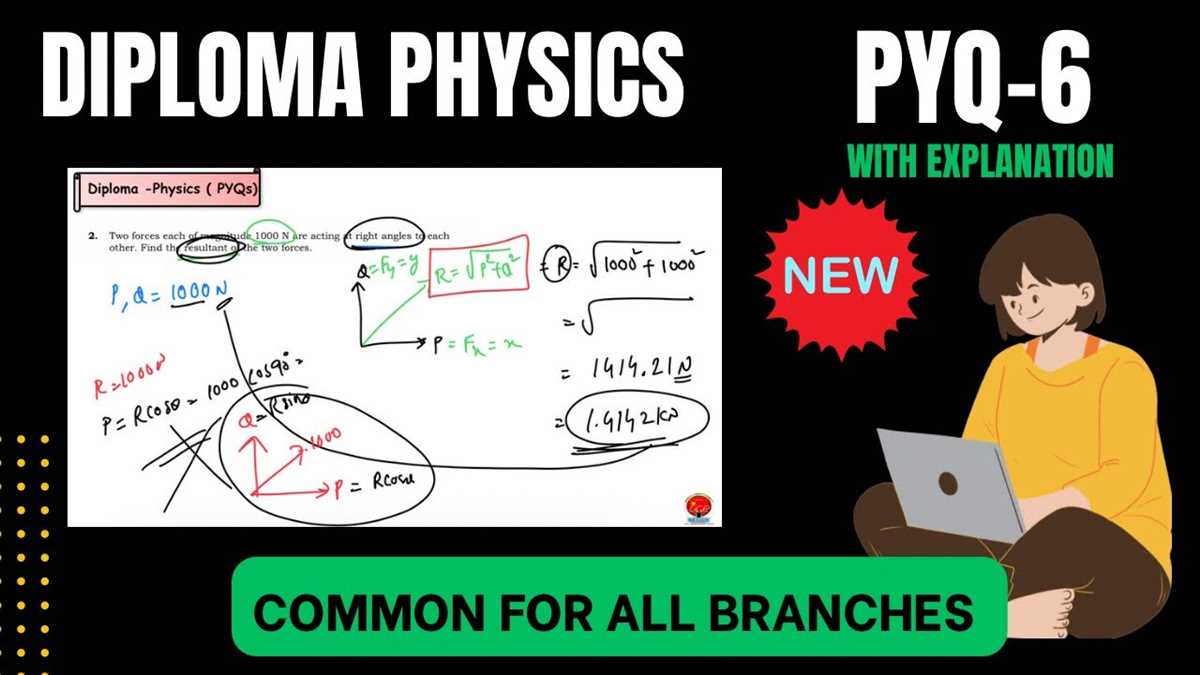
Another important topic in physics is forces. Forces are responsible for the motion of objects. They can cause objects to move, change direction, or stop. The most well-known force is gravity, which pulls objects towards each other. Other forces include friction, which opposes motion, and tension, which occurs when a rope or string is pulled. Knowing how to calculate and analyze forces is crucial for solving problems related to motion and understanding the behavior of objects.
What to Expect on Your Physics Semester Exam
Preparing for your physics semester exam can be a daunting task, but with the right approach, you can feel confident and ready to ace the test. Understanding what to expect on the exam can help you focus your studies and prioritize the most important topics. Here are some key areas to focus on:
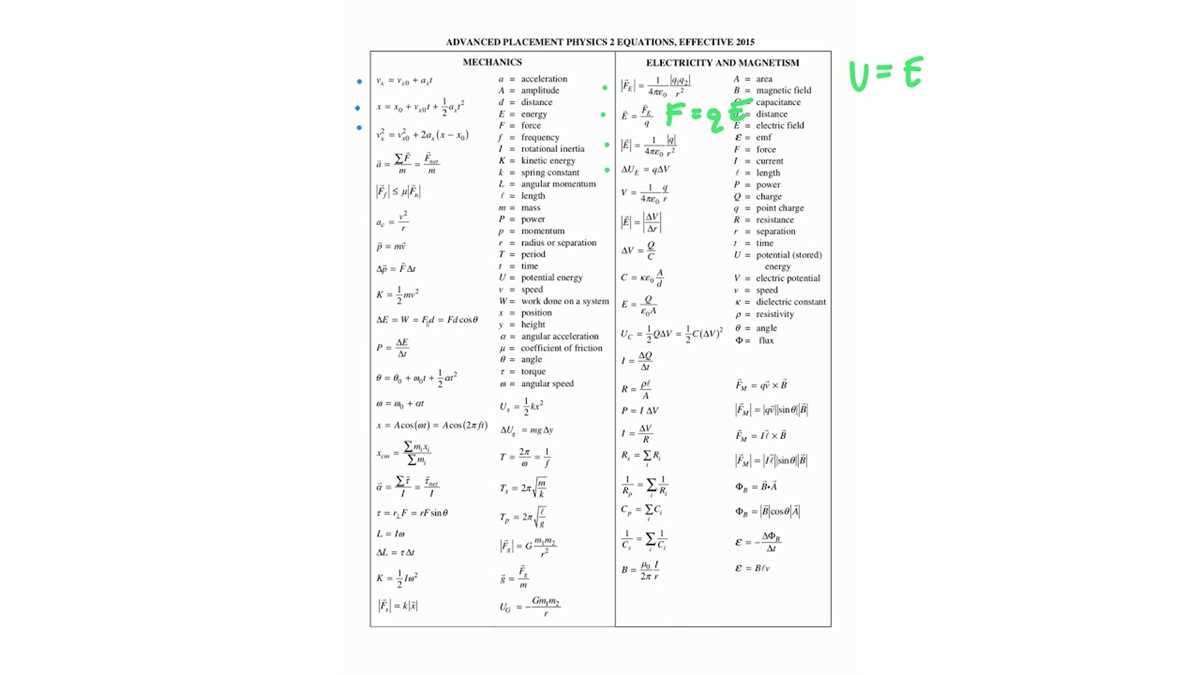
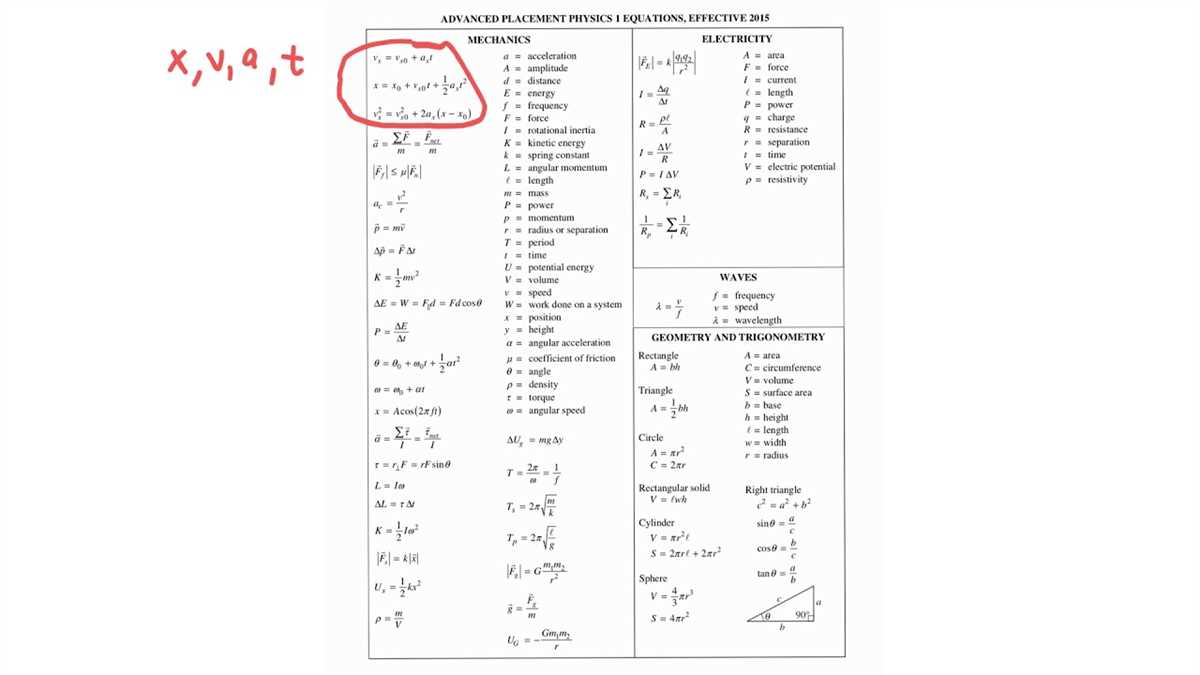
- Formulas and equations: Physics exams typically require you to apply various formulas and equations to solve problems. Make sure you have a solid grasp of the fundamental equations and their applications.
- Conceptual understanding: While formulas are important, it’s also crucial to have a deep understanding of the underlying physics concepts. Be prepared to explain the principles behind certain phenomena and how they relate to real-world scenarios.
- Units and conversions: Physics involves a lot of calculations, so it’s important to be comfortable working with different units and converting between them. Practice converting between metric and imperial units as well as using scientific notation.
- Problem-solving techniques: Physics exams often include word problems that require you to apply problem-solving strategies. Familiarize yourself with common problem-solving techniques, such as drawing diagrams, identifying known and unknown quantities, and breaking down complex problems into smaller steps.
- Laboratory skills: Depending on your course, your physics exam may include questions or problems related to laboratory work. Review any labs you have completed throughout the semester and understand the underlying principles and techniques.
Remember to review your notes, textbook, and any additional study materials provided by your instructor. Practice solving different types of problems, both conceptual and numerical, to assess your understanding and identify any areas that need further attention. With thorough preparation and a clear understanding of the exam expectations, you’ll be well-equipped to tackle your physics semester exam with confidence.
Key Concepts and Formulas
In preparation for the Physics semester exam, it is important to review the key concepts and formulas that have been covered throughout the course. These concepts and formulas serve as the foundation for understanding and solving problems in various areas of physics.
One of the fundamental concepts in physics is Newton’s laws of motion, which describe the relationship between an object’s motion and the forces acting on it. Newton’s second law, F = ma, states that the net force on an object is equal to the mass of the object multiplied by its acceleration. This equation is used to calculate the force required to accelerate an object or determine the acceleration of an object when the force is known.
In addition to Newton’s laws, understanding the concept of work and energy is essential in physics. Work is defined as the transfer of energy that occurs when a force is applied to an object and the object moves in the direction of the force. The formula for work is W = Fd, where W represents work, F represents the force applied, and d represents the displacement of the object.
Another important concept in physics is the conservation of energy. According to this principle, energy cannot be created or destroyed, but it can be transferred from one form to another. The law of conservation of energy states that the total energy of an isolated system remains constant over time. This concept is often used to analyze the motion and interactions of objects in mechanical systems.
These are just a few of the key concepts and formulas that students should review before the Physics semester exam. It is important to understand these concepts and how to apply the associated formulas in order to solve problems and analyze physical phenomena accurately and efficiently.
Key Concepts:

- Newton’s laws of motion
- Work and energy
- Conservation of energy
Key Formulas:
- Newton’s second law: F = ma
- Work: W = Fd
- Conservation of energy: E_total = constant
Newtonian Mechanics

Newtonian mechanics, also known as classical mechanics, is a branch of physics that studies the motion and forces of objects. It is based on Sir Isaac Newton’s three laws of motion, which provide fundamental principles for understanding the behavior of objects in motion.
Newton’s first law of motion, also known as the law of inertia, states that an object at rest will stay at rest, and an object in motion will stay in motion with the same velocity, unless acted upon by an external force. This law helps explain why objects naturally tend to resist changes in their state of motion.
Newton’s second law of motion states that the acceleration of an object is directly proportional to the net force acting on it, and inversely proportional to its mass. It can be expressed mathematically as F = ma, where F is the force applied to the object, m is its mass, and a is its acceleration. This law quantifies the relationship between force, mass, and acceleration.
Newton’s third law of motion states that for every action, there is an equal and opposite reaction. This means that whenever an object exerts a force on another object, the second object exerts a force of equal magnitude but in the opposite direction on the first object. This law is fundamental in understanding how forces are exchanged between objects.
In addition to these laws, Newtonian mechanics also includes concepts such as momentum, energy, and angular motion. By applying these laws and concepts, physicists can analyze and predict the behavior of objects in various physical scenarios. Newtonian mechanics forms the basis for understanding the motion of everyday objects, as well as more complex systems such as planets and celestial bodies.
Electricity and Magnetism
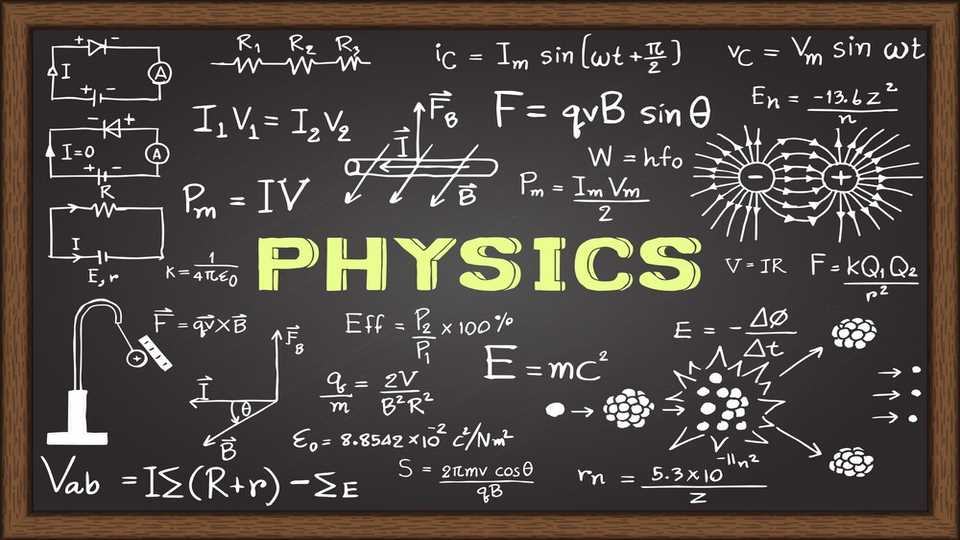
Electricity and magnetism are two closely related concepts in physics. They both involve the study of charged particles and their interactions. Electric charge is a fundamental property of particles, and it can be positive or negative. Like charges repel each other, while opposite charges attract. This fundamental property gives rise to the phenomenon of electrical forces.
The study of electricity focuses on the behavior and properties of electric charges. It includes topics such as electric fields, electric potential, electric current, resistance, and circuits. Electric fields are regions of influence around charged particles, and they exert forces on other charged particles within their vicinity. Electric potential is the amount of electric potential energy per unit charge at a certain point in space. Electric current refers to the flow of electric charges through a conductor, such as a wire. Resistance is a measure of how much a material impedes the flow of electric current. Circuits are paths for the flow of electric current, and they can be either series or parallel.
Magnetism, on the other hand, deals with the behavior and properties of magnets and the magnetic field. Magnets have two poles, north and south, and opposite poles attract while like poles repel. The magnetic field is a region around a magnet where its influence can be felt. When a magnetic field changes over time, it induces an electric field, and vice versa, according to Faraday’s law of electromagnetic induction. This is the basis for generating electricity in power plants and for the operation of electric motors.
In summary, electricity and magnetism are interconnected phenomena that form the basis of many technological innovations that we rely on today. Understanding their principles and properties is crucial for various applications, such as power generation, electrical circuits, and electromagnets.
Waves and Optics

Waves and optics are fundamental concepts in the field of physics. Waves can be described as disturbances that propagate through a medium or space. They can exhibit various properties, including amplitude, wavelength, frequency, and speed. In the context of light waves, they can be classified as electromagnetic waves, which are composed of electric and magnetic fields oscillating perpendicular to each other.
One important concept in wave physics is the wave-particle duality, which states that particles, such as photons, can exhibit wave-like behavior. This duality is a fundamental principle in quantum mechanics and has been experimentally verified through the famous double-slit experiment. This experiment demonstrates the interference and diffraction effects that occur when light passes through two narrow slits, revealing its wave-like nature.
Optics is the study of light and its interaction with matter. It encompasses various phenomena, including reflection, refraction, dispersion, and diffraction. Reflection occurs when light bounces off a surface, while refraction refers to the bending of light as it passes from one medium to another. Dispersion is the separation of light into its constituent colors, as seen in a rainbow. Diffraction is the bending of light around obstacles or through small openings.
Optical devices, such as lenses and mirrors, play a crucial role in optics. Lenses are transparent objects with curved surfaces that can converge or diverge light, allowing for the formation of images. Mirrors, on the other hand, reflect light and can be concave or convex in shape. These devices are utilized in various optical systems, such as telescopes and microscopes, to manipulate and focus light to observe distant objects or magnify tiny objects.
In conclusion, waves and optics are essential areas of study in physics. Waves exhibit various properties and can behave as both particles and waves. Optics, on the other hand, focuses on the behavior of light and its interaction with matter. Understanding these concepts is crucial for explaining a wide range of natural phenomena and developing advanced optical technologies.
Thermodynamics and Kinetic Theory
Thermodynamics is the study of energy and its transformations in a system. It focuses on the relationships between heat, work, and energy. The principles of thermodynamics have wide-ranging applications in various fields, including engineering, physics, chemistry, and biology. The understanding of thermodynamics is crucial in designing efficient engines, refrigeration systems, and power plants, among others.
The kinetic theory of gases is based on the idea that the particles in a gas are in constant motion and that their motion is random. It provides a microscopic explanation for the macroscopic properties of gases, such as pressure, temperature, and volume. According to the kinetic theory, the average kinetic energy of gas particles is directly proportional to the temperature of the gas. This relationship allows for the determination of temperature using the kinetic theory.
One of the key concepts in thermodynamics is entropy, which is a measure of the disorder or randomness of a system. The second law of thermodynamics states that the entropy of a closed system always increases or remains constant in a spontaneous process. This principle is essential in understanding the direction of heat flow and the efficiency of various thermodynamic processes.
Another important concept in thermodynamics is heat transfer. Heat can be transferred through three main mechanisms: conduction, convection, and radiation. Conduction involves the transfer of heat through direct contact between particles, convection involves the transfer of heat through the movement of fluids, and radiation involves the transfer of heat through electromagnetic waves. These mechanisms play a crucial role in various everyday phenomena, such as cooking, heating, and cooling.
In conclusion, thermodynamics and the kinetic theory provide fundamental insights into the behavior of energy and particles in systems. Understanding these concepts is essential for various applications in engineering, physics, and chemistry. The principles of thermodynamics help in designing efficient systems, while the kinetic theory provides a microscopic explanation for the macroscopic properties of gases. Together, these concepts contribute to our understanding of the fundamental laws of energy and its transformations.
Conclusion
Quantum mechanics is a fundamental branch of physics that describes the behavior of matter and energy at the smallest scales. It revolutionized our understanding of the microscopic world and has led to groundbreaking discoveries and technological advancements. By embracing the probabilistic nature of particles and their wave-like properties, quantum mechanics has challenged our classical intuitions and pushed the boundaries of our knowledge.
Through the principles of superposition and entanglement, quantum mechanics has paved the way for technologies such as quantum computing, encryption, and teleportation. It has enabled us to manipulate individual atoms and molecules, resulting in advancements in fields such as medicine, materials science, and electronics. The development and application of quantum mechanics continue to shape our modern world.
Despite its impressive successes, quantum mechanics remains a complex and often counterintuitive theory. Many of its concepts, such as wave-particle duality and the observer effect, challenge our everyday experiences and require a shift in thinking. However, with ongoing research and exploration, physicists strive to unravel the mysteries of quantum mechanics and uncover the ultimate nature of reality.