The Pull Ranking: Analyzing Gravitational Forces in Descending Order
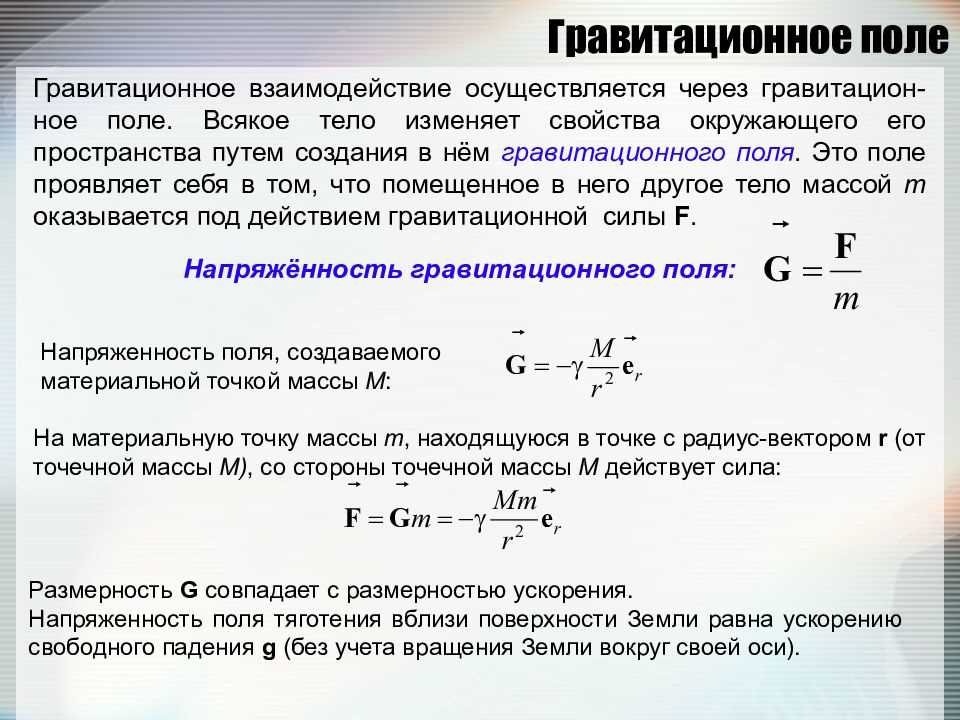
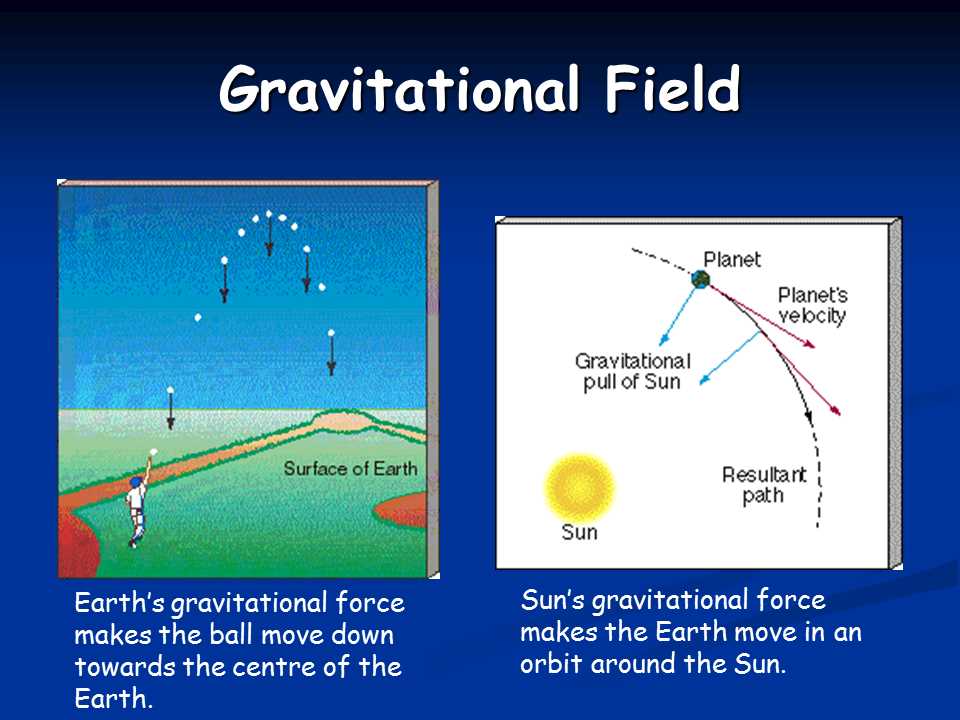
Gravity is a fundamental force that affects all objects in the universe. It is responsible for keeping planets in orbit around the sun, for causing objects to fall to the ground, and for creating the structure of the cosmos. Understanding the relative strengths of gravitational forces can help us understand the behavior of celestial bodies and the dynamics of our universe.
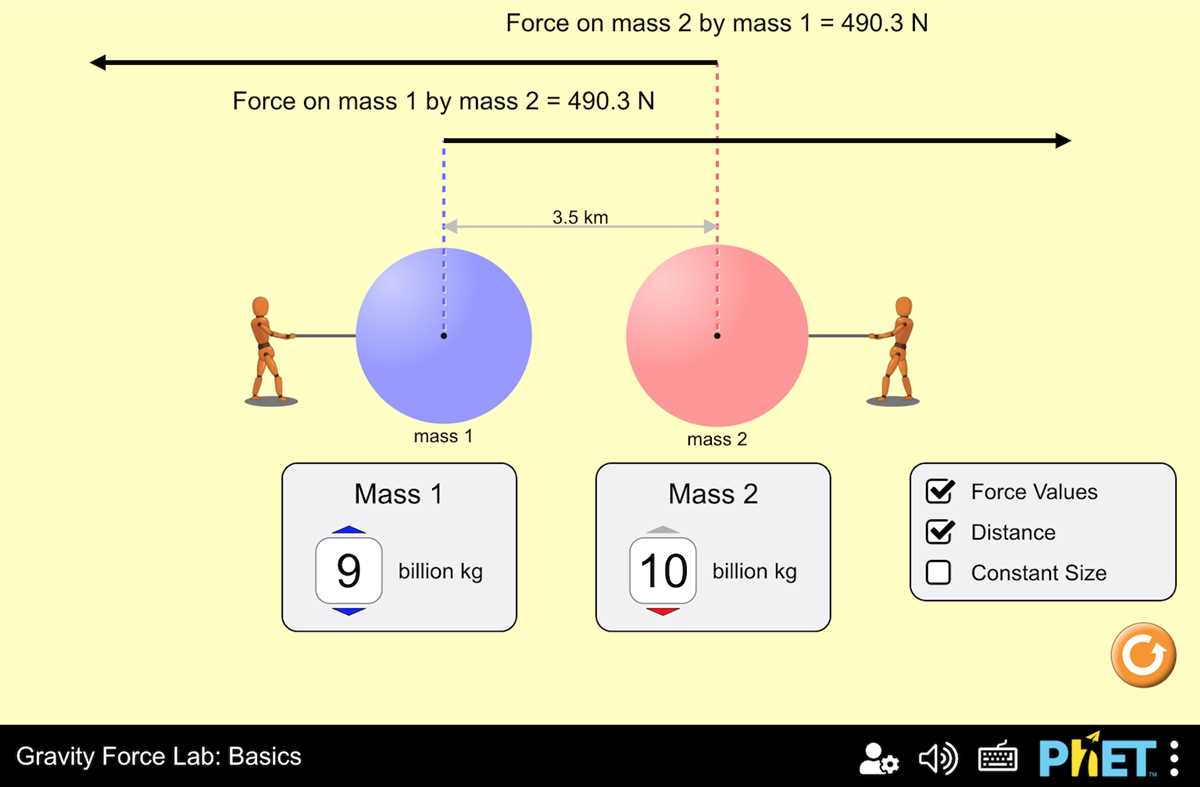
The strength of a gravitational force depends on two factors: the mass of the objects involved and the distance between them. In general, the greater the mass of an object, the stronger its gravitational force. Similarly, the closer two objects are to each other, the stronger their gravitational attraction. This means that the gravitational force between two objects can vary greatly depending on these factors.
When ranking gravitational forces from greatest to least, we need to consider objects and their mass. The largest gravitational force in the universe is that between a black hole and nearby matter. Black holes are incredibly dense objects with massive amounts of matter concentrated in a small space. Their gravitational pull is so strong that nothing, not even light, can escape their grasp. This makes them the most powerful sources of gravity in the universe.
Newton’s Law of Universal Gravitation
The Law of Universal Gravitation, formulated by English physicist Sir Isaac Newton, describes the force of gravity between two objects. This law states that every particle in the universe attracts every other particle with a force that is directly proportional to the product of their masses and inversely proportional to the square of the distance between them.
In mathematical terms, the Law of Universal Gravitation can be expressed as:
F = G * ((m1 * m2) / r^2)
Where:
- F is the gravitational force between the two objects
- G is the gravitational constant, approximately equal to 6.674 x 10^-11 N*m^2/kg^2
- m1 and m2 are the masses of the two objects
- r is the distance between the centers of the two objects
This equation shows that the gravitational force depends on the masses of the objects and the distance between them. The greater the masses of the objects, the stronger the gravitational force. Similarly, the closer the objects are to each other, the stronger the gravitational force.
It is important to note that the Law of Universal Gravitation applies to all objects in the universe, regardless of their size or composition. Whether it be celestial bodies like planets and stars, or everyday objects like apples and people, gravity acts as a fundamental force that governs the interactions between all matter in the universe.
Gravitational Force on Earth
The gravitational force on Earth is the force of attraction that all objects with mass have towards each other. It is responsible for keeping us grounded and preventing us from floating away into space. The strength of the gravitational force depends on two factors: the mass of the objects involved and the distance between them.
In terms of mass, the Earth is much larger than any object on its surface, such as humans or buildings. This means that the Earth exerts a strong gravitational force on everything around it. The force is commonly referred to as the weight of the object, which is the mass of the object multiplied by the acceleration due to gravity.
According to Newton’s law of universal gravitation, the force of gravity between two objects is directly proportional to the product of their masses and inversely proportional to the square of the distance between their centers. This means that as the mass of an object increases, so does the gravitational force it exerts. Similarly, as the distance between two objects decreases, the gravitational force between them increases.
If we compare the gravitational force between objects on Earth to other celestial bodies in the universe, we can see that the force on Earth is relatively strong due to its large mass. For example, the gravitational force on the Moon is about one-sixth the force on Earth, while the force on Mars is roughly one-third. However, the gravitational force on Earth is significantly weaker compared to massive objects like stars or black holes.
Overall, the gravitational force on Earth plays a fundamental role in our daily lives, keeping us grounded and ensuring the stability of our planet. It is a force that we often take for granted, but without it, life as we know it would be very different.
Gravitational Force on the Moon
The gravitational force on the Moon is significantly weaker compared to that on Earth. This is due to the Moon’s smaller mass and radius, which result in a lower gravitational pull. The force of gravity on the Moon is approximately 1/6th of that on Earth.
This weaker gravitational force on the Moon has several implications. Firstly, because of the lower gravity, objects on the Moon weigh less than they do on Earth. For example, a person who weighs 150 pounds on Earth would weigh only about 25 pounds on the Moon. This reduced weight allows for easier movement and the ability to jump higher on the lunar surface.
The Moon’s weaker gravitational force also affects the behavior of celestial bodies in its vicinity. For example, the Moon’s gravity influences the tides on Earth, causing the regular rise and fall of the ocean waters. The Moon’s gravitational force also affects the Earth’s rotation, causing a slight slowing down over time.
Despite its relatively weaker gravitational force, the Moon still exerts a significant influence on space exploration. Its lower gravitational pull makes it easier for spacecraft to launch from the lunar surface or land on it, as less energy is required to overcome the weaker gravity. This has been utilized in various lunar missions, including the historic Apollo landings in the 1960s and 1970s.
In summary, the gravitational force on the Moon is much weaker compared to Earth, offering unique conditions for exploration and scientific study. Its reduced gravitational pull allows for lighter weights, influences tides on Earth, and affects the Earth’s rotation. Understanding the gravitational force on the Moon is crucial for successfully navigating lunar missions and advancing our knowledge of both the Moon and our own planet.
Gravitational Force on Mars
The gravitational force on Mars is significantly weaker than on Earth due to its smaller size and lower mass. Mars has a gravitational acceleration of approximately 3.71 meters per second squared, which is only about 38% of Earth’s gravitational acceleration. This means that objects on Mars weigh less compared to their weight on Earth.
The weaker gravitational force on Mars has several implications for the planet and its exploration. One of the most notable impacts is that humans and other organisms would experience less weight and feel lighter on Mars. This can have both advantages and disadvantages. On the one hand, it would require less effort to move around and perform physical tasks. On the other hand, it can lead to muscle and bone loss over extended periods of time due to the decreased stress on the body.
The weaker gravity on Mars also affects the planet’s atmosphere. With the lower gravitational force, Mars struggles to retain its atmosphere, and the atmosphere is much thinner compared to Earth. This has significant implications for the ability of humans and other organisms to survive on the planet, as the thin atmosphere provides less protection against harmful cosmic rays and solar radiation.
Furthermore, the weaker gravitational force on Mars affects the space exploration efforts on the planet. It requires less fuel to launch spacecraft from its surface, making Mars an attractive destination for future manned missions and colonization. However, landing and taking off from Mars can be challenging due to the lower gravitational pull, requiring precise calculations and technology.
In summary, the gravitational force on Mars is much weaker compared to Earth, leading to several unique effects. From altering the weight and physical experiences of humans to impacting the planet’s atmosphere and space exploration efforts, understanding the gravitational force on Mars is crucial for future missions and potential colonization of the planet.
Gravitational Force on Jupiter
Jupiter, the largest planet in our solar system, exerts a tremendous gravitational force due to its massive size and high density. The gravitational force on Jupiter is approximately 24.79 m/s², which is about 2.53 times stronger than the gravitational force on Earth. This means that objects on Jupiter’s surface would feel significantly heavier compared to their weight on Earth.
The immense gravitational force on Jupiter is a result of its enormous mass. Jupiter has a mass of about 1.898 × 10^27 kilograms, which is more than 317 times the mass of Earth. This massive size allows Jupiter to exert a gravitational pull that is capable of capturing numerous moons and maintaining a complex system of rings.
Comparing the gravitational forces of different celestial bodies, it is evident that Jupiter has a much higher gravitational force than planets like Earth, Mars, and Venus. However, it is still significantly weaker than the gravitational force on massive objects like the Sun or black holes.
The strong gravitational force on Jupiter has many interesting effects on its atmosphere and surrounding environment. The high level of gravity causes the gas giant to have a thick atmosphere composed mainly of hydrogen and helium. It also creates intense storms and weather patterns, such as the iconic Great Red Spot, which is a massive storm system that has been raging for centuries.
In conclusion, the gravitational force on Jupiter is incredibly strong due to its large mass and density. This force plays a vital role in shaping Jupiter’s atmosphere, maintaining its moons, and creating its distinct features. Understanding the gravitational forces of celestial bodies like Jupiter helps us gain a deeper understanding of the dynamics of our solar system and the universe as a whole.
Comparing Gravitational Forces in the Solar System
The gravitational forces within the solar system vary greatly depending on the mass of the celestial bodies involved. In this article, we have explored the gravitational forces exerted by the sun, planets, and other objects in our solar system. Let’s summarize our findings:
Gravitational Forces from Greatest to Least
- The Sun: The gravitational force exerted by the sun is the greatest in our solar system. Its immense mass and close proximity to all other celestial bodies make its gravitational pull incredibly strong. The sun’s gravity keeps all the planets, moons, and asteroids in orbit around it.
- Jupiter: After the sun, Jupiter has the highest gravitational force among the planets. Its large mass allows it to exert significant gravitational pull on its numerous moons, some of which are larger than certain planets in the solar system. Jupiter’s gravity also influences the orbits of other nearby celestial bodies.
- Saturn: Saturn, known for its rings, also possesses a strong gravitational force. It is the second-largest planet in terms of mass and exerts a considerable pull on its moons and icy ring particles.
- Other Planets: The remaining planets in the solar system, such as Uranus, Neptune, Earth, Venus, Mars, and Mercury, have progressively smaller gravitational forces. Their gravity influences the orbits and movements of their respective moons, spacecraft, and other objects in their vicinity.
- Moons: The gravitational force exerted by moons varies depending on their mass and distance from the planet they orbit. Larger moons with substantial mass, like Earth’s moon, exert a noticeable gravitational pull on smaller objects in their vicinity.
- Asteroids and Comets: Smaller objects like asteroids and comets have much weaker gravitational forces compared to planets and moons. While their gravitational pull may not be significant enough to form spherical shapes, their gravity can still influence nearby objects.
Understanding the various gravitational forces within our solar system helps us comprehend the intricate dynamics that govern the movement of celestial bodies. These gravitational forces not only shape the orbital paths of planets and moons but also play a vital role in the stability of the solar system as a whole.