Mastering Test Cross Worksheet Answers: All the Solutions You Need
Understanding genetics and the principles of inheritance is crucial for studying and predicting the traits of living organisms. One of the most common ways to analyze and determine the genotype of an individual is through a test cross. This process involves crossing an individual with an unknown genotype with another individual that has a known genotype for a particular trait.
The purpose of a test cross is to determine whether the individual with the unknown genotype is heterozygous or homozygous for a specific trait. By observing the phenotypes of the offspring, it is possible to deduce the genotype of the unknown individual. This information is invaluable for geneticists and breeders looking to determine and predict the genetic makeup of future generations.
A test cross worksheet provides a series of questions and scenarios that help reinforce the concepts and calculations involved in a test cross. These worksheets often include Punnett squares, which are a visual representation of the possible gene combinations that can result from a particular cross. The answers to these worksheets allow individuals to check their understanding and ensure they have accurately analyzed the genetic outcomes.
Test Cross Worksheet Answers
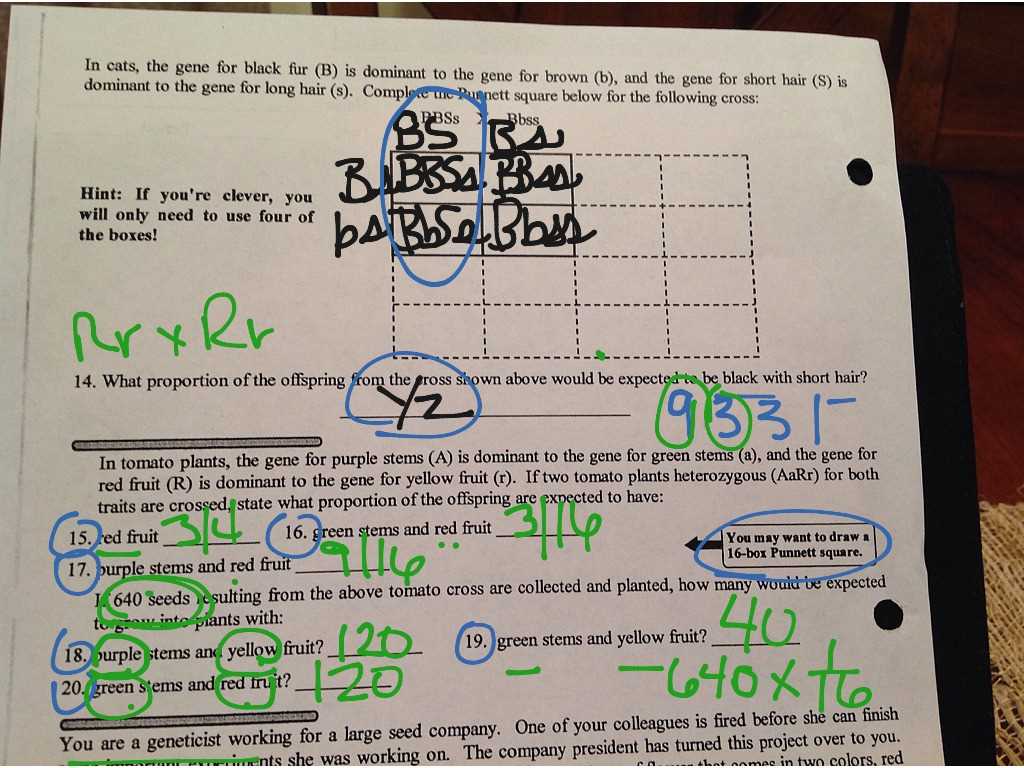
In genetics, a test cross is a tool used to determine the genotype of an organism by crossing it with a known genotype. This method is particularly useful for determining whether an organism with a dominant trait is homozygous or heterozygous. A test cross worksheet provides a series of genetic crosses, and the answers to these crosses can help students understand the principles of genetics.
One example of a test cross worksheet question is: “A plant with purple flowers is crossed with a plant with white flowers. If all of the offspring have purple flowers, what is the genotype of the purple-flowered parent?” The answer to this question would be that the purple-flowered parent is homozygous for the purple flower allele, because all of the offspring inherited the purple flower allele.
Another question that might be included in a test cross worksheet is: “A mouse with black fur is mated with a mouse with white fur. If half of the offspring have black fur and half have white fur, what are the genotypes of the parent mice?” The answer to this question would be that the black-furred parent mouse is heterozygous for fur color, and the white-furred parent mouse is homozygous for the white fur allele.
By providing answers to test cross questions on a worksheet, students can practice applying the principles of Mendelian genetics and gain a better understanding of how traits are inherited. This can also help reinforce the concept of genotype and phenotype and how they relate to each other. Through test crosses, students can discover the hidden genetics behind observable traits and explore the diversity that can arise from different combinations of alleles.
Understanding the Test Cross
In genetics, a test cross is a method used to determine the genotype of an individual with a dominant phenotype. This cross involves crossing the unknown genotype with a homozygous recessive individual, and the resulting offspring can help determine the genotype of the unknown individual. The test cross is a powerful tool in genetic research and breeding programs as it allows scientists to study inheritance patterns and predict the likelihood of certain traits being passed on.
The test cross works by taking advantage of the principles of Mendelian genetics. When two individuals with different genotypes are crossed, the resulting phenotype of their offspring can provide clues about the genotypes of the parents. In a test cross, the individual with the unknown genotype is crossed with an individual that is homozygous recessive for the trait of interest. If the unknown individual is homozygous dominant, all the offspring will exhibit the dominant phenotype. If the unknown individual is heterozygous, half of the offspring will exhibit the dominant phenotype and half will exhibit the recessive phenotype.
The test cross is particularly useful in situations where it can be difficult to determine the genotype of an individual just by observing its phenotype. By performing a test cross, researchers can obtain a definitive answer about the unknown genotype. This information is valuable in many fields, including agriculture, where breeders can use the test cross to predict the inheritance of desirable traits in plants and animals. Additionally, the test cross can also be used in the study of human genetics, helping to determine the likelihood of certain genetic disorders being passed on to future generations.
In conclusion, the test cross is an important tool in genetics research and breeding programs. It allows scientists to determine the genotype of individuals with dominant phenotypes and predict the inheritance of traits. Through the test cross, researchers can gain valuable insights into the principles of inheritance and make informed decisions in fields such as agriculture and human genetics.
Key Concepts in Genetics
In the field of genetics, there are several key concepts that are crucial to understanding how traits are inherited and passed down from one generation to the next. These concepts include dominant and recessive alleles, genotype and phenotype, and Punnett squares.
One key concept in genetics is the idea of dominant and recessive alleles. Alleles are different versions of a specific gene, and some alleles are dominant while others are recessive. Dominant alleles are expressed in the phenotype, or physical appearance, of an organism, while recessive alleles are only expressed when an individual has two copies of the recessive allele.
The terms genotype and phenotype are also important in genetics. The genotype refers to the genetic makeup of an organism, while the phenotype refers to the physical characteristics that result from the genotype. For example, a person may have the genotype for blue eyes (BB or Bb), but the phenotype will only be blue if the dominant allele for blue eyes is present.
Punnett squares are a visual tool used in genetics to predict the possible outcomes of a cross between two individuals with known genotypes. By combining the alleles from each parent, the Punnett square can show the probability of different genotypes and phenotypes in the offspring. This concept is essential in understanding how traits are inherited and can be used to make predictions about the likelihood of certain traits being passed on to future generations.
Summary of Key Concepts in Genetics:
- Alleles can be dominant or recessive, determining whether they are expressed in the phenotype.
- The genotype refers to the genetic makeup of an organism, while the phenotype is the physical appearance resulting from the genotype.
- Punnett squares are a visual tool used to predict the possible outcomes of a genetic cross.
The Importance of Test Cross Worksheet Answers
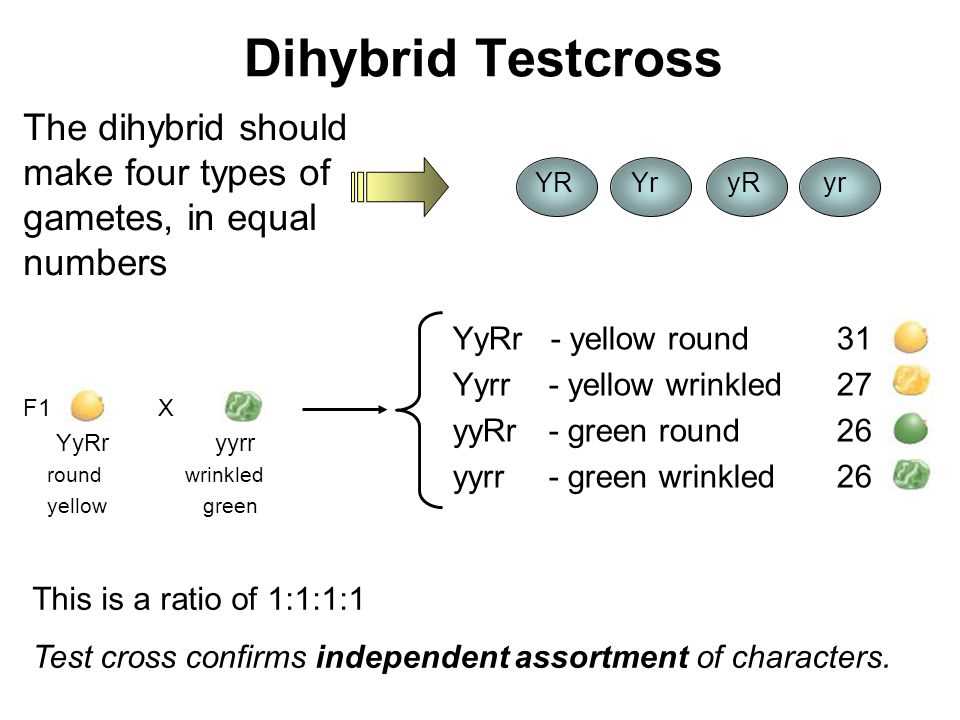
The use of test cross worksheet answers is crucial in the field of genetics. This tool allows scientists and students to understand and analyze the inheritance patterns of certain traits in organisms. By performing a test cross, where an individual with an unknown genotype is crossed with a known homozygous recessive individual, researchers can determine the genotype of the unknown individual by observing the phenotypic ratios of the offspring.
Test cross worksheet answers provide a clear and organized way to record and interpret the results of test crosses. These answers allow students to practice their understanding of Mendelian genetics and reinforce the concepts learned in the classroom. They also serve as a valuable resource for instructors to assess their students’ comprehension and provide feedback.
The analysis of test cross worksheet answers can reveal important information about the inheritance of traits and the presence of certain alleles in a population. This information can have applications in various fields, such as agriculture, medicine, and evolutionary biology. For example, understanding the inheritance of disease-causing alleles can help in the development of targeted treatments and genetic screening programs.
In conclusion, test cross worksheet answers play a vital role in genetics education and research. They enable students to practice and reinforce their understanding of inheritance patterns, while also providing valuable information for scientific analysis. With the help of these worksheets, scientists and students can unravel the complexities of genetic inheritance and contribute to the advancement of the field.
How to Interpret Test Cross Worksheet Answers
When working on a test cross worksheet, it is important to understand how to interpret the answers. A test cross is a tool used in genetics to determine the genotype of an individual with a dominant phenotype. By crossing the individual with a homozygous recessive individual, the results of the offspring can provide insight into the genotype of the original individual.
To interpret test cross worksheet answers, it is necessary to understand the principles of Mendelian genetics. In a test cross, the dominant phenotype of the original individual indicates that it has at least one dominant allele. By crossing it with a homozygous recessive individual, the resulting offspring can reveal whether the original individual is homozygous dominant (AA) or heterozygous (Aa). If all the offspring have the dominant phenotype, it suggests that the original individual is homozygous dominant. However, if some of the offspring have the recessive phenotype, it suggests that the original individual is heterozygous.
Test cross worksheet answers can be interpreted by analyzing the phenotypes and genotypes of the offspring. By observing the ratio of dominant to recessive phenotypes, it is possible to determine the genotypes of the original individual. If there is a 1:1 ratio of dominant to recessive phenotypes, it suggests that the original individual is heterozygous. On the other hand, if all the offspring have the dominant phenotype, it suggests that the original individual is homozygous dominant.
It is important to note that the results of a test cross are only indicative of the genotype of the original individual for a specific trait. Other traits may have different genotypes, so it is necessary to perform multiple test crosses to fully understand the genotype of an individual. Additionally, the results of a test cross may be influenced by factors such as incomplete dominance or codominance, which can complicate the interpretation of the answers.
Overall, understanding how to interpret test cross worksheet answers requires a solid understanding of Mendelian genetics and the principles of inheritance. By analyzing the phenotypes and genotypes of the offspring, it is possible to determine the genotype of the original individual for a specific trait.
Troubleshooting Test Cross Worksheet Answers
Test cross worksheets are commonly used in biology to understand the inheritance patterns of traits. However, sometimes students may encounter difficulties while completing these worksheets. It is important to troubleshoot any issues to ensure accurate answers are obtained.
1. Incomplete or incorrect information: One common issue that students face is incomplete or incorrect information provided in the worksheet. This can lead to confusion and incorrect answers. It is crucial to carefully read the instructions and gather all the necessary information before attempting to answer the questions.
2. Lack of understanding concepts: Test cross worksheets often involve complex genetic concepts that students may not fully understand. This can make it difficult for them to provide accurate answers. It is recommended to review the relevant concepts and seek clarification from the instructor if necessary. Using additional resources such as textbooks or online tutorials can also be helpful in improving understanding.
3. Calculation errors: Test cross worksheets often require mathematical calculations to determine the probability of certain traits being inherited. Students may make mistakes while performing these calculations, leading to incorrect answers. It is important to double-check all calculations and ensure accuracy before finalizing the answers.
4. Misinterpretation of questions: Sometimes, students may misinterpret the questions on the test cross worksheet, leading to incorrect answers. It is important to carefully read and understand each question before attempting to answer it. If a question seems unclear or confusing, it is advisable to seek clarification from the instructor.
5. Lack of time management: Test cross worksheets often have a time limit for completion. Poor time management can result in rushing through the questions and making mistakes or omitting important steps. It is essential to plan the time wisely, allocating sufficient time to read and understand each question, gather necessary information, perform calculations accurately, and review the answers before submission.
By troubleshooting these common issues, students can enhance their understanding of genetic concepts and improve their test cross worksheet answers. With practice and attention to detail, accurate and comprehensive answers can be achieved.
Tips for Effective Test Cross Worksheet Answers
Completing a test cross worksheet can be a challenging task, especially when it comes to providing accurate and concise answers. To help you excel in this exercise, here are some tips to keep in mind:
- Understand the concept: Before attempting to answer any questions on the test cross worksheet, make sure you have a solid understanding of the underlying genetic concept. This will enable you to approach each question with clarity and confidence.
- Read the questions carefully: Carefully read each question on the worksheet to ensure that you understand what is being asked. Pay attention to any specific instructions or details provided, as they may influence your answers.
- Use clear and concise language: When answering the questions, use clear and concise language to convey your thoughts. Avoid unnecessary jargon or complex sentences that may confuse the reader. Stick to the point and provide only the relevant information.
- Show your work: In genetic problems, it is often helpful to show your work, especially when calculating probabilities or creating Punnett squares. This will not only help you check your own work but also allow your instructor to understand your thought process.
- Double-check your answers: Before submitting your completed worksheet, take the time to review and double-check your answers. Look for any errors or inconsistencies that may have slipped through during your initial work.
By following these tips, you can increase your chances of providing effective and accurate answers on your test cross worksheet. Remember, practice makes perfect, so keep practicing and refining your skills to become even better at solving genetic problems.