Solving the Enigmatic Queries of “The Charge of the Light Brigade” Poem
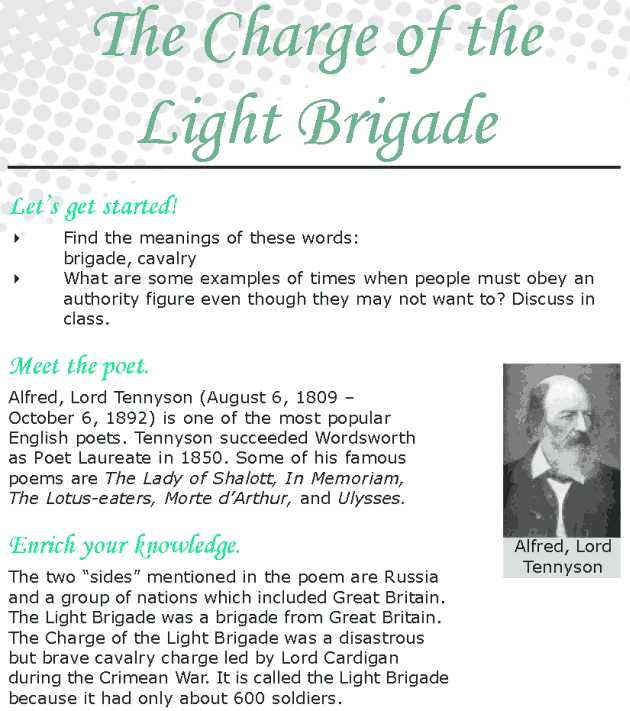
The Charge of the Light Brigade poem, written by Alfred, Lord Tennyson, is one of the most well-known and celebrated poems in English literature. Inspired by the events of the Crimean War, the poem tells the story of a disastrous military charge and raises numerous thought-provoking questions about war, honor, and the role of soldiers.
One of the most commonly asked questions about the poem is why Tennyson decided to write about this particular event. The charge itself was a military blunder, resulting in a significant loss of life for the British cavalry. Some speculate that Tennyson was inspired by the bravery and sacrifice of the soldiers, while others believe he wanted to shed light on the senseless nature of war and the blind obedience of soldiers to their commanders.
Another question often asked is why Tennyson chose to write the poem in a narrative format. Rather than expressing his own thoughts and opinions directly, Tennyson adopts the role of a storyteller, recounting the events of the charge in vivid detail. This choice allows readers to form their own interpretations and draw their own conclusions about the themes and messages of the poem.
Ultimately, The Charge of the Light Brigade poem raises important questions about the human cost of war, the motives of those in power, and the role of individual soldiers in a larger conflict. By delving into these questions, Tennyson invites readers to reflect on the harsh realities of war and the significance of honor, duty, and sacrifice.
The Charge of the Light Brigade Poem Questions and Answers
In Alfred, Lord Tennyson’s poem “The Charge of the Light Brigade,” the poet describes the heroic but tragic charge of a British cavalry brigade during the Battle of Balaclava in the Crimean War. The poem raises several thought-provoking questions about the nature of warfare, the role of the individual soldier, and the responsibilities of military leaders. Let’s explore some of these questions and attempt to find answers:
1. Why did the Light Brigade charge into enemy fire?
The Charge of the Light Brigade was not a planned military maneuver. Due to a miscommunication, the brigade was ordered to charge directly into the line of Russian artillery. Despite the obvious danger, the soldiers dutifully followed their orders and charged forward into the hail of cannon fire. This raises the question of blind obedience in the face of certain death. Was their unquestioning loyalty to their commanders a virtue or a tragic flaw?
2. What was the motivation behind the charge?
In the poem, Tennyson describes the soldiers’ motivation as a sense of duty and honor. They were willing to sacrifice their lives for their country and for their regiment. However, some critics argue that there were political motives behind the charge, driven by a desire to retain or gain strategic positions. This raises the question of whether the soldiers were mere pawns in the larger game of war, or if their individual bravery and sacrifice should be celebrated.
3. Who should take responsibility for the tragedy?
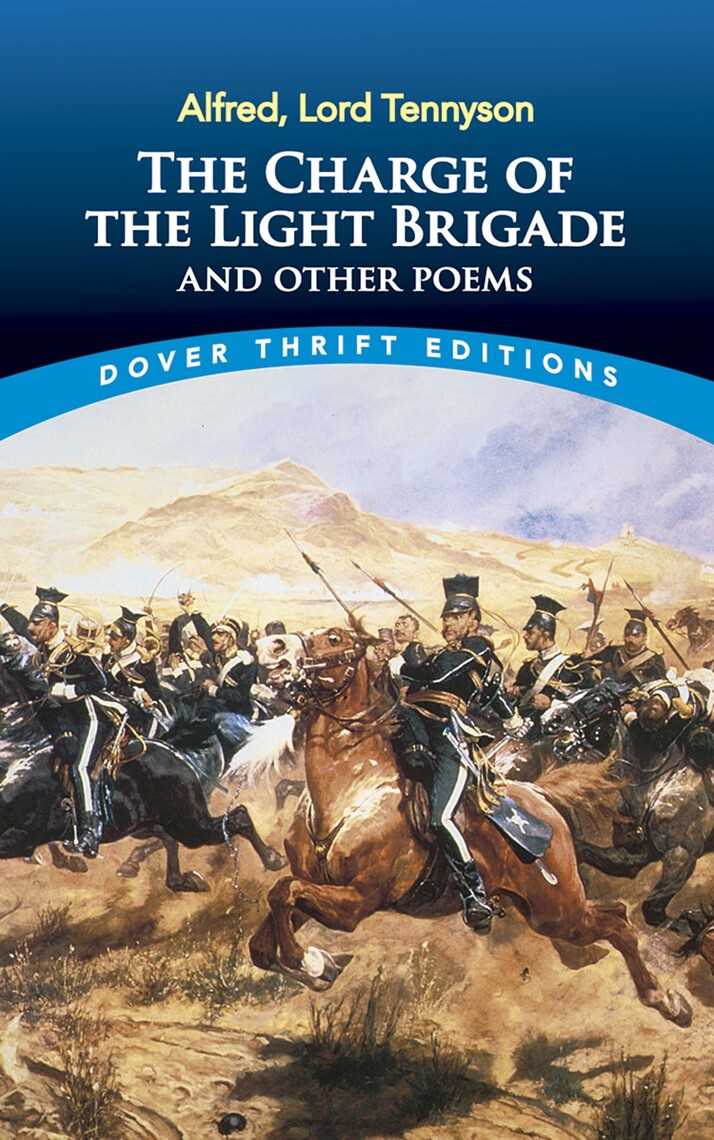
The miscommunication that led to the charge can be seen as a failure of leadership. The poem hints at this, with lines like “Someone had blundered” and “Not though the soldier knew.” But who should ultimately bear the responsibility for the tragedy? The soldiers who unquestioningly obeyed orders, the commanders who gave unclear instructions, or the political leaders who set the stage for the conflict in the first place? This question highlights the complexities and moral ambiguities of war.
4. What is the lasting impact of the charge?
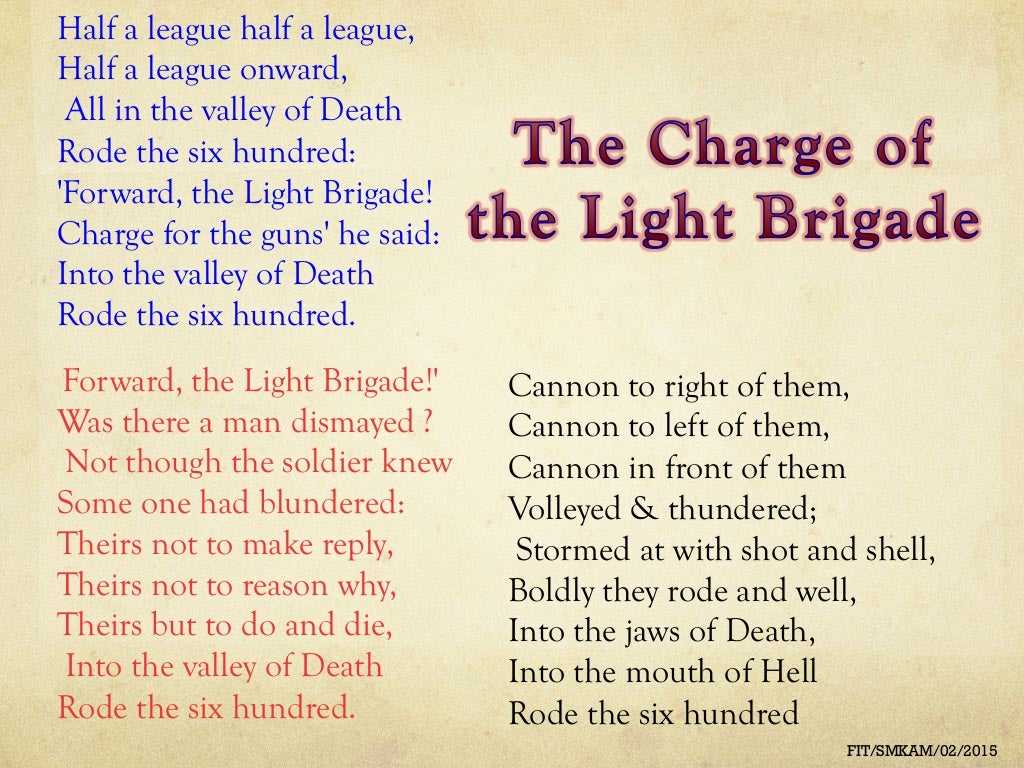
The Charge of the Light Brigade has become a powerful symbol of bravery and sacrifice. Despite the futility of the charge, the soldiers’ courage in the face of certain death has been immortalized in Tennyson’s poem. The lasting impact of the charge raises questions about the ways in which we remember and commemorate wartime sacrifices, and the role of poetry and literature in shaping our collective memory.
Overall, “The Charge of the Light Brigade” raises important questions about war, heroism, leadership, and the human condition. Through these questions and their exploration, the poem forces us to confront the complexities and moral dilemmas inherent in armed conflict.
What is “The Charge of the Light Brigade” poem?
“The Charge of the Light Brigade” is a famous narrative poem written by Alfred, Lord Tennyson in 1854. It is based on the events of the Battle of Balaclava during the Crimean War. The poem tells the story of a disastrous military charge made by the British Light Brigade against Russian forces.
Tennyson’s poem vividly depicts the bravery and sacrifice of the soldiers involved in the charge, despite the fact that it was a strategically flawed and ultimately futile mission. The poem is known for its powerful imagery and rhythmic structure, which adds to its emotional impact.
In the poem, Tennyson captures the chaos and confusion of war, highlighting the courage and loyalty of the soldiers who followed orders without question. The charge itself is portrayed as a heroic and noble act, even though it led to the deaths of many soldiers.
Tennyson’s “The Charge of the Light Brigade” has since become one of the most memorized and widely studied poems in the English language. It continues to be celebrated for its depiction of heroism, patriotism, and the horrors of war.
Who Wrote “The Charge of the Light Brigade” Poem?
The poem “The Charge of the Light Brigade” was written by Alfred, Lord Tennyson. Tennyson was an English poet and one of the most popular poets of the Victorian era. He was appointed the Poet Laureate of Great Britain and Ireland in 1850, succeeding William Wordsworth. Tennyson held this position until his death in 1892.
Tennyson wrote “The Charge of the Light Brigade” in 1854, during the Crimean War. The poem is based on the Battle of Balaclava, which took place during the war. It celebrates the bravery and sacrifice of the British cavalry, specifically the Light Brigade, as they charged into battle against overwhelming odds. The poem captures the horror and chaos of war, while also emphasizing the courage and honor of the soldiers.
“The Charge of the Light Brigade” Poem by Alfred, Lord Tennyson:
Half a league, half a league,
Half a league onward,
All in the valley of Death
Rode the six hundred.
“Forward, the Light Brigade!
Charge for the guns!” he said.
Into the valley of Death
Rode the six hundred.
- Tennyson’s poem is known for its vivid imagery and powerful rhythmic structure.
- It has become one of the most famous war poems in the English language.
- The poem was inspired by reports of the Battle of Balaclava in the British press.
In conclusion, Alfred, Lord Tennyson, a renowned English poet, wrote the poem “The Charge of the Light Brigade” during the Crimean War. The poem immortalizes the heroic actions of the British cavalry and has become a staple in the canon of war poetry. Tennyson’s expressive and evocative writing style continues to resonate with readers today.
When was “The Charge of the Light Brigade” poem written?
“The Charge of the Light Brigade” poem was written by the British poet Alfred, Lord Tennyson. It was published in 1854, shortly after the Battle of Balaclava during the Crimean War.
Tennyson was inspired to write the poem after reading about the heroic but tragic charge of the British cavalry against Russian forces. The poem focuses on the bravery and sacrifice of the soldiers, despite the flawed orders they received. Tennyson’s powerful and emotive language captures the chaos and danger of the battle, as well as the sense of honor and duty felt by the soldiers.
What is the message of “The Charge of the Light Brigade” poem?
The Charge of the Light Brigade” by Alfred Lord Tennyson is a poem that relays the heroic and tragic story of a military cavalry charge during the Crimean War. The main message of the poem is the valor and sacrifice of the soldiers involved in the charge, and the disastrous consequences of blindly following orders without questioning their validity.
The poem highlights the bravery and loyalty of the Light Brigade, who were sent into battle against overwhelming odds. They charged into the “valley of death” with their cannons firing at them from all sides. Despite the certain death that awaited them, the soldiers showed unwavering courage and determination. Tennyson emphasizes their heroism, portraying them as noble warriors who fearlessly followed their duty, even in the face of imminent doom.
However, the poem also conveys the tragic consequences of a military command that fails to provide its soldiers with crucial information. The Light Brigade is sent into battle with vague orders, resulting in a disastrous charge into enemy territory. Tennyson criticizes this leadership failure and the needless loss of lives it caused, showing the futility of war and the bureaucratic incompetence that can lead to such devastating outcomes.
In conclusion, “The Charge of the Light Brigade” carries a powerful message about the valor of soldiers and the consequences of blind obedience to authority. It serves as a reminder of the sacrifices made by those in war and the need for effective leadership to prevent unnecessary loss of life.
How does “The Charge of the Light Brigade” poem portray war?
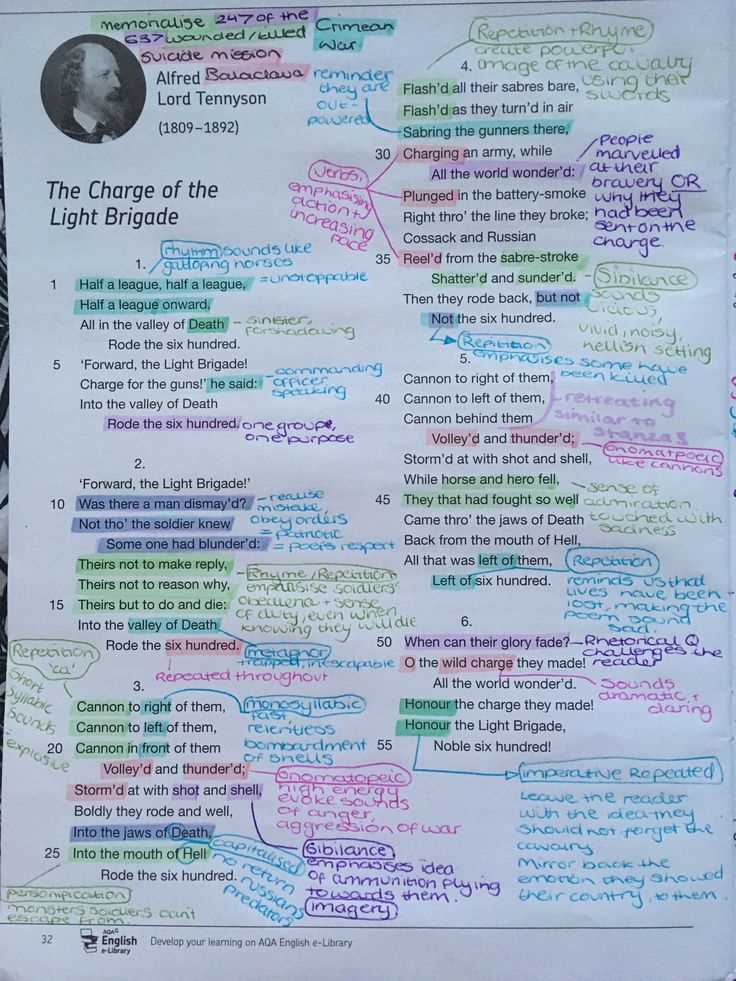
The poem “The Charge of the Light Brigade” by Alfred Lord Tennyson portrays war as both heroic and tragic. It celebrates the bravery and courage of the soldiers who charge into battle, but also highlights the senseless loss and futility of war. The poem captures the chaos and confusion of the battlefield, painting a vivid picture of the violence and devastation that war brings.
Tennyson’s use of vivid imagery and powerful language brings the horrors of war to life in the poem. He describes how the soldiers “storm’d” and “thunder’d” into the “valley of Death,” emphasizing the terrifying and dangerous nature of battle. The repetition of certain phrases, such as “into the mouth of Hell,” reinforces the idea that war is a hellish experience.
The poem also addresses the idea of blind obedience and the sacrifices made by soldiers. Tennyson praises the soldiers for their loyalty and their unwavering devotion to duty, even though they were charging into certain death. He highlights the honor and nobility of the soldiers, despite the fact that their orders were a mistake. This underscores the sense of tragedy and waste that war often entails.
Overall, “The Charge of the Light Brigade” portrays war as a chaotic and brutal affair, filled with both heroism and tragedy. It serves as a reminder of the sacrifices made by soldiers and the devastating consequences of war.
What historical event inspired “The Charge of the Light Brigade” poem?
The historical event that inspired Alfred, Lord Tennyson to write “The Charge of the Light Brigade” poem was the Battle of Balaclava, which took place during the Crimean War in 1854.
The Battle of Balaclava was part of a larger conflict between the Russian Empire and an alliance of the Ottoman Empire, France, and the United Kingdom. In the poem, Tennyson vividly describes the charge of the British light cavalry brigade during the battle. The Brigade was ordered to attack the Russian artillery positions, despite being outnumbered and facing heavily fortified enemy lines.
Tennyson, who was already the Poet Laureate of the United Kingdom at the time, was inspired by the bravery and heroism displayed by the British soldiers during the charge. The poem was published in 1854 and became popular for its depiction of the sacrifices made by the soldiers in the face of certain death.
- The Battle of Balaclava took place on October 25, 1854.
- The poem “The Charge of the Light Brigade” was published on December 9, 1854.
- The British light cavalry suffered heavy casualties during the charge, with 118 men killed, 127 wounded, and many horses lost.
- The poem is a tribute to the courage and sacrifice of the soldiers, emphasizing their unwavering loyalty and sense of duty.
In conclusion, “The Charge of the Light Brigade” poem was inspired by the Battle of Balaclava during the Crimean War. The poem immortalizes the bravery and sacrifice of the British soldiers who charged into battle despite overwhelming odds. It serves as a reminder of the heroism and courage displayed by those who fought in the face of adversity.