The Ultimate Guide to The Gift of the Magi Test Answers
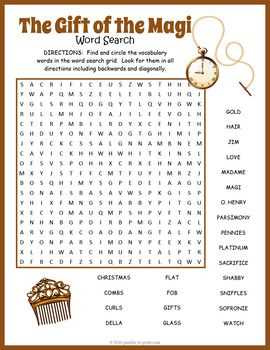
For many students, “The Gift of the Magi” by O. Henry is a beloved and timeless story. This heartwarming tale follows a young couple, Jim and Della, who are determined to give each other the perfect Christmas gift, despite their limited finances. As the story unfolds, readers are captivated by their selfless love and sacrifice.
Teachers often use this story as a way to delve deeper into themes of love, sacrifice, and the true meaning of gift-giving. To assess their understanding, students are often required to take a test on the story. This article will provide answers to some common questions that students may encounter on “The Gift of the Magi” test.
One of the questions that students may come across is about the significance of the title, “The Gift of the Magi.” The term “magi” refers to the wise men or kings who visited the baby Jesus in the biblical story of Christmas. In this context, the title suggests that Jim and Della’s gifts to each other are valuable and wise, much like the gifts brought by the magi. The story emphasizes that the true value of a gift lies in the love and sacrifice behind it.
The Gift of the Magi Test Answers
Below are the answers to the test questions for “The Gift of the Magi”.
Question 1:
What is the main theme of the story?
Answer: The main theme of the story is sacrifice and love.
Question 2:
Who are the main characters in the story?
Answer: The main characters in the story are Della and Jim.
Question 3:

What does Della do to buy Jim a gift?
Answer: Della sells her long, beautiful hair to buy Jim a chain for his watch.
Question 4:
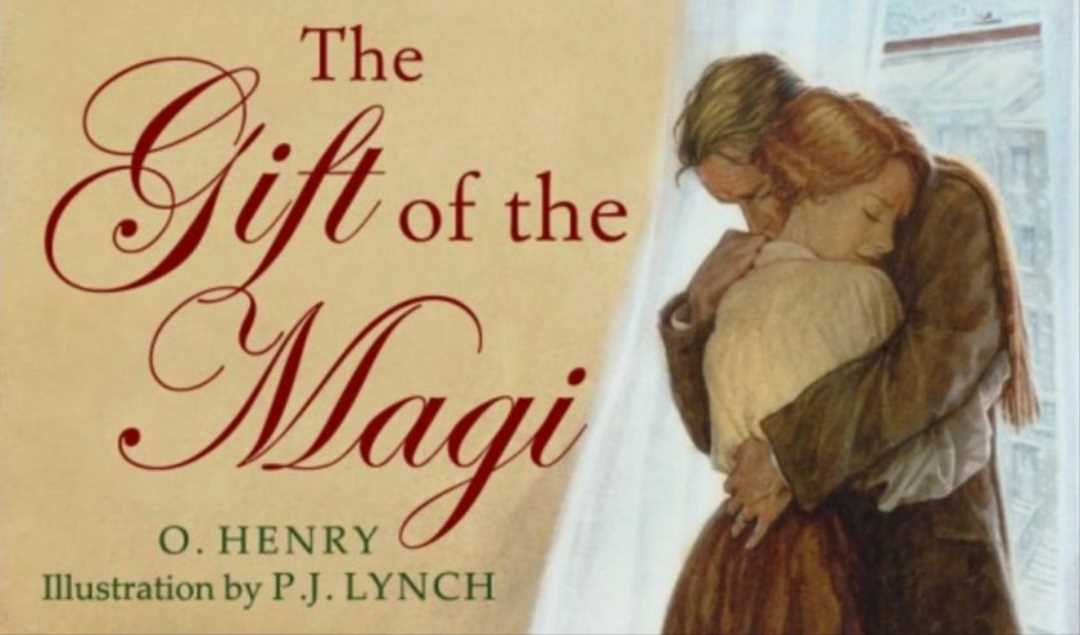
What does Jim do to buy Della a gift?
Answer: Jim sells his watch to buy Della a set of beautiful combs for her hair.
Question 5:
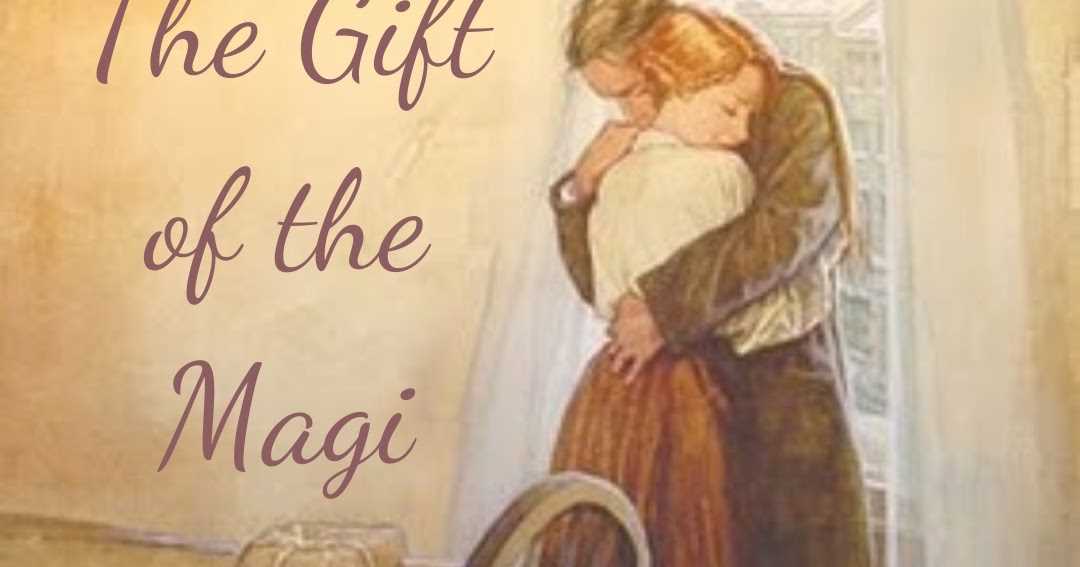
What is the irony in the story?
Answer: The irony in the story is that both Della and Jim sacrifice their most prized possessions to buy each other gifts that are useless without those possessions.
Question 6:
What is the significance of the story’s title?
Answer: The title, “The Gift of the Magi,” refers to the biblical story of the Magi who brought gifts to baby Jesus. In this story, Della and Jim’s selfless acts of giving each other gifts, despite the personal sacrifices, is seen as a parallel to the gifts brought by the Magi.
Question 7:
What is the overall message of the story?
Answer: The overall message of the story is that love and sacrifice are more valuable than material possessions.
Question 8:
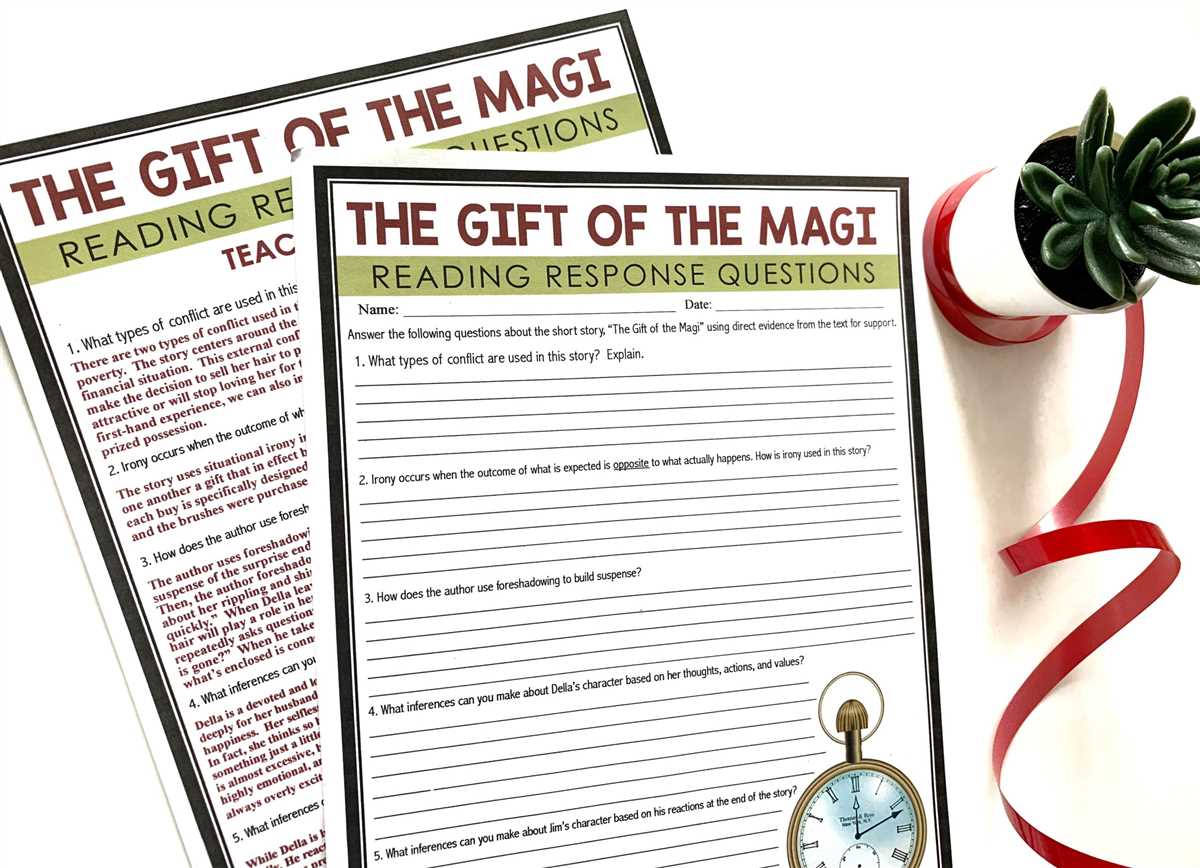
How does the story demonstrate the theme of sacrifice?
Answer: The story demonstrates the theme of sacrifice through the willingness of both Della and Jim to give up their most treasured possessions for the sake of buying each other gifts.
Question 9:
What is the significance of Della and Jim’s actions at the end of the story?
Answer: Della and Jim’s actions at the end of the story signify the depth of their love for each other and their understanding of the true value of their relationship, which is more important than any material possession.
Question 10:
What lesson can we learn from “The Gift of the Magi”?
Answer: The story teaches us that true love involves selflessness and sacrifice, and that the value of a gift lies in the sentiment behind it rather than its material worth.
Summary of “The Gift of the Magi”
“The Gift of the Magi” is a short story by O. Henry about a young couple, Jim and Della, who are struggling financially but deeply in love. The story takes place on Christmas Eve, and both Jim and Della desperately want to give each other a special gift. However, they each only have a small amount of money to spend.
Della, with her long, beautiful hair, decides to sell it in order to buy Jim a chain for his prized pocket watch. Meanwhile, Jim decides to sell his pocket watch to buy Della a set of decorative combs for her hair. On Christmas Eve, they exchange their gifts, only to discover that their sacrifices were in vain. Della no longer has her hair to wear the combs, and Jim can no longer use his pocket watch chain without the watch.
Despite their disappointment, the story ultimately highlights the selfless love between Jim and Della. Their willingness to sacrifice their most treasured possessions for each other demonstrates the true spirit of giving. The story concludes with the narrator describing their love as being greater than any material possessions and emphasizing that the true value of a gift lies in the intention behind it.
Analysis of Main Characters
In “The Gift of the Magi,” the two main characters are Jim and Della, a young married couple struggling to make ends meet. Despite their financial hardships, Jim and Della’s love for each other is evident throughout the story. Jim is described as a hardworking man who is willing to sacrifice for his family. Della, on the other hand, is portrayed as a selfless and loving wife who wants to buy a special gift for her husband.
Jim’s actions throughout the story demonstrate his devotion to his wife. He works long hours to earn money for their living expenses and is willing to give up his most prized possession, his pocket watch, to buy Della a gift. His decision to sell his watch shows his willingness to sacrifice his own desires for the happiness of his wife. This act of selflessness is a testament to his love for Della.
Della, too, exhibits her love for Jim through her actions. Despite having limited funds, she manages to save enough money to buy Jim a gift by cutting and selling her beautiful long hair. Her decision to sacrifice her hair showcases her selflessness and desire to make Jim happy. Like Jim, Della is willing to give up something valuable to show her love.
The relationship between Jim and Della is characterized by their mutual understanding and love for each other. Both characters are willing to go to great lengths to make the other person happy, even if it means giving up something valuable. Their actions demonstrate the true meaning of love and the importance of selflessness in a relationship.
In conclusion, the main characters in “The Gift of the Magi” are portrayed as selfless individuals who are willing to sacrifice for each other. Jim and Della’s love for each other shines through their actions, and their relationship serves as a powerful example of the true meaning of love and sacrifice.
Interpretation of Theme
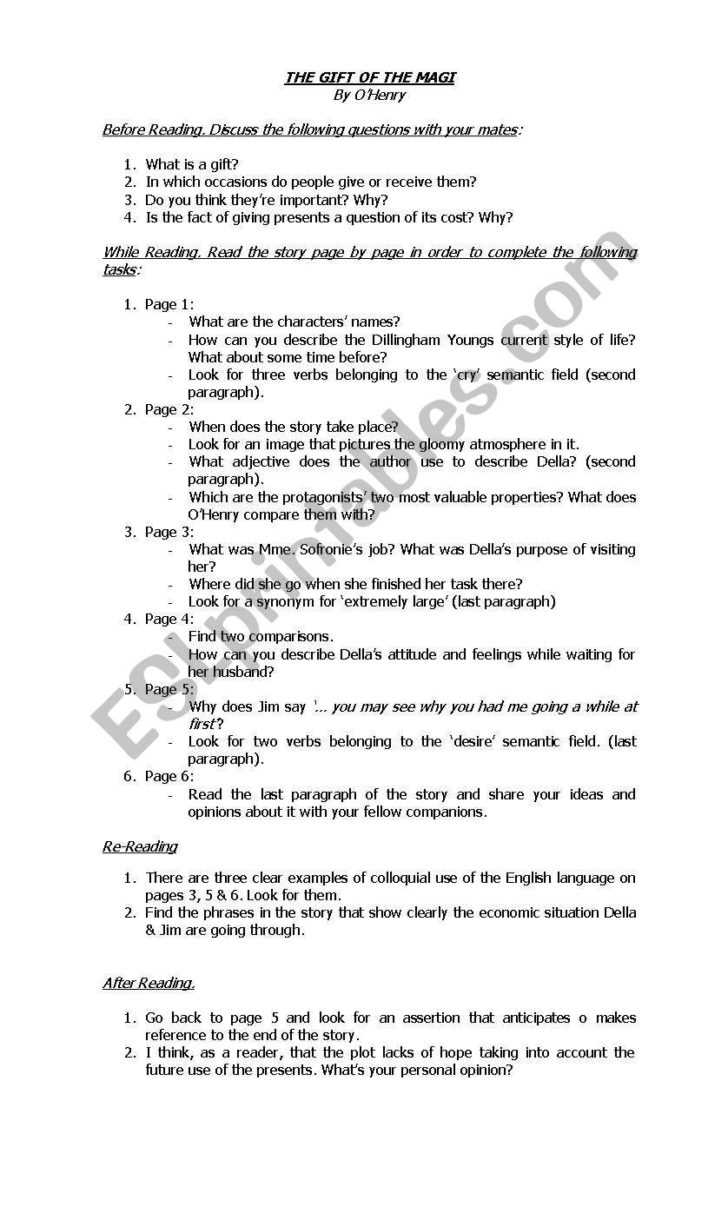
In “The Gift of the Magi,” the theme of selflessness and sacrifice is prevalent throughout the story. The main characters, Jim and Della, are willing to give up their most prized possessions in order to buy meaningful gifts for each other. This theme of selflessness demonstrates the deep love they have for one another and their willingness to put the other person’s happiness before their own.
Key phrases: selflessness, sacrifice, meaningful gifts, deep love, willingness
The story also explores the theme of the true value of possessions. Jim and Della’s gifts, a watch chain and a set of combs, may not be as valuable as the possessions they gave up, but they hold immense sentimental value. This theme suggests that material possessions are not the most important aspect of a relationship or a measure of love. It highlights the idea that the true value of a gift lies in the thought and sentiment behind it, rather than its monetary worth.
Key phrases: true value, possessions, sentimental value, material possessions, measure of love
The theme of irony is also present in the story. Both Jim and Della make sacrifices to buy gifts for each other that end up being useless due to the sacrifices they each made. This irony emphasizes the irony of their situation and adds a touch of humor to the story. It also serves to highlight the importance of the thought and intention behind a gift, rather than its practicality or usefulness.
Key phrases: irony, useless gifts, sacrifices, importance of thought, intention behind a gift
In conclusion, “The Gift of the Magi” explores themes of selflessness and sacrifice, the true value of possessions, and irony. Through the characters’ actions and the outcome of their sacrifices, the story delivers a powerful message about love, generosity, and the importance of thoughtfulness in gift-giving.
Discussion of Symbolism in the Story
“The Gift of the Magi” is a story that is rich in symbolism, highlighting the selflessness and sacrifice of the main characters. One significant symbol in the story is Della’s hair, which represents her most prized possession. Her decision to cut and sell her hair to buy a gift for her husband, Jim, demonstrates her willingness to give up something dear to her in order to show her love and devotion. This symbolizes the lengths we are willing to go for the ones we love, even if it means sacrificing our own physical appearance or material possessions.
The pair of prized possessions – Della’s hair and Jim’s watch – are also symbolic in this story. Della’s hair symbolizes her beauty and femininity, while Jim’s watch represents his masculinity and practicality. By sacrificing their possessions to buy gifts for each other, they are ultimately giving up a part of their identity. This symbolizes the depth of their love and their willingness to prioritize their relationship over material possessions.
Another symbol in the story is the Magi, which references the biblical story of the Three Wise Men who brought gifts to the baby Jesus. In the context of this story, the Magi symbolize the transformative power of love and the idea that the true value of a gift lies in the sentiment behind it rather than its material worth. Just as the Wise Men brought gifts to honor Jesus, Della and Jim’s gifts to each other symbolize their love and devotion. The story suggests that the true act of giving is a gift in itself.
In conclusion, “The Gift of the Magi” is filled with symbolism that enriches the meaning of the story. The hair, possessions, and the Magi all serve as symbols of love, selflessness, and sacrifice. These symbols emphasize the importance of giving wholeheartedly and prioritize genuine sentiment over material worth.
Overview of O. Henry’s Writing Style
O. Henry, the pen name of American writer William Sydney Porter, is renowned for his unique writing style that captivates readers with its wit, humor, and unexpected twists. In his short stories, he masterfully weaves together complex plots and characters, showcasing his keen understanding of human nature and society.
Rich and Vivid Descriptions: One of the defining features of O. Henry’s writing style is his ability to paint vivid pictures with words. His descriptions are rich and detailed, allowing readers to immerse themselves in the world he creates. Whether it’s a bustling city street or a small, dimly lit room, O. Henry’s descriptive language brings the settings to life, making them feel real and tangible.
Irony and Surprise Endings: O. Henry’s stories are famous for their twist endings and ironic plot twists. He often sets up his narratives in a way that readers expect a certain outcome, only to surprise them with an unexpected turn of events. This element of surprise is a hallmark of his writing style, keeping readers engaged and eager to find out what happens next.
Character-driven Stories: O. Henry’s focus on character development is another notable aspect of his writing style. His characters are often ordinary people who find themselves in extraordinary situations, and through their actions and dialogue, O. Henry provides insights into their motivations, desires, and flaws. This emphasis on character drives the narrative and adds depth to his stories.
Satire and Social Commentary: O. Henry’s writing often contains elements of satire and social commentary. Through his witty observations and clever wordplay, he critiques societal norms and practices, shedding light on the flaws and contradictions of human behavior. This satirical approach adds a layer of depth and thought-provoking analysis to his stories.
Overall, O. Henry’s writing style can be characterized as engaging, entertaining, and thought-provoking. His ability to create memorable characters, craft intricate plots, and deliver surprising endings sets him apart as a master of the short story form.
Comparison of Different Versions of the Story
In the world of literature, stories often undergo adaptations and reinterpretations, resulting in various versions that captivate different audiences. The Gift of the Magi by O. Henry is no exception, as it has been retold and reimagined in several ways. This article will compare some of the different versions of the renowned tale and explore their unique qualities.
1. Classic Original Version
The original version of The Gift of the Magi was penned by O. Henry in 1905. This masterpiece follows the story of Jim and Della, a young couple struggling financially but determined to express their love through sacrificial gifts. O. Henry’s writing style brilliantly captures the emotions and hardships faced by the protagonists, leaving readers with a profound message about the true meaning of gift-giving.
2. Modern Adaptations
Over the years, several modern adaptations of The Gift of the Magi have emerged, each bringing a fresh perspective to the timeless narrative. These adaptations often transport the story to different time periods or settings, allowing readers to experience the tale in a new light. Through modern adaptations, the story’s themes of love, sacrifice, and selflessness are made relevant to contemporary readers, bridging the gap between the original and the present.
3. Cultural Reinterpretations
Another fascinating aspect of The Gift of the Magi is its cultural reinterpretations in various contexts. Different cultures and regions have put their own unique spin on the story, incorporating their traditions, customs, and values. These reinterpretations not only provide diverse perspectives but also offer glimpses into the cultural nuances that shape societies around the world.
4. Visual and Cinematic Adaptations
Furthermore, The Gift of the Magi has found its way onto the silver screen and television, inspiring visual and cinematic adaptations that bring the story to life. Through film and television, the characters and setting come alive, enriching the narrative with visual elements and engaging performances. These adaptations offer a different experience for audiences, demonstrating the story’s enduring appeal across various mediums.
In conclusion, the comparison of different versions of The Gift of the Magi showcases the story’s versatility and universal themes. Whether through modern adaptations, cultural reinterpretations, or visual adaptations, the essence of the original tale remains intact while presenting itself in fresh and captivating ways. This enduring narrative continues to touch the hearts of readers and viewers, reminding us of the profound beauty found in selfless acts of love and sacrifice.
Q&A:
What are the different versions of the story?
The different versions of the story refer to the multiple adaptations or retellings of the same story by different authors or in different forms such as books, movies, or plays.
How do the different versions of the story differ?
The different versions of the story can differ in various aspects such as plot details, character development, setting, and writing style. Each adaptation or retelling may bring its own unique interpretation or changes to the original story.
What are some examples of different versions of the story?
Some examples of different versions of a story include different film adaptations of a novel, such as “Pride and Prejudice” by Jane Austen, which has been made into several movies with varying interpretations of the characters and settings.
Why are different versions of the story created?
Different versions of the story are created to offer a fresh perspective or take on the original story. They allow authors, filmmakers, and other creators to bring their own creativity and ideas to the narrative, and sometimes to cater to different audiences or cultural contexts.
Can different versions of the story be better than the original?
It is subjective whether a different version of the story can be considered better than the original. Some people may prefer a certain adaptation or retelling due to its unique interpretation, while others may prefer the original for its authenticity or impact. It ultimately depends on personal preference and individual opinions.
What are the different versions of the story?
The different versions of the story include the original version written by the author, adaptations made for film or television, and retellings by other authors.
What are some differences between the different versions of the story?
Some differences between the different versions of the story can include changes in the plot, characters, settings, or even the overall theme and message of the story.