The Hidden Symbolism in ‘The Great Gatsby’: An In-Depth Literary Analysis
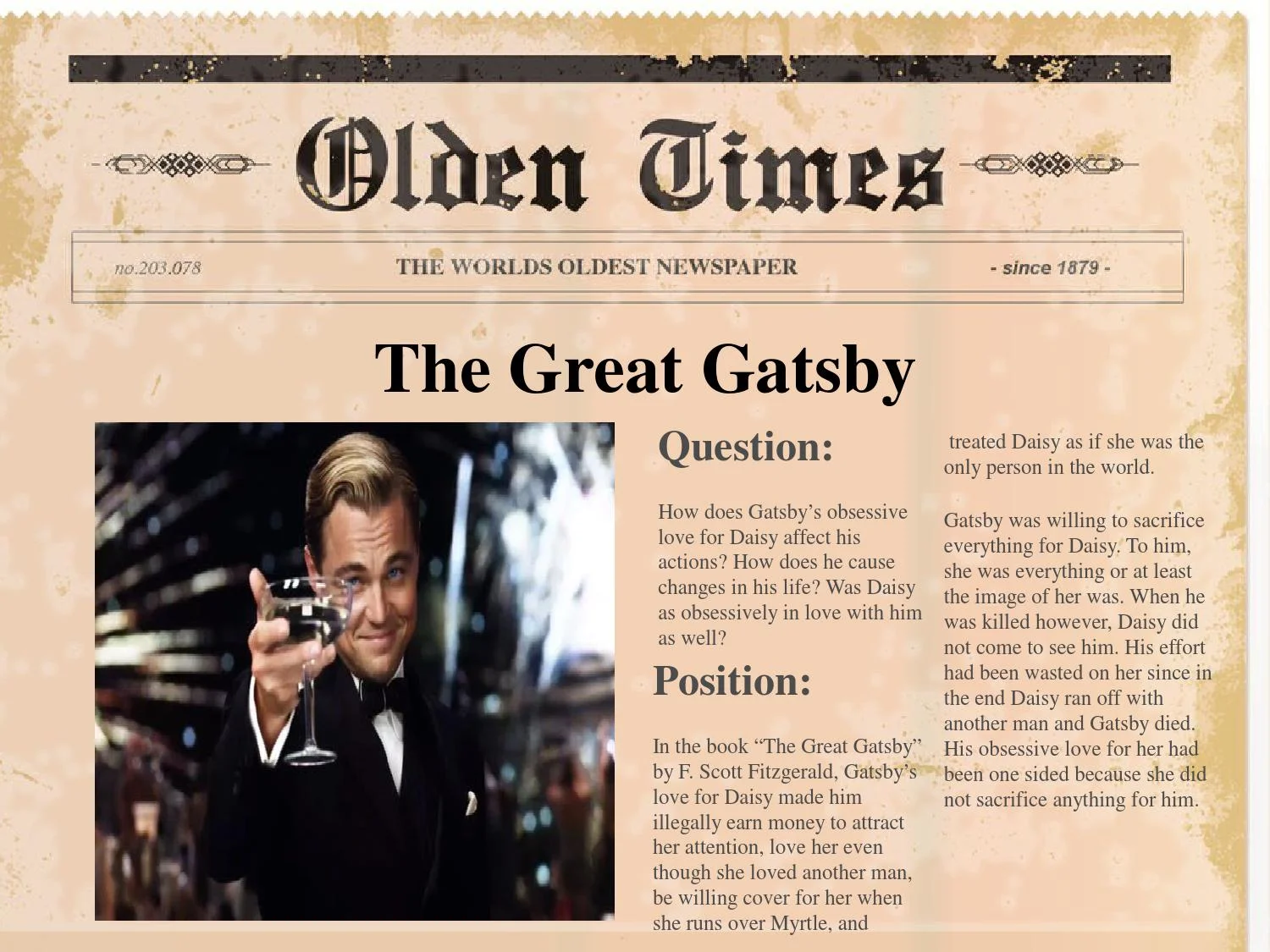
If you’re a student studying F. Scott Fitzgerald’s classic novel, “The Great Gatsby,” then you know just how important it is to review for an upcoming test. This literary masterpiece has captivated readers for generations with its themes of love, wealth, and the elusive American Dream. Whether you’re facing a multiple-choice exam, an essay question, or a class discussion, this test review will help you prepare by covering key plot points, character analysis, and important themes.
One of the first areas to focus on during your test review is the plot of “The Great Gatsby.” The story is set in the 1920s and follows the mysterious and wealthy Jay Gatsby as he tries to win back the love of his life, Daisy Buchanan. From extravagant parties to secret affairs, the plot is filled with twists and turns that keep readers engaged. Be sure to review the major events, such as Gatsby’s extravagant parties, the car accident, and the tragic ending, as these moments are often referenced in test questions.
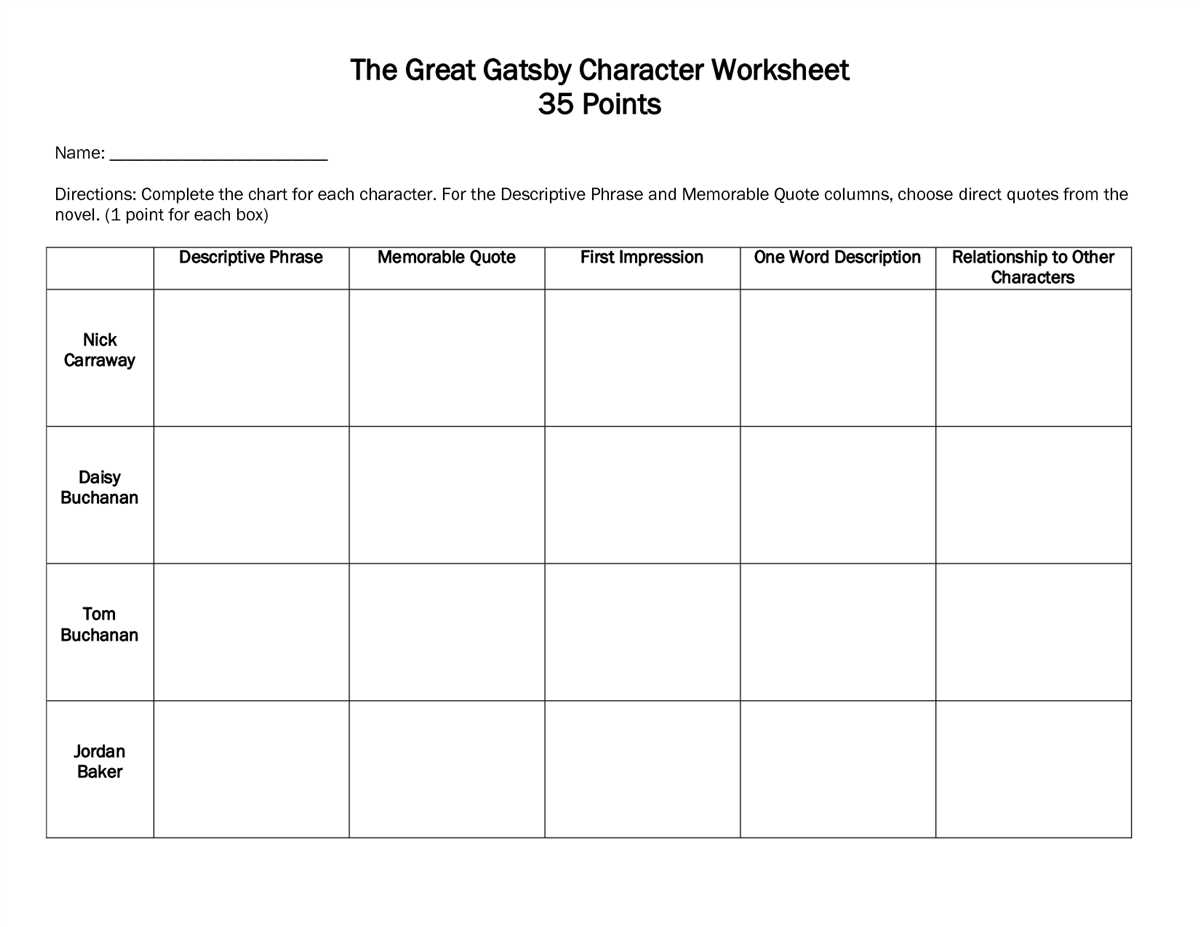
In addition to understanding the plot, it’s essential to delve into the characters of “The Great Gatsby” during your test review. Jay Gatsby himself is a complex character, and understanding his motivations and desires is key to interpreting the novel. Take note of other significant characters, such as Nick Carraway, Daisy Buchanan, and Tom Buchanan, and consider their roles in the story. Analyze their relationships, motivations, and character development to gain a deeper understanding of the novel’s themes and messages.
Finally, as you review for your test, don’t forget to explore the important themes in “The Great Gatsby.” This novel is known for its exploration of the American Dream and the corrupting influence of wealth, among other themes. Consider the symbolism of the green light, the contrast between old money and new money, and the disillusionment of the characters. By connecting these themes to the events and characters in the novel, you’ll be well-prepared to answer any test questions that come your way.
With this test review, you’ll have a solid foundation to tackle any test on “The Great Gatsby.” By reviewing the plot, analyzing the characters, and exploring the novel’s themes, you’ll be able to confidently answer any question that comes your way. So get studying and good luck!
The Great Gatsby Test Review
The Great Gatsby is a classic American novel written by F. Scott Fitzgerald. It tells the story of Jay Gatsby, a mysterious millionaire, and his pursuit of the American Dream in the 1920s. The novel is set in the fictional town of West Egg, Long Island, and explores themes of wealth, love, and the corruption of the American Dream.
One of the key themes in The Great Gatsby is the contrast between the old money and the new money. The old money refers to the wealthy families who have inherited their wealth and social status, such as Tom and Daisy Buchanan. The new money, on the other hand, refers to those who have recently acquired their wealth, like Gatsby himself. This contrast highlights the shallow nature of the upper class and the emptiness of their lives.
The characters in The Great Gatsby are complex and flawed, each representing different aspects of society. Gatsby, for example, is a self-made man who has created a new identity for himself in order to win back his lost love, Daisy. His pursuit of the American Dream ultimately leads to his downfall. Tom Buchanan, on the other hand, represents the privileged class who are unaffected by their actions and the consequences they have on others.
Overall, The Great Gatsby is a powerful novel that explores the illusions of the American Dream and the corruption of the upper class. Its themes and characters continue to resonate with readers today, making it a timeless classic.
F. Scott Fitzgerald and The Great Gatsby
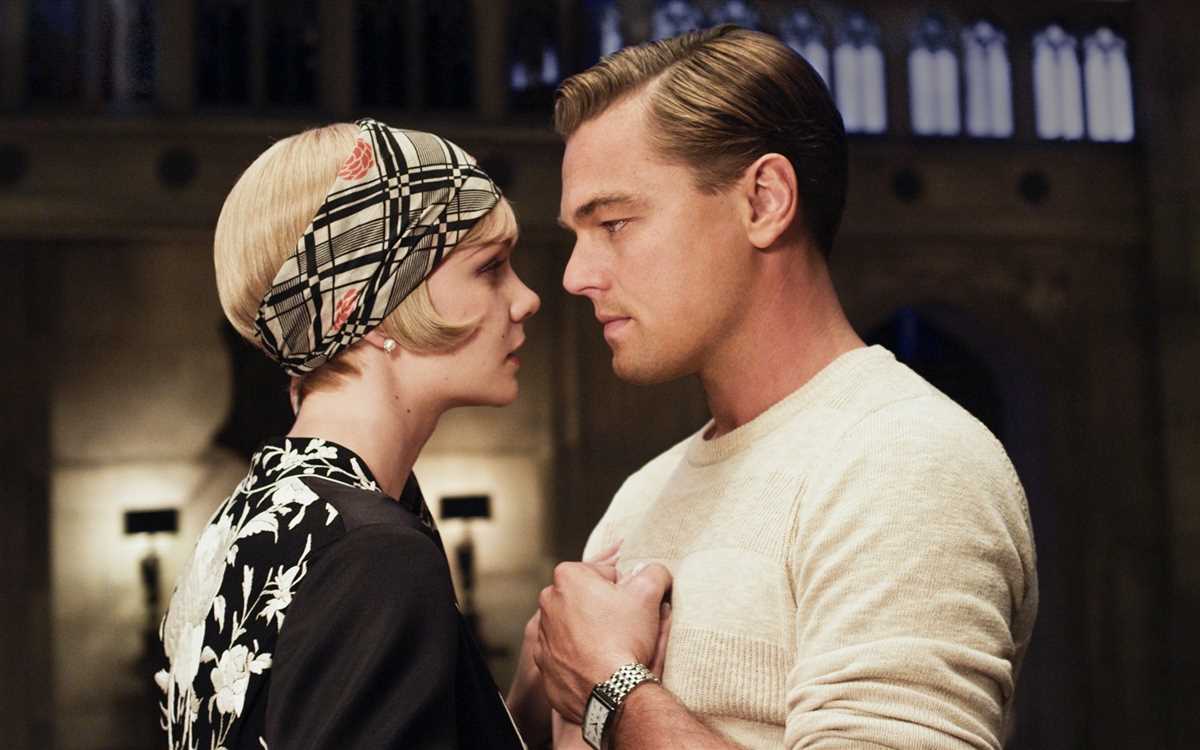
F. Scott Fitzgerald is widely regarded as one of the greatest American writers of the 20th century. His novel, The Great Gatsby, is often considered his masterpiece and has become a classic of American literature. Set in the 1920s, the novel explores themes of wealth, love, and the elusive nature of the American Dream.
Fitzgerald himself was born in 1896 in St. Paul, Minnesota. He attended Princeton University, where he developed his passion for writing. After graduating, Fitzgerald moved to New York City in pursuit of a career as a writer. It was during this time that he met his future wife, Zelda Sayre, who would become a significant influence on his work.
Published in 1925, The Great Gatsby tells the story of Jay Gatsby, a wealthy man living in the prosperous Long Island town of West Egg. Gatsby is known for throwing extravagant parties, but his true motives and past remain mysterious. The novel is narrated by Nick Carraway, a young man from the Midwest who becomes intertwined in Gatsby’s world of wealth and excess.
The Great Gatsby is a critique of the American Dream, portraying the hollowness and corruption that can accompany the pursuit of wealth and status. Fitzgerald explores themes of class, social mobility, and the decay of traditional values. The novel also delves into the complexities of love and the illusions we create to mask our insecurities.
Fitzgerald’s writing style is characterized by its poetic and lyrical language, as well as its vivid imagery and symbolism. He masterfully captures the jazz age of the 1920s, with its glitz and glamour juxtaposed against the underlying tension and emptiness.
Key themes in The Great Gatsby:
- The illusion of the American Dream
- The corrupting influence of wealth and status
- The emptiness of social climbing
- The idealization of love and the reality of relationships
- The decay of traditional values
F. Scott Fitzgerald’s The Great Gatsby continues to resonate with readers today, as it offers a poignant critique of the American Dream and its consequences. Through its compelling characters and beautifully crafted prose, the novel explores universal themes that are still relevant in contemporary society.
Plot Summary
Set in the 1920s, “The Great Gatsby” by F. Scott Fitzgerald follows the life of Jay Gatsby, a self-made millionaire who lives in a mansion on Long Island. The story is narrated by Nick Carraway, Gatsby’s neighbor and friend. The novel explores the theme of the American Dream and the lengths one is willing to go to achieve it.
Gatsby throws extravagant parties at his mansion, hoping to attract the attention of his long-lost love, Daisy Buchanan, who is married to Tom Buchanan. Daisy and Gatsby had a brief romance before Gatsby went off to war, and he has spent years amassing his wealth in the hopes of winning her back. Despite his wealth and grandeur, Gatsby is unable to capture Daisy’s heart.
As the story progresses, secrets and betrayals unravel, leading to a tragic climax. Gatsby’s past is revealed, painting him as a man driven by an unattainable dream. Through the lens of the Jazz Age, Fitzgerald explores the disillusionment and corruption of American society. The novel culminates with a confrontation between Gatsby, Tom, and Daisy, resulting in Gatsby’s untimely demise. The story ends with Nick reflecting on the nature of dreams and the emptiness that comes with the pursuit of the unattainable.
- Key themes: The American Dream, wealth, love, betrayal, disillusionment
- Main characters: Jay Gatsby, Daisy Buchanan, Tom Buchanan, Nick Carraway
Themes in The Great Gatsby
One of the main themes in F. Scott Fitzgerald’s novel, The Great Gatsby, is the corrupting influence of wealth and the American Dream. Throughout the story, characters strive to attain material wealth and social status, often at the expense of their moral values and personal relationships. This theme is explored through the character of Jay Gatsby, who amasses great wealth in order to win back his former love, Daisy Buchanan. Gatsby’s obsession with wealth and social status ultimately leads to his downfall and tragic demise.
Another prominent theme in The Great Gatsby is the emptiness and hollowness of the American Dream. The novel critiques the idea that wealth and status can bring happiness and fulfillment. The characters in the story, particularly Gatsby and the Buchanan’s, appear to have it all on the surface, but in reality, their lives are plagued by loneliness, dissatisfaction, and moral decay. Fitzgerald highlights the emptiness of the American Dream by contrasting it with the genuine love and happiness that is found in simpler, more authentic relationships, such as that between Nick Carraway and Jordan Baker.
Furthermore, The Great Gatsby explores the theme of the decline of the American Dream and the disillusionment of the Jazz Age. The 1920s were a time of economic prosperity and social change, but Fitzgerald portrays this era as morally bankrupt and spiritually void. The characters in the novel are driven by materialism, superficiality, and a lack of genuine human connection. The lavish parties and excesses of the wealthy elite serve as a facade, masking the underlying emptiness and decay of the American Dream.
Other themes in The Great Gatsby include:
- The theme of the past and its impact on the present
- The theme of social class and inequality
- The theme of love and desire
- The theme of illusion and reality
- The theme of the corrupting power of money and wealth
In conclusion, The Great Gatsby explores various themes that reflect the disillusionment and moral decay of the Jazz Age. It critiques the corrupting influence of wealth and the emptiness of the American Dream. Fitzgerald’s masterpiece serves as a cautionary tale, warning against the pursuit of material wealth and status at the expense of genuine human connection and moral values.
Symbolism in The Great Gatsby
One of the most prominent aspects of F. Scott Fitzgerald’s novel, The Great Gatsby, is its extensive use of symbolism. Throughout the book, Fitzgerald captures the essence of the 1920s and the Jazz Age by employing symbolic representations that provide a deeper understanding of the characters and themes.
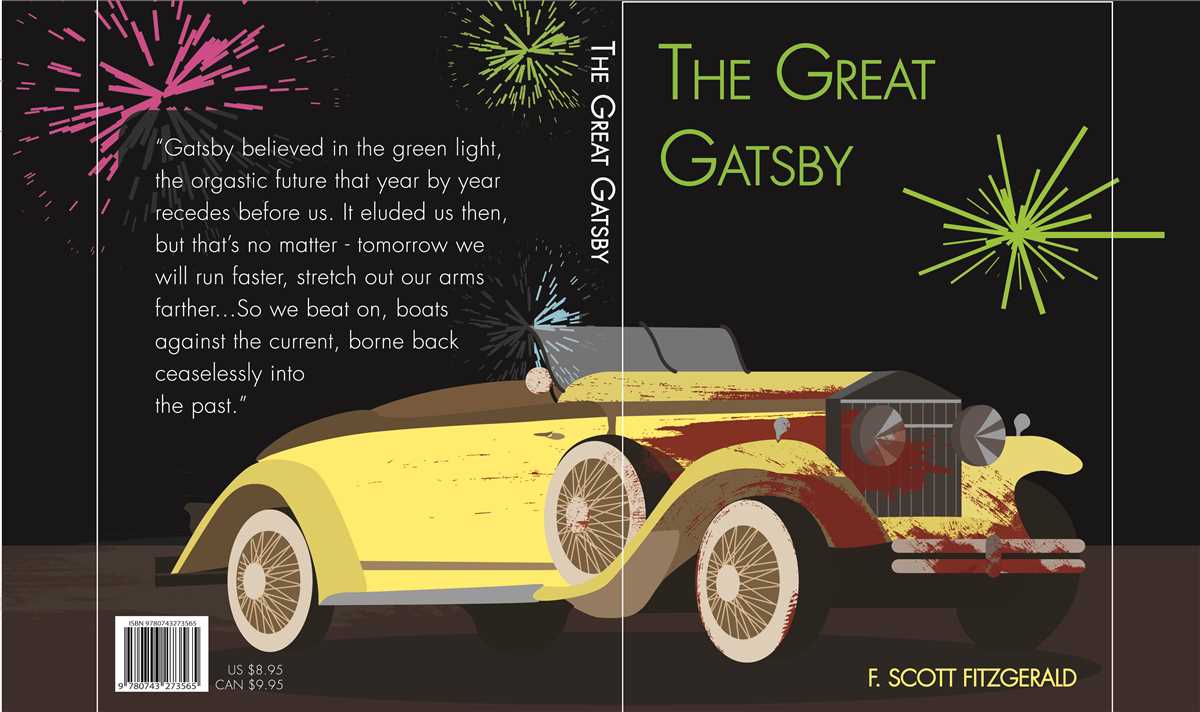
The green light at the end of Daisy Buchanan’s dock is one of the most famous symbols in the novel. It represents Gatsby’s dreams and desires for the future, specifically his longing for Daisy. The green light is often associated with the illusion of the American Dream and the pursuit of wealth and status.
- The eyes of Dr. T.J. Eckleburg: These billboard eyes serve as a constant reminder of the moral and spiritual decay in society. The eyes represent the loss of traditional values and the corruption of the American Dream.
- The Valley of Ashes: This desolate and industrial wasteland symbolizes the moral decay and emptiness of the wealthy upper class. It acts as a stark contrast to the glamour and excess of the city.
- The color white: White represents purity and innocence, but in The Great Gatsby, it is often associated with illusions and deceit. Daisy is often depicted wearing white, portraying her facade of purity while hiding her true nature.
- The color yellow: The color yellow is associated with wealth, extravagance, and decay. It is often depicted in the opulent parties and luxurious surroundings of the characters.
Fitzgerald’s use of symbolism adds depth and complexity to the narrative, allowing readers to delve into the themes of the novel and understand the characters on a deeper level. These symbols serve as a commentary on the emptiness and moral decay of the Jazz Age and its impact on society.
Characters in The Great Gatsby
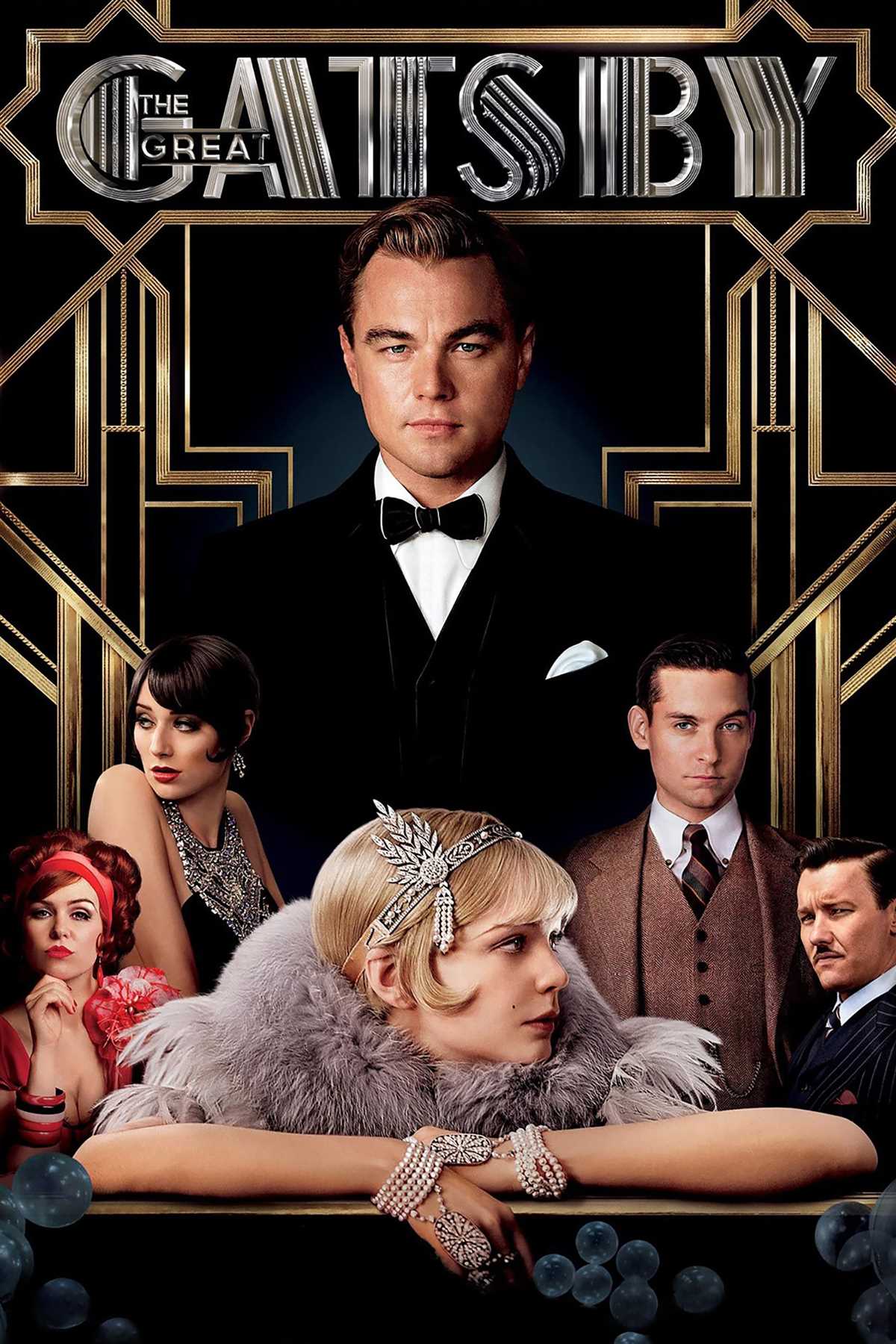
One of the most notable characters in F. Scott Fitzgerald’s novel, The Great Gatsby, is Jay Gatsby himself. Gatsby is a wealthy and mysterious man who throws extravagant parties in the hope of attracting the attention of his long lost love, Daisy Buchanan. He is seen as a symbol of the American Dream, as he tries to amass wealth and social status in order to win back Daisy’s love. However, beneath his glamorous exterior, Gatsby is a deeply lonely and flawed character who becomes consumed by his obsession with the past.
Daisy Buchanan, on the other hand, is portrayed as an attractive and wealthy socialite. She is Gatsby’s love interest and the catalyst for much of the novel’s action. Despite being married to Tom Buchanan, Daisy embarks on an affair with Gatsby, highlighting the themes of love, wealth, and social status in the novel. Daisy is often seen as a symbol of the shallow and materialistic nature of the upper class during the Roaring Twenties. Her indecisiveness and inability to commit to Gatsby ultimately lead to tragic consequences.
Tom Buchanan serves as a foil to Gatsby. He is Daisy’s husband and comes from old money. Tom is arrogant, arrogant, and hypocritical. He represents the callousness and corruption of the wealthy class, using his power and money to manipulate others. Tom’s affair with Myrtle Wilson, a working-class woman, further emphasizes the class divisions and moral decay of the time.
Jordan Baker is a professional golfer and a friend of Daisy’s. She is portrayed as independent and cynical, reflecting the changing roles and attitudes of women during the 1920s. Jordan plays a minor but significant role in the unraveling of Gatsby’s past and provides insight into the world of the wealthy elite.
The characters in The Great Gatsby are complex and multi-dimensional, representing different aspects of society during the Jazz Age. Each character contributes to the overall theme of the novel, highlighting the pursuit of wealth, the corruption of the American Dream, and the empty pursuit of happiness.
Critical Reception and Legacy
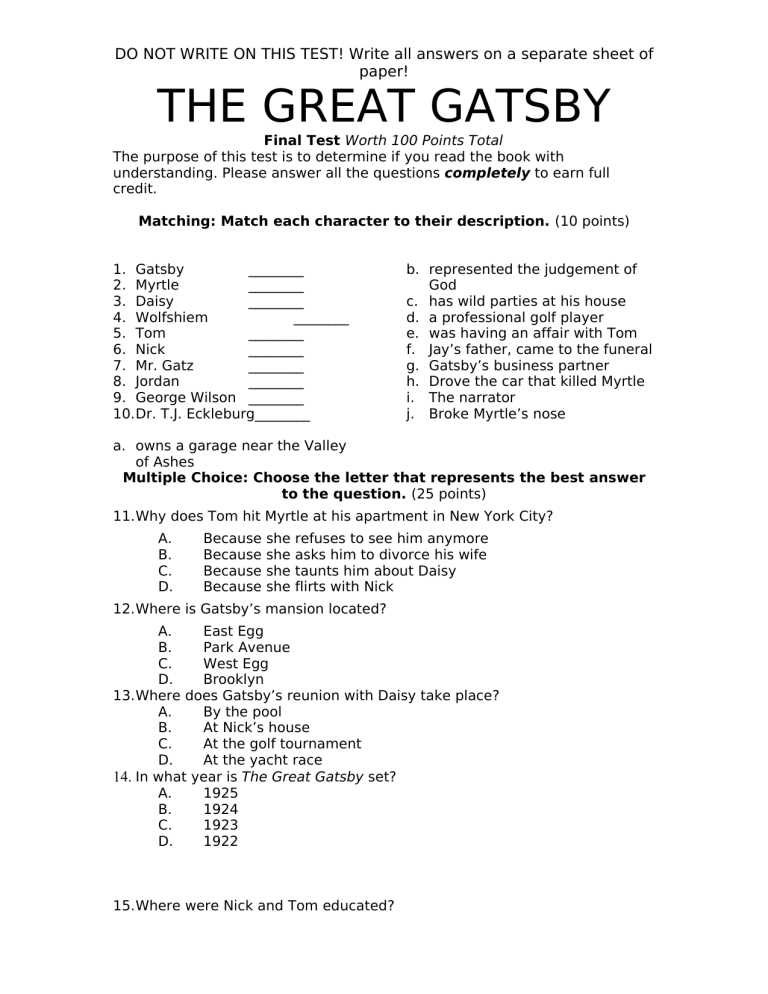
Upon its initial publication in 1925, The Great Gatsby received mixed reviews from critics. While some praised Fitzgerald’s vivid imagery and exploration of the American Dream, others criticized the novel’s lack of depth and character development. However, over time, the novel gained recognition as a masterpiece of American literature.
The Great Gatsby has since become a staple in high school and college literature curricula, with its themes of wealth, love, and disillusionment resonating with readers of all generations. The novel’s enduring popularity has been attributed to its timeless critique of the excesses of the Jazz Age and its exploration of the human condition.
- In 1940, the novel was adapted into a film, starring Alan Ladd as Jay Gatsby, further solidifying its cultural impact.
- Since then, there have been several film adaptations, the most famous being the 1974 version starring Robert Redford and the 2013 version starring Leonardo DiCaprio.
- The influence of The Great Gatsby can be seen in numerous works of literature, film, and art, as well as in popular culture references.
In conclusion, The Great Gatsby has stood the test of time and continues to captivate readers with its poignant exploration of the American Dream and the emptiness of the pursuit of wealth. Fitzgerald’s novel remains not only a classic of American literature but also a cautionary tale of the dangers of materialism and the fleeting nature of happiness.