Unlocking the Answers: Understanding the 7 Properties of Solutions
Properties of solutions are a fundamental concept in chemistry. Understanding these properties is crucial for predicting the behavior and interactions of different substances in a solution. In this article, we will explore the answers to some common questions related to the properties of solutions.
One important property of solutions is their concentration. Concentration refers to the amount of solute dissolved in a given amount of solvent. It can be expressed in various units such as molarity, molality, and mass percent. The concentration of a solution affects its physical and chemical properties, such as boiling point, freezing point, and osmotic pressure.
Another property of solutions is their colligative properties. These properties depend on the number of solute particles present in a solution, rather than their identity. Some examples of colligative properties include vapor pressure lowering, boiling point elevation, freezing point depression, and osmotic pressure. These properties are important in various applications, such as in determining the freezing point of antifreeze solutions or the osmotic pressure of biological fluids.
Answer 1: What are the properties of a solution?

A solution is a homogeneous mixture composed of two or more substances, with one substance being uniformly dissolved in the other. Solutions can exist in different states, such as solid, liquid, or gas, and they can be comprised of a variety of combinations of solutes and solvents.
There are several properties that characterize solutions:
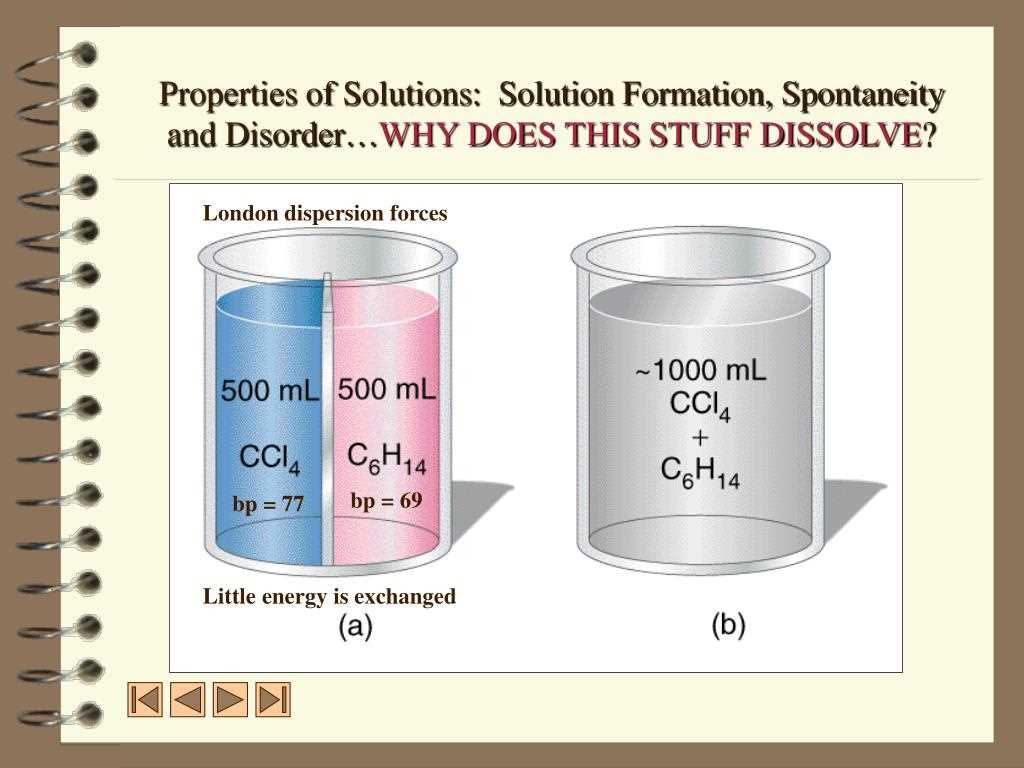
- Dissolution: This property refers to the process by which a solute dissolves in a solvent to form a solution. It involves the breaking of intermolecular forces between solute particles, the breaking of intermolecular forces between solvent particles, and the formation of new attractive forces between solute and solvent particles.
- Homogeneity: Solutions are homogeneous mixtures, which means that the composition is uniform throughout. The solute particles are evenly distributed in the solvent, resulting in a solution with a consistent appearance and properties.
- Concentration: The concentration of a solution refers to the amount of solute present in a given amount of solvent or solution. It is typically expressed in terms of moles of solute per liter of solution (molarity) or in terms of mass of solute per mass of solution (mass percent).
- Colligative properties: Colligative properties of solutions depend on the number of solute particles, rather than their identity. Examples of colligative properties include boiling point elevation, freezing point depression, and osmotic pressure.
- Solubility: Solubility is the maximum amount of solute that can be dissolved in a given amount of solvent at a specific temperature and pressure. It is often expressed in terms of grams of solute per 100 grams of solvent.
In summary, the properties of a solution include dissolution, homogeneity, concentration, colligative properties, and solubility. These properties play important roles in various applications, such as chemistry, biology, pharmacy, and environmental science.
Answer 2: How do solutes affect the properties of a solution?
When a solute is dissolved in a solvent to form a solution, it can significantly affect the properties of that solution. These changes occur because the introduction of solute particles disrupts the intermolecular forces within the solvent and creates new interactions.
Colligative Properties: One way solutes affect the properties of a solution is through colligative properties. These properties depend solely on the number of solute particles in the solution, regardless of their identity. Examples of colligative properties include vapor pressure lowering, boiling point elevation, and freezing point depression. These changes occur because the presence of solute particles interferes with solvent-solvent interactions, making it more difficult for the solvent to change phase.
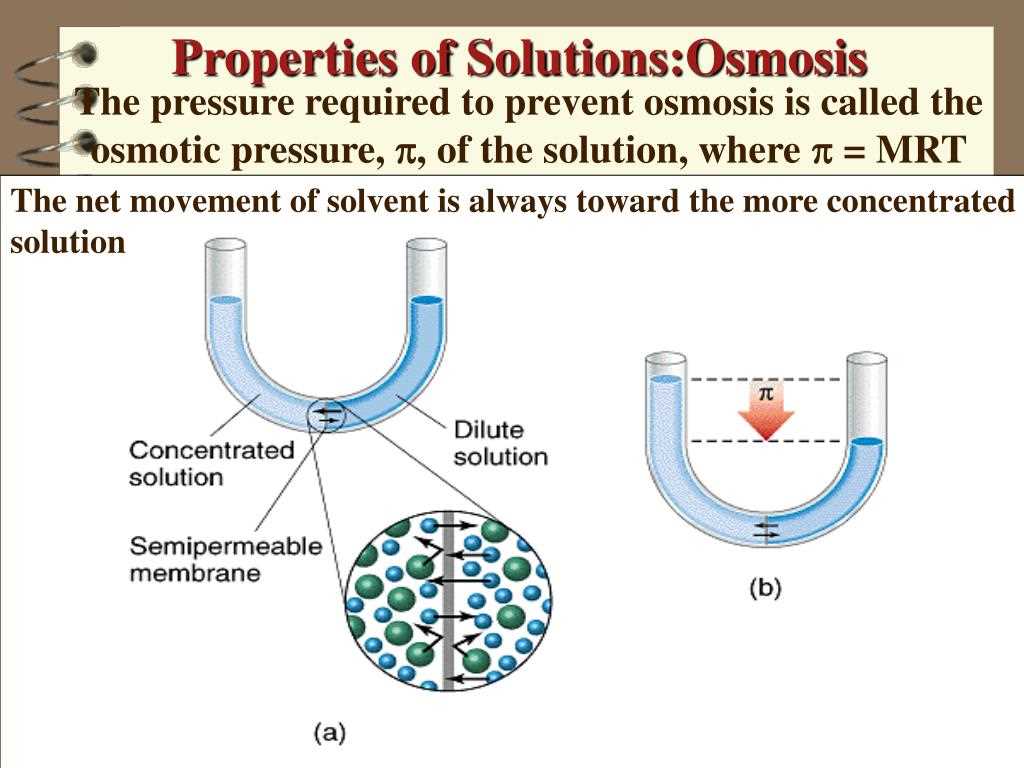
Osmotic Pressure: Another property affected by solutes is osmotic pressure. Osmosis is the movement of solvent molecules through a semi-permeable membrane from an area of lower solute concentration to an area of higher solute concentration. The presence of solutes in a solution increases its osmotic pressure, which can have important implications in biological systems and industrial processes.
Conductivity: Solutes can also affect the conductivity of a solution. When an ionic solute dissolves in a polar solvent, it dissociates into ions that can carry electric charge. This allows the solution to conduct electricity. The concentration of solute particles in the solution directly affects its conductivity; a higher concentration of ions leads to a higher conductivity.
Chemical Reactivity: Lastly, the presence of solute particles can influence the chemical reactivity of a solution. For example, certain solutes can act as catalysts, increasing the rate of a chemical reaction in the solution. Solutes can also interact with other solutes or solvents to form new compounds, changing the overall chemical composition of the solution.
In conclusion, solutes have a significant impact on the properties of a solution. They alter colligative properties, affect osmotic pressure, influence conductivity, and can even participate in chemical reactions. Understanding the effects of solutes on solutions is crucial for various scientific, industrial, and everyday applications.
Answer 3: How does concentration affect the properties of a solution?

The concentration of a solution refers to the amount of solute present in a given amount of solvent. It is a key factor that affects the properties of the solution. A higher concentration of solute leads to changes in various properties, including the physical and chemical behavior of the solution.
1. Physical properties: Concentration affects several physical properties of solutions, such as density, boiling point, and freezing point. With an increase in concentration, the density of the solution generally increases, as more solute particles are packed into the same volume of solvent. The boiling point of a solution also increases with increasing concentration, as the presence of solute particles raises the boiling point elevation. Furthermore, the freezing point of a solution decreases with higher concentration due to the solute particles disrupting the formation of solvent crystals.
2. Chemical properties: Concentration plays a crucial role in the chemical behavior of solutions. It influences the rate of chemical reactions and the solubility of substances. In general, the rate of a chemical reaction increases with increasing concentration, as a higher concentration of reactant particles leads to more frequent collisions and a higher chance of successful reaction. Additionally, concentration affects the solubility of substances, with some solutes becoming more soluble with higher concentration, and others becoming less soluble.
Overall, concentration has a significant impact on the properties of a solution. Understanding the relationship between concentration and these properties is essential in areas such as chemistry, biology, and industry, where solutions are frequently encountered and manipulated.
How Does Temperature Affect the Properties of a Solution?
Temperature plays a significant role in determining the properties of a solution. As the temperature of a solution increases, several changes can occur, including alterations in solubility, viscosity, conductivity, and density.
Solubility: Generally, an increase in temperature leads to an increase in the solubility of solutes in a solvent. This is because higher temperatures provide more energy for the solvent molecules to break the intermolecular forces holding solute particles together, allowing for increased dissolution. However, there are exceptions to this rule, such as when the dissolution process is exothermic, where increasing the temperature may actually decrease solubility.
Viscosity: Temperature also affects the viscosity, or thickness, of a solution. In general, as temperature increases, the viscosity of a solution decreases. This is because higher temperatures increase the kinetic energy of the solvent molecules, causing them to move more rapidly and reducing the strength of the intermolecular forces between them.
Conductivity: The conductivity of a solution, or its ability to conduct electricity, is also influenced by temperature. In most cases, the conductivity of an electrolytic solution increases with rising temperature. This is because higher temperatures provide molecules with more kinetic energy, allowing them to move more freely and carry electric charge more effectively.
Density: Temperature can have an impact on the density of a solution. As a general rule, the density of a solution decreases as temperature increases. This is because, under normal conditions, most substances expand when heated, leading to an increase in volume and a decrease in density.
Overall, the effect of temperature on the properties of a solution depends on the specific solute and solvent involved, as well as the type of interaction between them. Understanding the influence of temperature on solution properties is crucial for various scientific and industrial applications, including pharmaceuticals, chemical reactions, and environmental studies.
Answer 5: How does pressure affect the properties of a solution?
Pressure has a significant impact on the properties of a solution. One of the key properties affected by pressure is the solubility of gases in a solution. According to Henry’s Law, the solubility of a gas in a liquid is directly proportional to the pressure of the gas above the solution. This means that as the pressure increases, the solubility of gases also increases. This is why carbonated beverages, which are solutions of carbon dioxide gas dissolved in liquid, become more carbonated when placed under high pressure.
Additionally, pressure can also affect the boiling and freezing points of a solution. When the pressure on a solution is increased, the boiling point also increases. This is due to the fact that increased pressure inhibits the escape of volatile molecules from the liquid phase, making it harder for the solution to reach its boiling point. On the other hand, decreasing the pressure on a solution lowers its boiling point.
The effect of pressure on the freezing point of a solution is similar to its effect on the boiling point. Increasing the pressure on a solution decreases its freezing point, while decreasing the pressure increases the freezing point. This phenomenon, known as the colligative properties of solutions, occurs because pressure affects the rate at which solvent molecules can move freely.
In conclusion, pressure plays a crucial role in determining the properties of a solution. It influences the solubility of gases, as well as the boiling and freezing points of a solution. Understanding the effects of pressure on solutions is important in various industries, such as the production of carbonated beverages and the design of industrial processes. By manipulating pressure, scientists and engineers can control and optimize the properties of solutions for different applications.
Answer 6: What are the colligative properties of solutions?
In chemistry, colligative properties are the properties of a solution that depend on the number of solute particles, rather than the identity of the solute particles. These properties include boiling point elevation, freezing point depression, vapor pressure lowering, and osmotic pressure.
Boiling point elevation occurs when a nonvolatile solute is added to a solvent. The presence of the solute particles increases the boiling point of the solution. This is commonly observed when salt is added to water to boil pasta. The salt increases the boiling point of the water, allowing the pasta to cook at a higher temperature.
Freezing point depression occurs when a solute is added to a solvent, causing the freezing point of the solution to be lower than that of the pure solvent. This can be seen when antifreeze is added to the coolant in a car. The antifreeze lowers the freezing point of the coolant, preventing it from freezing in cold temperatures.
Vapor pressure lowering is the phenomenon where the presence of a solute in a solvent reduces the vapor pressure of the solvent. This is observed when salt is added to water. The salt particles reduce the number of water molecules that can escape from the solution as vapor, thereby lowering the vapor pressure.
Osmotic pressure is the pressure exerted by a solvent to prevent the flow of water across a semipermeable membrane. It is dependent on the concentration of solute particles in the solution. This property is important in biological systems, such as the movement of water in and out of cells.
In summary, colligative properties of solutions depend on the number of solute particles and include boiling point elevation, freezing point depression, vapor pressure lowering, and osmotic pressure.