Mastering the Fundamentals: A Comprehensive Study Guide for Unit 1 Algebra Basics Test
Algebra is a branch of mathematics that studies mathematical symbols and the rules for manipulating these symbols. It is often seen as a gateway to higher math and is an essential skill for solving complex problems in various fields. In this study guide, we will review the basics of algebra to help you prepare for your upcoming Unit 1 test.
One of the fundamental concepts in algebra is the use of variables and equations. A variable is a symbol or letter that represents an unknown quantity. It can be any letter, but commonly used variables include x, y, and z. An equation, on the other hand, is a mathematical statement that shows the equality between two expressions. By solving equations, we can find the value of the variable.
Another important topic in algebra is simplifying expressions. In algebraic expressions, we often encounter terms with variables and constants. Simplifying an expression involves combining like terms, removing parentheses, and performing operations such as addition, subtraction, multiplication, and division. This process allows us to represent complex expressions in a simpler and more concise form.
To further strengthen your understanding of algebra, it is essential to practice solving equations and simplifying expressions. This study guide will provide you with practice problems and step-by-step solutions to help reinforce the concepts covered in the unit. By dedicating time to review these basics, you will be well-prepared for your upcoming Unit 1 test and will be equipped with the necessary skills to tackle more advanced algebraic concepts.
Understanding Algebra Basics
Algebra can often be seen as a challenging subject, but by understanding the basics, anyone can begin to approach it with confidence. At its core, algebra is about using symbols and letters to represent variables and unknown quantities. These symbols allow us to work with equations and expressions in a more flexible and abstract way.
One fundamental concept in algebra is solving equations. Equations are statements that express the equality of two quantities. By solving an equation, we find the value of the variable that makes the equation true. This involves manipulating the equation using different operations such as addition, subtraction, multiplication, and division.
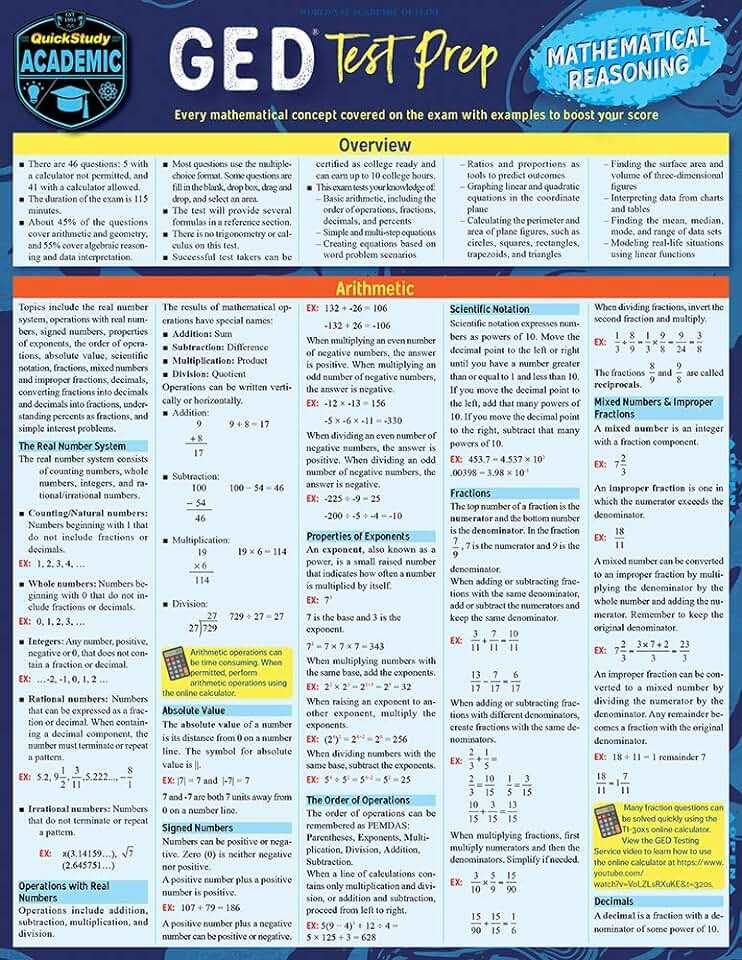
To solve equations, we follow a set of principles called the order of operations. These principles dictate the order in which different operations should be performed. They are: parentheses and brackets, exponents and roots, multiplication and division (from left to right), and addition and subtraction (from left to right). By applying the order of operations correctly, we can simplify expressions and solve equations step by step.
In algebra, we also work with expressions, which are combinations of variables, numbers, and mathematical operations. Expressions can be simplified by combining like terms and using the distributive property. By simplifying expressions, we make them easier to work with and better understand their underlying structure.
Understanding algebra basics involves mastering these foundational concepts and skills. By practicing solving equations, simplifying expressions, and applying the order of operations, one can develop a solid foundation in algebra and confidently tackle more complex algebraic problems.
Defining Algebra
Algebra is a branch of mathematics that deals with mathematical symbols and the rules for manipulating these symbols. It involves solving equations, simplifying expressions, and analyzing patterns and relationships. Algebra is an essential tool in many fields, including physics, engineering, economics, and computer science.
At its core, algebra is about finding unknown quantities and understanding their relationships. Algebraic expressions consist of variables, constants, and mathematical operations, such as addition, subtraction, multiplication, and division. These expressions can be combined, simplified, and solved using a set of rules and properties. Equations, on the other hand, involve an equal sign and require finding the value(s) of the variables that make the equation true.
One of the key concepts in algebra is that of a variable. Variables are symbols that represent unknown quantities or values that can vary. They are used to generalize mathematical statements and formulas, allowing us to solve problems that involve changing or unknown values. Variables are typically denoted by letters, such as x, y, and z, but they can also be represented by other symbols.
Algebraic equations and expressions can be represented graphically using coordinate planes and graphs. These visual representations help us analyze the behavior of functions, identify key points, and understand the relationship between variables. This graphical approach is especially useful when dealing with linear equations and inequalities, quadratic functions, and exponential growth or decay.
In summary, algebra is a powerful mathematical tool that allows us to solve problems, analyze patterns, and understand relationships. It provides a framework for describing and manipulating mathematical symbols and equations, making it an essential skill for various academic and professional disciplines.
Working with Variables
In algebra, variables are symbols that represent unknown values or quantities in equations and expressions. They are typically represented by letters such as x, y, or z. Working with variables allows us to solve problems and find unknown values by performing operations and manipulations.
Variables can be used in equations to represent relationships between different quantities. For example, if we have an equation “2x + 5 = 13”, the variable x represents an unknown value that we need to find. We can solve for x by isolating the variable on one side of the equation and performing the necessary operations.
When working with variables, it is important to understand the rules of algebraic operations. Variables can be added, subtracted, multiplied, and divided just like numbers. However, keep in mind that variables can also have exponents or be part of more complex expressions. To simplify expressions with variables, we can apply the rules of algebra to combine similar terms and perform calculations.
Variables are a powerful tool in mathematics and are used in various fields such as physics, engineering, and economics. They allow us to represent and analyze real-world situations and solve problems by translating them into algebraic equations. By understanding how to work with variables, we can efficiently solve equations, simplify expressions, and uncover unknown values.
Solving Equations
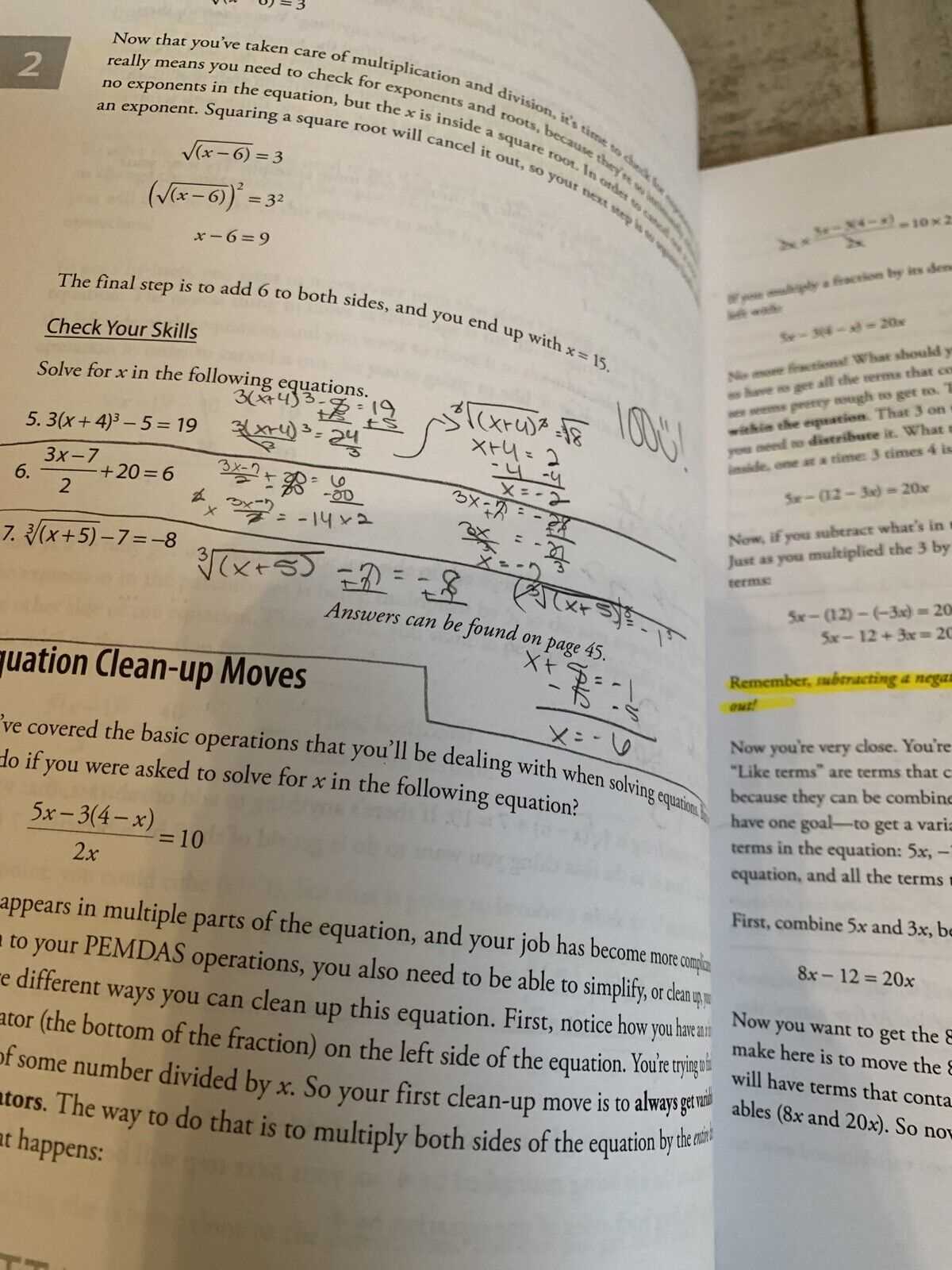
Solving equations is a fundamental skill in algebra that allows us to find the values of variables that make an equation true. In order to solve an equation, we need to isolate the variable on one side of the equation.
To solve an equation, we can use several techniques such as combining like terms, distributing, or applying inverse operations. When using inverse operations, we perform the opposite operation to both sides of the equation in order to isolate the variable.
Example:
Let’s say we have the equation 2x + 5 = 17. To solve for x, we first need to isolate the variable. We can subtract 5 from both sides of the equation:
2x + 5 – 5 = 17 – 5
2x = 12
Next, we divide both sides of the equation by 2 to solve for x:
2x/2 = 12/2
x = 6
It is important to remember to perform the same operation to both sides of the equation in order to maintain equality. By following these steps, we can solve equations and find the values of variables that satisfy the equation.
Solving One-Step Equations
One-step equations are mathematical equations that can be solved in just one step. This means that by performing one operation on both sides of the equation, we can find the value of the variable. The goal of solving one-step equations is to isolate the variable on one side of the equation and determine its value.
In order to solve one-step equations, we need to use inverse operations. Inverse operations are operations that undo each other. For example, addition and subtraction are inverse operations, as well as multiplication and division. By applying inverse operations to both sides of the equation, we can simplify the equation and determine the value of the variable.
When solving one-step equations, it is important to remember the key phrase “whatever you do to one side of the equation, you must do to the other side.” This means that whatever operation we perform on one side of the equation, we must also perform on the other side in order to maintain the equality of the equation.
Some examples of one-step equations include:
- 2x = 8
- 5 + y = 10
- 4a – 7 = 15
- 3b/2 = 6
By following the steps of solving one-step equations and applying inverse operations, we can easily find the solutions to these equations. Practice and understanding of one-step equations is essential in algebra, as it forms the foundation for solving more complex equations and systems of equations.
Solving Two-Step Equations
When it comes to solving two-step equations, there are two main steps that need to be followed. The first step is to isolate the variable term by performing inverse operations. This means that if there is addition or subtraction involved, you should use multiplication or division to remove it. For example, if the equation is 3x + 5 = 17, you can start by subtracting 5 from both sides to eliminate the addition. This will give you 3x = 12.
The second step is to further isolate the variable by performing the inverse operation of any multiplication or division. In the previous example, the variable term is being multiplied by 3. By dividing both sides of the equation by 3, you can solve for x. This will give you x = 4.
It’s important to remember that when solving two-step equations, you need to perform the same operation on both sides of the equation in order to keep it balanced. By following these steps, you can confidently solve two-step equations and find the value of the variable.
Graphing Linear Equations
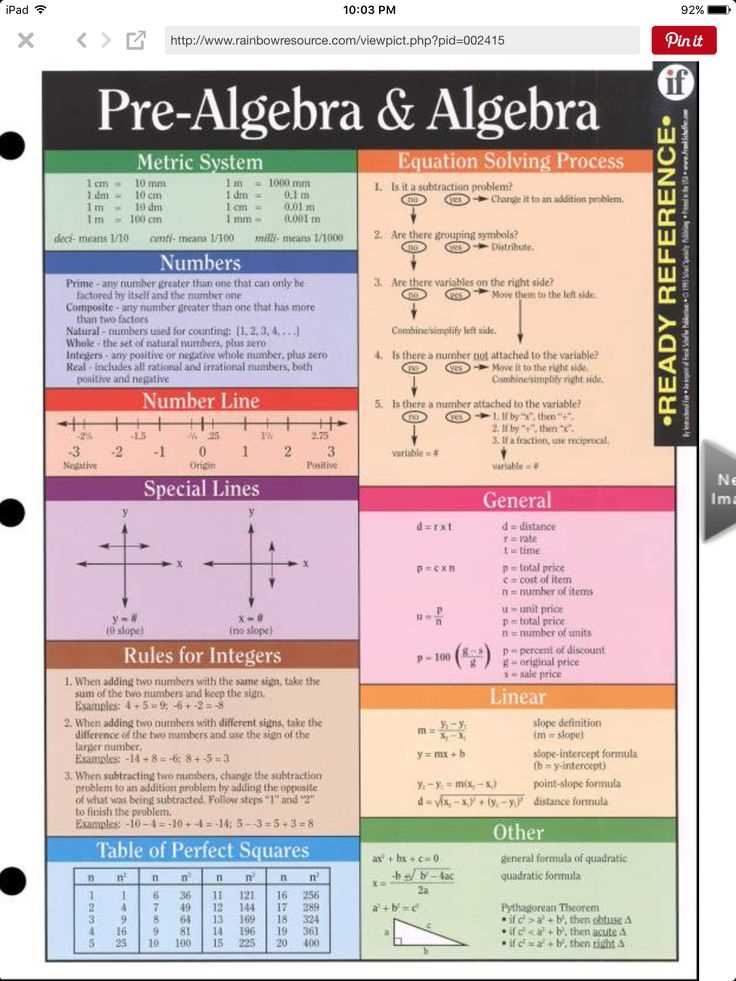
Graphing linear equations is an essential skill in algebra. It allows us to visualize the relationship between two variables and understand how they are related. In general, a linear equation represents a straight line on a graph. The equation can be written in the form y = mx + b, where m represents the slope of the line and b represents the y-intercept.
To graph a linear equation, we need to plot at least two points on the coordinate plane and connect them with a straight line. One way to find these points is to choose values for x and calculate the corresponding values for y using the equation. Another method is to find the y-intercept and use the slope to determine the second point.
The slope of a line indicates how steep or flat it is. A positive slope means the line goes up as we move from left to right, while a negative slope means the line goes down. A slope of zero represents a horizontal line, and an undefined slope represents a vertical line. It’s important to note that the slope affects the direction and steepness of the line, while the y-intercept determines where the line crosses the y-axis.
In addition to graphing linear equations on a coordinate plane, we can also use graphing calculators or computer software to visualize and analyze the data. These tools make it easier to understand the relationship between variables, identify patterns, and make predictions based on the graph. Overall, graphing linear equations is a fundamental skill that helps us analyze and interpret data in various fields, from science and economics to engineering and social sciences.
Graphing Points and Linear Equations
In this section, we covered the basics of graphing points and linear equations. We learned how to plot points on a coordinate plane, and how to graph linear equations in slope-intercept form.
To graph a point, we need to know its coordinates. The x-coordinate represents the horizontal position, while the y-coordinate represents the vertical position. By plotting points with their respective coordinates, we can create a visual representation of mathematical data.
Linear equations, on the other hand, represent a straight line on a graph. The equation is typically written in the form y = mx + b, where m represents the slope of the line, and b represents the y-intercept. By identifying the slope and y-intercept, we can easily graph the line.
When graphing linear equations, it’s important to remember that the slope determines the steepness of the line. A positive slope indicates a line that rises from left to right, while a negative slope indicates a line that falls from left to right. The y-intercept represents the point where the line crosses the y-axis.
To graph a linear equation, we can follow a simple process:
- Identify the slope and y-intercept from the equation.
- Plot the y-intercept as a point on the graph.
- Use the slope to find a second point on the line, either by moving horizontally and vertically from the y-intercept, or by using the slope formula (rise over run).
- Connect the two points with a straight line to graph the equation.
Overall, graphing points and linear equations is an essential skill in algebra. It allows us to visually represent data and analyze mathematical relationships. By understanding the concepts of plotting points and graphing linear equations, we can solve problems more efficiently and communicate mathematical ideas effectively.