Mastering 7th Grade Math: Tackling Word Problems with Confidence
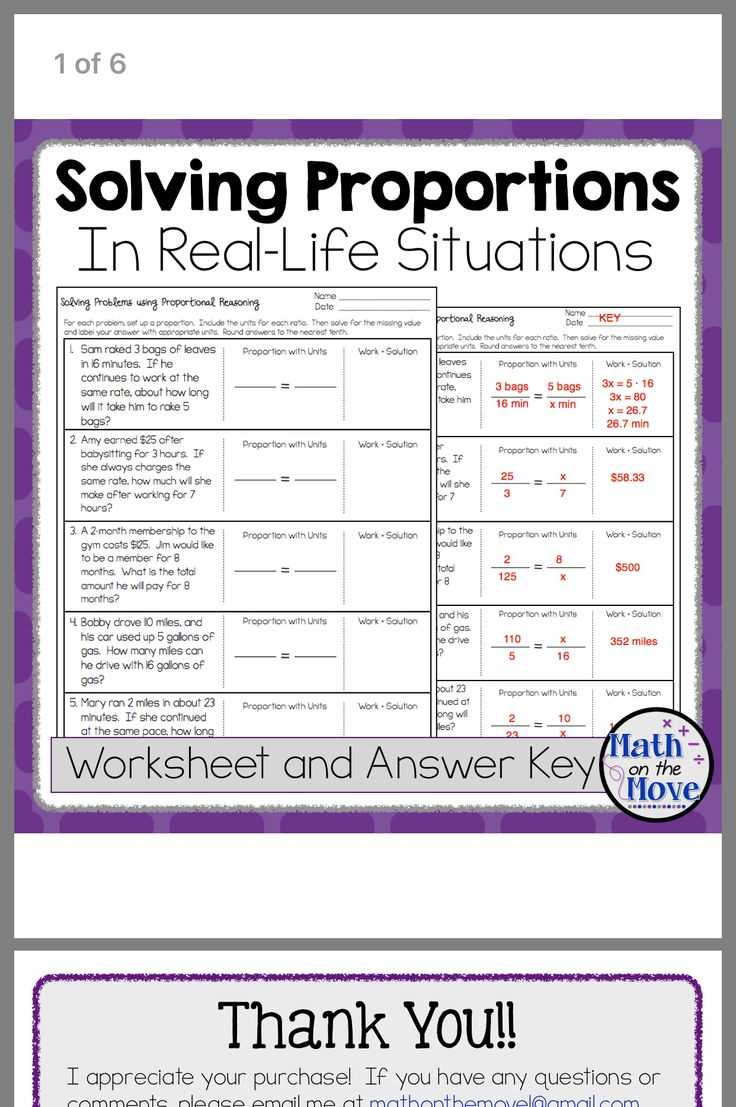
Word problems are an important aspect of mathematics education as they help students apply their knowledge to real-life situations. In 7th grade math, word problems become more complex and require students to think critically and use multiple mathematical concepts to find the solution.
These word problems often involve a variety of topics such as proportions, percent problems, geometry, algebra, and more. Through solving word problems, students not only enhance their mathematical skills but also develop problem-solving and logical thinking abilities.
This article will provide a collection of word problems specifically targeted for 7th-grade math students. Each problem will be accompanied by a step-by-step solution and explanation, allowing students to understand the process of solving these types of problems. By practicing these word problems, students will become more confident in their math skills and better equipped to tackle real-world math challenges.
Solving equations with one variable

Equations with one variable are a fundamental concept in 7th-grade math. Solving these equations involves finding the value of the variable that makes the equation true. This skill is essential for understanding algebraic concepts and real-life applications.
To solve an equation with one variable, you need to isolate the variable on one side of the equation. This can be accomplished by using inverse operations, such as addition, subtraction, multiplication, and division, to eliminate any other terms or coefficients.
Let’s look at an example: 3x + 5 = 17. To solve for x, we want to get rid of the 5 on the left side of the equation. We can do this by subtracting 5 from both sides, which gives us 3x = 12. Now, to isolate x, we divide both sides by 3, resulting in x = 4.
There are different types of equations that can be solved using various methods. These include equations with fractions, decimals, or variables on both sides. It’s important to follow the same steps of isolating the variable and applying inverse operations to solve for x in each scenario.
Practicing solving equations with one variable helps build problem-solving skills and develops a solid foundation for more complex math concepts in the future. It allows students to apply logical thinking and analytical skills to real-life situations and mathematical problems.
Calculating Percentages and Proportions
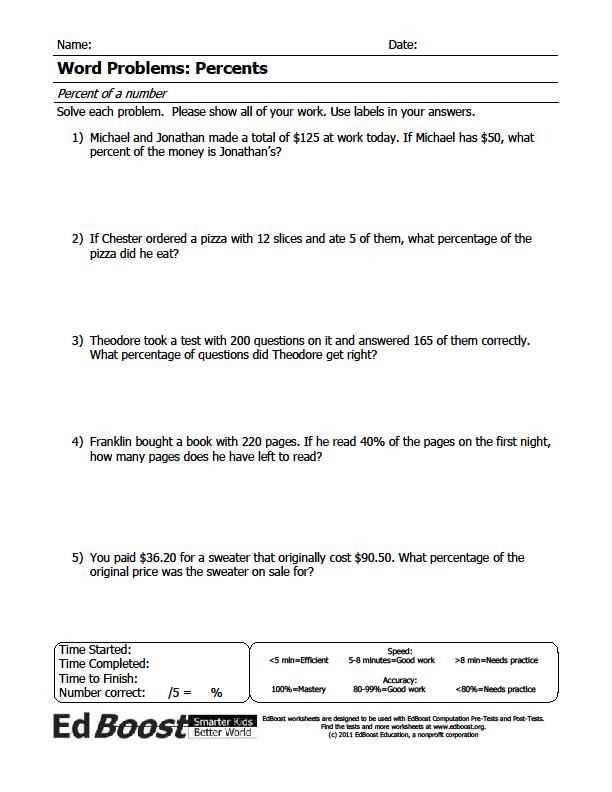
Calculating percentages and proportions is an important skill in 7th grade math. It allows students to understand the relationship between parts and wholes, and apply this knowledge to real-world scenarios. Whether it’s figuring out discounts, finding the percentage of a number, or solving proportion problems, these skills are essential in everyday life.
A percentage is a way to express a part of a whole as a fraction of 100. To calculate a percentage, you can use the formula: part/whole × 100%. For example, if there are 20 red marbles and 80 blue marbles in a jar, you can calculate the percentage of red marbles by dividing the number of red marbles (20) by the total number of marbles (100), then multiplying by 100%. The result is 20%
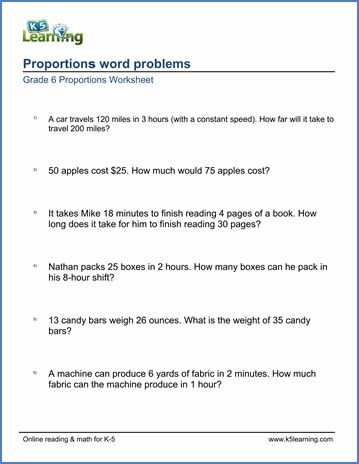
Proportions, on the other hand, involve comparing two ratios or fractions to find an unknown value. An example of a proportion problem is finding out how much paint is needed to cover a wall based on the area of the wall and the coverage rate of the paint. To solve proportion problems, you can set up an equation using cross products. For instance, if it takes 3 cans of paint to cover 300 square feet and you want to know how many cans are needed for 600 square feet, you can set up the proportion: 3/300 = x/600. By cross multiplying, you can find that x equals 6 cans of paint.
By mastering the skills of calculating percentages and proportions, students can not only solve math problems but also apply their knowledge to real-life situations. These skills are used in a variety of fields, such as finance, business, and science. Understanding percentages and proportions is a fundamental skill that lays the foundation for more advanced math concepts in the future.
Working with Fractions and Decimals
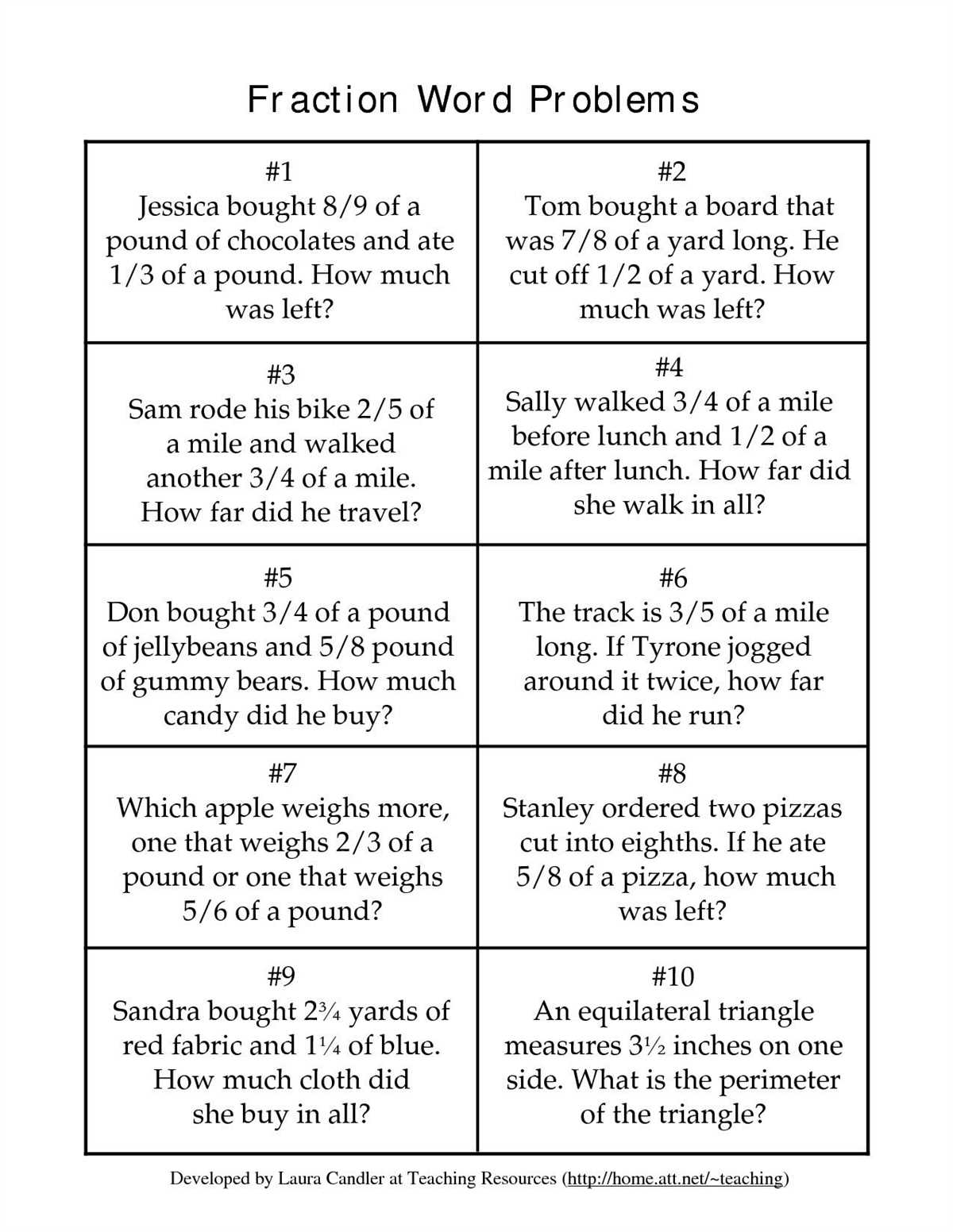
Fractions and decimals are an important part of seventh-grade math, and understanding how to work with them is essential for solving word problems. In this grade, students learn to multiply, divide, add, and subtract fractions and decimals in various scenarios. These skills help them solve real-life problems that involve measurements, money, and proportions.
When working with fractions, students start by simplifying them to their lowest terms. This involves finding the greatest common factor between the numerator and denominator and dividing both by that number. Simplifying fractions allows for easier computation and comparison. For example, if a word problem requires adding two fractions with different denominators, the students need to find a common denominator before performing the addition. This ensures that the fractions can be combined accurately.
Decimals, on the other hand, are useful for representing parts of a whole and comparing different values. Students learn to convert fractions to decimals and vice versa. For example, they may need to convert a fraction to a decimal to calculate a percentage or compare two different values. Word problems often present scenarios where decimals are used, such as calculating sales tax or determining the length of a given object.
Working with fractions and decimals also involves understanding their relationship to whole numbers. Students learn how to convert fractions and decimals into whole numbers, and vice versa. This allows them to manipulate the numbers easily and accurately in various mathematical operations.
Overall, working with fractions and decimals is essential in seventh-grade math. These skills allow students to solve a wide range of word problems that involve measurements, percentages, and proportions. Mastering these skills will not only help students in their math classes but also in real-life situations where the ability to work with fractions and decimals is necessary.
Understanding Ratios and Proportions
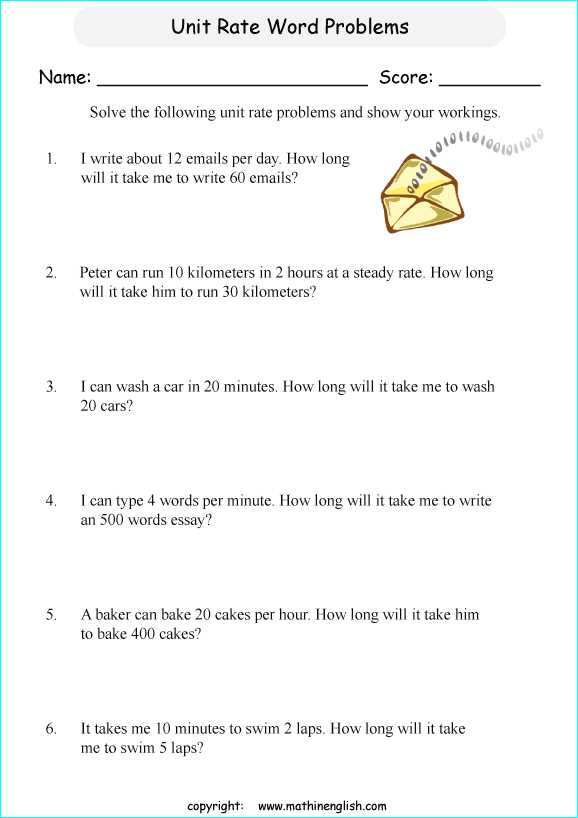
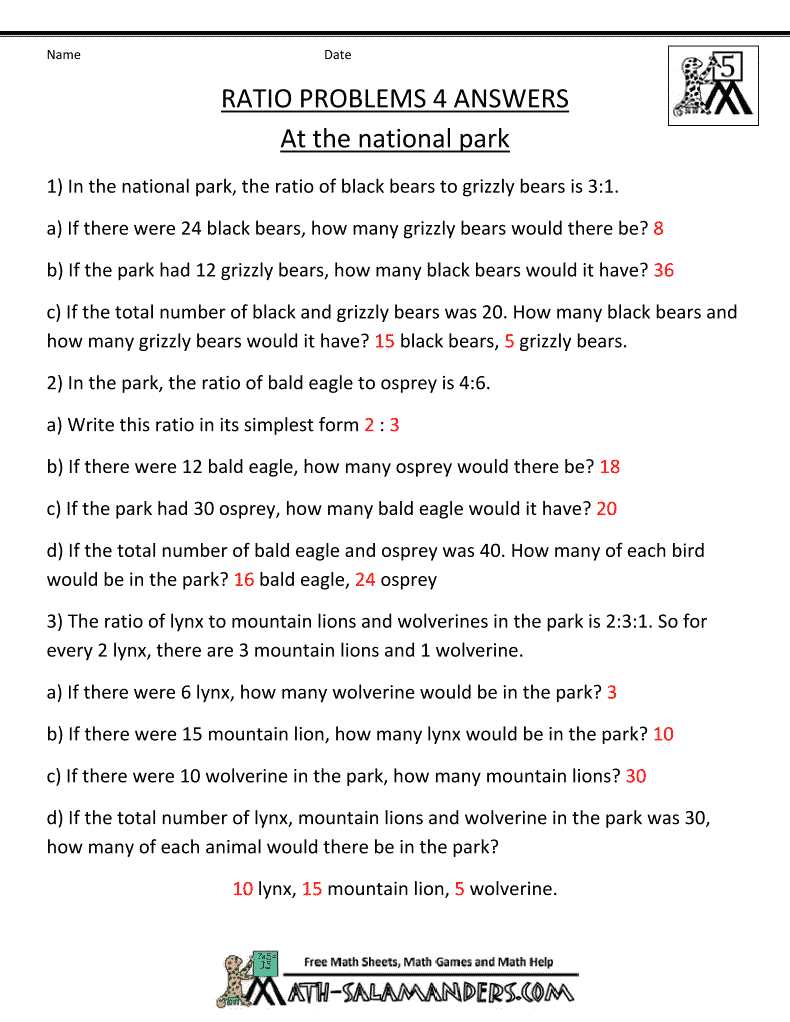
In mathematics, ratios and proportions are important concepts that help us understand and compare different quantities. A ratio is a comparison of two numbers or quantities using division, while a proportion is an equation that states that two ratios are equal. Understanding ratios and proportions can be helpful in solving word problems, as they allow us to find missing values or make predictions.
Ratios can be written in different forms, such as using the word “to,” using a colon, or using a fraction. For example, the ratio of boys to girls in a class can be written as “2 to 3,” “2:3,” or “2/3.” Ratios can also be simplified, which means dividing both numbers by their greatest common factor. Simplifying ratios helps us compare them more easily.
Proportions are used to solve problems that involve two related ratios. The key to solving proportion problems is setting up an equation where the two ratios are equal. Cross multiplication can then be used to solve the equation and find the missing value. For example, if we know that the ratio of oranges to apples is 3:4, and we have 12 oranges, we can use a proportion to find out how many apples there are.
Ratios and proportions can be seen in many real-life situations. For example, if you are baking a cake and the recipe calls for 2 cups of flour and 3 eggs, you can use the ratio 2:3 to adjust the recipe if you want to make more or fewer servings. Similarly, if you are planning a road trip and want to calculate the time it will take to reach your destination, you can use the proportion of miles traveled to time elapsed to estimate your arrival time.
Applying Algebraic Expressions in Word Problems
Algebraic expressions are mathematical representations that involve variables, constants, and operations such as addition, subtraction, multiplication, and division. These expressions are often used to solve real-world problems where unknown quantities need to be determined.
In 7th grade math, students are introduced to word problems that require the use of algebraic expressions to find solutions. These problems typically involve translating verbal descriptions into mathematical equations and then solving for the unknown variable.
For example, consider the problem: “Alex has 3 times as many marbles as John. If John has x marbles, how many marbles does Alex have?” To solve this problem, we can represent the number of marbles Alex has with the expression 3x. We know that Alex has 3 times as many marbles as John, so the expression 3x represents the total number of marbles Alex has. By substituting x with the value given for John’s marbles, we can determine the number of marbles Alex has.
Another common type of word problem in 7th grade math involves finding the area or perimeter of geometric shapes. These problems can be solved using algebraic expressions by representing the unknown values, such as the length or width, with variables. By setting up equations based on the given information, students can solve for the unknown variables and find the desired measurements.
In conclusion, applying algebraic expressions in word problems allows students to use their math skills to solve real-world situations. By translating verbal descriptions into mathematical equations and using variables to represent unknown quantities, students can find solutions to various problems and enhance their problem-solving abilities.
Conclusion:
In conclusion, practicing geometry and measurement concepts is essential for 7th grade students. These concepts provide a foundation for understanding the physical world and making sense of mathematical principles. By engaging in word problems and hands-on activities, students can develop their spatial reasoning, problem-solving skills, and mathematical reasoning abilities.
Through the use of real-world scenarios and practical applications, students can see the relevance and importance of geometry and measurement in their everyday lives. By incorporating various teaching strategies such as group work, visual aids, and technology, educators can create an engaging and interactive learning environment that fosters students’ understanding and retention of these concepts.
Furthermore, by continuously revisiting and reinforcing these concepts throughout the school year, students can build a strong foundation for more advanced mathematical topics in the future. By mastering geometry and measurement concepts in 7th grade, students are better prepared for higher-level math courses in high school and beyond.
In conclusion, practicing geometry and measurement concepts not only helps students excel in their math studies but also equips them with valuable critical thinking and problem-solving skills that they can apply in various aspects of their lives.
Q&A:
What is a geometric shape?
A geometric shape is a figure that has specific properties, such as number of sides, angles, and dimensions.
What is a polygon?
A polygon is a closed figure with straight sides. It can have any number of sides, but each side must be a straight line segment.
What is the difference between perimeter and area?
Perimeter is the distance around the outside of a shape, while area is the measure of the space enclosed by a shape.
What is the definition of volume?
Volume is the measure of the amount of space occupied by a three-dimensional object.