Uncover the Secrets of World History: Semester Review Answers Revealed!

In the study of world history, it is important to review the key topics and concepts learned throughout the semester. This review allows students to consolidate their understanding of global events and their impact on society. It also helps students prepare for exams and assessments, ensuring they have a solid grasp of the material covered in class.
One way to review world history is by answering questions that cover a wide range of topics, including ancient civilizations, world wars, and major historical figures. These questions can test students’ knowledge and critical thinking skills, while also providing an opportunity to explore different perspectives and interpretations of historical events. By engaging in this review, students can deepen their understanding of world history and develop a more nuanced view of the past.
Additionally, reviewing world history allows students to make connections between different time periods and regions. They can analyze the causes and consequences of historical events, identify patterns and trends, and understand how societies and civilizations have evolved over time. This holistic approach to learning helps students develop a comprehensive understanding of world history, enabling them to make informed judgments and decisions about the present and future.
World History Semester Review Answers

World history is a vast subject that encompasses the entire history of humanity. This semester review aims to provide concise answers to key questions and topics covered throughout the course.
1. What were the causes of World War I?
- The assassination of Archduke Franz Ferdinand of Austria-Hungary
- Militarism and arms race among European nations
- Alliances and diplomatic tensions
- Imperialism and competition for colonies
- Nationalism and ethnic tensions in the Balkans
2. How did the Industrial Revolution impact society?
- Increase in urbanization and growth of cities
- Rise of factories and the growth of the working class
- Technological advancements in manufacturing and transportation
- Social and economic changes, including the emergence of capitalist economies
- Environmental degradation and pollution
3. What were the main causes of the French Revolution?
- Social inequality and injustice
- Economic crisis and heavy taxation on the poor
- Enlightenment ideas and the desire for political and social reforms
- Influence of the American Revolution and the spread of democratic ideals
- Inefficiency and corruption of the monarchy
4. How did the Cold War shape the world?
- Division of the world into two blocs: capitalist West led by the United States and communist East led by the Soviet Union
- Arms race and nuclear weapons proliferation
- Proxy wars and conflicts in various regions, such as Vietnam and Korea
- Space race and technological competition
- The collapse of the Soviet Union and the end of the Cold War
5. What were the major consequences of European colonization?
- Exploitation of native populations and resources
- Establishment of colonial empires and systems of governance
- Cultural and religious assimilation
- Introduction of new diseases and displacement of indigenous peoples
- Global spread of European languages, trade, and technology
This review provides a brief overview of some important topics in world history. It is important to further explore and study these subjects to gain a deeper understanding of the complexities and nuances of our shared human past.
Ancient Civilizations

Ancient civilizations were the building blocks of the modern world. They laid the foundation for many aspects of our society, including government, culture, and technology. These civilizations were incredibly diverse, with unique customs and beliefs that continue to fascinate us today.
One of the most influential ancient civilizations was the Egyptians. They developed a complex society along the Nile River, with a centralized government ruled by pharaohs. The Egyptians were known for their impressive pyramids, intricate hieroglyphics, and advanced knowledge of mathematics and engineering.
- Egyptians
- Greeks
- Romans
- Chinese
The Greeks and Romans also left a lasting impact on the world. The Greeks were pioneers in philosophy, art, and democracy. Their city-states, such as Athens and Sparta, were centers of intellectual and cultural development. The Romans, on the other hand, were known for their vast empire and efficient infrastructure. They built roads, aqueducts, and other structures that still exist today.
The Chinese civilization is one of the oldest and most enduring in history. They were responsible for numerous inventions and discoveries, such as gunpowder, paper, and the compass. The Chinese also developed a highly organized bureaucracy and made significant advancements in agriculture and medicine.
These ancient civilizations laid the groundwork for the world we live in today. They shaped our understanding of government, art, science, and much more. By studying their achievements and failures, we can gain valuable insights into our own society and continue to learn from the past.
Middle Ages
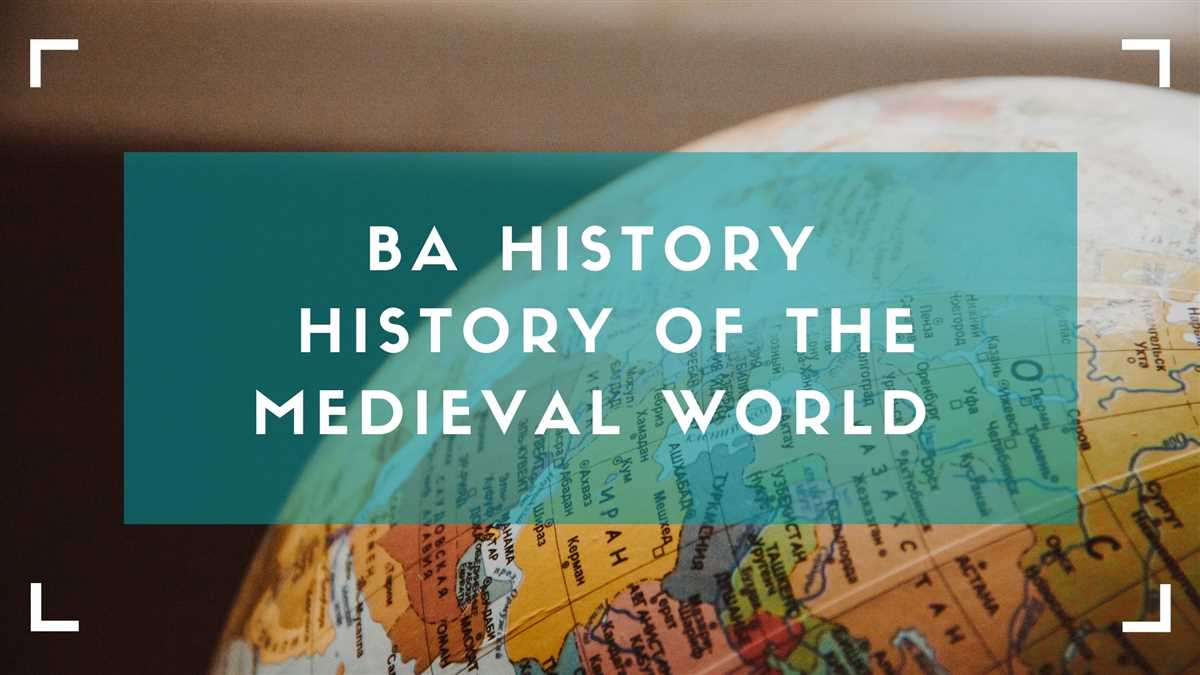
The Middle Ages, also known as the Medieval period, spanned from the 5th to the 15th century in Europe. It was a time of significant political, social, and economic change. One of the defining features of this era was its feudal system, which was characterized by the hierarchical relationships between lords, knights, and serfs.
During the Middle Ages, Europe experienced the decline of the Roman Empire and the rise of various Germanic kingdoms. The Catholic Church played a central role in medieval society, exerting its influence over political and religious affairs. The Church was also responsible for the spread of Christianity throughout Europe, as well as the preservation of classical knowledge.
The Middle Ages saw the development of chivalry and the code of knighthood, which emphasized bravery, loyalty, and honor. The Crusades, a series of military campaigns launched by Western Christians to reclaim the Holy Land from Muslims, were a major event of this period. They resulted in cultural exchanges between Europe and the Middle East and had lasting effects on trade and diplomacy.
Art and architecture flourished during the Middle Ages, with the construction of magnificent cathedrals and castles. Gothic architecture, with its soaring vaulted ceilings and intricate stained glass windows, emerged as a dominant style. The rise of universities and the rediscovery of ancient Greek and Roman texts also marked significant intellectual advancements during this time.
The Middle Ages ended with the onset of the Renaissance, a period of renewed interest in classical learning and humanism. Despite being often characterized as a dark and backward period, the Middle Ages laid the foundation for the development of modern Europe and shaped its culture, politics, and religion.
Renaissance and Reformation

The Renaissance was a period of rebirth and cultural awakening that took place in Europe during the 14th to 17th centuries. It was characterized by an increased focus on education, arts, and science, as well as a revival of classical ideas and values. During this time, scholars and artists sought to emulate the achievements of ancient Greece and Rome, leading to significant advancements in literature, philosophy, architecture, and visual arts.
One of the key features of the Renaissance was the rise of humanism. Humanists placed a strong emphasis on human potential and achievements, valuing individualism, reason, and critical thinking. This led to a shift away from the dominant religious worldview of the Middle Ages and a greater focus on secularism and the individual. Artists such as Leonardo da Vinci, Michelangelo, and Raphael emerged during this period, creating iconic works that reflected these humanist ideals.
- The Reformation was a religious movement that emerged in the 16th century as a response to perceived corruption and abuses within the Catholic Church. Led by individuals such as Martin Luther, John Calvin, and Henry VIII, the Reformation sought to reform Christianity and establish new branches of Protestantism.
- Martin Luther, a German theologian and professor, is often credited as the catalyst for the Reformation. In 1517, he famously nailed his Ninety-Five Theses to the door of the Castle Church in Wittenberg, criticizing the Church’s practice of selling indulgences and calling for reform. Luther’s ideas spread rapidly, challenging the authority of the Pope and leading to a split within the Church.
- Meanwhile, in England, King Henry VIII broke away from the Catholic Church and established the Church of England after the Pope refused to annul his marriage. This event, known as the English Reformation, had significant political and religious implications and marked the beginning of a new religious landscape in England.
- The Reformation brought about religious conflict and wars in Europe, leading to changes in political and social structures. It also fostered the rise of individual interpretation of Scripture, the translation of the Bible into vernacular languages, and an increased emphasis on education and literacy.
In conclusion, the Renaissance and Reformation were pivotal periods in European history. The Renaissance brought about a cultural revolution, pushing boundaries in arts, literature, and science. Meanwhile, the Reformation challenged the authority of the Catholic Church and resulted in the establishment of various Protestant denominations. Both movements had a profound impact on the social, political, and religious landscape of Europe and laid the foundation for the modern world as we know it today.
Colonialism and Imperialism
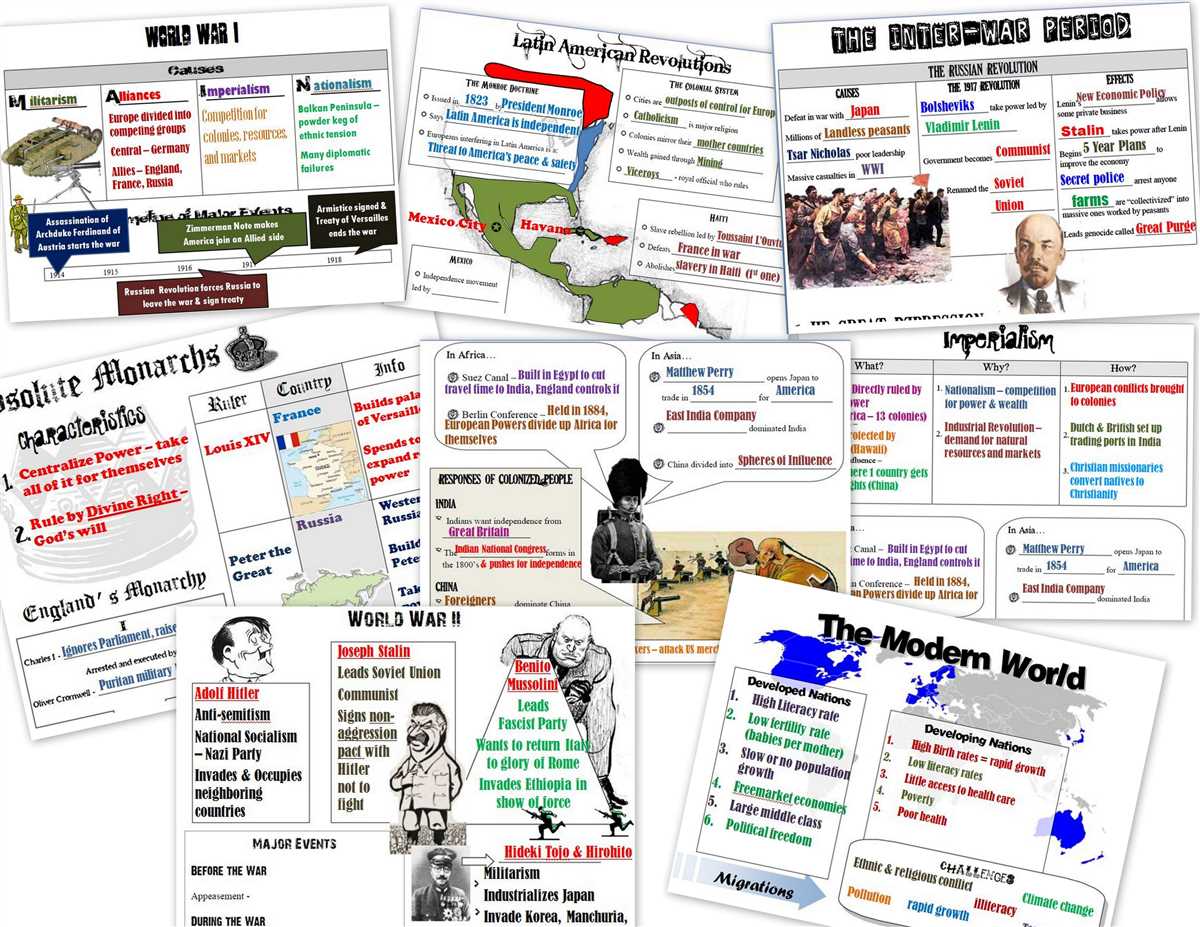
Colonialism and imperialism were two interconnected systems through which European powers established and maintained control over vast territories around the world during the 16th to 20th centuries. Colonialism refers to the process in which a foreign power establishes settlements and exerts political, economic, and cultural control over another territory. Imperialism, on the other hand, involves the extension of a nation’s power and influence over other countries through various means, including military conquest, economic dominance, and cultural imperialism.
The era of colonialism and imperialism was driven by several factors, including the desire for wealth, resources, and strategic advantages. European powers such as Britain, France, Spain, Portugal, and the Netherlands sought to expand their empires and exploit the resources and labor of colonies for their own benefit. This often involved the establishment of trading posts, plantations, and mining operations, as well as the forced labor and enslavement of indigenous populations.
Under colonial rule, indigenous cultures and economies were often suppressed or eradicated, as European powers imposed their own systems of governance, law, and economic structures. The effects of colonialism and imperialism were far-ranging and continue to shape the world today. Many former colonies still struggle with the legacies of exploitation, inequality, and cultural imperialism imposed by their former colonial masters. However, the resistance and struggles of colonized peoples also played a crucial role in the eventual dismantling of colonial empires and the establishment of independent nations.
Main Characteristics of Colonialism:
- Establishment of settlements by a foreign power in another territory
- Political, economic, and cultural control exerted over the colony
- Exploitation of resources and labor of the colony for the benefit of the colonizing power
- Imposition of colonial governance, legal systems, and economic structures
Main Characteristics of Imperialism:
- Extension of a nation’s power and influence over other countries
- Can involve military conquest, economic dominance, and cultural imperialism
- Driven by the desire for wealth, resources, and strategic advantages
- Can lead to the suppression or eradication of indigenous cultures and economies
World War I and Interwar Period
The First World War, also known as the Great War, was a global conflict that lasted from 1914 to 1918. It involved many of the world’s major powers, including the Allied Powers (led by Britain, France, and Russia) and the Central Powers (led by Germany, Austria-Hungary, and the Ottoman Empire). The war was sparked by the assassination of Archduke Franz Ferdinand of Austria-Hungary by a Serbian nationalist in 1914. This event set off a chain reaction of alliances and mobilizations that ultimately led to the outbreak of war.
The war was characterized by brutal trench warfare, with both sides digging extensive networks of trenches to protect their troops from enemy fire. The introduction of new technologies, such as machine guns, artillery, and poison gas, resulted in unprecedented levels of casualties. Millions of soldiers and civilians were killed, and entire cities and regions were devastated. The war also saw significant advancements in medical care and military technology, including the first use of tanks and aircraft in combat.
- One of the key turning points of the war was the entry of the United States into the conflict in 1917. The American troops provided fresh reinforcements and resources, which helped tip the balance in favor of the Allies.
- The war finally came to an end in 1918 with the signing of the Treaty of Versailles. This treaty imposed harsh terms on Germany, including significant territorial losses and reparations payments. The treaty also laid the groundwork for the interwar period, which was marked by economic instability, social unrest, and the rise of extremist political movements.
- The interwar period witnessed the collapse of several empires, including the Ottoman, Austro-Hungarian, and Russian empires. The resulting power vacuum and geopolitical realignments set the stage for future conflicts, including the rise of fascism and the outbreak of World War II.
The aftermath of World War I also saw the emergence of new international organizations, such as the League of Nations, which aimed to promote peace and cooperation among nations. However, these efforts ultimately proved insufficient in preventing future conflicts.
In conclusion, World War I and the interwar period had a profound impact on global history. The war transformed political, economic, and social landscapes, and its consequences continue to reverberate to this day.
World War II and the Cold War
World War II was a global conflict that took place from 1939 to 1945. It involved many countries around the world, with the two major alliances being the Allies and the Axis. The war was characterized by massive military engagements, widespread destruction, and the use of new and devastating weapons such as atomic bombs.
The aftermath of World War II led to the division of Europe and the beginning of the Cold War. The Cold War was a period of political tension and military rivalry between the United States and the Soviet Union, the two superpowers of the time. It lasted from the late 1940s to the early 1990s, and was characterized by ideological conflicts and the threat of nuclear war.
During the Cold War, the world was divided into two distinct spheres of influence, with the United States leading the capitalist Western Bloc and the Soviet Union leading the communist Eastern Bloc. Both sides engaged in a series of proxy wars and global power struggles, with the most notable being the Korean War and the Vietnam War.
The end of the Cold War came with the collapse of the Soviet Union in 1991, marking the victory of the United States and its capitalist ideology. The end of the Cold War also brought about significant geopolitical changes, with the reunification of Germany, the dissolution of the Eastern Bloc, and the emergence of new independent states.
In conclusion, World War II and the Cold War were two pivotal events in world history that shaped the geopolitical landscape of the 20th century. The lessons learned from these conflicts continue to influence international relations and the pursuit of global peace and stability.