Unlock the Secrets of 3-1 Geometry Exercises: Find the Answers Here!
Geometry is a fascinating branch of mathematics that deals with the properties and relationships of shapes and figures. It is a field that many students find challenging, but with practice and the right resources, it can be mastered.
One of the best ways to improve your understanding of geometry is through exercises. These exercises allow you to apply the concepts and formulas you have learned in a practical way, helping you build problem-solving skills and develop a deeper intuition for geometry.
In this article, we will provide answers to some of the exercises from Lesson 3-1, which focuses on lines and angles. This lesson covers topics such as parallel lines, transversals, and the angles they form. By reviewing the answers to these exercises, you can check your work and gain a better understanding of the concepts covered in this lesson.
-1 Exercises Geometry Answers
Geometry is a branch of mathematics that deals with the shape, size, and properties of figures and spaces. It is a subject that requires logical thinking and problem-solving skills. One way to practice and improve these skills is by doing exercises and problems related to geometry. In this article, we will provide answers to some -1 exercises in geometry.
The first exercise is about finding the area of a rectangle. The dimensions are given as 4 units for the length and 6 units for the width. To find the area, we use the formula A = length × width. Plugging in the given values, we get A = 4 × 6 = 24 square units.
The second exercise involves calculating the perimeter of a square. The side length is given as 5 units. Perimeter is the sum of all the sides of a figure. In the case of a square, all sides are equal. Therefore, the perimeter of the square is 4 times the side length. Plugging in the given value, we get 4 × 5 = 20 units.
These are just a few examples of -1 exercises in geometry. By practicing and solving more exercises, one can become more familiar with the concepts and formulas in geometry. It is important to understand the steps and reasoning behind each solution in order to develop a deeper understanding of the subject.
Summary: -1 Exercises in geometry can help improve logical thinking and problem-solving skills. In this article, we provided answers to some exercises related to finding the area of a rectangle and the perimeter of a square. By practicing more exercises, one can gain a better understanding of the concepts and formulas in geometry.
What are exercises in geometry?
Exercises in geometry refer to practice problems and tasks that help students enhance their understanding and skills in the field of geometric concepts and principles. These exercises typically involve solving problems related to points, lines, angles, shapes, and spatial relationships. They are an essential part of geometry education as they allow students to apply theoretical knowledge to real-world scenarios and develop problem-solving abilities.
Geometry exercises often require students to analyze and manipulate geometric figures, apply theorems and postulates, and use mathematical reasoning to arrive at solutions. They can range from simple tasks such as identifying types of angles or calculating the perimeter of a shape to more complex problems like proving geometric theorems or solving three-dimensional spatial puzzles.
Geometry exercises are commonly found in textbooks, worksheets, and online learning platforms. They are designed to cover various topics in geometry, including Euclidean geometry, coordinate geometry, trigonometry, and transformations. Through these exercises, students can reinforce their understanding of geometric concepts, improve their problem-solving skills, and develop logical thinking abilities.
To solve geometry exercises effectively, students are encouraged to actively engage with the material, visualize geometric figures, and apply logical reasoning. They may use a variety of tools and strategies, such as drawing diagrams, applying formulas, utilizing properties of geometric figures, and using algebraic methods. The process of solving geometry exercises helps students develop analytical thinking skills and prepares them for higher-level mathematical concepts and applications.
How to Find the Answers to 3-1 Exercises in Geometry
Geometry can be a challenging subject, but finding the answers to 3-1 exercises can be made easier with the right approach. These exercises often involve solving for unknown angles, identifying geometric shapes, or applying various theorems. By following a systematic approach and utilizing the information given, you can determine the answers correctly.
1. Read the problem carefully: Before attempting to solve the exercise, it is crucial to understand what is being asked. Pay attention to the given information, such as the measurements of angles or sides, and any additional clues provided.
2. Identify the relevant concepts: Determine which geometric concepts or theorems are applicable to solving the exercise. This may involve recalling formulas, properties of angles or polygons, or the relationships between different shapes.
3. Draw a diagram: Visualizing the problem by sketching a diagram can help you better understand the given information and visualize the solution. Include all given measurements, angles, and other relevant details accurately.
4. Apply the appropriate formulas or theorems: Use the relevant formulas or theorems to solve for unknown angles or identify geometric properties. Make sure to show all your calculations step by step, and double-check your work for accuracy.
5. Check your answer: Once you have found a possible solution, check if it satisfies all the given conditions in the exercise. Review the original problem and ensure that your answer aligns with the requested information.
By following these steps, you can improve your ability to find the answers to 3-1 exercises in geometry accurately. Regular practice and a solid understanding of fundamental concepts will further enhance your problem-solving skills in this subject.
The importance of practicing exercises in geometry
Geometry is a branch of mathematics that deals with the study of shapes, sizes, and properties of figures and spaces. It plays a significant role in various fields, including architecture, engineering, physics, and computer graphics. To gain a solid understanding of geometry, it is essential to practice exercises that allow students to apply their knowledge and develop problem-solving skills.
Practicing exercises in geometry helps students to become familiar with the different types of geometric figures, such as triangles, circles, and polygons, and their properties. By solving problems, students learn about angles, lines, symmetry, and transformations. They also develop spatial reasoning skills, which are crucial in many STEM (science, technology, engineering, and mathematics) fields.
Through continuous practice, students not only reinforce their understanding of geometric concepts but also enhance their critical thinking and logical reasoning abilities. Geometry exercises often require students to analyze and interpret information, identify patterns, and make connections between different concepts. This helps them to develop a systematic approach to problem-solving, which is valuable not only in mathematics but also in real-life situations.
Moreover, practicing geometry exercises allows students to improve their mathematical communication skills. As they solve problems and justify their solutions using clear and concise explanations, they learn to express their mathematical ideas effectively. This skill is essential for future academic and professional success, as it enables individuals to communicate their mathematical reasoning to others and collaborate on complex problem-solving tasks.
In conclusion, practicing exercises in geometry is crucial for a comprehensive understanding of geometric concepts and their applications. By solving problems, students develop problem-solving skills, enhance logical reasoning abilities, and improve mathematical communication. Regular practice prepares students to tackle complex geometric problems and equips them with the skills needed in various academic and professional fields.
Tips for solving geometric exercises
In geometry, it is important to have a systematic approach when solving exercises. Here are some tips that can help you tackle geometric problems effectively:
1. Understand the problem
Before jumping into solving an exercise, make sure you fully understand what is being asked. Read the problem carefully and identify the given information and the required solution.
2. Draw a diagram
A diagram can be very helpful in visualizing the problem and understanding the relationships between different elements. Take the time to draw an accurate and clear diagram that represents the given information.
3. Identify relevant theorems and formulas
Geometry is a subject that relies heavily on theorems and formulas. Familiarize yourself with the relevant theorems and formulas beforehand, so you can easily apply them to the problem at hand.
4. Break down the problem
If the exercise seems complex, try breaking it down into smaller, more manageable parts. Solve each part separately and then combine the solutions to reach the final answer.
5. Use logical reasoning
Geometry often requires logical reasoning to reach a solution. Start by using the given information and theorems to make logical deductions. If necessary, explore different possibilities and consider all the angles of the problem.
6. Practice, practice, practice
Like any skill, solving geometric exercises requires practice. The more you practice, the better you will become at recognizing patterns, applying theorems, and finding creative solutions to problems. Work through a variety of exercises to strengthen your understanding of different concepts.
By following these tips and developing good problem-solving strategies, you can improve your proficiency in solving geometric exercises. Remember to always double-check your answers and seek clarification if needed. With practice and perseverance, geometry can become an enjoyable and rewarding subject.
Common Mistakes to Avoid When Solving 3-1 Exercises in Geometry
Geometry can be a challenging subject, and it’s easy to make mistakes when solving exercises. In this section, we will discuss some common mistakes to avoid when working on 3-1 exercises in geometry. By being aware of these mistakes, you can improve your problem-solving skills and achieve better results.
1. Misinterpreting the Problem
One of the most common mistakes in geometry exercises is misinterpreting the problem. It’s important to read the problem carefully and understand what it is asking for. Pay attention to key words and phrases that provide clues about the geometric concepts involved. Take your time to analyze the given information and identify the specific question or goal of the problem. Misinterpreting the problem can lead to incorrect solutions or wasted time on irrelevant calculations.
2. Skipping Steps
Geometry problems often require a series of logical steps to reach the solution. Skipping steps or rushing through the problem-solving process can lead to errors. Make sure to write down all the necessary steps, including any given information, relevant formulas, and intermediate calculations. Take the time to show all the work clearly and logically. Skipping steps can result in incorrect answers or lost points on exams or assignments.
3. Forgetting to Label Figures
It’s important to label figures accurately in geometry problems. Forgetting to label figures or using incorrect labels can cause confusion and mistakes. Take the time to label all the given angles, lines, and other geometric elements in the figure. Use clear and consistent labels throughout your work. Labeling figures correctly will help you visualize the problem better and prevent errors when applying geometric properties or theorems.
4. Using Incorrect Formulas or Theorems
Geometry relies on a variety of formulas, theorems, and geometric properties. Using incorrect formulas or theorems can lead to incorrect solutions. Make sure to review and understand the relevant formulas and theorems before attempting the exercises. Pay attention to the conditions and limitations of each formula or theorem. Applying the wrong formula or theorem can result in invalid calculations and incorrect solutions.
5. Lack of Precision
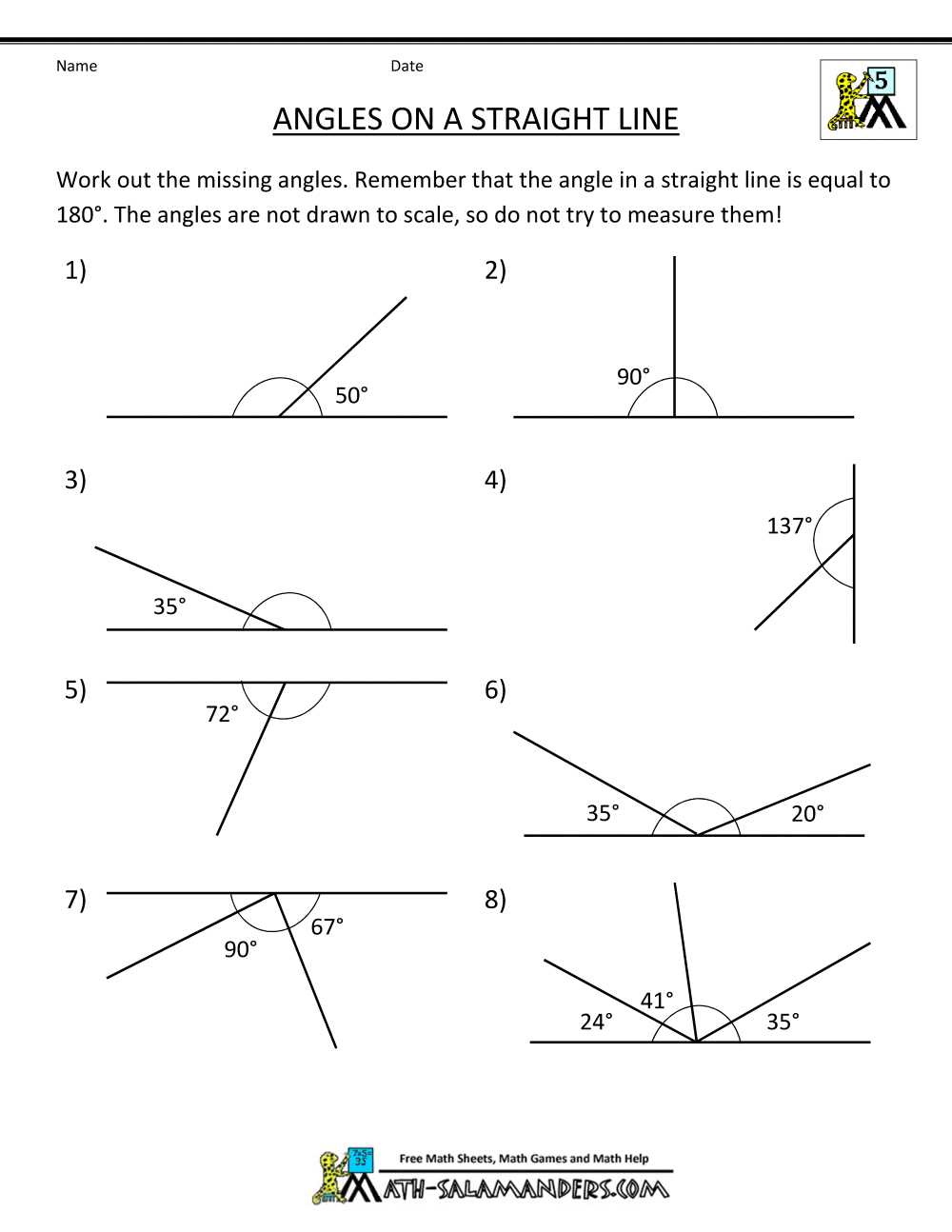
Precision is crucial in geometry. Small mistakes in measurements or calculations can lead to significant errors in the final solution. Pay attention to detail and ensure that you are accurate in every step of the problem-solving process. Use precise measurements, correct decimal places, and accurate calculations. Double-check your work to minimize errors caused by lack of precision.
Summary

Geometry exercises require attention to detail and a logical problem-solving approach. By avoiding common mistakes such as misinterpreting the problem, skipping steps, forgetting to label figures, using incorrect formulas or theorems, and lacking precision, you can improve your geometry skills and achieve better results. Practice these strategies consistently to become more proficient in solving geometry exercises and enhance your understanding of geometric concepts.
Q&A:
What is a common mistake when solving 3-1 exercises in geometry?
A common mistake is not properly labeling the given information in the problem. It is important to clearly identify the given measurements or angles in order to solve the problem correctly.
What is another common mistake in solving geometry exercises?
Another common mistake is not using the proper geometric formulas or theorems to solve the problem. It is important to have a good understanding of the relevant formulas and theorems in order to apply them correctly.
How can I avoid making mistakes in geometry exercises?
To avoid making mistakes, it is important to read the problem carefully and understand what is being asked. It is also helpful to double-check your work and make sure your solution makes sense in the context of the problem.
What is a common mistake when finding the solution to a geometry problem?
A common mistake is not showing enough work or not providing enough explanation in your solution. It is important to provide clear step-by-step explanations and show all relevant calculations in order to receive full credit for your work.
What should I do if I make a mistake in a geometry exercise?
If you make a mistake, it is important to identify the error and try to understand where you went wrong. You can then correct your mistake and redo the problem to ensure you get the correct answer.
What are common mistakes to avoid when solving 3-1 exercises in geometry?
There are several common mistakes to avoid when solving 3-1 exercises in geometry. One mistake is not clearly understanding the given information and what is being asked in the problem. It is important to read the problem carefully and identify the relevant information and what needs to be found. Another mistake is not using the appropriate formulas or theorems. It is essential to have a good understanding of the relevant formulas and theorems and apply them correctly. Additionally, some students make errors in calculations, such as arithmetic mistakes or incorrect conversions of units. It is important to double-check all calculations to avoid these mistakes.
How can I avoid common mistakes when solving 3-1 exercises in geometry?
To avoid common mistakes when solving 3-1 exercises in geometry, it is important to carefully read and understand the problem before attempting to solve it. Take the time to identify the given information and what needs to be found. Make sure to use the appropriate formulas and theorems based on the given information. It can be helpful to write down the relevant formulas and theorems at the beginning of the problem to refer to them easily. When performing calculations, be diligent and double-check all calculations to avoid arithmetic mistakes or incorrect conversions of units. It is also beneficial to practice solving various types of geometry problems to improve problem-solving skills and avoid common mistakes.