Unlocking the Secrets: A Comprehensive Study Guide with Questions and Answers for ‘A Raisin in the Sun’

Are you studying Lorraine Hansberry’s classic play, “A Raisin in the Sun”? Do you have questions about the plot, characters, themes, and symbolism? Look no further! This study guide is designed to help you navigate through the play and gain a deeper understanding of its key elements.
In this article, we provide a comprehensive list of study guide questions and answers to assist you in your analysis of “A Raisin in the Sun.” Whether you’re a student looking for guidance or a fan of the play seeking to delve deeper into its nuances, this guide will prove invaluable in enhancing your knowledge and appreciation of this seminal work.
We’ve divided the study guide questions according to the play’s three acts, allowing you to explore different aspects of the story. From probing the dreams and aspirations of the Younger family to analyzing the impact of racial discrimination and the quest for identity, these questions will prompt you to think critically about the themes that permeate the play.
So, dive in, pick a question that piques your interest, and let’s embark on a journey to uncover the layers of meaning hidden within “A Raisin in the Sun.”
Understanding “A Raisin in the Sun”: Study Guide Questions and Answers
As an important piece of literature, “A Raisin in the Sun” by Lorraine Hansberry raises various significant questions that prompt readers to think deeply about important themes and issues. This study guide provides answers to some of these questions, offering a comprehensive understanding of the play.
1. What is the significance of the play’s title?
The title “A Raisin in the Sun” is taken from a poem by Langston Hughes called “Harlem.” It symbolizes the dreams and aspirations of the Younger family, who are striving for a better life. Just as a raisin shrinks and dries up when exposed to the sun, the dreams of the characters are constantly challenged by external forces such as racism and poverty.
2. How does the play explore themes of race and racism?
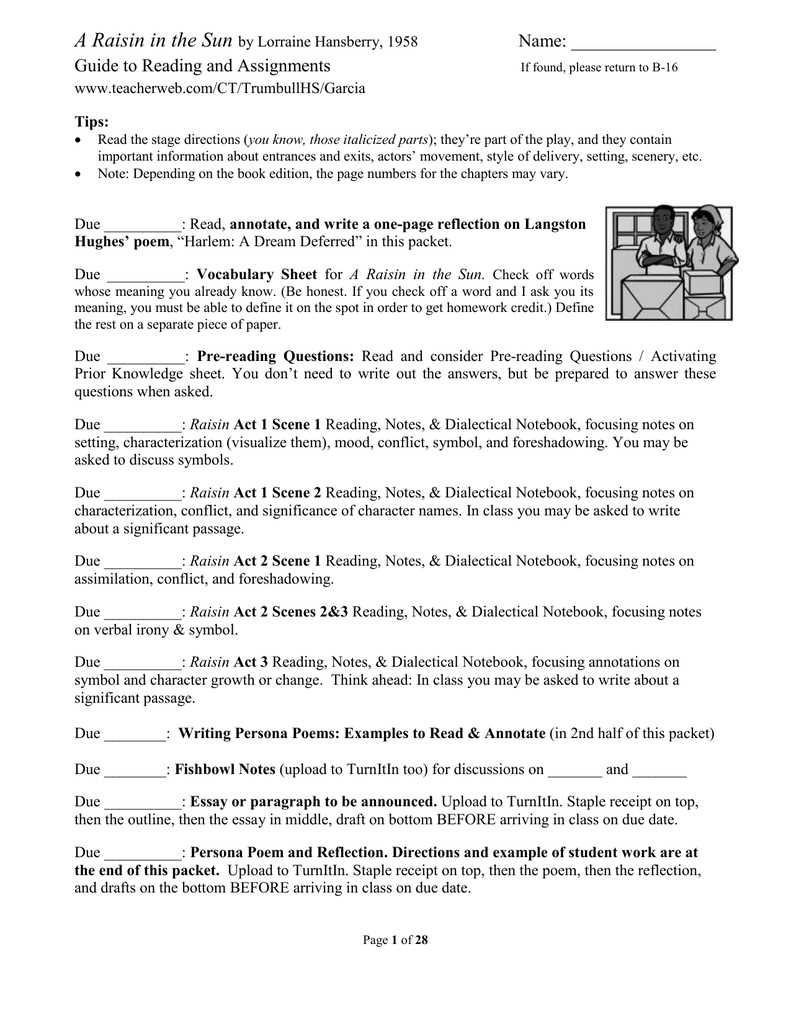
“A Raisin in the Sun” highlights the experiences and struggles of African Americans living in a racially segregated society. The Younger family faces racial discrimination at various levels, such as housing discrimination and social marginalization. The play also emphasizes the importance of racial identity and pride, as shown through the character of Walter Lee Younger.
3. What is the significance of Mama’s plant?
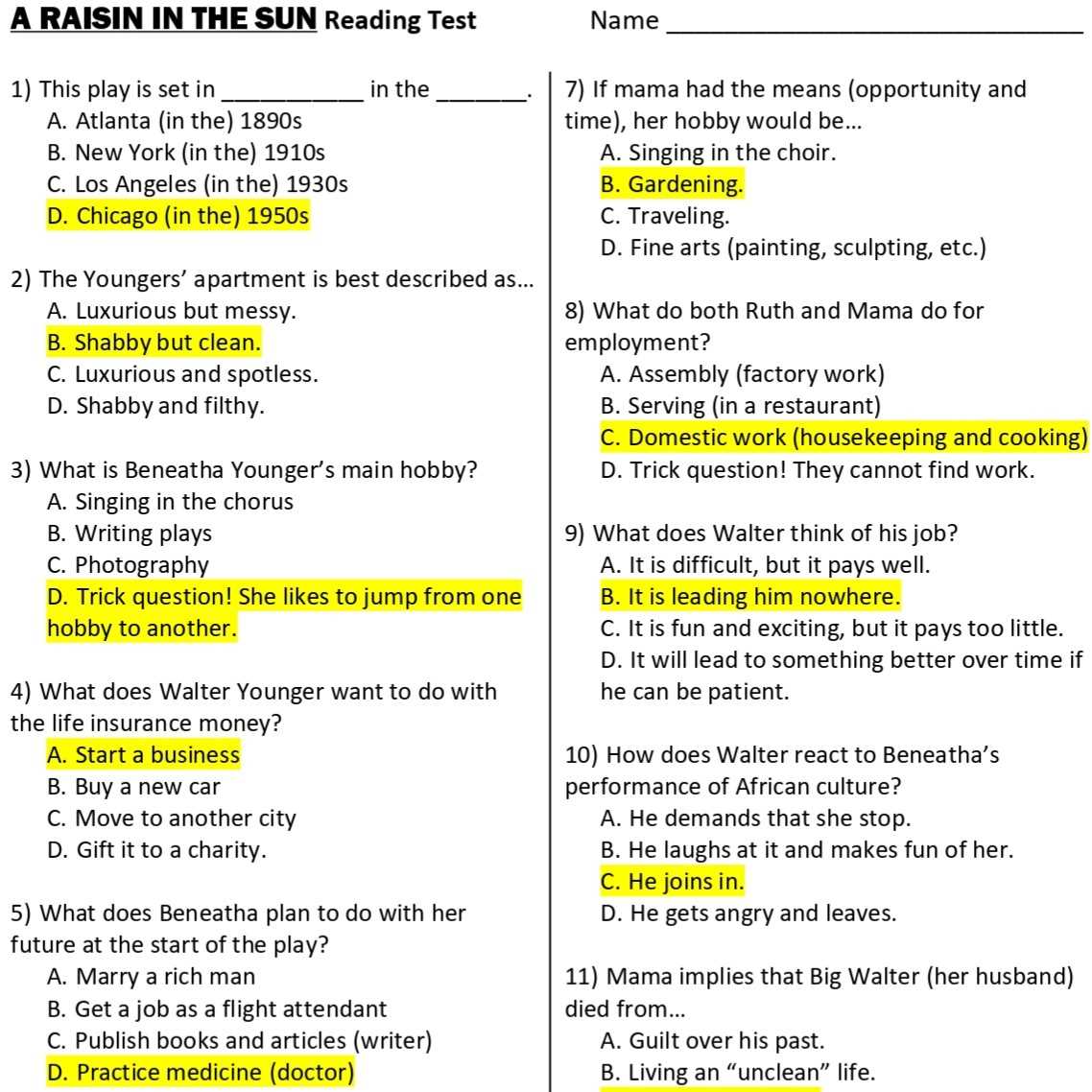
Mama’s plant, a small and struggling raphaela, symbolizes the dreams and hopes of the Younger family. Despite its lack of growth and struggle to survive, Mama nurtures and cares for the plant, just as she does for her family. The plant symbolizes Mama’s unwavering faith in the future and her determination to create a better life for her loved ones.
4. How does the play explore the concept of the American Dream?
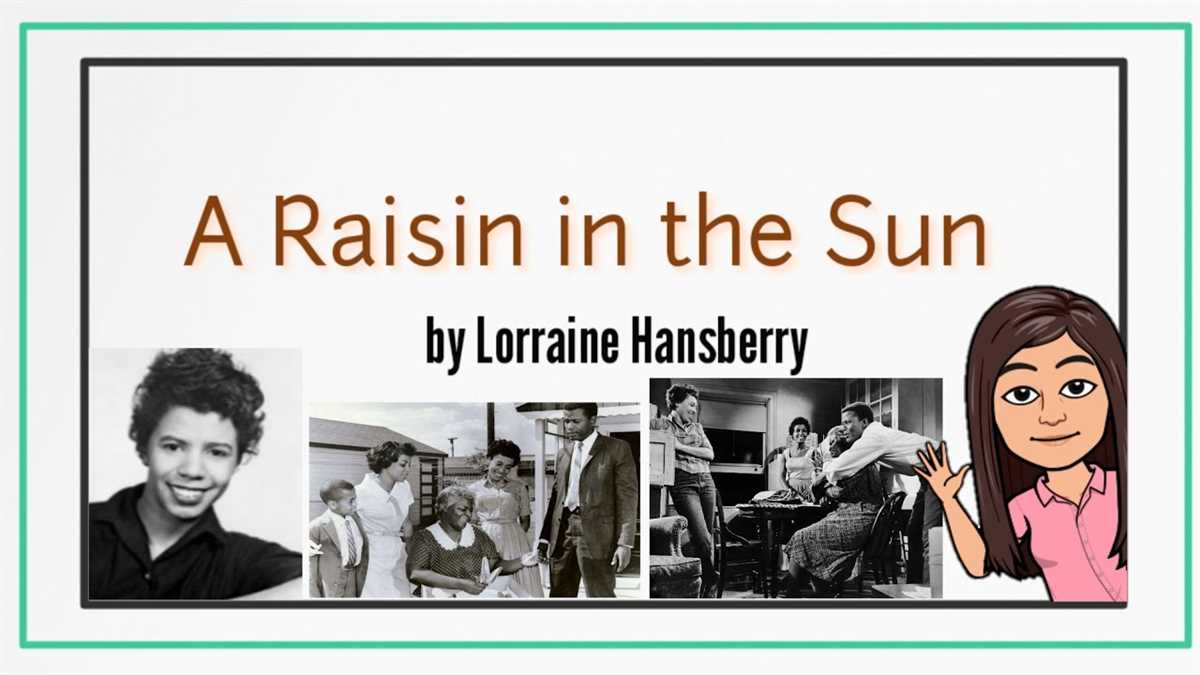
“A Raisin in the Sun” delves into the complexities of the American Dream, highlighting its limitations and challenges for African Americans. Each character in the Younger family has their own interpretation of the American Dream, whether it is achieving financial stability, pursuing personal aspirations, or finding social acceptance. Through their struggles, the play questions the extent to which the American Dream is attainable for marginalized communities.
5. How does the play address the theme of gender roles?
“A Raisin in the Sun” challenges traditional gender roles by depicting strong and independent female characters. Both Mama and Beneatha Younger defy societal expectations and pursue their own ambitions. Mama acts as the matriarch of the family, making important decisions and providing support and guidance. Meanwhile, Beneatha aspires to become a doctor, challenging gender norms and advocating for women’s equality.
This study guide offers insights into the various themes and motifs explored in “A Raisin in the Sun.” By understanding these questions and their answers, readers can develop a deeper appreciation for the play’s significance and relevance in addressing important social issues.
Background and Context
In order to fully appreciate and understand the play “A Raisin in the Sun”, it is important to have a clear understanding of the background and context in which it was written. Written by Lorraine Hansberry, an African-American playwright, the play debuted on Broadway in 1959, making Hansberry the first black woman to have a play produced on Broadway.
The play is set in Chicago’s South Side in the 1950s, a time when racial tensions and discrimination against African-Americans were rampant. The Younger family, the protagonists of the play, lives in a small and cramped apartment, struggling to make ends meet. This setting reflects the socio-economic disparities that many African-American families faced during that time period.
Key themes:
- Racial discrimination and inequality: The play explores the systemic racism and discrimination that African-Americans faced in the 1950s. It highlights the limited opportunities and barriers they encountered in their pursuit of the American Dream.
- The quest for identity and empowerment: Each member of the Younger family grapples with their own aspirations and desires, reflecting the broader struggle of African-Americans to assert their identity and find their place in society.
- The importance of family and community: Despite the challenges they face, the Younger family finds strength and support in their familial bonds and their community. The play emphasizes the importance of unity and solidarity in the face of adversity.
A Raisin in the Sun is a powerful and influential play that explores themes of race, identity, and the pursuit of dreams. Its relevance and impact are still felt today, as it continues to resonate with audiences and provoke discussions about racial inequality and social justice.
Plot Summary
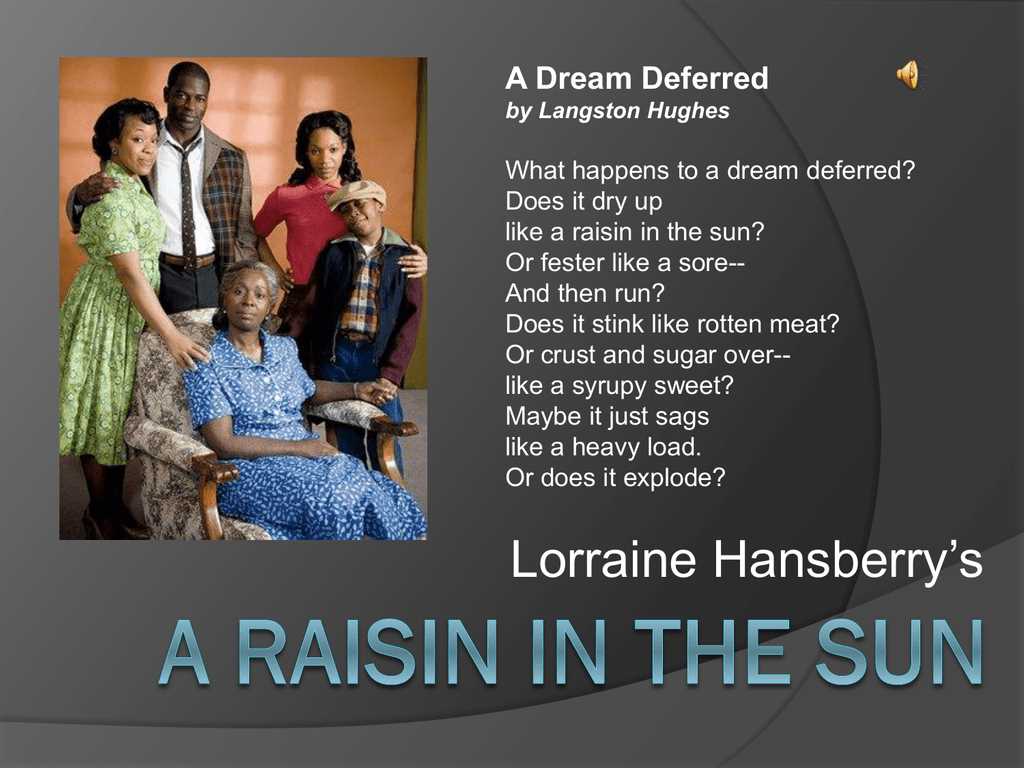
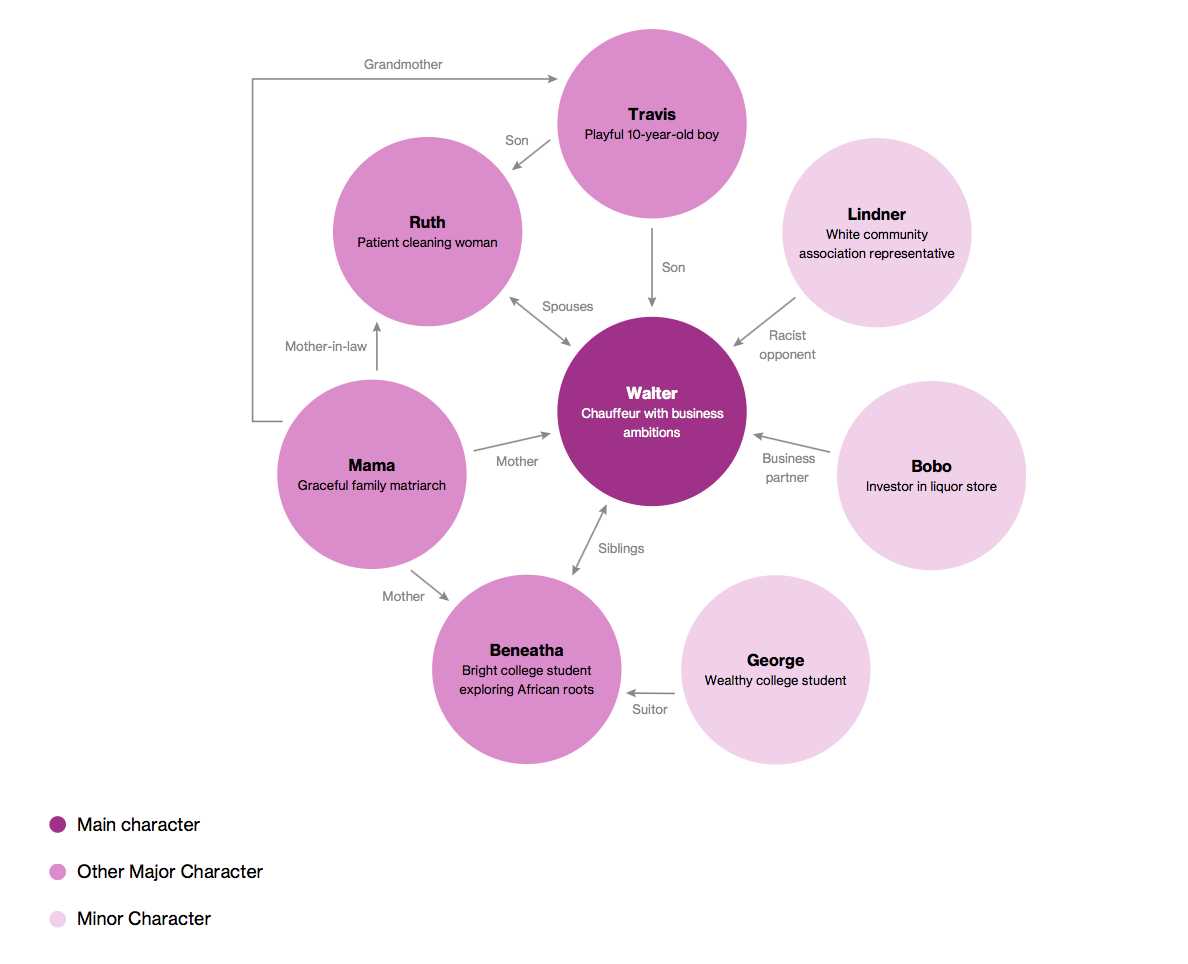
The play “A Raisin in the Sun” is set in the early 1950s in Chicago’s South Side and follows the Younger family, composed of Lena (Mama) Younger, her children Walter Lee and Beneatha, and Walter Lee’s wife Ruth, as they navigate their hopes and dreams in a world filled with racial prejudice and economic struggles.
The story begins with the family waiting for a $10,000 life insurance check following the death of Lena’s husband. Each family member has their own ideas about how the money should be spent. Walter Lee wants to use it to invest in a liquor store, believing it will provide a better future for his family. Beneatha, on the other hand, dreams of becoming a doctor and wants to use the money for her education. However, Lena has her own plans and wants to use the money to buy a house in a white neighborhood.
The conflict between the family members’ desires and dreams unfolds throughout the play. Walter Lee’s desperation to improve his family’s financial situation leads him to make a deal with a man to invest in the liquor store, but the man runs away with the money. This loss pushes Walter Lee to the brink of despair. Meanwhile, Beneatha faces her own challenges as she confronts her African heritage and becomes involved with two suitors, one of whom represents traditional values and the other represents a more progressive mindset.
As the play progresses, Lena decides to use the insurance money to buy a house in the all-white neighborhood of Clybourne Park, despite the hostility and racist threats they may face. This decision symbolizes the family’s determination to overcome racial barriers and find their own place in society. In the end, Walter Lee has a change of heart and, united as a family, they move forward with hope and dreams of a better future.
Character Analysis
The play “A Raisin in the Sun” features a diverse set of characters who each have their own unique qualities and motivations. In this character analysis, we will delve into the inner workings of some of the key characters and explore how their actions and choices contribute to the overall development of the story.
Walter Lee Younger

Walter is the main protagonist of the play and carries the weight of the Younger family’s dreams on his shoulders. He is a complex character who struggles with his identity and finds solace in the idea of achieving financial success. Throughout the play, Walter’s desperation grows as he yearns for a chance to prove his worth and provide a better life for his family. However, his impulsive decisions and misguided actions often have unintended consequences. Despite his flaws, Walter’s character embodies the universal desire for a better life and highlights the importance of hope and perseverance.
Lena Younger (Mama)
Mama is the matriarch of the Younger family and serves as a grounding force throughout the play. She is portrayed as a strong and resilient woman who values family above all else. Mama’s character represents the older generation’s dreams and desires for their children. Her actions and decisions are rooted in tradition and a desire to protect her family. Mama’s unwavering love and determination provide a sense of stability in the midst of the family’s struggles, highlighting the importance of family bonds and heritage.
Beneatha Younger

Beneatha is Walter’s younger sister and an aspiring doctor. She is portrayed as a highly educated and independent woman who challenges traditional gender roles and societal expectations. Beneatha’s character represents a new generation’s desire for individuality and self-fulfillment. She questions the identity and value systems imposed upon her and explores her African heritage. Beneatha’s character highlights the importance of embracing one’s roots and pursuing personal aspirations, even in the face of adversity.
These character analyses offer a glimpse into the multifaceted nature of the characters in “A Raisin in the Sun”. Each character brings their own unique perspective and struggles to the table, contributing to the richness of the story and shedding light on the universal themes of dreams, family, and identity.
Themes and Symbols
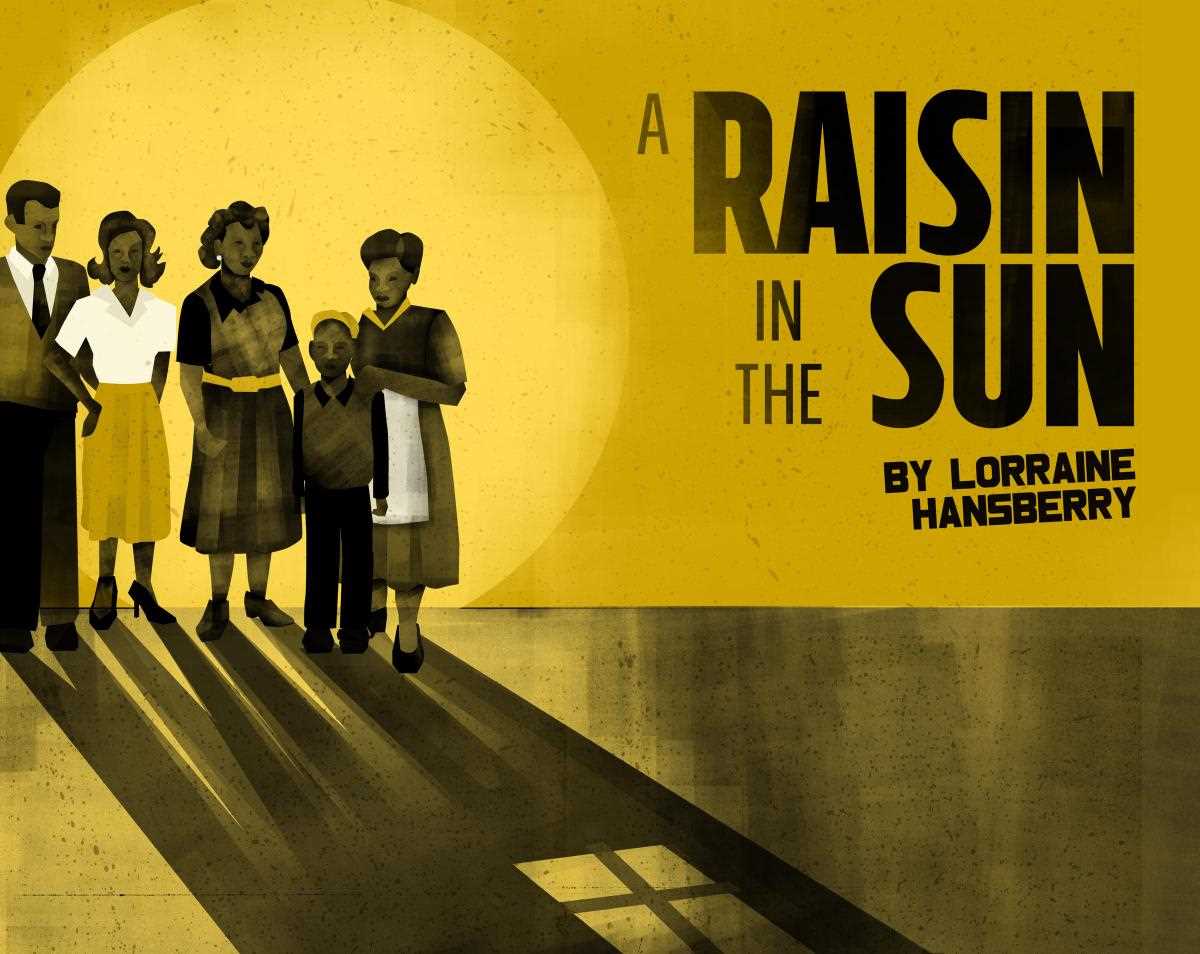
Family
A prominent theme in A Raisin in the Sun is the importance of family. The Younger family is portrayed as a tight-knit unit that faces various challenges and struggles together. The play highlights the power of familial love and support in overcoming adversity. Despite their differences and conflicts, the Youngers ultimately come together as a family to pursue their dreams and create a better future for themselves.
Racial Identity and Discrimination
The play also explores the theme of racial identity and discrimination. The Younger family, as African Americans living in a predominantly white society, faces various forms of discrimination and racism. They are limited in their opportunities and face obstacles in achieving their goals due to the color of their skin. The play sheds light on the harsh realities of racial inequality and the impact it has on individuals and communities.
The American Dream
The American Dream is another important theme in A Raisin in the Sun. Each member of the Younger family has their own dreams and aspirations, representing different aspects of the American Dream. Whether it is owning a house, pursuing education, or finding happiness, the characters strive to achieve their dreams despite the challenges they face. The play explores the limitations and sacrifices one has to make in the pursuit of the American Dream.
Symbols
- The Plant: The plant symbolizes hope and the potential for growth. As the plant struggles to survive in a small, cramped apartment, it mirrors the struggles and aspirations of the Younger family.
- The Insurance Check: The insurance check represents the family’s newfound opportunity and the catalyst for change. It symbolizes the hope for a better life and the opportunity to overcome poverty and discrimination.
- The Raisin in the Sun: The “raisin in the sun” is a metaphor for deferred dreams. It symbolizes the frustrations and challenges faced by the characters as they strive to achieve their dreams in a society that discriminates against them.
Cultural Significance
Cultural significance refers to the impact and importance of a particular piece of literature or work of art within a specific cultural context. In the case of “A Raisin in the Sun,” the play holds immense cultural significance as it addresses and explores key themes and issues that were prevalent in African American society during the 1950s.
One of the primary themes in “A Raisin in the Sun” is racial discrimination and the struggle for equality. The play showcases the challenges and obstacles faced by the Younger family, who are striving to improve their lives in a racially segregated society. Through the characters’ experiences, the play sheds light on the realities of systemic racism and the lengths individuals go to overcome it.
- Another significant theme in the play is the pursuit of the American Dream. The Younger family’s desire to move to a better neighborhood and improve their economic status reflects the aspirations of many African Americans during the time. The play critically examines the limitations and hardships faced by marginalized communities in achieving their dreams, highlighting the socio-economic barriers and inequality they face.
- “A Raisin in the Sun” also explores the complexities of family dynamics and the importance of unity and resilience in the face of adversity. The play portrays the Younger family’s struggles and conflicts as they navigate their differing ambitions and desires. It emphasizes the significance of family bonds and the ways in which they can be a source of strength and support.
In addition to these thematic elements, “A Raisin in the Sun” is considered culturally significant as it was one of the first plays written by an African American playwright to be produced on Broadway. Lorraine Hansberry’s play not only gives a voice to the African American experience, but it also paved the way for future generations of minority playwrights and artists to share their stories and make their mark in the world of theater and literature.
Overall, “A Raisin in the Sun” is a culturally significant play that continues to resonate with audiences today. Its exploration of race, the American Dream, and family dynamics provides valuable insights into the challenges faced by marginalized communities and serves as a reminder of the ongoing need for social progress and equality.
Discussion Questions
Throughout the play, “A Raisin in the Sun,” Lorraine Hansberry explores various themes and social issues that continue to resonate with audiences today. The story follows the Younger family as they navigate the challenges of racism, poverty, dreams, and family dynamics. As you engage with the play, here are some thought-provoking discussion questions to consider:
- 1. How does the play depict the effects of racism on the African American community in the 1950s?
- 2. What role does poverty play in shaping the characters’ choices and dreams?
- 3. How does each character’s individual dream contribute to the overall theme of the play?
- 4. How does the play portray the generational divide between the Younger family members?
- 5. How do the conflicts within the family mirror the struggles faced by African Americans during the civil rights era?
- 6. What significance does the title, “A Raisin in the Sun,” hold for the play?
These discussion questions are meant to spark deeper conversations and reflections on the themes presented in the play. As you delve into the stories and experiences of the characters, consider the historical context and the relevance of the issues raised in “A Raisin in the Sun” to contemporary society.