The Ultimate Guide to Six Sigma Green Belt Exam Questions: Test Your Knowledge and Prepare for Success
If you are planning to take the Six Sigma Green Belt exam, it is important to be well prepared. This certification is highly respected in the quality management field, and passing the exam demonstrates your knowledge and skills in implementing Six Sigma methodologies.
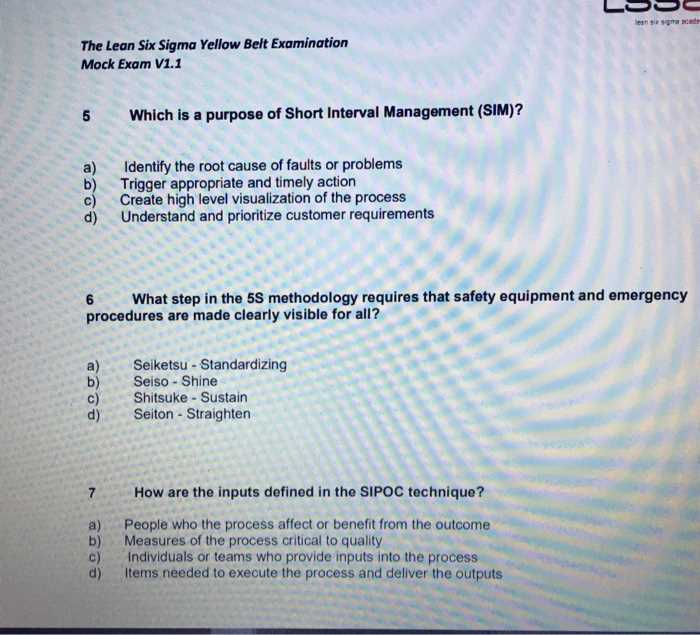
One of the best ways to prepare for the exam is to practice answering sample questions. This will help you familiarize yourself with the format and types of questions that may be asked. In this article, we will provide you with a selection of Six Sigma Green Belt exam questions to help you in your preparation.
These questions cover a wide range of topics, such as statistical analysis, process improvement, project management, and more. By answering these questions and understanding the concepts behind them, you will be better equipped to tackle the actual exam with confidence.
Remember, the Six Sigma Green Belt exam is challenging, and it requires a solid understanding of the Six Sigma principles and methodologies. Practicing sample questions and reviewing the underlying concepts will greatly enhance your chances of success.
So, let’s dive into these Six Sigma Green Belt exam questions and start honing your skills in quality management and process improvement!
Six Sigma Green Belt Exam Questions
The Six Sigma Green Belt exam is a comprehensive assessment that tests an individual’s knowledge and understanding of the Six Sigma methodology. It covers various topics including statistical analysis, process improvement tools, and project management. The exam consists of multiple-choice questions and requires candidates to demonstrate their ability to apply Six Sigma principles to real-world scenarios.
One type of question that may be included in the exam is a problem-solving scenario. Candidates are presented with a specific issue or challenge and are asked to identify the root cause, determine appropriate corrective actions, and evaluate the potential impact of those actions on the process performance. This type of question assesses the candidate’s ability to apply the DMAIC (define, measure, analyze, improve, control) methodology to solve problems and make data-driven decisions.
Another type of question that may be found in the exam is related to statistical analysis. Candidates may be asked to calculate process performance metrics such as process capability, sigma level, or defects per million opportunities (DPMO) based on given data. They may also be asked to interpret statistical charts and graphs, such as control charts or Pareto charts, to identify trends, patterns, or areas for improvement. These questions evaluate the candidate’s proficiency in using statistical tools and techniques to analyze and interpret data.
In addition to problem-solving and statistical analysis questions, the exam may also include questions related to Six Sigma tools and methodologies. For example, candidates may be asked to identify the appropriate tool to use in a given situation, such as a fishbone diagram for root cause analysis or a process map for process documentation. They may also be asked to explain the steps involved in conducting a process capability study or implementing a control plan. These questions assess the candidate’s knowledge and understanding of various Six Sigma tools and techniques and their application in different stages of the DMAIC process.
To succeed in the Six Sigma Green Belt exam, it is essential for candidates to have a solid understanding of the Six Sigma methodology, its tools, and its application in real-world situations. They should be able to analyze and interpret data, identify root causes, and recommend effective solutions for process improvement. By adequately preparing and studying the relevant concepts and topics, candidates can increase their chances of passing the exam and obtaining their Six Sigma Green Belt certification.
What is Six Sigma?
Six Sigma is a data-driven, problem-solving methodology widely used in organizations to improve their processes, reduce defects, and increase overall efficiency. It was developed by Motorola in the 1980s and later popularized by General Electric. The goal of Six Sigma is to eliminate variation and defects in the processes and products of an organization, resulting in improved customer satisfaction and increased profitability.
The term “Six Sigma” refers to a statistical measure of quality that signifies a process is producing only 3.4 defects per million opportunities. By achieving this level of quality, organizations can significantly reduce waste, improve productivity, and gain a competitive advantage in the market.
To achieve Six Sigma, organizations follow a structured and disciplined approach known as DMAIC (Define, Measure, Analyze, Improve, Control). This methodology helps identify the root causes of problems, measure process performance, analyze data, implement improvements, and establish control mechanisms to sustain the improvements over time.
Six Sigma also emphasizes the importance of strong leadership, effective teamwork, and employee involvement. It encourages organizations to develop a culture of continuous improvement and provide training to employees to enhance their problem-solving skills and knowledge of statistical tools.
Overall, Six Sigma is a powerful methodology that enables organizations to achieve higher levels of quality, customer satisfaction, and profitability by systematically identifying and eliminating defects and variations in their processes.
The Importance of Becoming a Six Sigma Green Belt
In today’s competitive business environment, companies are constantly striving to improve their processes and increase their efficiency. One effective way to achieve this is by implementing Six Sigma methodologies. As a result, the demand for Six Sigma professionals, particularly those with Six Sigma Green Belt certification, has been steadily increasing.
Obtaining Six Sigma Green Belt certification can be a significant career boost. It demonstrates your knowledge and skills in using the Six Sigma tools and techniques to identify and eliminate defects in processes. This certification showcases your ability to effectively analyze data, implement process improvements, and drive organizational change.
With Six Sigma Green Belt certification, you can have a direct impact on your company’s bottom line. By reducing process variations and minimizing defects, you can help increase customer satisfaction and loyalty. This can lead to improved product quality, increased productivity, and reduced costs, which ultimately contribute to higher profits.
Becoming a Six Sigma Green Belt also opens up numerous career opportunities. Many companies prioritize hiring and promoting employees with Six Sigma certification, as they see the value in having individuals who can effectively manage process improvement projects. Having this certification on your resume can make you stand out from other candidates and give you a competitive edge in the job market.
In summary, obtaining Six Sigma Green Belt certification is essential for professionals who want to excel in their careers and make a significant impact on their organizations. It not only enhances your knowledge and skills in process improvement but also opens up doors to new and exciting job opportunities. So, if you are looking to advance your career and contribute to your company’s success, becoming a Six Sigma Green Belt is a wise investment.
Preparing for the Six Sigma Green Belt Exam

Preparing for the Six Sigma Green Belt exam requires diligent studying and practice. The exam is designed to test your knowledge and understanding of the Six Sigma methodology, tools, and techniques. By adequately preparing for the exam, you can increase your chances of passing and obtaining your Green Belt certification.
One way to prepare for the exam is to review the key concepts and principles of Six Sigma. Familiarize yourself with the DMAIC (Define, Measure, Analyze, Improve, Control) framework and understand how each phase contributes to the overall goal of process improvement. Additionally, make sure to study the different statistical tools and techniques used in Six Sigma, such as control charts, process capability analysis, and hypothesis testing.
Another essential aspect of exam preparation is practicing with sample questions. There are numerous resources available online that provide Six Sigma Green Belt exam questions and practice tests. These questions will help you understand the types of questions that may be asked on the actual exam and allow you to gauge your knowledge and identify any areas requiring additional study.
Furthermore, consider joining a study group or enrolling in a Six Sigma training program to enhance your preparation efforts. Collaborating with others who are also preparing for the exam can provide additional insights and support. Additionally, structured training programs can offer in-depth lessons and exercises that align with the exam content.
Lastly, create a study plan and dedicate regular time to review and practice. Break down the exam content into manageable sections and allocate specific study periods for each topic. Consistency and discipline in your study routine will help solidify your understanding and improve your chances of success on the Six Sigma Green Belt exam.
Sample Questions for the Six Sigma Green Belt Exam
Six Sigma is a methodology aimed at improving the quality and efficiency of business processes. To become certified as a Six Sigma Green Belt, individuals must pass an exam that assesses their knowledge and understanding of the principles and tools used in Six Sigma projects.
Below are some sample questions that can help you prepare for the Six Sigma Green Belt exam:
- Question 1: What is the purpose of a process map in the Define phase of a Six Sigma project?
- Question 2: How can statistical process control (SPC) be used to monitor and control process performance?
- Question 3: What is the difference between a Type I error and a Type II error in hypothesis testing?
- Question 4: Explain the concept of variation and its importance in Six Sigma.
- Question 5: How can a cause-and-effect diagram be used to identify potential root causes of a problem?
These questions are just a small sample of the topics covered in the Six Sigma Green Belt exam. It is important to study and understand the various tools, methodologies, and concepts used in Six Sigma projects to successfully pass the exam and demonstrate your knowledge and skills in process improvement.
Remember to review and practice answering different types of questions, as well as familiarize yourself with the Six Sigma DMAIC (Define, Measure, Analyze, Improve, Control) methodology, as it is the structured approach used in Six Sigma projects.
Tips for Passing the Six Sigma Green Belt Exam
The Six Sigma Green Belt exam is a challenging test that assesses your knowledge and understanding of the Six Sigma methodology. To increase your chances of passing the exam, it is important to prepare effectively. Here are some tips to help you succeed:
- Understand the Six Sigma concepts: Familiarize yourself with the key principles and methodologies of Six Sigma, such as DMAIC (Define, Measure, Analyze, Improve, Control), process mapping, statistical analysis, and problem-solving techniques. Ensure you have a deep understanding of each concept.
- Study the exam content: Review the exam syllabus and understand the topics that will be covered. Pay close attention to areas where you feel less confident and allocate more time to studying those topics.
- Utilize study materials: There are numerous study materials available, such as textbooks, online courses, and practice exams. Make use of these resources to reinforce your understanding of the concepts and identify areas where you need further improvement.
- Practice problem-solving: The exam will likely include questions that test your ability to apply Six Sigma tools and techniques to real-life scenarios. Practice solving problems using the DMAIC approach and familiarize yourself with the commonly used statistical tools, such as control charts and regression analysis.
- Work on time management: The exam is timed, and you need to answer a certain number of questions within a specified timeframe. Practice taking timed quizzes to improve your speed and accuracy in answering. Additionally, learn to manage your time effectively during the exam by allocating sufficient time for each question and not getting stuck on difficult ones.
- Review past exam questions: Familiarize yourself with the types of questions that have been asked in previous exams. Use these questions as practice and try to understand the underlying concepts being tested. This will give you a better idea of what to expect in the actual exam.
By following these tips and putting in the necessary effort and practice, you can increase your chances of passing the Six Sigma Green Belt exam. Remember to stay focused, manage your time well, and approach each question methodically and confidently.
Benefits of Obtaining the Six Sigma Green Belt Certification

The Six Sigma Green Belt certification is a valuable qualification that demonstrates a professional’s expertise in process improvement methodologies. This certification is highly recognized in various industries and organizations around the world. There are several benefits to obtaining the Six Sigma Green Belt certification, including:
- Enhanced Career Opportunities: The Six Sigma Green Belt certification can significantly improve your career prospects. It showcases your knowledge and skills in process improvement and quality management, making you a valuable asset to any organization.
- Increased Employability: With the growing demand for professionals with Six Sigma skills, having the Green Belt certification can set you apart from other candidates in the job market. Employers often prefer individuals who have proven their ability to drive process improvement and deliver tangible results.
- Improved Salary Potential: A Six Sigma Green Belt certification can lead to higher earning potential. Professionals with this certification often command higher salaries due to their specialized knowledge and ability to contribute to organizational success.
- Enhanced Skills and Knowledge: The Six Sigma Green Belt certification provides in-depth training in various process improvement methodologies, tools, and techniques. It equips you with the skills and knowledge needed to identify and eliminate defects, reduce process variations, and improve overall operational efficiency.
- Effective Problem-Solving: The Six Sigma Green Belt certification teaches you how to approach problem-solving in a systematic and data-driven manner. You will learn how to analyze process data, identify root causes of problems, and implement effective solutions to achieve measurable results.
Earning a Six Sigma Green Belt certification is an investment in your professional development and can open doors to exciting career opportunities. Whether you work in manufacturing, healthcare, finance, or any other industry, this certification can help you become a valuable asset in driving continuous improvement and organizational success.