Mastering Algebra 1 Chapter 7: Your Complete Guide to Review Answers
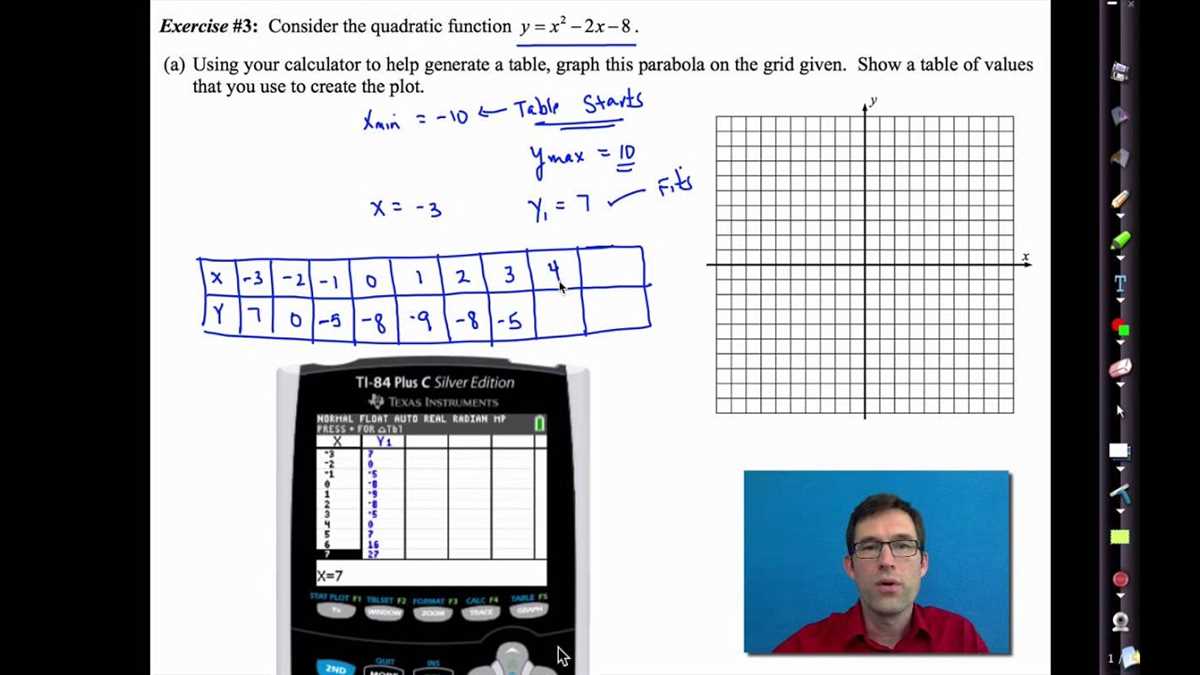
Algebra 1 is a fundamental math course that introduces students to various concepts and skills necessary for higher-level math courses. Chapter 7 of the Algebra 1 curriculum focuses on linear equations and inequalities. In this chapter, students learn how to solve and graph linear equations, as well as how to solve and graph linear inequalities.
The chapter begins with an introduction to the slope-intercept form of a linear equation, which is y = mx + b, where “m” represents the slope and “b” represents the y-intercept. Students are taught how to find the slope and y-intercept of a given equation, as well as how to graph the equation using these values.
Next, students learn how to solve systems of linear equations using the substitution and elimination methods. They are given examples and step-by-step instructions on how to solve these systems, and are encouraged to practice these methods on their own.
Finally, the chapter covers linear inequalities and how to solve them. Students learn how to graph inequalities on a number line and how to find the solution set for a given inequality. They also learn about compound inequalities and how to solve them using the intersection or union of two inequalities.
Algebra 1 Chapter 7 Review Answers
Chapter 7 of Algebra 1 covers various topics, including solving linear equations and inequalities, graphing linear equations, and systems of linear equations. The review at the end of the chapter provides an opportunity for students to test their understanding of these concepts.
Here are the answers to the review questions:
- Question 1: Solve the equation 2x + 5 = 13.
- Answer 1: To solve the equation, we need to isolate the variable. Subtracting 5 from both sides gives us 2x = 8. Dividing both sides by 2, we find that x = 4.
- Question 2: Graph the equation y = 2x – 3.
- Answer 2: To graph the equation, we can plot a few points and draw a line through them. For example, when x = 0, y = -3. When x = 1, y = -1. Connect these points to get the line.
- Question 3: Solve the inequality 3x + 7 < 22.
- Answer 3: To solve the inequality, we need to isolate the variable. Subtracting 7 from both sides gives us 3x < 15. Dividing both sides by 3, we find that x < 5.
- Question 4: Solve the system of equations:
- Answer 4: There are multiple ways to solve the system of equations. One method is to use substitution. Solving Equation 1 for y, we get y = 9 – x. Substituting this into Equation 2, we have 2x – (9 – x) = 4. Simplifying, we find that x = 2. Plugging this back into Equation 1, we determine that y = 7. Therefore, the solution to the system of equations is x = 2 and y = 7.
| Equation 1 | Equation 2 |
|---|---|
| x + y = 9 | 2x – y = 4 |
These are just a few examples of the answers you may encounter in Algebra 1 Chapter 7 Review. It’s important to practice these concepts regularly to reinforce your understanding and improve your problem-solving skills.
The Importance of Reviewing Algebra 1 Chapter 7
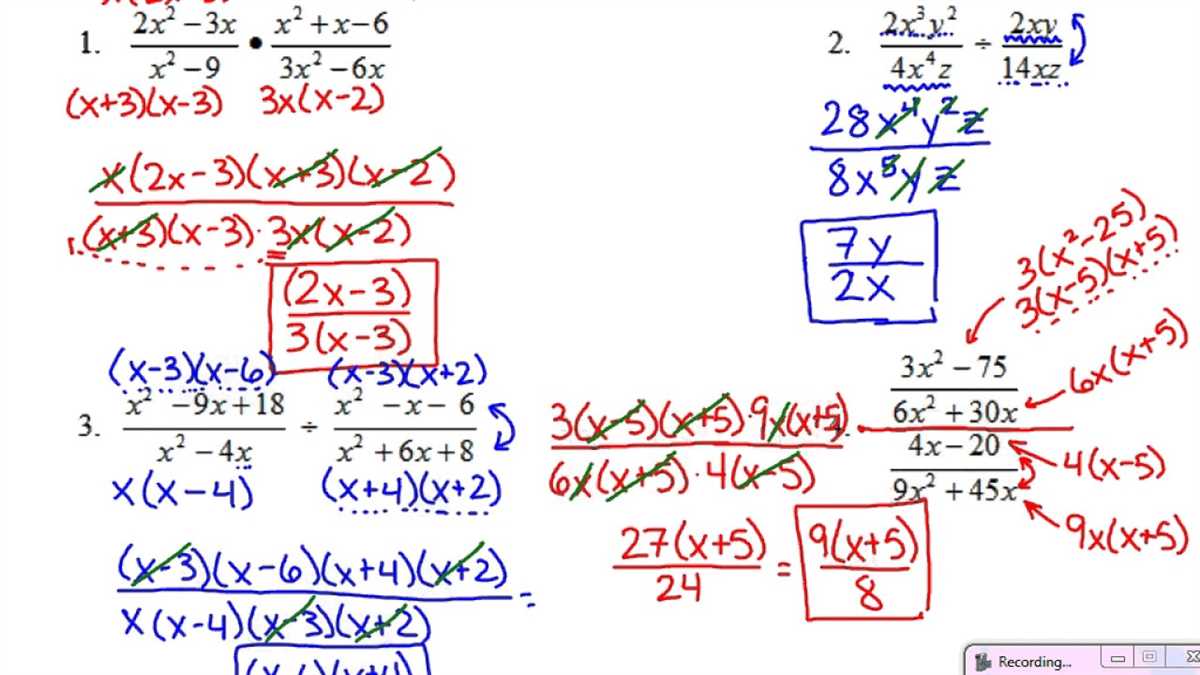
Chapter 7 of Algebra 1 covers important concepts in algebra, including solving systems of linear equations and inequalities. It is crucial to review this chapter before moving on to subsequent topics because a strong foundation in these concepts is necessary for success in higher-level math courses.
One of the key reasons why reviewing Chapter 7 is important is that it helps reinforce the fundamental skills needed to solve systems of equations and inequalities. These skills include graphing, substitution, and elimination methods. By revisiting these concepts, students can solidify their understanding and build confidence in their ability to solve complex mathematical problems.
Another benefit of reviewing Chapter 7 is that it allows students to identify and address any areas of weakness. Understanding systems of equations and inequalities is crucial for many real-world applications, such as analyzing data or solving optimization problems. By reviewing this chapter, students can pinpoint any gaps in their knowledge and work towards strengthening those specific areas.
Additionally, reviewing Chapter 7 enables students to establish connections between different algebraic concepts. For example, the concepts covered in this chapter lay the foundation for future topics, such as matrix algebra or linear programming. By reviewing and understanding Chapter 7, students can better grasp these advanced concepts when they are introduced.
In conclusion, reviewing Algebra 1 Chapter 7 is essential for mastering the concepts of solving systems of equations and inequalities. It reinforces fundamental skills, helps identify areas of weakness, and establishes connections with future topics. By dedicating time to review this chapter, students can solidify their understanding and set themselves up for success in subsequent math courses.
Understanding the Key Concepts in Algebra 1 Chapter 7

In Algebra 1 Chapter 7, students will delve into a variety of key concepts that build upon their previous knowledge and skills. This chapter focuses on how to simplify expressions, solve equations and inequalities, and work with functions and their properties.
Simplifying Expressions: An important skill in algebra is simplifying expressions by combining like terms and applying the rules of arithmetic. This chapter covers topics such as distributing, factoring, and expanding expressions to help students simplify complex equations.
Solving Equations and Inequalities: Another fundamental skill in algebra is solving equations and inequalities. In this chapter, students will learn different techniques for solving linear and quadratic equations, as well as absolute value and literal equations. They will also explore how to solve and graph linear and quadratic inequalities.
Functions and their Properties: Understanding functions is crucial in algebra. Chapter 7 introduces students to the concept of a function, including domain and range, graphing functions, and identifying key features such as intercepts and symmetry. Students will also learn about the Algebraic method of solving systems of linear equations.
Overall, Algebra 1 Chapter 7 provides students with a solid foundation in simplifying expressions, solving equations and inequalities, and working with functions. These key concepts are essential for success in higher level math courses and applications in real-world problem-solving.
Exploring the Practice Problems in Algebra 1 Chapter 7
In Algebra 1 Chapter 7, students are introduced to various practice problems that help them reinforce their understanding of important algebraic concepts and techniques. These problems cover a wide range of topics including solving equations, factoring, graphing, and systems of linear equations.
Solving Equations: One of the main focuses of Chapter 7 is solving equations. Students are presented with different types of equations, such as one-step, two-step, and multi-step equations, and are given opportunities to practice solving them. By applying inverse operations and simplifying expressions, they learn how to find the solutions to these equations.
Factoring: Another important skill covered in this chapter is factoring. Students learn how to factor different types of polynomials, including binomials and trinomials. They practice using factoring to simplify expressions and solve equations by setting the factored expressions equal to zero and finding the values of the variables.
Graphing: Chapter 7 also introduces students to graphing linear equations. They learn how to plot points and draw lines on a coordinate plane. By understanding the relationship between equations and their graphs, students are able to interpret and analyze the solutions to these equations visually.
Systems of Linear Equations: Lastly, students are introduced to systems of linear equations. They learn how to solve systems of equations using different methods, such as substitution and elimination. By applying these techniques, students can find the points of intersection, or the solutions, of these systems.
Overall, the practice problems in Algebra 1 Chapter 7 provide students with the opportunity to strengthen their algebraic skills and build a solid foundation for more advanced topics in algebra. By working through these problems, students can improve their problem-solving abilities and gain confidence in their ability to solve a variety of algebraic equations and problems.
Solving Equations and Inequalities in Algebra 1 Chapter 7
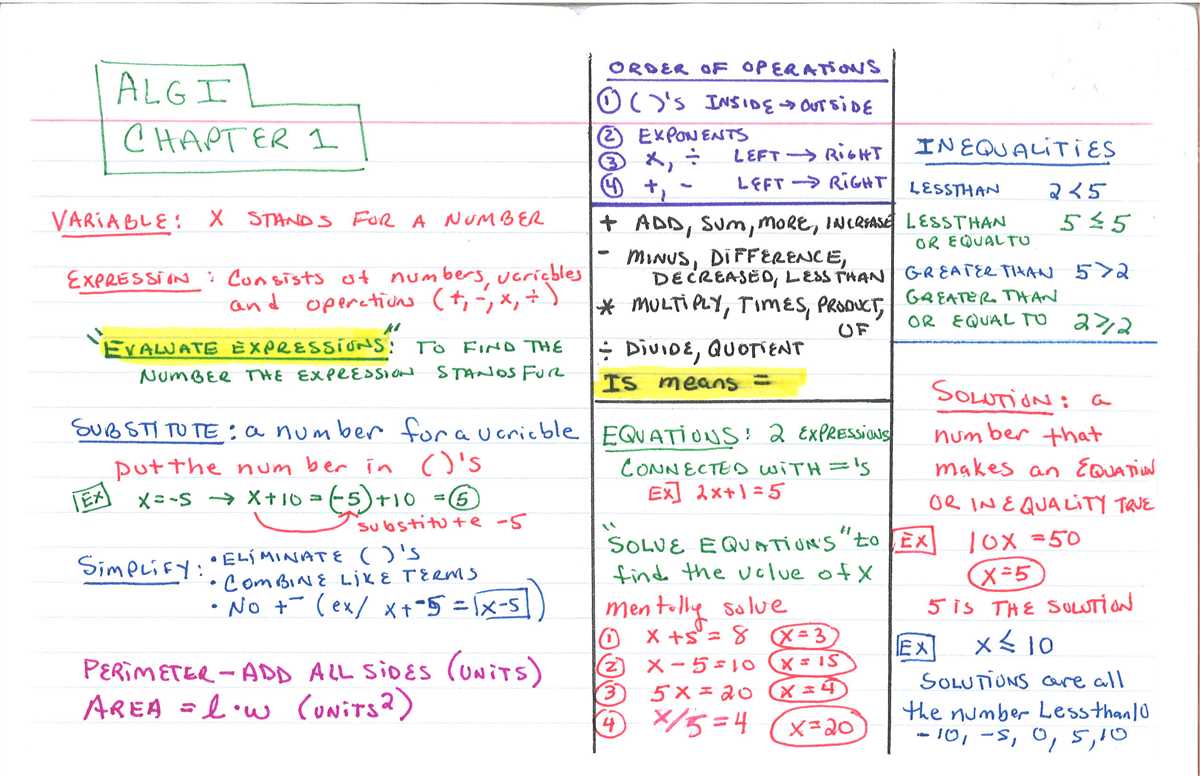
In Chapter 7 of Algebra 1, students will learn how to solve equations and inequalities. This chapter focuses on understanding the basic concepts of equations and inequalities and developing the skills to solve them. Students will learn about different types of equations, including one-step, two-step, multi-step, and literal equations.
One of the key topics covered in Chapter 7 is solving linear equations. Students will learn how to use properties of equality to solve equations and solve equations with variables on both sides. They will also learn how to solve equations with fractions and decimals, as well as how to solve word problems using equations.
Another important topic covered in this chapter is solving inequalities. Students will learn how to graph and solve one-step and two-step inequalities, as well as how to solve compound inequalities and absolute value inequalities. They will also learn how to solve systems of linear inequalities.
- Types of equations covered in this chapter include: one-step, two-step, multi-step, and literal equations.
- Students will learn how to solve linear equations using properties of equality and variables on both sides.
- Inequalities covered in this chapter include: one-step, two-step, compound, and absolute value inequalities.
- Students will also learn how to solve systems of linear inequalities.
This chapter provides students with the foundational skills needed to solve equations and inequalities, which are essential for success in higher-level math courses. By the end of Chapter 7, students should be comfortable solving a variety of equations and inequalities, including word problems, and be able to apply these skills to real-world situations.
Applying Algebra 1 Chapter 7 to Real-World Scenarios
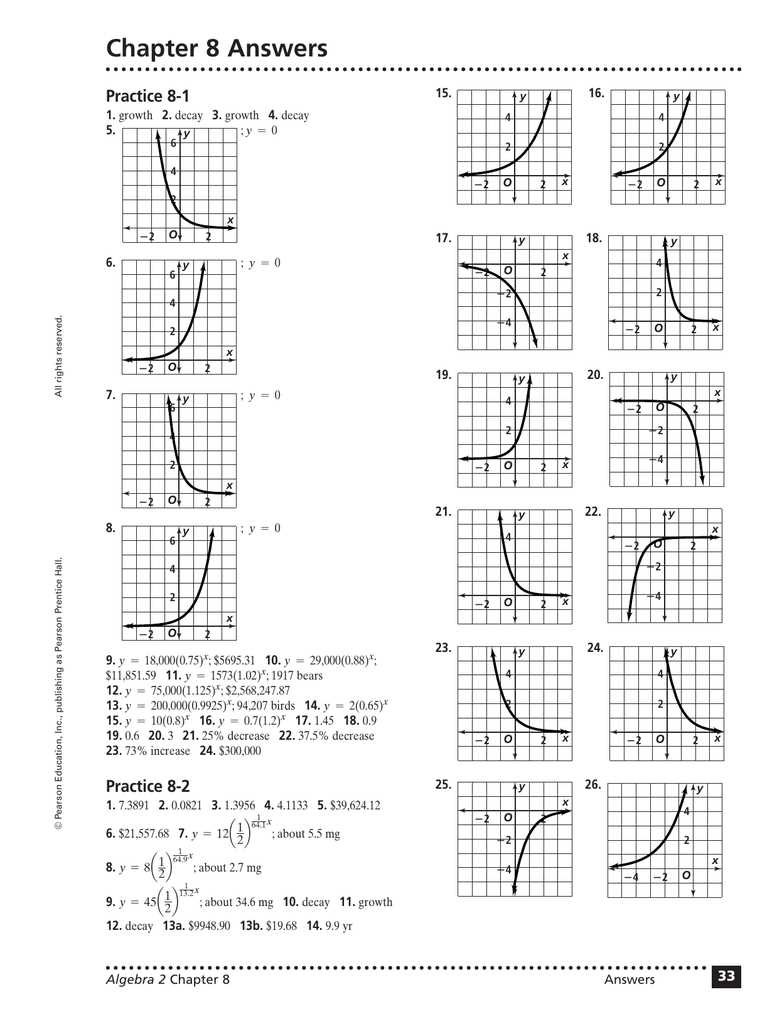
Chapter 7 of Algebra 1 introduces students to various concepts and techniques that can be applied to solve real-world problems. By understanding and mastering these concepts, students gain the ability to analyze and solve mathematical problems in practical situations.
One of the key topics covered in Chapter 7 is linear equations and inequalities. Students learn how to represent real-life situations using equations and inequalities, and then solve these equations to find the unknown values. For example, they may learn how to use linear equations to calculate the cost of a shopping trip or determine the time it would take to travel a certain distance.
Another important concept covered in this chapter is systems of linear equations. Students learn how to solve systems of equations to find the values of multiple variables. This can be useful in real-world scenarios where multiple unknowns need to be determined, such as determining the number of adults and children attending an event based on the total number of tickets sold.
Furthermore, students learn about quadratic equations and how to solve them. Quadratic equations can be used to model various real-world scenarios, such as calculating the trajectory of a projectile or determining the profit or loss of a business based on different factors. By understanding quadratic equations, students can analyze and make predictions about real-life situations.
Overall, Chapter 7 of Algebra 1 equips students with the necessary mathematical skills to tackle real-world problems. By applying the concepts learned in this chapter, students can analyze, solve, and make predictions about various practical situations, allowing them to make informed decisions and navigate the complexities of the real world.
Identifying Mistakes and Avoiding Common Errors in Algebra 1 Chapter 7
In Algebra 1 Chapter 7, students delve deeper into the world of polynomials, exploring topics such as factoring, solving quadratic equations, and working with exponential functions. While this chapter can be challenging, it is also a crucial foundation for higher-level math courses. To succeed in mastering this material, it is essential to be able to identify common mistakes and develop strategies to avoid them.
1. Misunderstanding the Distributive Property: One of the most common mistakes students make in Chapter 7 is misunderstanding and misapplying the distributive property. This often leads to errors when factoring or simplifying expressions. To avoid this mistake, it is crucial to clearly understand the concept of distributing and practice applying it correctly.
2. Forgetting to Check Solutions: Another common error is failing to check solutions to equations or inequalities. It is essential to verify that the values obtained actually satisfy the original equation or inequality. This step helps to catch any potential mistakes made during the solving process and ensures the accuracy of the final solution.
3. Mixing Up Sign Rules: In algebraic expressions, it is easy to mix up the sign rules when multiplying or dividing terms. For example, applying the incorrect sign rule when combining like terms can lead to errors in simplification. Developing a clear understanding of the sign rules and practicing their application will help avoid this mistake.
4. Relying Too Much on Memorization: Algebra often requires applying logical thinking and problem-solving skills rather than relying solely on memorization. Many students make the mistake of trying to memorize procedures and formulas without truly understanding the underlying concepts. It is crucial to focus on understanding the why behind each step and practice applying concepts in different scenarios.
5. Rushing Through Problems: Lastly, rushing through problems can lead to careless mistakes in Chapter 7. This chapter involves several complex concepts and calculations that require attention to detail. Taking the time to read and understand the problem carefully, double-checking calculations, and showing all steps of the solution process will help minimize errors.
By being aware of these common mistakes and actively working to avoid them, students can enhance their understanding and success in Algebra 1 Chapter 7. Practicing diligently, seeking clarification when needed, and developing problem-solving strategies will contribute to a solid foundation in algebraic reasoning.