Unleashing the Secrets of the Pythagorean Theorem: A Mind-bending Test

The Pythagorean theorem is one of the fundamental principles in mathematics. It states that in a right-angled triangle, the square of the hypotenuse is equal to the sum of the squares of the other two sides. This theorem, named after the ancient Greek mathematician Pythagoras, has countless practical applications in various fields.
One of the most common ways to test the understanding and application of the Pythagorean theorem is through a Pythagorean theorem test. This test usually consists of multiple-choice or problem-solving questions that require students to find the missing side lengths or angles in a right-angled triangle.
By taking a Pythagorean theorem test, students can evaluate their understanding of the theorem and their ability to apply it in different situations. It helps them to identify any gaps in their knowledge and areas that need improvement. Additionally, these tests can also serve as a tool for teachers to assess the effectiveness of their instruction and identify areas where students may need additional support.
Pythagorean theorem: definition and formula

The Pythagorean theorem is a fundamental principle in geometry that relates to right triangles. It states that in any right triangle, the square of the length of the hypotenuse is equal to the sum of the squares of the lengths of the other two sides.
The formula for the Pythagorean theorem is as follows:
c2 = a2 + b2
Here, c represents the length of the hypotenuse, and a and b represent the lengths of the other two sides of the right triangle.
This theorem is named after the ancient Greek mathematician Pythagoras, who is credited with discovering and proving it. The Pythagorean theorem has numerous applications in various fields, including architecture, engineering, and physics.
By using the Pythagorean theorem, one can determine the length of an unknown side of a right triangle when the lengths of the other two sides are known. It is a powerful tool for solving geometric problems and is widely used in practical applications.
In addition to its practical applications, the Pythagorean theorem also has a rich mathematical history and is a topic of study in mathematics education. It is often introduced to students in middle or high school as one of the fundamental concepts in geometry.
What is the Pythagorean Theorem?
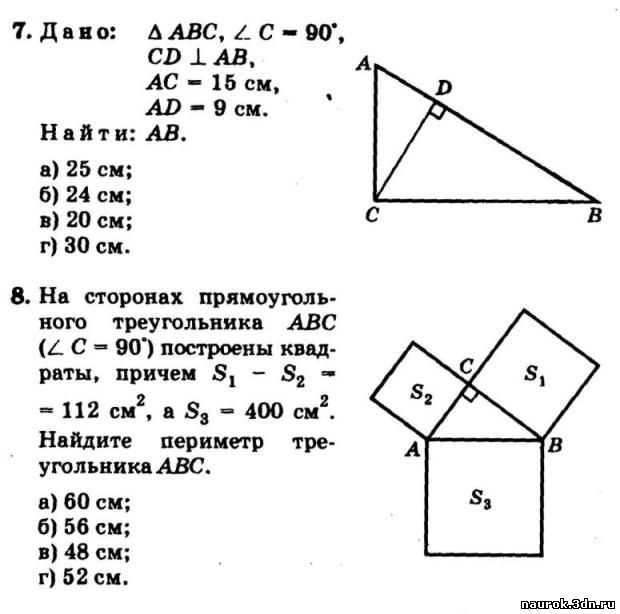
The Pythagorean theorem is a fundamental concept in mathematics that relates to right triangles. It states that in a right triangle, the square of the length of the hypotenuse (the side opposite the right angle) is equal to the sum of the squares of the lengths of the other two sides. This theorem is named after the ancient Greek mathematician Pythagoras, who is credited with its discovery.
The Pythagorean theorem can be expressed mathematically as follows: if a and b are the lengths of the legs of a right triangle, and c is the length of the hypotenuse, then a^2 + b^2 = c^2. This theorem provides a useful tool for solving problems involving right triangles, such as finding missing side lengths or determining whether a triangle is a right triangle.
The Pythagorean theorem has widespread applications in various fields, including engineering, architecture, physics, and navigation. It can be used to calculate distances, determine angles, and solve complex geometric problems. The theorem forms the basis for trigonometry and is an essential concept in advanced mathematical studies.
- The theorem is often represented using the formula: a^2 + b^2 = c^2
- It is applicable only to right triangles.
- The theorem has been known for more than 2,500 years and is one of the oldest mathematical principles.
- Pythagoras, the ancient Greek mathematician, is commonly associated with the discovery of this theorem.
Understanding the formula
The Pythagorean theorem is a fundamental concept in geometry that relates to right triangles. It states that in a right triangle, the square of the length of the hypotenuse (the side opposite the right angle) is equal to the sum of the squares of the lengths of the other two sides. The formula for the theorem is written as:
a^2 + b^2 = c^2
Here, ‘a’ and ‘b’ represent the lengths of the two legs of the triangle, while ‘c’ represents the length of the hypotenuse.
The Pythagorean theorem is based on the concept of the Pythagorean triple, which is a set of three positive integers that satisfy the equation a^2 + b^2 = c^2. The most well-known example of a Pythagorean triple is the set {3, 4, 5}, where 3^2 + 4^2 = 5^2.
This theorem has various applications in real-life situations. For example, it can be used to calculate distances in navigation and surveying, determine the length of a diagonal in a rectangular shape, or solve problems involving triangles and right angles.
Understanding the Pythagorean theorem and knowing how to apply it can be extremely useful in many fields, including mathematics, engineering, and physics. It provides a foundational understanding of the relationships between the sides of right triangles and allows for the calculation of unknown lengths or angles.
Applying the Pythagorean theorem
The Pythagorean theorem is a fundamental concept in geometry that relates to right-angled triangles. It states that in a right triangle, the square of the hypotenuse (the side opposite the right angle) is equal to the sum of the squares of the other two sides. This theorem is useful in solving various problems related to triangles, such as finding the missing length of a side or determining if a triangle is a right triangle.
One practical application of the Pythagorean theorem is in construction and architecture. For example, if you want to build a fence around a rectangular backyard and you know the width and length of the yard, you can use the theorem to calculate the diagonal length of the yard. This information is useful in determining the amount of fencing material needed. Architects and engineers also use the Pythagorean theorem when designing buildings and structures to ensure that the dimensions are accurate and that everything fits together seamlessly.
Another application of the Pythagorean theorem is in navigation and distance calculations. For instance, if you are given the coordinates of two points on a grid, you can use the theorem to find the distance between them. This is particularly useful in GPS systems, as it allows for accurate measurement of distances between locations.
Furthermore, the Pythagorean theorem is often used in physics and engineering when working with vectors. Vectors are quantities that have both magnitude and direction. By using the theorem, you can calculate the magnitude of a vector by finding the length of its components along the different axes. This allows engineers to analyze forces, motion, and other physical phenomena in various systems.
In conclusion, the Pythagorean theorem has wide-ranging applications in various fields, from construction and navigation to physics and engineering. Its simplicity and versatility make it an essential tool for solving problems involving right triangles and for understanding the relationships between their sides. Understanding and applying this theorem can improve problem-solving skills and provide valuable insight into the world of mathematics and its practical uses.
Solving for the hypotenuse
The Pythagorean theorem allows us to find the length of the hypotenuse in a right triangle when we know the lengths of the other two sides. The theorem states that in a right triangle, the sum of the squares of the lengths of the two shorter sides is equal to the square of the length of the hypotenuse.
To solve for the hypotenuse, we can use the formula c = √(a^2 + b^2), where c represents the length of the hypotenuse, and a and b represent the lengths of the other two sides. This formula is derived from the Pythagorean theorem.
Let’s take an example to understand how to solve for the hypotenuse using the Pythagorean theorem. Suppose we have a right triangle with side lengths a = 3 units and b = 4 units. We can use the formula mentioned earlier to find the length of the hypotenuse.
- First, we calculate a^2 = 3^2 = 9 and b^2 = 4^2 = 16.
- Next, we add a^2 and b^2: 9 + 16 = 25.
- Finally, we take the square root of 25 to find the length of the hypotenuse: c = √25 = 5 units.
Therefore, in this example, the length of the hypotenuse is 5 units.
Solving for a leg
The Pythagorean theorem is a useful tool for solving problems involving right triangles. One common application is finding the length of a missing leg in a right triangle when the lengths of the other leg and the hypotenuse are known.
To solve for a leg using the Pythagorean theorem, we can follow these steps:
- Identify the known lengths: In the given right triangle, determine which side lengths are known. The known lengths are typically labeled as the legs (a and b) or the hypotenuse (c).
- Assign variables: Let’s assume that the unknown length is represented by the variable x.
- Apply the Pythagorean theorem: Substitute the known lengths into the Pythagorean theorem equation, a^2 + b^2 = c^2, and solve for x.
- Take the square root: Once you have the value of x squared, take its square root to find the length of the missing leg.
It is important to note that the Pythagorean theorem only applies to right triangles. If the given triangle is not a right triangle, this method cannot be used to solve for a leg.
By following these steps and applying the Pythagorean theorem, you can confidently solve for a missing leg in a right triangle.