Understanding the Declaration of Independence Grievances: Uncovering Answers through Historian-like Reading

When studying history, it is important to not just memorize dates and events, but to critically analyze primary sources and understand the perspectives of those who lived through them. One such primary source that holds immense significance in American history is the Declaration of Independence. This document, penned by Thomas Jefferson in 1776, outlined the grievances of the American colonists against British rule and ultimately led to the American Revolution.
In order to better understand the Declaration of Independence and its grievances, historians have employed a method called “Reading like a Historian.” This approach emphasizes analyzing primary sources and looking for evidence to support claims. By examining the grievances listed in the text and the historical context surrounding them, historians can gain a deeper understanding of the motivations and frustrations of the colonists living in America at the time.
One common question that arises when reading the Declaration of Independence is: How valid were these grievances? Were they merely exaggerated claims made to justify a revolution, or were they legitimate concerns of the colonists? By delving into the historical context and examining the evidence provided by the colonists themselves, historians can begin to answer these questions and gain a more nuanced understanding of the motivations behind the document.
Overall, the practice of “Reading like a Historian” allows us to engage with primary sources and dive deeper into the historical events that have shaped our world. By using this approach to study the Declaration of Independence and its grievances, we can gain a clearer understanding of the perspectives and motivations of the American colonists, shedding light on the complexities of the American Revolution and its lasting impact on the world.
Understanding the Declaration of Independence Grievances: Key Answers

The Declaration of Independence is a historic document that outlines the grievances of the American colonists against the British monarchy. To fully understand the significance of these grievances, it is important to explore the key answers provided by the document itself.
1. “He has refused his Assent to Laws, the most wholesome and necessary for the public good.”
This grievance refers to the British monarchy’s refusal to pass laws that would benefit the American colonies. It highlights the lack of representation and the monarchy’s disregard for the welfare of the colonists.
2. “He has forbidden his Governors to pass Laws of immediate and pressing importance.”
This complaint suggests that the British monarchy restricted the power of colonial governors to pass laws that were urgent and necessary. It demonstrates the lack of self-governance and autonomy for the colonists.
3. “He has called together legislative bodies at places unusual, uncomfortable, and distant from the depository of their public Records.”

In this grievance, the colonists accused the British monarchy of convening legislative bodies in inconvenient and distant locations, making it difficult for representatives to access public records. This hindered the ability of the colonists to participate in the political process.
4. “He has dissolved Representative Houses repeatedly, for opposing with manly firmness his invasions on the rights of the people.”

Here, the American colonists condemned the repeated dissolution of representative houses by the British monarchy. This action was seen as a violation of the rights of the people and a suppression of their voices in matters of governance.
5. “He has plundered our seas, ravaged our Coasts, burnt our towns, and destroyed the lives of our people.”

This grievance accuses the British monarchy of engaging in destructive actions against the American colonies, such as seizing ships, attacking coastal areas, burning towns, and causing loss of life. It underscores the oppressive and hostile nature of British rule.
- The grievances listed in the Declaration of Independence provide important insights into the colonists’ reasons for seeking independence.
- They demonstrate the desire for self-governance, representation, and protection of individual rights.
- By understanding these grievances, we can appreciate the courage and determination of the American colonists in their fight for freedom and independence.
The Importance of Reading the Declaration of Independence like a Historian
When studying historical documents such as the Declaration of Independence, it is essential to approach the text with a historian’s lens. By analyzing the document from this perspective, we can gain a deeper understanding of the context, motivations, and impact of the grievances expressed within it.
One of the key aspects of reading the Declaration of Independence like a historian is considering the historical context in which it was written. By examining the political, social, and economic conditions of the time, we can better grasp why certain grievances were included in the document. For example, understanding the tensions between the American colonies and Britain, as well as the colonists’ desire for independence, sheds light on the grievances against the King and Parliament.
Moreover, reading the Declaration of Independence like a historian involves analyzing the language and rhetoric used by the authors. The document is not merely a list of grievances but also a persuasive argument and statement of intent. The use of powerful phrases such as “unalienable rights” and “life, liberty, and the pursuit of happiness” evokes a sense of passion and conviction, appealing to the emotions of the readers. Examining the rhetorical techniques employed provides insight into the goals and intentions of the authors.
Furthermore, applying a historical lens to the grievances expressed in the Declaration of Independence helps us understand their significance and impact on the course of history. By examining the grievances in the context of the events that followed, such as the American Revolutionary War and the eventual establishment of the United States, we can see how these grievances served as catalysts for revolutionary action and shaped the future of the nation. In this way, reading the document like a historian allows us to appreciate its historical significance and the lasting effects it had on American society.
Exploring the Concept of Grievances in the Declaration of Independence

The Declaration of Independence is a pivotal document in American history. It not only declared the independence of the American colonies from British rule but also outlined the grievances and reasons for this separation. These grievances were a crucial part of the document, as they detailed the injustices and abuses suffered by the colonists under British rule, providing a rationale for their rebellion.
The first section of the Declaration of Independence consists of a preamble followed by a list of grievances against King George III and the British government. The grievances articulate the colonists’ complaints about various policies and actions of the British monarchy, ranging from unfair taxation to the violation of natural rights. These specific grievances were intended to convince the colonists and other nations of the justness of the American cause.
Unfair Taxation Policies

One of the primary grievances listed in the Declaration of Independence was the issue of taxation without representation. The colonists believed that they were being subjected to excessive taxation by the British government without having any say in the matter. This taxation burdened the colonists heavily and was seen as a violation of their rights and freedoms.
Violation of Natural Rights
The colonists also cited the violation of their natural rights as a grievance in the Declaration. They believed that the British government had infringed upon their rights to life, liberty, and the pursuit of happiness. The various acts and policies imposed by the British government were seen as oppressive and restrictive, denying the colonists their fundamental rights as human beings.
Interference with Colonial Self-Government

Another significant grievance expressed in the Declaration of Independence was the interference with colonial self-government by the British monarchy. The colonists believed that they should have the right to govern themselves and make decisions about their own affairs, free from the control and influence of the British government. The denial of this right was seen as a direct violation of their autonomy and freedom.
- Overall, the grievances listed in the Declaration of Independence highlight the injustices and abuses suffered by the American colonists under British rule.
- These grievances served as a justification for their revolution and a rallying cry for independence.
- The document denounced the tyrannical actions of the British government and affirmed the colonists’ belief in their natural rights and the principles of self-government.
- The grievances presented in the Declaration of Independence continue to be significant in shaping American political and legal discourse, emphasizing the importance of individual rights and freedoms.
Unraveling the Historical Context of the Declaration of Independence
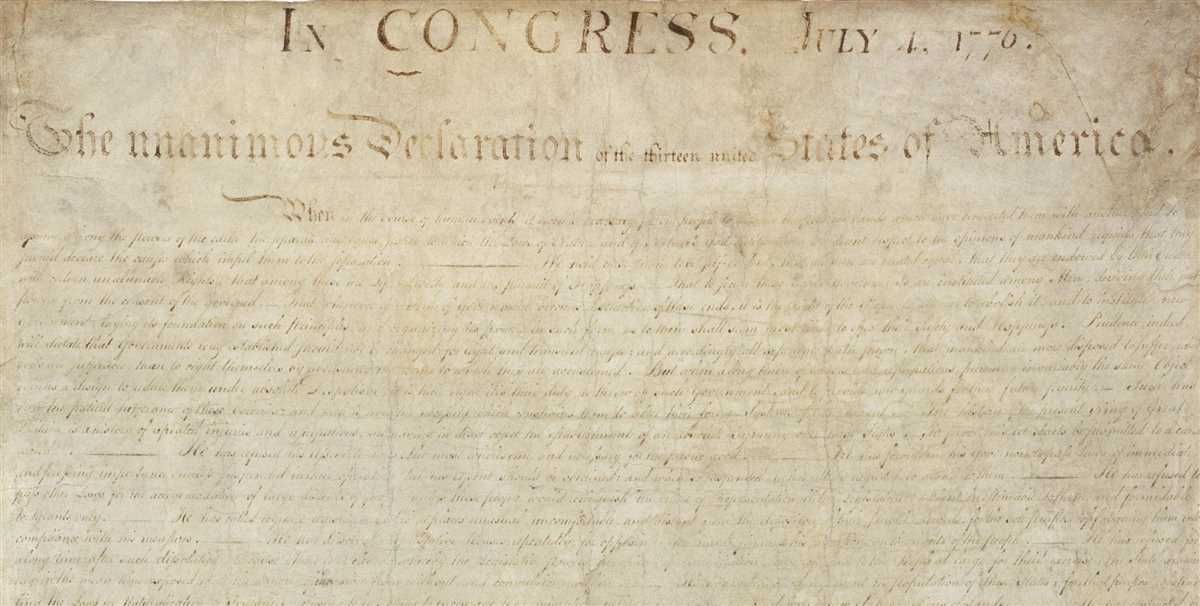
The Declaration of Independence, one of the most iconic documents in American history, was written in the midst of the Revolutionary War. Its purpose was to articulate the grievances of the American colonists against British rule and to declare their independence from the British Crown. To fully understand the historical context of the Declaration, it is important to examine the events leading up to its creation and the ideological influences that shaped its content.
The colonial period was characterized by a growing dissatisfaction among the American colonists with British rule. The British government imposed a series of taxes and regulations on the colonies, such as the Stamp Act and the Tea Act, which were met with resistance and protests. These acts, coupled with the colonists’ desire for self-governance and representation, eventually culminated in the outbreak of the Revolutionary War in 1775.
As the war progressed, the Continental Congress, a gathering of representatives from the thirteen colonies, began to debate the idea of declaring independence from Britain. Influenced by Enlightenment thinkers such as John Locke and Thomas Paine, who advocated for individual liberty and limited government, the members of the Continental Congress drafted the Declaration of Independence with the intention of justifying their break from Britain and rallying support both domestically and internationally.
The grievances outlined in the Declaration of Independence demonstrate the colonists’ belief in their natural rights and their frustration with the British government’s violations of those rights. The document listed a series of specific complaints against King George III and his administration, including the imposition of taxes without consent, the denial of colonial representation in Parliament, and the quartering of British troops in private homes without consent. These grievances highlighted the colonists’ desire for self-determination and their belief that the British government had forfeited its right to govern.
In conclusion, the historical context of the Declaration of Independence is essential to understanding its significance and the motivations behind its creation. By examining the events leading up to the Revolutionary War and the ideological influences on the colonists, we can gain a deeper understanding of the grievances articulated in the Declaration and the principles that shaped the foundation of the United States of America.
Examining the Answers Provided by the Declaration of Independence Grievances
The Declaration of Independence contains a list of grievances against King George III and the British government, which the American colonists believed justified their decision to declare independence. By examining these grievances, we can gain insight into the specific injustices that the colonists felt were being committed and understand the motivations behind the American Revolution.
1. The imposition of unjust taxes: One of the main grievances outlined in the Declaration of Independence is the imposition of unjust taxes by the British government. The colonists argued that they were being taxed without their consent and without any representation in the British Parliament, which they believed violated their rights as English subjects. This grievance reflects the colonists’ desire for self-governance and control over their own taxation.
2. Denial of fair trials and due process: Another significant grievance highlighted in the declaration is the denial of fair trials and due process to the colonists. The document states that King George III and his government had “deprived [the colonists] in many cases, of the benefits of Trial by Jury.” This grievance reflects the colonists’ concern about their lack of legal protections and their belief in the importance of a fair and impartial justice system.
- 3. Quartering of troops:
The declaration also mentions the quartering of troops as a grievance. The colonists objected to the British government’s practice of forced quartering and demanded that the soldiers be removed from their homes. This grievance reflects the colonists’ belief in the sanctity of their private property and their resistance to the presence of a standing army in their midst.
- 4. Restriction of trade:
An additional grievance outlined in the declaration is the restriction of trade imposed by the British government. The colonists argued that these restrictions stifled their economic growth and limited their ability to engage in commerce with other nations. This grievance reflects the colonists’ desire for economic independence and the freedom to trade with whomever they chose.
In conclusion, examining the answers provided by the Declaration of Independence grievances allows us to understand the specific injustices that the American colonists believed justified their decision to declare independence. These grievances reflect the colonists’ desire for self-governance, fair treatment under the law, protection of their property rights, and economic independence. By studying these grievances, we can gain insight into the ideals and motivations that drove the American Revolution.
Interpreting the Implications of the Declaration of Independence Grievances
The Declaration of Independence, adopted by the Continental Congress on July 4, 1776, contains a list of grievances against the British crown. These grievances outline the colonists’ frustrations with the policies and actions of the British government, which they believed violated their rights as British subjects. Interpreting the implications of these grievances can provide insight into the motivations and goals of the American Revolution.
One of the key grievances listed in the Declaration is the imposition of taxes without the consent of the colonists. This grievance speaks to the colonists’ desire for representation and participation in the decision-making process. They believed that their rights as Englishmen were being violated by taxation without representation, and sought to establish a system of government in which they could have a say in the laws and policies that affected them.
Another important grievance is the denial of basic legal rights, such as the right to trial by jury and protection against arbitrary imprisonment. This grievance reflects the colonists’ belief in the importance of individual liberties and the rule of law. They saw the British government’s disregard for these rights as an infringement on their freedom and sought to establish a government that would protect and uphold these fundamental principles.
The grievances also address issues of military occupation and the quartering of British troops in the colonies. This grievance highlights the colonists’ concerns about the presence of a standing army and the potential for abuse of power. They saw the quartering of troops as a violation of their property rights and as a symbol of British oppression. Through the grievances, the colonists express their desire to establish a government that would prioritize the protection of individual liberties and limit the power of the military.
In summary, the grievances listed in the Declaration of Independence provide valuable insights into the colonists’ motivations and goals during the American Revolution. They sought representation, the protection of individual rights, limitations on government power, and the establishment of a system that would safeguard their freedoms. These grievances serve as a reminder of the revolutionary spirit that shaped the founding of the United States and continue to influence the interpretation of American values today.
Applying the Lessons from the Declaration of Independence Grievances to Contemporary Issues
The Declaration of Independence, with its list of grievances against King George III, laid the foundation for the birth of a new nation and the establishment of fundamental principles that continue to influence American society to this day. Although written over two centuries ago, the lessons learned from the Declaration of Independence’s grievances are still applicable to contemporary issues. By examining these grievances, one can gain insights into how they can be relevant in addressing and rectifying current challenges.
Civil Rights and Equality:
The Declaration of Independence emphasizes the fundamental rights and equality of all individuals. It stated that “all men are created equal,” promoting the notion that every person deserves equal treatment and opportunities under the law. This principle continues to resonate in modern discussions on civil rights, gender equality, LGBTQ+ rights, and racial justice. The lessons from the grievances of the past can guide us in promoting unity and combating discrimination against marginalized groups in society.
Government Accountability:
The Declaration of Independence reflects the importance of holding those in power accountable for their actions. The grievances highlighted the abuse of authority by King George III and the denial of individual rights. In today’s world, where transparency and accountability in government are crucial, the Declaration’s lessons remind us of the need to ensure that those in positions of authority are answerable to the people they serve. This includes fostering transparency, promoting ethical behavior, and promoting democratic processes.
Protection of Individual Liberties:
The Declaration of Independence’s grievances shed light on the importance of protecting individual liberties. They denounced violations such as warrantless searches, the imposition of unjust laws, and the suppression of free speech. These grievances remain relevant in contemporary discussions on surveillance, privacy, freedom of expression, and the balance between individual rights and national security. By applying the lessons from the past, we can actively work towards safeguarding individual liberties in an ever-evolving technological and political landscape.
International Relations and Self-Determination:
The Declaration of Independence expressed the desire for self-determination and the belief that all nations should have the right to govern themselves. It highlighted the importance of international relations based on mutual respect and cooperation. Today, these grievances can be seen in discussions on sovereignty, globalization, and human rights. Understanding the lessons from the past can guide us in navigating complex international dynamics and promoting peace, diplomacy, and collaboration among nations.
In conclusion, the Declaration of Independence’s grievances serve as a timeless reminder of the principles that underpin American society. By applying the lessons learned from these grievances, we can address contemporary challenges related to civil rights, government accountability, individual liberties, and international relations. Embracing these lessons can guide us in creating a society that upholds equality, justice, and freedom for all.