The great gatsby exam answers

Focus on core themes throughout the narrative, especially the pursuit of wealth and its impact on personal relationships. Examine how characters like Nick, Daisy, and Tom reflect these social dynamics. Pay attention to the symbolic meanings behind recurring objects, like the green light and the eyes of Dr. T.J. Eckleburg, as they provide deeper insights into the author’s critique of American society during the Jazz Age.
Character motivations are integral to understanding the story’s progression. Analyze how Gatsby’s dream of recreating the past influences his actions and how it ultimately leads to his downfall. Compare his idealism with the more pragmatic and cynical approaches of other key figures in the plot, especially Daisy and Tom, who prioritize personal comfort over lofty ideals.
Consider narrative structure as an essential element in shaping the reader’s perception of events. The story’s first-person perspective through Nick Carraway allows for a subjective interpretation of the characters and situations. Explore how Nick’s reliability as a narrator plays a significant role in guiding or misguiding the audience’s understanding of key moments.
Contextual analysis is also necessary. The historical setting of the 1920s directly influences the behavior of the characters. The novel critiques the excesses of the era, focusing on themes such as class disparity and the hollowness of the American Dream. Understanding this context will provide more depth to any analysis or response regarding the text.
The Great Gatsby Exam Answers: A Detailed Guide
Focus on key themes, symbols, and character motivations to achieve a strong grasp of the material. Familiarize yourself with the following crucial points for exam success:
- Nick Carraway’s Role: Examine his perspective as narrator. How does his reliability influence the story? Consider his evolution throughout the plot.
- Jay Gatsby’s Pursuit of Dreams: Analyze his fixation on Daisy and how his idealism shapes his actions. What does this reveal about the American Dream?
- The Valley of Ashes: Symbolizes the moral and social decay of the time. Pay attention to its connection with other settings, like East Egg and West Egg.
- Color Imagery: Colors like green, yellow, and white play significant roles. Understand their symbolic meanings in relation to characters and events.
- Setting and Social Class: Study the contrasts between old money and new money. How does this divide impact relationships and outcomes?
Review these core ideas to prepare for specific questions. Focus on how Fitzgerald critiques American society through these symbols and character arcs.
Understanding Key Themes for Exam Success
Focus on these central topics for a deep understanding of the narrative and its broader implications:
- American Dream: Explore the contrast between the pursuit of wealth and personal fulfillment. How does Fitzgerald critique the notion through different characters, especially Gatsby?
- Class and Social Mobility: Examine the divide between East Egg and West Egg, and how social status impacts relationships and outcomes. Consider how characters like Daisy and Tom represent old money versus new money.
- Illusion vs. Reality: Focus on how Gatsby’s perception of Daisy and his idealized vision of life contrasts with the harsh truths of the world around him.
- Time and Memory: Analyze how Gatsby’s fixation on recreating the past shapes his decisions. Look at how the narrative structure reflects the manipulation of time.
- Moral Decay: Understand how the characters’ actions reflect a loss of ethics in the society depicted. Pay attention to the behaviors of characters like Tom and Daisy, who evade consequences for their actions.
Make sure to tie these themes to specific moments in the text, as they offer key insights into the novel’s deeper meanings and societal critiques.
How to Analyze the Main Characters in The Great Gatsby
Focus on key personality traits and their evolution throughout the narrative. Begin by examining Jay’s obsession with wealth and his relentless pursuit of a romanticized past. Consider how his background and choices shape his identity. Recognize the tension between his idealism and the harsh reality of his social position.
Next, examine Daisy’s role in the story. Her actions and motivations reflect her internal conflict between materialism and genuine affection. Pay attention to her choices, as they reveal her inability to break free from societal expectations. Consider the contrast between her surface-level charm and deeper emotional emptiness.
For Tom, assess his arrogance and sense of entitlement. His actions reveal a sense of superiority, stemming from his wealth and privilege. Reflect on his relationships with other characters and how his actions drive much of the conflict within the story. Consider how his character acts as a foil to others, especially Jay.
Nick’s perspective as the narrator plays a critical role in shaping the portrayal of these characters. His biased admiration for certain figures, especially Jay, can influence how readers interpret others. Analyze Nick’s reliability and how his background impacts his interpretation of events.
Lastly, consider Myrtle and George’s positions in the narrative. Myrtle’s pursuit of a better life contrasts with George’s passive acceptance of his circumstances. Their tragic outcomes highlight the disconnect between dreams and reality for those outside the upper class.
Common Exam Questions on The Great Gatsby Plot
Focus on understanding key plot points and their implications. Here are some typical questions that often appear in assessments:
- What motivates Jay’s actions throughout the story? Analyze his pursuit of wealth and its connection to his dreams.
- How does Daisy’s character influence the development of the narrative? Consider her impact on other characters and major events.
- What role does Nick play in shaping the narrative? How reliable is his perspective on the events around him?
- How does the setting, particularly East Egg and West Egg, contribute to the story’s themes?
- What is the significance of the novel’s tragic ending? How do the deaths of key characters highlight the central themes?
For more in-depth analysis and discussion on plot-related topics, visit: SparkNotes – The Great Gatsby.
Important Symbols and Their Meaning in The Great Gatsby
One of the most striking symbols in the story is the green light at the end of Daisy’s dock. It represents Gatsby’s hopes and desires, particularly his dream of rekindling a relationship with Daisy, as well as his pursuit of the American Dream. The light’s position–just out of reach–suggests the unattainability of his goals.
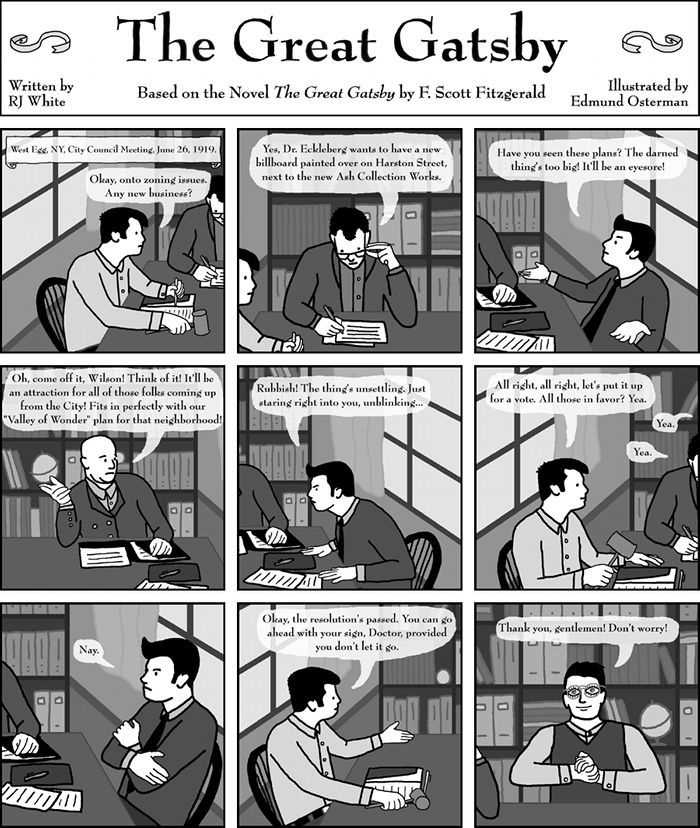
The eyes of Dr. T.J. Eckleburg are another powerful symbol. Positioned on an old billboard overlooking the Valley of Ashes, these eyes symbolize the moral and spiritual decay of society. They also act as a reminder of the lack of true guidance and the emptiness in the lives of the characters.
The color yellow plays a significant role throughout the novel. It often appears in association with wealth, luxury, and the superficial aspect of the American Dream. The yellow car Gatsby drives, for example, symbolizes both his material success and his ultimate inability to achieve happiness. This color also signifies corruption, as the riches acquired by certain characters come at the cost of their morality.
Lastly, the valley of ashes itself is a potent symbol of desolation. It represents the moral and physical decay hidden behind the wealth and glamour of the East Egg and West Egg communities. This wasteland shows the consequences of the characters’ empty pursuits, highlighting the contrast between illusion and reality.
How to Write Strong Answers for Gatsby Essay Prompts
Focus on direct engagement with the prompt. Clearly identify key themes or character motivations and relate them to specific examples from the text. Avoid vague references and instead reference exact moments to support your ideas.
Make sure to structure your response logically. Begin with a brief yet precise thesis statement that outlines your position. Follow up with body paragraphs that expand on this point with evidence from the text. Use quotes sparingly, ensuring they serve to clarify your argument rather than just fill space.
Be mindful of word choice. Use precise language to describe the characters’ actions or themes, avoiding generalizations. Tailor your language to demonstrate a deep understanding of the text and its nuances.
| Weak Response | Strong Response |
|---|---|
| Nick Carraway is a good narrator because he tells the story well. | Nick Carraway’s reliability as a narrator is questioned due to his subjective interpretations of events, which shape the reader’s understanding of other characters. |
| The novel is about love and wealth. | The novel explores the tension between idealized love and the pursuit of wealth, revealing how both lead to disillusionment and destruction for the main characters. |
Avoid summarizing the plot. Instead, focus on analysis and interpretation. Discuss how particular scenes contribute to broader themes, such as the illusion of the American Dream, rather than simply retelling events.
Finally, conclude by synthesizing your points. Restate your thesis with an added layer of insight based on the analysis provided. This approach reinforces your argument and leaves the reader with a thoughtful, well-supported perspective.
Study Tips for Tackling The Great Gatsby Exam
Focus on understanding character development. Track how Nick Carraway’s perception of other characters evolves throughout the story, especially his views on Gatsby and Daisy. Be able to explain key shifts in their relationships and how this impacts the narrative.
Review key symbols. Pay particular attention to the green light, the eyes of Dr. T.J. Eckleburg, and the Valley of Ashes. Be ready to explain how these symbols reflect larger themes like the decay of the American Dream and the illusory nature of wealth.
Memorize key quotes that illustrate central themes. For example, understand how Gatsby’s belief in the past shapes his actions and how this is reflected in his interactions with Daisy. Quote examples that highlight his idealization of her and the conflict between illusion and reality.
Practice analyzing chapters in detail. Focus on the purpose of each chapter and its role in advancing the themes of the narrative. For instance, consider how each party scene contributes to the novel’s critique of excess and superficiality.
Develop a strong thesis for your response. Make sure it addresses the main question directly and ties back to specific text examples. Avoid writing vague statements or rephrasing the question without analysis.